Minnesota · Kandiyohi County
Willmar Lake Fishing guide
Willmar Lake sits in Kandiyohi County, Minnesota, and covers 636 acres, reaching 14 ft at its deepest point. Average water clarity runs about 1.6 ft. The Minnesota DNR has surveyed the lake 13 times, most recently in 2025, with walleye, largemouth bass, northern pike and bluegill in the nets.
DNR survey data
Fish species
WalleyeLast stocked 2025One of the best around14per gill net7"Typical25"Biggest
Lengths measured · 96 fish
Recent · 2025Lengths measured · 96 fish
2025Lengths measured · 16 fish
2020Lengths measured · 10 fish
2019Lengths measured · 1 fish
2017Only 1 fish measured that year — too few to read as a shape.
No recent survey rating.
Northern pikeGood numbers10per gill net23"Typical32"Biggest
Lengths measured · 37 fish
Recent · 2025Lengths measured · 37 fish
2025Lengths measured · 30 fish
2020Lengths measured · 15 fish
2014Lengths measured · 30 fish
2009BluegillJust a few3.3per trap net6"Typical9"Biggest
Lengths measured · 21 fish
Recent · 2025Lengths measured · 21 fish
2025Lengths measured · 70 fish
2020Lengths measured · 74 fish
2014Lengths measured · 543 fish
2009CrappieJust a few6per trap net10"Typical12"Biggest
Lengths measured · 73 fish
Recent · 2025Lengths measured · 73 fish
2025Lengths measured · 225 fish
2020Lengths measured · 129 fish
2014Lengths measured · 118 fish
2009No recent survey rating.
Rates come from standard DNR survey gear (gill nets, trap nets, electrofishing), judged against statewide benchmarks for the same gear, so the same number of fish per net can read differently for two species. Where the standard gear can't count a species reliably, only presence and size are listed. Typical is the middle fish of those measured. Open a row for the full length spread, survey by survey.
How to fish Willmar Lake through the year
Walleye
- Spring
- Walleye are shallow, on and just off the spawning flats and the first green weeds. In 1.6 ft of visibility, they sit shallower than you think.
- Early summer
- Walleye are setting up on the outside weed edge, points and shallow structure.
- Summer
- Walleye are working the weed edge, points and any wind-blown structure. With 70% of this lake 15 ft or shallower, the weed edge is the main event.
- Fall
- Walleye are packing onto the sharpest breaks and points as the water cools, in big schools with short windows. A 14-ft bowl cools fast, so the fall window comes early here.
Northern pike
- Spring
- Pike are in the shallow bays and along new weed growth. In 1.6 ft of visibility, they sit shallower than you think.
- Early summer
- Pike are on the outside weed edge and points.
- Summer
- Pike are on the deep weed edge and points near the coolest water they can find. With 70% of this lake 15 ft or shallower, the weed edge is the main event.
- Fall
- Pike are on the last green weeds and the breaks beside them, feeding heavily as the water drops. A 14-ft bowl cools fast, so the fall window comes early here.
Season patterns for each species. Open the live map for today's wind, light and water temp.
Size history
Biggest fish by survey year
| Survey year | Walleye | Northern pike | Yellow perch |
|---|---|---|---|
| 2025 | 25" | 32" | 8" |
| 2020 | 25" | 38" | 8" |
| 2019 | 7" | — | — |
| 2017 | 6" | — | — |
| 2016 | 13" | — | — |
| 2014 | 24" | 35" | 8" |
| 2009 | 26" | 32" | 7" |
| 2004 | 21" | 32" | 8" |
Longest fish measured by DNR survey crews in each year's nets. Survey gear samples the population, so the lake usually holds larger fish than any survey measured.
Suggested tackle
What to bring
Top presentations for this lake's structure and clarity:
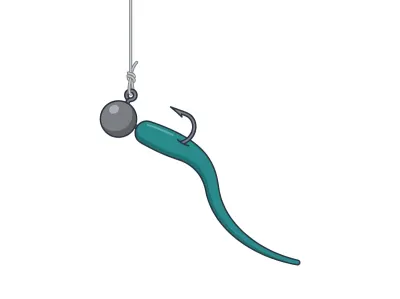
Walleye · Soft plastics
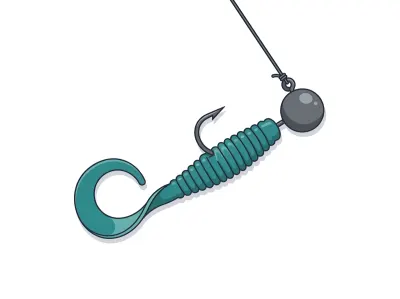
Curly-Tail Grub on Jig
3" curly-tail grub threaded on a round jighead
Northern pike · Jigs & bladed
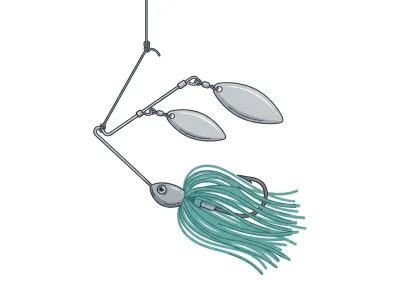
Spinnerbait
3/8–1/2 oz safety-pin spinnerbait with tandem willow-leaf blades
Northern pike · Jigs & bladed
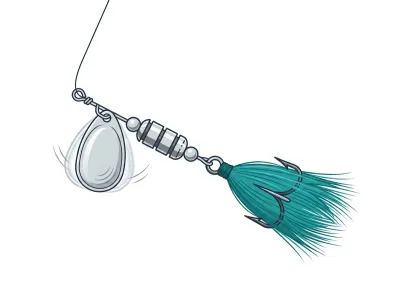
Inline Spinner (Mepps/Blue Fox)
#2–#4 in-line spinner
Yellow perch · Soft plastics
Curly-Tail Grub on Jig
3" curly-tail grub threaded on a round jighead
Yellow perch · Soft plastics
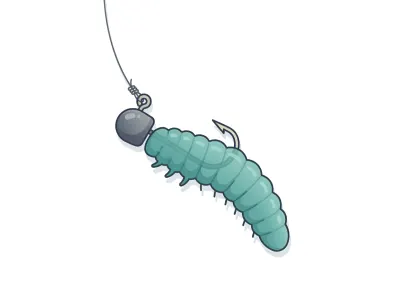
Tungsten Jig + Micro Plastic
1–1.5" micro plastic
Full setups, including hooks, weights and line, are on the live map. As an Amazon Associate I earn from qualifying purchases.
DNR stocking records
Stocking history
| Year | Species | Stocked |
|---|---|---|
| 2025 | Walleye | 149,314 fry |
| 2024 | Walleye | 150,941 fry |
| 2023 | Walleye | 152,525 fry |
| 2022 | Walleye | 224,191 fry |
| 2021 | Walleye | 316,575 fry |
| 2019 | Walleye | 300,000 fry · 7,963 fingerlings |
| 2018 | Walleye | 357,952 fry |
| 2017 | Walleye | 402,090 fry |
| 2016 | Walleye | 333,629 fry |
MN DNR · in their words
From the 2025 survey
A standard survey was conducted on Willmar Lake during late July of 2025. A fall night electrofishing survey was conducted for young of year "YOY" (fingerling sized) Walleye during early September of 2025. A targeted survey is generally used for sampling a specific kind of fish or time of year (i.e. spawning season, fall season, etc.) unlike a standard survey which samples a wider range of fish species during the summer months using standard methodology (i.e. standard time of year, set sampling stations, taking water clarity readings and oxygen/temperature profiles, etc.) and gears (i.e. lake survey gillnets, trapnets and possibly spring electrofishing for Largemouth Bass).
Willmar is a moderate sized (447 acres), aerated, shallow (14 feet maximum) and productive lake located in Kandiyohi County. Willmar is part of the Hawk Creek Watershed. Willmar Lake (34-0180-01) is located within the city limits of Willmar. A large city park "Robbin's Island" is located along the south side of the lake. There are 45 homes, 1 commercial building and a golf course located around the lake (2020). Willmar Lake has one public boat access on the south shore. Willmar Lake is also connected to Foot Lake via a downstream navigable outlet channel. A basin on the west side of Robbin's Island Park has been considered as part of Foot Lake (34-0181-00) for MNDNR Fisheries management purposes since the 1980's. MNDNR Ecological Waters Resources identifies this basin as part of Willmar Lake (34-0180-02). Fish movement between the Foot Lake basins and Willmar Lake probably occurs frequently. Eagle Lake and several shallow lakes are upstream of Willmar Lake and connected via ditches and inlets that eventually flow to Willmar Lake. There are 15 inlets/tiles that enter Willmar Lake. Nutrient inputs into Willmar Lake are from varied sources such as road runoff via Highway 23/71, storm sewer runoff from the city of Willmar, golf course runoff via inlets, residential lawn runoff, fecal droppings from local Canada goose populations, and agricultural runoff primarily along the northwest shore. Nutrient levels (total phosphorus=0.091 ppm, chlorophyll a=34.6 ppb) were high on June 9, 2022. Water clarity was poor (secchi=2.3 feet) on July 23, 2025. Dissolved oxygen was 5.9 ppm or higher to 7 feet deep during the 2025 summer survey. Shoalwater substrates are varied with mostly sand, silt, gravel, boulder, muck, and rubble. Willmar had generally sparse submergent vegetation (sago pondweed and curly-leaf pondweed) throughout the lake in 2025. However, curly-leaf pondweed was abundant during the late spring thru early summer of 2020. Emergent vegetation (cattails) is common near the Willmar Lake outlet channel area. Blue-green algae blooms are common occurrences during the late summer months of most years. Water levels were low during the spring but above normal by mid-summer. Historically, both Foot and Willmar basins, and surrounding wetlands have been altered over time by dredging and filling. Willmar Lake has been a popular fishing lake for Black Crappie, Walleye, Northern Pike, Bluegill, Channel Catfish and largemouth bass in recent years. Shore fishing occurs at the public boat access, east shore off Highway 23/71, and Robbin's Island Park near the boat channel bridge. The DNR Spicer Area Fisheries Office manages Willmar for Walleye, Northern Pike, Channel Catfish, Black Crappie and Yellow Perch.
Read the full DNR narrative
Black Crappie abundance was high in 2025 (6.00 fish/trapnet). Black Crappie gillnet catch was also high (18.50 fish/gillnet, 0.56 pounds average size) in 2025. The Black Crappie historical average catch rate is 11.00 fish/trapnet. The 2025 Black Crappie size was moderate (0.59 pounds and 9.80 inches) from trapnets. The Black Crappie historical average weight is 0.33 pounds from trapnets. The 2025 Black Crappie catch rate of preferred size (10.00 inches and larger) Black Crappie was high (3.83 fish/trapnet) in 2025. Black Crappie growth rates were normal for ages 1-6, but below normal for age 7. The 2020 and 2023 year classes comprised 38% and 30% respectively of the 2025 Black Crappie catch. The largest Black Crappie captured was 12.13 inches in 2025.
Bluegill abundance was low in 2025 (3.33 fish/trapnet). The Bluegill historical average catch rate is 6.35 fish/trapnet. The 2025 Bluegill average size was large (0.30 pounds and 6.86 inches) from trapnets. The Bluegill historical average weight is 0.23 pounds from trapnets. The 2025 Bluegill catch rate of quality size (6.00 inches and larger) was low (2.33 fish/trapnet). The largest Bluegill captured was 9.09 inches in 2025.
Channel Catfish were not captured in the 2025 summer survey. Channel Catfish were absent from the 2020 survey. Channel Catfish were absent in the 2014 gillnets (0.00 fish/gillnet), but two fish were present in the 2014 trapnets (0.33 fish/trapnet, 4.70 pounds average weight). The historical average catch rates are 0.37 fish/gillnet and 0.24 fish/trapnet. Channel Catfish were last stocked in 2013 (4,225 fingerlings, 65 pounds).
Northern Pike abundance was high in 2025 (10.00 fish/gillnet). The Northern Pike historical average catch rate is 4.89 fish/gillnet. The 2025 Northern Pike average size was moderate (3.47 pounds and 24.89 inches) from gillnets. The Northern Pike historical average weight is 3.81 pounds from gillnets. The 2025 Northern Pike catch rate of 26.00 inches and larger was high (3.00 fish/gillnet). The largest Northern Pike captured was 32.87 inches in 2025.
Walleye abundance was high in 2025 (14.00 fish/gillnet). The Walleye historical average catch rate is 16.37 fish/gillnet. Walleye were less abundant in connected Foot Lake during 2025 (3.67 fish/gillnet, 1.09 pounds average weight). The 2025 Walleye average size was moderate (1.41 pounds and 14.52 inches) from Willmar gillnets. The Walleye historical average weight is 1.36 pounds from gillnets. The 2025 Walleye catch rate of quality size (15.00 inches and larger) was moderate (4.50 fish/gillnet). Walleye growth rates for Willmar were normal for age 1, but below normal for ages 2-8. The 2022 and 2023 Walleye year classes comprised 34% and 28% respectively of the 2025 Walleye catch. The largest Walleye captured was 25.51 inches in 2025.
Walleye natural reproduction in Willmar is generally infrequent and insignificant based on previous fall and summer surveys. Walleye fry have been generally stocked (250,000-670,000 fish per lake) during even years from 1982-2018 in both Willmar and Foot. Recent Walleye stockings include 2025 (149,314 fry), 2024 (150,941 fry), 2023 (152,525 fry), 2022 (224,191 fry), 2021 (316,575 fry), 2019 (300,000 fry; 7,963 fingerlings, 668 pounds), and 2018 (357,952 fry). YOY Walleye abundance was high (180.00 YOY/hour, 7.09 inches average) in Willmar Lake during 2025. YOY Walleye abundance was also high (186.00 YOY/hour, 6.81 inches average) in 2025 Foot fall night electrofishing survey. YOY Walleye (fry stockings) were previously abundant in the 2014 fall electrofishing surveys for Willmar (192.00 YOY/hour, 5.63 inches) and connected Foot (216.00 YOY/hour, 5.59 inches). YOY Walleye abundance was low (15.00 YOY/hour or less) in 2016-2019 fall electrofishing surveys for both Foot and Willmar.
Yellow Perch abundance was low in 2025 (2.50 fish/gillnet). The Yellow Perch historical average catch rate is 2.63 fish/gillnet for Willmar. The 2025 Yellow Perch average size was large (0.25 pounds and 8.17 inches) from gillnets. The Yellow Perch historical average weight and length is 0.18 pounds from gillnets. The 2025 Yellow Perch catch rate of quality size (8.00 inches and larger) was low (1.50 fish/gillnet). The largest Yellow Perch captured was 8.94 inches in 2025.
Bigmouth Buffalo abundance was low in 2025 (0.17 fish/trapnet and 0.50 fish/gillnet). The Bigmouth Buffalo historical average catch rates are 0.33 fish/trapnet and 3.35 fish/gillnet. The 2025 average weight was moderate (9.61 pounds) from gillnets and trapnets combined.
Black Bullhead abundance was low in 2025 (11.00 fish/gillnet). The Black Bullhead historical average catch rate is 105.46 fish/gillnet. Black Bullhead were absent from the 2025 trapnets. The 2025 Black Bullhead average size was moderate (0.63 pounds and 10.37 inches) from gillnets. The Black Bullhead historical average weight is 0.46 pounds from gillnets. The largest Black Bullhead captured was 11.69 inches in 2025. One Brown Bullhead was captured in the trapnets (11.61 inches).
Common Carp abundance was moderate in 2025 (2.83 fish/trapnet). The Common Carp historical average catch rate is 2.98 fish/trapnet for Willmar. The 2025 Common Carp average size was small (4.76 pounds and 21.02 inches) from trapnets. The Common Carp historical average weight is 5.68 pounds from trapnets.
Freshwater Drum abundance was high in 2025 (31.00 fish/gillnet). The Freshwater Drum historical average catch rates are 17.63 fish/gillnet and 6.35 fish/trapnet for Willmar. The 2025 trapnet catch rate was 4.17 fish/trapnet. The 2025 Freshwater Drum average sizes were moderate from both gillnets (1.11 pounds and 13.60 inches) and trapnets (1.09 pounds and 13.31 inches). The historical average weights are 0.96 pounds and 1.07 pounds respectively from gillnets and trapnets. The largest Freshwater Drum captured was 16.30 inches in 2025.
Current fish management activities on Willmar include protecting the important aquatic habitats such as emergent and submergent vegetation through the permit process, preventing and educating about the spread of invasive species, encouraging land owners to implement best management practices in the watershed, and stocking various fish species as warranted. All fish species in Willmar Lake will be surveyed again in the summer of 2030.
Narrative text from the Minnesota DNR lake survey.
Recent reports
Willmar Lake fishing reports
Recent reports on Willmar Lake from guides, tournaments and regular anglers. Anything posted in the last two weeks also bumps the matching spots on the live map, so you'll see a "matches a recent report" tag on them.
Public water access
Getting on the water
- Foot Lake, Robbins Island (trailer launch)
- Willmar Lake (trailer launch)
- Foot Lake Winter Access (carry-in)
- Wilmar Lake, Robbins Island Regional Park Fishing Pier (fishing pier)
DNR bathymetry
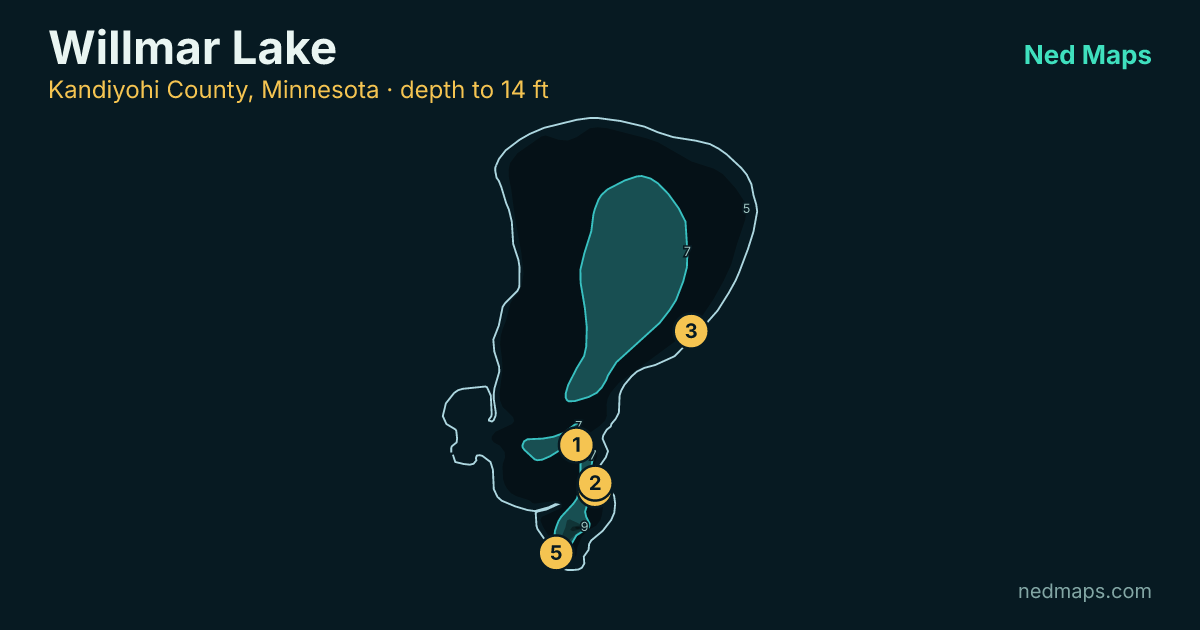
Willmar Lake depth map
Within 30 miles
Nearby lakes
- Foot Lake · 503 ac · 1.2 mi
- Eagle Lake · 850 ac · 3.8 mi
- East Solomon Lake · 658 ac · 4.2 mi
- Point Lake · 174 ac · 4.3 mi
- Long Lake · 1,573 ac · 4.6 mi
- Wakanda Lake · 1,760 ac · 5.7 mi
- Ringo Lake · 735 ac · 6.5 mi
- Henderson Lake · 75 ac · 7 mi
Quick answers
Frequently asked questions
How deep is Willmar Lake?
Willmar Lake reaches 14 ft at its deepest point; about 70% of the lake is littoral (15 ft or shallower).
How big is Willmar Lake?
Willmar Lake covers 636 acres with about 7.9 miles of shoreline.
How clear is the water in Willmar Lake?
DNR Secchi readings on Willmar Lake average 1.6 ft of visibility, on the stained end for a Minnesota lake.
What fish are in Willmar Lake?
Minnesota DNR surveys (most recently 2025) record walleye, largemouth bass, northern pike, bluegill, crappie, yellow perch, channel catfish.
Is Willmar Lake stocked?
Yes. The DNR stocked walleye in 2025; the stocking table on this page lists every year back to 2016.
Does Willmar Lake have a public access?
Yes. Willmar Lake has 4 public access sites, including Foot Lake, Robbins Island (trailer launch).
How big do walleye get in Willmar Lake?
The biggest walleye measured in recent DNR surveys taped 25"; the size-history table on this page tracks the biggest fish in each survey back to 2004.
When was Willmar Lake last surveyed?
The Minnesota DNR last surveyed Willmar Lake in 2025, the most recent of 13 surveys on record.
Page updated .

Featured guide spot
Your guide service here
One featured guide per lake, with your photo, your writeup and a link straight to your booking page. Free through December 31, 2026.
Then $20 a month from January. Cancel any time.
The live map adds today's conditions and ranked spots for Willmar Lake, plus a trip plan you can share:
Open Willmar Lake on the live map → Fished it lately? Write a report