Minnesota · Kandiyohi County
Eagle Lake Fishing guide
Eagle Lake covers 850 acres in Kandiyohi County, Minnesota, reaching 67 ft at its deepest point. Average water clarity runs about 6.1 ft. The Minnesota DNR has surveyed the lake 19 times, most recently in 2025, with walleye, largemouth bass, smallmouth bass and northern pike in the nets.
DNR survey data
Fish species
WalleyeLast stocked 2025Good numbers5.3per gill net13"Typical27"Biggest
Lengths measured · 84 fish
Recent · 2021 + 2025Lengths measured · 66 fish
2025Lengths measured · 11 fish
2023Lengths measured · 16 fish
2022Lengths measured · 7 fish
2021Only 7 fish measured that year — too few to read as a shape.
Largemouth bassFair numbers30.9per hr (electrofishing)8"Typical18"Biggest
Lengths measured · 108 fish
Recent · 2021 + 2022 + 2025Lengths measured · 6 fish
2025Only 6 fish measured that year — too few to read as a shape.
Lengths measured · 99 fish
2022Lengths measured · 3 fish
2021Only 3 fish measured that year — too few to read as a shape.
Lengths measured · 1 fish
2020Only 1 fish measured that year — too few to read as a shape.
Smallmouth bassJust a few7.7per hr (electrofishing)15"Typical20"Biggest
Lengths measured · 28 fish
Recent · 2021 + 2022 + 2025Lengths measured · 6 fish
2025Only 6 fish measured that year — too few to read as a shape.
Lengths measured · 21 fish
2022Lengths measured · 1 fish
2021Only 1 fish measured that year — too few to read as a shape.
Lengths measured · 12 fish
2020Northern pikeGood numbers12per gill net23"Typical32"Biggest
Lengths measured · 79 fish
Recent · 2021 + 2025Lengths measured · 76 fish
2025Lengths measured · 3 fish
2021Only 3 fish measured that year — too few to read as a shape.
Lengths measured · 14 fish
2020Lengths measured · 18 fish
2014BluegillJust a few8.5per trap net4"Typical9"Biggest
Lengths measured · 203 fish
Recent · 2021 + 2025Lengths measured · 48 fish
2025Lengths measured · 155 fish
2021Lengths measured · 82 fish
2020Lengths measured · 927 fish
2014CrappieJust a few0.4per trap net5"Typical13"Biggest
Lengths measured · 10 fish
Recent · 2021 + 2025Lengths measured · 2 fish
2025Only 2 fish measured that year — too few to read as a shape.
Lengths measured · 8 fish
2021Only 8 fish measured that year — too few to read as a shape.
Lengths measured · 19 fish
2020Lengths measured · 22 fish
2014Yellow perchFair numbers3.5per gill net5"Typical8"Biggest
Lengths measured · 27 fish
Recent · 2021 + 2025Lengths measured · 25 fish
2025Lengths measured · 2 fish
2021Only 2 fish measured that year — too few to read as a shape.
Lengths measured · 6 fish
2020Only 6 fish measured that year — too few to read as a shape.
Lengths measured · 229 fish
2014No recent survey rating.
Rates come from standard DNR survey gear (gill nets, trap nets, electrofishing), judged against statewide benchmarks for the same gear, so the same number of fish per net can read differently for two species. Where the standard gear can't count a species reliably, only presence and size are listed. Typical is the middle fish of those measured. Open a row for the full length spread, survey by survey.
How to fish Eagle Lake through the year
Walleye
- Spring
- Walleye are shallow, on and just off the spawning flats and the first green weeds.
- Early summer
- Walleye are setting up on the outside weed edge, points and shallow structure.
- Summer
- Walleye are working the weed edge, points and any wind-blown structure. On a lake that drops to 67 ft, check the deep edge of that structure too.
- Fall
- Walleye are packing onto the sharpest breaks and points as the water cools, in big schools with short windows.
Northern pike
- Spring
- Pike are in the shallow bays and along new weed growth.
- Early summer
- Pike are on the outside weed edge and points.
- Summer
- Pike are on the deep weed edge and points near the coolest water they can find. On a lake that drops to 67 ft, check the deep edge of that structure too.
- Fall
- Pike are on the last green weeds and the breaks beside them, feeding heavily as the water drops.
Season patterns for each species. Open the live map for today's wind, light and water temp.
Size history
Biggest fish by survey year
| Survey year | Walleye | Northern pike | Largemouth bass |
|---|---|---|---|
| 2025 | 25" | 32" | 18" |
| 2023 | 10" | — | — |
| 2022 | 5" | — | 17" |
| 2021 | 27" | 24" | 12" |
| 2020 | 26" | 37" | 13" |
| 2018 | 11" | — | — |
| 2016 | 7" | — | — |
| 2014 | 27" | 33" | 18" |
Longest fish measured by DNR survey crews in each year's nets. Survey gear samples the population, so the lake usually holds larger fish than any survey measured.
Suggested tackle
What to bring
Top presentations for this lake's structure and clarity:
Walleye · Live bait
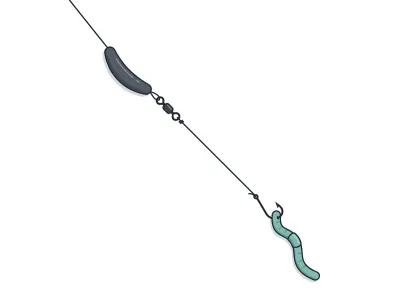
Live-Bait (Lindy) Rig + Leech/Crawler
jumbo leech or half a nightcrawler
Walleye · Trolling
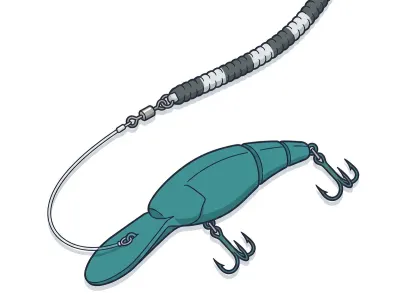
Leadcore Line + Crankbaits
4–5" mid-diving crankbait behind a long leadcore run
Northern pike · Soft plastics
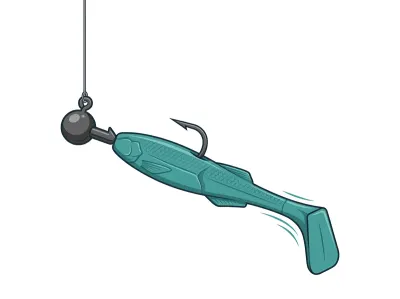
Paddletail Swimbait on Jighead
4–5" paddletail swimbait on a ball-head swimbait jighead
Northern pike · Trolling
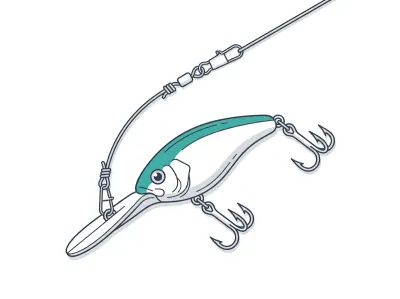
Muskie Trolling (big cranks)
8–10" large diving crankbait rated for the target depth
Largemouth bass · Hardbaits
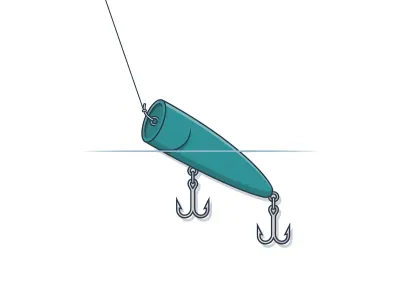
Topwater Popper
2.5–3" concave-face popper
Largemouth bass · Hardbaits
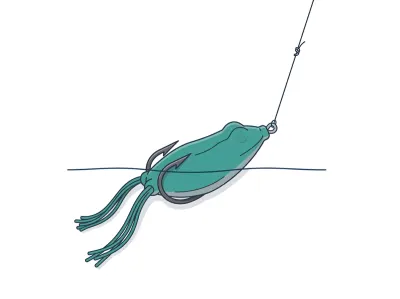
Hollow-Body Frog
3–3.5" hollow-body frog
Full setups, including hooks, weights and line, are on the live map. As an Amazon Associate I earn from qualifying purchases.
DNR stocking records
Stocking history
| Year | Species | Stocked |
|---|---|---|
| 2025 | Walleye | 452,033 fry |
| 2024 | Walleye | 350,890 fry |
| 2023 | Walleye | 349,536 fry · 18,412 fingerlings |
| 2022 | Walleye | 567,731 fry |
| 2021 | Walleye | 548,317 fry |
| 2018 | Walleye | 955,220 fry |
| 2016 | Walleye | 822,491 fry · 14,934 fingerlings · 935 yearlings · 24 adults |
MN DNR · in their words
From the 2025 survey
A standard survey of Eagle Lake was conducted during early-July of 2025. A fall night electrofishing survey was conducted for young of year "YOY" (fingerling sized) Walleye in early October of 2025. A targeted survey is generally used for sampling a specific kind of fish or time of year (i.e. spawning season, fall season, etc.) unlike a standard survey which samples a wider range of fish species during the summer months using standard methodology (i.e. standard time of year, set sampling stations, taking water clarity readings and oxygen/temperature profiles, etc.) and gears (i.e. lake survey gillnets, trapnets and possibly spring electrofishing for Largemouth Bass).
Eagle is a moderate sized (849 acres), deep (67 feet maximum), and productive lake located in Kandiyohi County. A public access is located along the southeast corner of the lake. Eagle is part of the Hawk Creek Watershed. Zebra Mussels were first documented in Eagle during 2018. Water clarity (secchi=8.3 feet) was excellent for Eagle during the 2025 survey. The water color is usually brown stained due to lake sediments. Nutrient levels (total phosphorus=0.023 ppm) were low in July of 2024. Dissolved oxygen levels were below 3.0 ppm at 21 feet and deeper during early July of 2025. Intense algae blooms can occur in Eagle during the late summer months. Residential development (271 homes/cabins, 2020 survey) has occurred around the entire shoreline area except for the northeast portion of the lake. Water levels were above normal during the 2025 summer. There are approximately 19 inlets and 1 outlet for Eagle Lake. Highway 23/71 drainage into the lake occurs along the west side. Point Lake outlet flows from a steep culvert across Highway 23/71 into the northwest corner of Eagle. Agricultural row crop drainage into the lake occurs via several inlets/tiles along east and south locations of the lake. A large gravel pit is near the north side of the lake. The Eagle outlet (southwest corner) eventually flows through a nonaerated lake (Swan 34-0186-00) and then two aerated shallow lakes (Willmar & Foot Lakes). A habitat rehabilitation project was conducted in 2014 below the outlet dam along the outlet channel shoreline to improve bank vegetation cover and reduce bank erosion.
Read the full DNR narrative
Emergent vegetation (cattails) was sparse in Eagle Lake during 2025. Hardstem bulrush transplanting was attempted during 1994 along the south and west shores of the lake. Bulrush transplants were present at most sites the following year in 1995; however, the stands did not increase in size. Wind and wave action was detrimental to the newly transplanted stands, especially along the south shore as time progressed. There was only 1 bulrush (west shore) stand remaining by 2003. Currently there are no bulrush stands present in Eagle Lake. Historical chemical applications of copper sulfate, lack of cooperating landowners, and undesirable wind/wave fetch conditions make future hardstem bulrush transplanting success unlikely in Eagle. Submergent vegetation species commonly occurring include clasping-leaf pondweed, muskgrass, narrow-leaf pondweed, water moss, sago pondweed, coontail and filamentous algae. Submergent vegetation densities are the highest along the extended shallow shelves of the near shore areas. Shoalwater substrates are mostly sand, gravel, rubble, and silt.
Black Crappie were absent in the 2025 gillnets. The Black Crappie historical average catch rate (1978-present) was 0.97 fish/gillnet. The 2025 Black Crappie trapnet catch rate (0.17 fish/trapnet) was low and below the historical average (3.16 fish/trapnet). The 2025 Black Crappie average size was large (0.54 pounds and 9.72 inches) from trapnets. The Black Crappie historical average weight is 0.39 pounds from trapnets. Abundant numbers of small (< 4 inches) Black Crappie were observed in the 2025 YOY Walleye fall electrofishing survey. The largest Black Crappie captured was 11.10 inches in 2025.
Northern Pike were abundant in 2025 (12.00 fish/gillnet). The Northern Pike historical average catch rate (1978-present) is 2.80 fish/gillnet for Eagle. The 2025 Northern Pike average size was fair (2.87 pounds and 23.52 inches) from gillnets. The Northern Pike historical average weight is 3.17 pounds from gillnets. The 2025 catch rates of Northern Pike 22.00 - 26.00 inches were high (7.00 fish/gillnet and 1.25 fish/trapnet). The 2025 catch rates of Northern Pike 26.00 inches and larger were also high (1.75 fish/gillnet and 0.33 fish/trapnet). The largest Northern Pike captured was 32.36 inches in 2025. Northern Pike possession limit regulations for Eagle in the North-central Zone are as follows: anglers can keep 10 Northern Pike, but not more than two Northern Pike longer than 26.00 inches; and all from 22.00 to 26.00 inches must be released. Northern Pike taken by spearing follow the same rules except one Northern Pike may be between 22.00 and 26.00 inches or two larger than 26.00 inches.
Yellow Perch abundance was low in 2025 (3.50 fish/gillnet). The Yellow Perch historical average catch rate (1978-present) is 37.08 fish/gillnet for Eagle. The 2025 Yellow Perch average size was small (0.08 pounds and 5.76 inches) from gillnets. The Yellow Perch historical average weight is 0.12 pounds. Abundant numbers of small (< 4 inches) Yellow Perch were observed during the 2025 fall YOY Walleye electrofishing survey. The largest Yellow Perch captured was 6.38 inches in 2025.
Walleye abundance was fair (5.25 fish/gillnet) in 2025. The Walleye historical average catch rate (1978-present) is 13.42 fish/gillnet for Eagle. The 2025 Walleye average size was moderate (1.94 pounds and 17.04 inches) from gillnets. The Walleye historical average weight is 1.45 pounds from gillnets. The 2025 catch rate of quality (15.00 inches and larger) sized Walleye was low (3.50 fish/gillnet). Walleye growth rates were normal for ages 1-4 and above normal for ages 5-8. The 2022 and 2021 year classes comprised 32% and 25% respectively of the 2025 Walleye gillnet and trapnet catch. The largest Walleye captured was 25.00 inches in 2025.
The Walleye population in Eagle Lake is due primarily to stocking, but limited Walleye natural reproduction has been documented by past surveys. Moderate YOY Walleye numbers (36.00 YOY/hour, 6.56 inches) were captured in the 2025 fall night electrofishing survey. Yearling Walleye numbers were low (2.00 fish/hour, 10.53 inches) in the 2025 fall electrofishing survey. YOY Walleye were low to moderate in fry stocked years of 2021 (10.50 YOY/hour, 6.65 inches), 2022 (22.50 YOY/hour, 5.54 inches). No YOY Walleye were captured in the 2023 fry stocked year. YOY Walleye were abundant (135.00 YOY/hour, 6.26 inches) in the 2018 fall electrofishing survey (fry stocked). Low YOY Walleye numbers (4.50 YOY/hour, 6.86 inches) were captured during a 2016 (fry stocked) fall electrofishing survey. A fall electrofishing survey was conducted in 2014 (no fry stocking), but zero YOY Walleye were captured indicating no natural reproduction. Eagle Lake was recently stocked with Walleye in 2011 (1,000,481 fry), 2012 (1,365 fingerlings, 100 pounds; 2,890 yearlings, 859 pounds), 2014 (24,510 fingerlings, 1,195 pounds), 2016 (822,491 fry; 14,934 fingerlings, 1,195 pounds; 935 yearlings, 284.5 pounds; 24 adults, 30 pounds), 2018 (955,220 fry), 2021 (548,317 fry), 2022 (567,731 fry), 2023 (349,536 fry; 18,412 fingerlings, 493 pounds), 2024 (350,890 fry) and 2025 (452,033 fry).
Bluegill abundance was low in 2025 (4.00 fish/trapnet). The Bluegill historical average catch rate (1978-present) is 37.36 fish/trapnet in Eagle. No Bluegill were captured in the gillnets. The 2025 Bluegill average size was moderate (0.22 pounds and 6.08 inches) from trapnets. The Bluegill historical average weight is 0.14 pounds from trapnets. The Bluegill catch rate of preferred (8.00 inches and larger) size was low (1.08 fish/trapnet) in 2025. Bluegill growth rates in Eagle were normal for ages 1-3 and above normal for ages 4-7. The 2023 year class comprised 49% of the 2025 Bluegill trapnet catch in Eagle Lake. The largest Bluegill captured was 8.98 inches.
Black Bullhead abundance was low in 2025 (0.50 fish/trapnet). Black Bullhead abundance was also low (0.25 fish/gillnet) in the 2025 gillnets. The Black Bullhead historical average catch rates (1978-present) are 13.08 fish/gillnet and 4.36 fish/trapnet. The 2025 Black Bullhead average size was moderate (0.36 pounds and 8.45 inches) from trapnets. The Black Bullhead historical average weight is 0.61 pounds. The largest Black Bullhead captured was 11.14 inches in 2025.
Yellow Bullhead abundance was high in 2025 (3.17 fish/trapnet). The 2025 Yellow Bullhead average size was large (0.89 pounds, 11.44 inches) from trapnets. The largest Yellow Bullhead captured was 14.80 inches in 2025.
Freshwater Drum abundance was fair in 2025 gillnets (2.50 fish/gillnet). The Freshwater Drum historical average catch rate (1978-present) is 4.50 fish/gillnet. However, Freshwater Drum were abundant in the 2025 trapnets (5.08 fish/trapnet) compared to the historical average (0.93 fish/trapnet). The 2025 Freshwater Drum average size was large (3.26 pounds and 18.35 inches) from gillnets, but smaller in the trapnets (1.85 pounds and 16.01 inches). The Freshwater Drum historical average weight is 1.64 pounds and 3.49 pounds respectively from gillnets and trapnets. The largest Freshwater Drum captured was 25.39 inches in 2025.
Largemouth Bass abundance in 2025 (0.50 fish/trapnet) was slightly above the historical average (0.36 fish/trapnet). The 2025 Largemouth Bass average size was moderate (1.05 pounds and 10.85 inches) from trapnets. The largest Largemouth Bass was 18.11 inches in the 2025 trapnets. Largemouth Bass are generally not sampled effectively in gillnets or trapnets. Spring electrofishing is the preferred method of sampling Largemouth Bass populations. No spring electrofishing surveys were conducted for Largemouth Bass in Eagle Lake during 2014, 2020 or 2025. However, abundant numbers of adult Largemouth Bass were observed in the 2025 fall YOY Walleye electrofishing survey.
Smallmouth Bass abundance was moderate in 2025 (1.50 fish/gillnet) and above the historical average (0.62 fish/gillnet). The 2025 Smallmouth Bass average size was large (1.48 pounds and 13.33 inches) from gillnets. The largest Smallmouth Bass was 17.32 inches in 2025.
Other species captured included low numbers of Bigmouth Buffalo (0.17 fish/trapnet) and Highfin Carpsucker (0.08 fish/trapnet), but abundant numbers of Common Carp (1.58 fish/trapnet, 5.34 pounds average size).
Current fish management activities on Eagle Lake include monitoring the fish population on a periodic basis, protecting native aquatic vegetation through the permit process, participating in local watershed initiatives, preventing and educating about the spread of invasive species, and stocking various fish species as warranted. The Eagle Lake fishery will be surveyed in 2030 spring for Largemouth Bass and 2030 summer for all fish species. Fall night electrofishing will be conducted during odd years for YOY Walleye.
Narrative text from the Minnesota DNR lake survey.
Recent reports
Eagle Lake fishing reports
Recent reports on Eagle Lake from guides, tournaments and regular anglers. Anything posted in the last two weeks also bumps the matching spots on the live map, so you'll see a "matches a recent report" tag on them.
Public water access
Getting on the water
- Eagle Lake (trailer launch)
DNR bathymetry
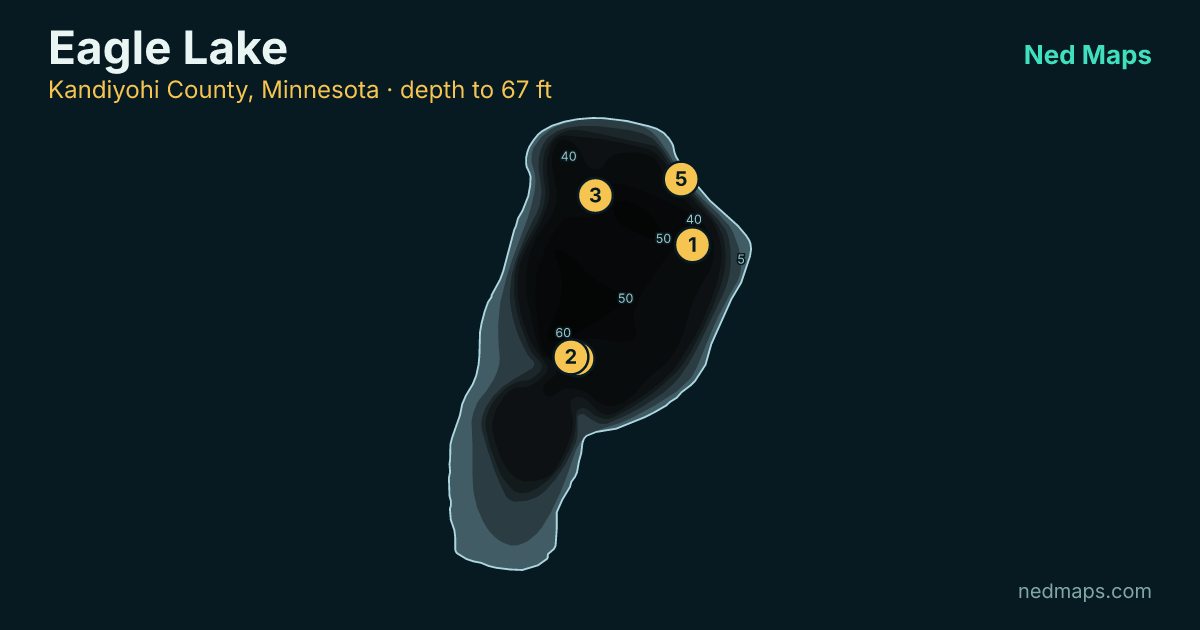
Eagle Lake depth map
Within 30 miles
Nearby lakes
- Point Lake · 174 ac · 1.1 mi
- Long Lake · 1,573 ac · 2.1 mi
- Ringo Lake · 735 ac · 3.1 mi
- Henderson Lake · 75 ac · 3.3 mi
- Elkhorn Lake · 79 ac · 3.5 mi
- Willmar Lake · 636 ac · 3.8 mi
- George Lake · 228 ac · 4.2 mi
- Foot Lake · 503 ac · 4.6 mi
Quick answers
Frequently asked questions
How deep is Eagle Lake?
Eagle Lake reaches 67 ft at its deepest point; about 32% of the lake is littoral (15 ft or shallower).
How big is Eagle Lake?
Eagle Lake covers 850 acres with about 5 miles of shoreline.
How clear is the water in Eagle Lake?
DNR Secchi readings on Eagle Lake average 6.1 ft of visibility, middling clarity for a Minnesota lake.
What fish are in Eagle Lake?
Minnesota DNR surveys (most recently 2025) record walleye, largemouth bass, smallmouth bass, northern pike, bluegill, crappie, yellow perch, channel catfish.
Is Eagle Lake stocked?
Yes. The DNR stocked walleye in 2025; the stocking table on this page lists every year back to 2016.
Does Eagle Lake have a public access?
Yes. Eagle Lake has one public access site: Eagle Lake (trailer launch).
How big do walleye get in Eagle Lake?
The biggest walleye measured in recent DNR surveys taped 27"; the size-history table on this page tracks the biggest fish in each survey back to 2014.
When was Eagle Lake last surveyed?
The Minnesota DNR last surveyed Eagle Lake in 2025, the most recent of 19 surveys on record.
Page updated .

Featured guide spot
Your guide service here
One featured guide per lake, with your photo, your writeup and a link straight to your booking page. Free through December 31, 2026.
Then $20 a month from January. Cancel any time.
The live map adds today's conditions and ranked spots for Eagle Lake, plus a trip plan you can share:
Open Eagle Lake on the live map → Fished it lately? Write a report