Minnesota · Kandiyohi County
Point Lake Fishing guide
Point Lake covers 174 acres in Kandiyohi County, Minnesota, reaching 32 ft at its deepest point. Average water clarity runs about 7.3 ft. The Minnesota DNR has surveyed the lake 12 times, most recently in 2025, with walleye, largemouth bass, northern pike and bluegill in the nets.
DNR survey data
Fish species
Largemouth bassLast stocked 2023Present, stocked7.5per seine haul8"Typical18"Biggest
Lengths measured · 23 fish
Recent · 2025Lengths measured · 23 fish
2025Lengths measured · 5003 fish
2023Lengths measured · 1 fish
2020Only 1 fish measured that year — too few to read as a shape.
Lengths measured · 135 fish
2014Northern pikePresent1.3per trap net19"Typical21"Biggest
Lengths measured · 20 fish
Recent · 2025Lengths measured · 20 fish
2025Lengths measured · 9 fish
2023Only 9 fish measured that year — too few to read as a shape.
Lengths measured · 18 fish
2020Lengths measured · 16 fish
2014BluegillLast stocked 2024One of the best around76per trap net3"Typical10"Biggest
Lengths measured · 1192 fish
Recent · 2023 + 2025Lengths measured · 684 fish
2025Lengths measured · 508 fish
2023Lengths measured · 402 fish
2020Lengths measured · 604 fish
2014CrappieLast stocked 2025Just a few1.3per trap net7"Typical11"Biggest
Lengths measured · 13 fish
Recent · 2025Lengths measured · 13 fish
2025Lengths measured · 5 fish
2023Only 5 fish measured that year — too few to read as a shape.
Lengths measured · 4 fish
2020Only 4 fish measured that year — too few to read as a shape.
Yellow perchLast stocked 2025Present, stocked2.8per seine haul8"Typical12"Biggest
Lengths measured · 12 fish
Recent · 2025Lengths measured · 12 fish
2025Lengths measured · 1 fish
2023Only 1 fish measured that year — too few to read as a shape.
Lengths measured · 8 fish
2020Only 8 fish measured that year — too few to read as a shape.
Lengths measured · 126 fish
2014Rates come from standard DNR survey gear (gill nets, trap nets, electrofishing), judged against statewide benchmarks for the same gear, so the same number of fish per net can read differently for two species. Where the standard gear can't count a species reliably, only presence and size are listed. Typical is the middle fish of those measured. Open a row for the full length spread, survey by survey.
How to fish Point Lake through the year
Walleye
- Spring
- Walleye are shallow, on and just off the spawning flats and the first green weeds.
- Early summer
- Walleye are setting up on the outside weed edge, points and shallow structure.
- Summer
- Walleye are working the weed edge, points and any wind-blown structure. With 71% of this lake 15 ft or shallower, the weed edge is the main event.
- Fall
- Walleye are packing onto the sharpest breaks and points as the water cools, in big schools with short windows.
Largemouth bass
- Spring
- Largemouth are moving up into the warming bays and flats, staging around wood, docks and new weeds to spawn.
- Early summer
- Largemouth are on the shallow spawning flats and protected bays, where beds go on firm bottom next to isolated cover.
- Summer
- Largemouth are in and along the weeds: cabbage and milfoil edges, matted cover and shade. With 71% of this lake 15 ft or shallower, the weed edge is the main event.
- Fall
- Largemouth are chasing bait back onto the flats and into the remaining green weeds, feeding hard and shallow before the freeze.
Season patterns for each species. Open the live map for today's wind, light and water temp.
Size history
Biggest fish by survey year
| Survey year | Walleye | Largemouth bass | Northern pike |
|---|---|---|---|
| 2025 | 18" | 14" | 21" |
| 2023 | — | 18" | 14" |
| 2020 | 24" | 14" | 33" |
| 2014 | 20" | 19" | 28" |
| 2009 | 23" | 19" | 32" |
| 2004 | 22" | 18" | 32" |
| 2000 | 20" | 18" | 30" |
| 1995 | 21" | 18" | 30" |
Longest fish measured by DNR survey crews in each year's nets. Survey gear samples the population, so the lake usually holds larger fish than any survey measured.
Suggested tackle
What to bring
Top presentations for this lake's structure and clarity:
Walleye · Live bait

Live-Bait (Lindy) Rig + Leech/Crawler
jumbo leech or half a nightcrawler
Walleye · Trolling
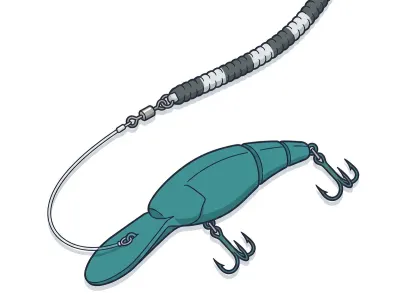
Leadcore Line + Crankbaits
4–5" mid-diving crankbait behind a long leadcore run
Largemouth bass · Soft plastics
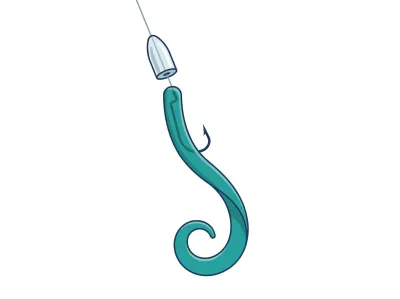
Texas-Rigged Worm
7" ribbon-tail or straight-tail plastic worm
Largemouth bass · Soft plastics
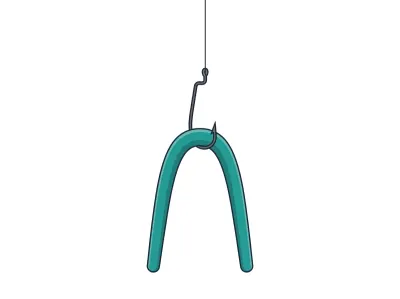
Wacky-Rigged Stickworm
5" stickworm
Northern pike · Soft plastics
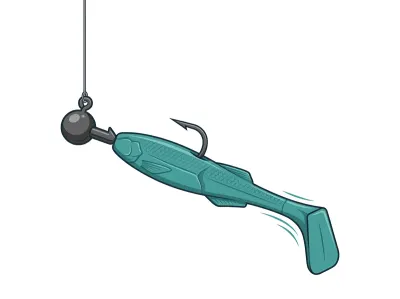
Paddletail Swimbait on Jighead
4–5" paddletail swimbait on a ball-head swimbait jighead
Northern pike · Muskie & pike
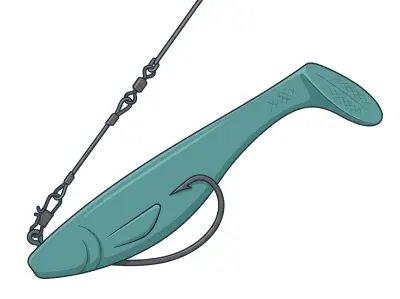
Soft Rubber (Bull Dawg / Medusa)
10" soft rubber body bait
Full setups, including hooks, weights and line, are on the live map. As an Amazon Associate I earn from qualifying purchases.
DNR stocking records
Stocking history
| Year | Species | Stocked |
|---|---|---|
| 2025 | Black Crappie | 2,925 yearlings |
| 2025 | Walleye | 51,135 fry · 210 fingerlings · 151 yearlings · 15 adults |
| 2025 | Yellow Perch | 4,005 yearlings · 375 adults |
| 2024 | Black Crappie | 3,193 yearlings · 70 adults |
| 2024 | Bluegill Sunfish | 87 adults |
| 2024 | BNS | 1,300 adults |
| 2024 | BOF | 30 adults |
| 2024 | BST | 2,050 adults |
| 2024 | IOD | 900 adults |
| 2024 | Walleye | 35 yearlings · 75 adults |
| 2024 | White Sucker | 31 yearlings |
| 2024 | Yellow Perch | 167 adults |
Stocking records before 2024 omitted.
MN DNR · in their words
From the 2025 survey
A targeted survey was conducted on Point Lake during mid-July to early September of 2025. The 2025 survey consisted of standard summer trapnets for sampling all fish species, summer shoreline seining for near shore fish, and fall night electrofishing for young of year "YOY" (fingerling sized) Walleye. A targeted survey is generally used for sampling a specific kind of fish or time of year (i.e. spawning season, fall season, etc.) unlike a standard survey which samples a wider range of fish species during the summer months using standard methodology (i.e. standard time of year, set sampling stations, taking water clarity readings and oxygen/temperature profiles, etc.) and gears (i.e. lake survey gillnets, trapnets and possibly spring electrofishing for Largemouth Bass).
Point is a small (174 acres), moderately deep (32 feet maximum), and moderately productive lake located in Kandiyohi County. Point is part of the Hawk Creek Watershed. A small island is present in addition to numerous standing dead hardwood trees in the water due to higher water levels in recent years. An extensive winterkill occurred in Point Lake during the 1996-1997 winter due to low oxygen levels. Other previous winterkills occurred during the 1974-75 and 1988-89 winters during low water years. Winterkill is generally rare for Point Lake, but it is susceptible during winters with high snowfall accumulations. Water levels were low during 2020-2023. A significant winterkill occurred during January-March of 2023 on Point Lake. High snowfall events and a prolonged winter (mid-March ice out) contributed to low winter oxygen levels in many shallow area lakes during 2023. Water levels returned to normal in the summer of 2024. Water levels were below normal during the spring, but above normal by the summer of 2025. The immediate watershed is comprised mostly of hardwoods, wetlands, highway frontage, and 23 residential homes (2020 survey). There are four small inlets and one outlet to Eagle Lake. The outlet culvert has a movable gate valve cover. Fish movement is minimal to none between Point and Eagle due to fish barriers and the steep drainage slope of the culvert. Total phosphorus was low to moderate (0.028 ppm) on June 8, 2009. Water clarity was good (average satellite calculated value=10.56 feet) for Point Lake during July of 2025. Aquatic vegetation (sago pondweed, muskgrass "chara", northern milfoil, hardstem bulrush and coontail) is usually abundant throughout the lake. Shoalwater substrates are mostly silt, sand and gravel. Pelicans and cormorants are commonly observed on the lake. The DNR Spicer Fisheries Office manages Point Lake for Largemouth Bass, Black Crappie, Bluegill, Northern Pike, and Walleye.
Read the full DNR narrative
A variety of nearshore fish species (i.e., Iowa Darter, Golden Shiner, Fathead Minnow, Bluntnose Minnow, Blackchin Shiner, Blacknose Shiner, Brook Stickleback, Northern Redbelly Dace, Tadpole Madtom and Central Mudminnow) and larger fish species (i.e., Bowfin, Black Crappie, Bluegill, Largemouth Bass, Walleye, White Sucker, Yellow Bullhead and Yellow Perch) were stocked after the winterkill during 2023 and 2024.
Targeted surveys were also conducted in 2023 (Fall electrofishing and trapnetting) and 2024 (Fall electrofishing and shoreline seining) following the 2023 winterkill. In the 2023 targeted survey, the only fish sampled from 2023 late-May 1/2" mesh trapnets were 1 Green Sunfish, 1 Black Bullhead and 8 Bluegill (probably stocked). A fall electrofishing survey was conducted on 9/12/2023 to assess young of year "YOY" Walleye numbers due to the 2023 fry stocking. No YOY Walleye were observed in the 2023 fall night electrofishing survey. We observed other fish species present in the fall electrofishing survey which included 10 Northern Pike (7-15 inches), 3 adult Largemouth Bass, numerous YOY Largemouth Bass (3+ inches), 4 Adult Bullhead (7-12 inches), 25 YOY Bullhead, 1 Yellow Perch (4 inches), 5 YOY Black Crappie (4 inches) and numerous YOY Bluegill (1-3 inches).
In the 2024 targeted survey, moderate numbers of YOY Bluegill (221 fish) were captured in shoreline seining. Low numbers of adult Brown Bullhead, adult Yellow Bullhead, Young of Year "YOY" Largemouth Bass, adult Largemouth Bass, YOY Yellow Perch, YOY Green Sunfish, YOY Hybrid Sunfish and adult Bluegill were also caught in the seine hauls. We observed abundant numbers of Bluegill (1-6 inches) and Largemouth Bass (3-6 inches); moderate numbers of Northern Pike (16-20 inches), Yellow and Brown Bullhead (8-12 inches); low numbers of Yellow Perch, Black Crappie, Rock bass and adult Largemouth Bass in the 2024 September night fall electrofishing survey. No YOY or yearling/adult Walleye were captured in the 2024 September fall night electrofishing survey. Walleye fry were not stocked in 2024.
In the 2025 targeted survey, we captured 9 fish species by shoreline seining. These species included Iowa Darter, Johnny Darter, Blacknose shiner, Bluegill (YOY and age 1+ fish), Green Sunfish, Hybrid Sunfish (YOY), Largemouth Bass (YOY and age 1+ fish), Pumpkinseed Sunfish and Yellow Perch (YOY and age 1+ fish). Both Largemouth Bass and Bluegill were abundant in the 2025 shoreline seine hauls.
Black Crappie abundance moderate in 2025 (1.33 fish/trapnet), but above the 2020 survey (0.44 fish/trapnet, 0.15 pounds average size). The Black Crappie historical average catch rate is 0.22 fish/trapnet. The 2025 Black Crappie average size was small (0.19 pounds and 6.38 inches) from trapnets. Black Crappie catch rate was 3.00 fish/hour with an average length of 8.23 inches from 2025 fall electrofishing. Adult pre-spawn Black Crappie were stocked during 2001 (114 fish, 38 pounds), 2002 (158 fish, 79 pounds) in Point Lake. Black Crappie were also stocked in 2023 (50 yearlings, 5 pounds; 70 adults 35 pounds), 2024 (3,193 yearlings, 103 pounds; 70 adults, 35 pounds) and 2025 (2,925 yearlings, 162.5 pounds) after the 2023 winterkill.
Bluegill abundance was high in 2025 (76.00 fish/trapnet). Bluegill abundance was 43.22 fish/trapnet in 2020. The Bluegill historical average catch rate is 44.30 fish/trapnet. The 2025 Bluegill average size was small (0.05 pounds and 4.00 inches) from trapnets. The Bluegill historical average weight is 0.11 pounds from trapnets. The catch rate of quality size (6.00 inches and larger) Bluegill was low (1.89 fish/trapnet) in 2025.
Largemouth Bass abundance was high (21.00 fish/hour) in 2025 fall electrofishing survey. The Largemouth Bass average length was moderate (9.61 inches) from 2025 fall electrofishing. Largemouth Bass abundance was moderate (1.00 fish/trapnet, 0.34 pounds average weight) in 2025 trapnets. The Largemouth Bass historical average catch rate is 1.06 fish/trapnet. The largest Largemouth Bass captured was 14.57 inches in 2025.
Northern Pike abundance was high (1.33 fish/trapnet) in 2025 trapnets. The Northern Pike historical average catch rate is 0.54 fish/trapnet. The 2025 Northern Pike average size was small (1.31 pounds and 18.36 inches) from trapnets. The Northern Pike historical average weight is 2.99 pounds from trapnets. Northern Pike catch rate was high (12.00 fish/hour) with a small average length of 18.85 inches from 2025 fall electrofishing. The largest Northern Pike captured was 21.81 inches in 2025.
Walleye abundance was low in 2025 (0.67 fish/trapnet). Walleye abundance was low in 2020 survey (0.22 fish/trapnet). The Walleye historical average catch rate is 0.81 fish/trapnet. The 2025 Walleye average size was moderate (1.28 pounds and 15.49 inches) from trapnets. The Walleye historical average weight is 1.54 pounds from trapnets. No YOY Walleye were captured in the 2025 fall electrofishing survey. Moderate numbers of Walleye adults (3.00 fish/hour, 16.34 inches average) were captured in the 2025 fall electrofishing survey. Walleye growth rates were normal for ages 1-2, but below normal for age 3-5. Walleye year classes present were from 2023, 2022 and 2020 with each comprising 33.3% of the 2025 Walleye trapnet catch. The largest Walleye captured was 18.94 inches in 2025. Recent Walleye stockings occurred in 2020 (532 yearlings, 283 pounds; 50 adults, 100 pounds), 2022 (8,468 fingerlings, 292 pounds), 2023 (50,842 fry; 2,933 fingerlings, 118.5 pounds; 101 yearlings, 61 pounds; 10 adults, 20 pounds), 2024 (35 yearlings, 9 pounds; 75 adults, 150 pounds) and 2025 (51,135 fry).
Yellow Perch abundance was moderate (1.33 fish/trapnet) in 2025. Yellow Perch abundance was 0.56 fish/trapnet in 2020. The Yellow Perch historical average catch rate is 1.39 fish/trapnet. The 2025 Yellow Perch average size was large (0.29 pounds and 8.01 inches) from trapnets. The Yellow Perch historical average weight is 0.19 pounds from trapnets. Recent Yellow Perch stockings occurred in 2021 (4,602 adults, 366 pounds), 2023 (1,245 adults, 143.5 pounds), 2024 (167 adults, 16 pounds) and 2025 (4,005 yearlings, 222.5 pounds; 375 adults, 125 pounds).
Black Bullhead were absent in 2025. Black Bullhead abundance was low (0.11 fish/trapnet) in 2020 survey. The Black Bullhead historical average catch rate is 84.34 fish/trapnet in Point.
Brown Bullhead abundance was moderate (4.67 fish/trapnet) in 2025. Brown Bullhead average weight was small (0.16 pounds) in 2025 trapnets. Brown Bullhead have been documented in previous Point Lake surveys. Yellow Bullhead abundance was low (0.89 fish/trapnet) in 2025 trapnets. Yellow Bullhead average weight was large (0.79 pounds) in 2025 trapnets.
Current fish management activities on Point include protecting the important aquatic habitats such as emergent and submergent vegetation through the permit process, preventing and educating about the spread of invasive species, encouraging land owners to implement best management practices in the watershed, periodic winter oxygen monitoring, and stocking various fish species as warranted. All fish species in Point Lake will be surveyed again in the summer of 2030.
Narrative text from the Minnesota DNR lake survey.
Recent reports
Point Lake fishing reports
Recent reports on Point Lake from guides, tournaments and regular anglers. Anything posted in the last two weeks also bumps the matching spots on the live map, so you'll see a "matches a recent report" tag on them.
Public water access
Getting on the water
- Point Lake (trailer launch)
DNR bathymetry
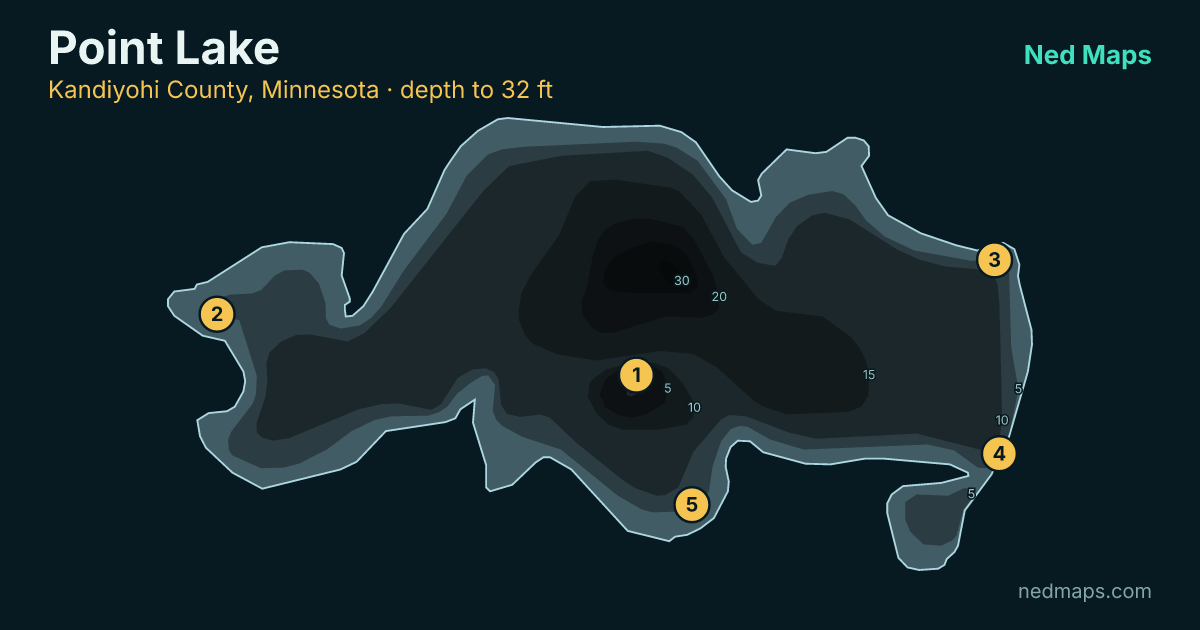
Point Lake depth map
Within 30 miles
Nearby lakes
- Long Lake · 1,573 ac · 1.1 mi
- Eagle Lake · 850 ac · 1.1 mi
- Ringo Lake · 735 ac · 2.3 mi
- Henderson Lake · 75 ac · 2.7 mi
- George Lake · 228 ac · 3.7 mi
- Elkhorn Lake · 79 ac · 3.9 mi
- East Solomon Lake · 658 ac · 4.1 mi
- Willmar Lake · 636 ac · 4.3 mi
Quick answers
Frequently asked questions
How deep is Point Lake?
Point Lake reaches 32 ft at its deepest point; about 71% of the lake is littoral (15 ft or shallower).
How big is Point Lake?
Point Lake covers 174 acres with about 3.3 miles of shoreline.
How clear is the water in Point Lake?
DNR Secchi readings on Point Lake average 7.3 ft of visibility, middling clarity for a Minnesota lake.
What fish are in Point Lake?
Minnesota DNR surveys (most recently 2025) record walleye, largemouth bass, northern pike, bluegill, crappie, yellow perch, rock bass.
Is Point Lake stocked?
Yes. The DNR stocked black crappie, walleye and yellow perch in 2025; the stocking table on this page lists every year back to 2024.
Does Point Lake have a public access?
Yes. Point Lake has one public access site: Point Lake (trailer launch).
How big do walleye get in Point Lake?
The biggest walleye measured in recent DNR surveys taped 18"; the size-history table on this page tracks the biggest fish in each survey back to 1995.
When was Point Lake last surveyed?
The Minnesota DNR last surveyed Point Lake in 2025, the most recent of 12 surveys on record.
Page updated .

Featured guide spot
Your guide service here
One featured guide per lake, with your photo, your writeup and a link straight to your booking page. Free through December 31, 2026.
Then $20 a month from January. Cancel any time.
The live map adds today's conditions and ranked spots for Point Lake, plus a trip plan you can share:
Open Point Lake on the live map → Fished it lately? Write a report