Minnesota · Kandiyohi County
Long Lake Fishing guide
Long Lake sits in Kandiyohi County, Minnesota, and covers 325 acres, reaching 46 ft at its deepest point. Secchi readings average around 13.7 ft of visibility. The Minnesota DNR has surveyed the lake 17 times, most recently in 2025, with walleye, largemouth bass, northern pike and bluegill in the nets.
DNR survey data
Fish species
WalleyeLast stocked 2025Fair numbers2per gill net17"Typical29"Biggest
Lengths measured · 19 fish
Recent · 2021 + 2023Lengths measured · 13 fish
2023Lengths measured · 6 fish
2021Only 6 fish measured that year — too few to read as a shape.
Lengths measured · 6 fish
2018Only 6 fish measured that year — too few to read as a shape.
Lengths measured · 9 fish
2013Only 9 fish measured that year — too few to read as a shape.
Largemouth bassPresent0.5per trap net7"Typical11"Biggest
Lengths measured · 20 fish
Recent · 2021 + 2023 + 2025Lengths measured · 2 fish
2025Only 2 fish measured that year — too few to read as a shape.
Lengths measured · 17 fish
2023Lengths measured · 1 fish
2021Only 1 fish measured that year — too few to read as a shape.
Lengths measured · 5 fish
2018Only 5 fish measured that year — too few to read as a shape.
Northern pikeGood numbers13.3per gill net19"Typical28"Biggest
Lengths measured · 53 fish
Recent · 2021 + 2023 + 2025Lengths measured · 6 fish
2025Only 6 fish measured that year — too few to read as a shape.
Lengths measured · 42 fish
2023Lengths measured · 5 fish
2021Only 5 fish measured that year — too few to read as a shape.
Lengths measured · 30 fish
2018BluegillJust a few18.4per trap net7"Typical10"Biggest
Lengths measured · 556 fish
Recent · 2021 + 2023 + 2025Lengths measured · 184 fish
2025Lengths measured · 162 fish
2023Lengths measured · 210 fish
2021Lengths measured · 221 fish
2018CrappieJust a few6.9per trap net9"Typical12"Biggest
Lengths measured · 206 fish
Recent · 2021 + 2023 + 2025Lengths measured · 59 fish
2025Lengths measured · 12 fish
2023Lengths measured · 135 fish
2021Lengths measured · 20 fish
2018Rates come from standard DNR survey gear (gill nets, trap nets, electrofishing), judged against statewide benchmarks for the same gear, so the same number of fish per net can read differently for two species. Where the standard gear can't count a species reliably, only presence and size are listed. Typical is the middle fish of those measured. Open a row for the full length spread, survey by survey.
How to fish Long Lake through the year
Northern pike
- Spring
- Pike are in the shallow bays and along new weed growth. At 13.7 ft of clarity, fish them deeper and lighter than usual.
- Early summer
- Pike are on the outside weed edge and points.
- Summer
- Pike are on the deep weed edge and points near the coolest water they can find. On a lake that drops to 46 ft, check the deep edge of that structure too.
- Fall
- Pike are on the last green weeds and the breaks beside them, feeding heavily as the water drops.
Walleye
- Spring
- Walleye are shallow, on and just off the spawning flats and the first green weeds. At 13.7 ft of clarity, fish them deeper and lighter than usual.
- Early summer
- Walleye are setting up on the outside weed edge, points and shallow structure.
- Summer
- Walleye are working the weed edge, points and any wind-blown structure. On a lake that drops to 46 ft, check the deep edge of that structure too.
- Fall
- Walleye are packing onto the sharpest breaks and points as the water cools, in big schools with short windows.
Season patterns for each species. Open the live map for today's wind, light and water temp.
Size history
Biggest fish by survey year
| Survey year | Northern pike | Walleye | Largemouth bass |
|---|---|---|---|
| 2025 | 28" | — | 11" |
| 2023 | 27" | 26" | 11" |
| 2021 | 22" | 29" | 7" |
| 2018 | 29" | 26" | 16" |
| 2016 | — | — | 18" |
| 2013 | 27" | 22" | 20" |
| 2008 | 38" | 28" | 18" |
| 2005 | 31" | — | 19" |
Longest fish measured by DNR survey crews in each year's nets. Survey gear samples the population, so the lake usually holds larger fish than any survey measured.
Suggested tackle
What to bring
Top presentations for this lake's structure and clarity:
Northern pike · Soft plastics
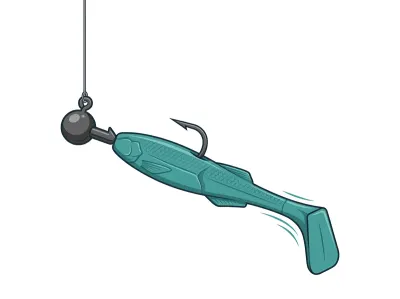
Paddletail Swimbait on Jighead
4–5" paddletail swimbait on a ball-head swimbait jighead
Northern pike · Jigs & bladed
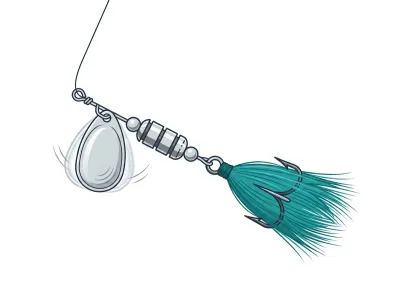
Inline Spinner (Mepps/Blue Fox)
#2–#4 in-line spinner
Walleye · Live bait

Live-Bait (Lindy) Rig + Leech/Crawler
jumbo leech or half a nightcrawler
Walleye · Trolling
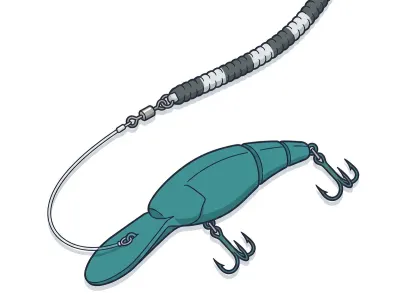
Leadcore Line + Crankbaits
4–5" mid-diving crankbait behind a long leadcore run
Largemouth bass · Soft plastics
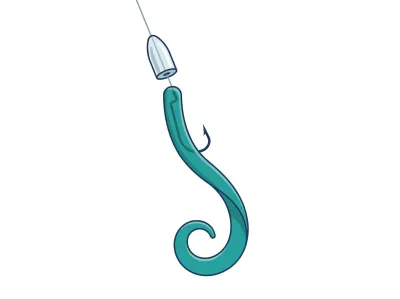
Texas-Rigged Worm
7" ribbon-tail or straight-tail plastic worm
Largemouth bass · Soft plastics
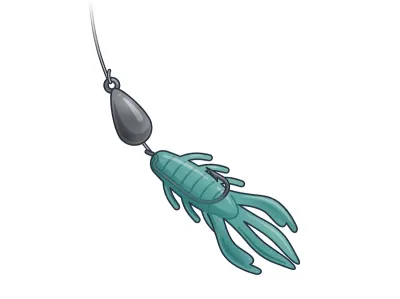
Free Rig
Creature bait or magnum finesse worm
Full setups, including hooks, weights and line, are on the live map. As an Amazon Associate I earn from qualifying purchases.
DNR stocking records
Stocking history
| Year | Species | Stocked |
|---|---|---|
| 2025 | Walleye | 81,816 fry · 393 fingerlings · 112 yearlings · 2 adults |
| 2024 | Walleye | 458 fingerlings · 176 yearlings |
| 2023 | Walleye | 250 yearlings · 25 adults |
| 2021 | Walleye | 600 fingerlings |
| 2020 | Walleye | 254 yearlings · 36 adults |
| 2019 | Walleye | 3,930 fingerlings |
| 2018 | Walleye | 1,356 yearlings · 16 adults |
| 2016 | Walleye | 169 adults |
MN DNR · in their words
From the 2025 survey
A targeted survey was conducted on Long Lake during mid-May of 2025. Ten standard lake survey trapnets were set at historical stations to target Bluegill and Black Crappie. Special regulations for several Spicer Area lakes (Nest, Long, Diamond, George and Florida) including Long Lake entail reduced bag limits (i.e., 5 or 10 fish) for Bluegill. George is the only lake that has a Crappie special regulation (i.e., 5 fish) in the Spicer Area. A Bluegill bag limit of 10 fish was enacted for Long Lake in May of 2021. A targeted survey is generally used for sampling a specific kind of fish or time of year (i.e., spawning season, fall season, etc.) unlike a standard survey which samples a wider range of fish species during the summer months using standard methodology (i.e., standard time of year, set sampling stations, taking water clarity readings and oxygen/temperature profiles, etc.) and gears (i.e., lake survey gillnets, trapnets and possibly spring electrofishing for Largemouth Bass). Trapnet sampling of pre-spawn Bluegill during early/mid-May is preferred to summer (June-August) netting for regulation evaluation.
Long is a small (286 acres) and low to moderately productive lake located in Kandiyohi County. The maximum depth is 46 feet. Residential development (110 homes/cabins, 2013 resurvey) has occurred around the entire lake except for some south shoreline areas. There are three resort/campgrounds located adjacent to Long Lake. Hardwoods and adjacent wetlands are the dominant cover types within the immediate watershed. Nutrient runoff is limited primarily to residential lawn runoff. The outlet connects to the Middle Fork Crow Reservoir. There are two public access sites adjacent to the lake. Emergent vegetation (i.e. water lilies, bulrush, cattails, and wild rice) is abundant in Long, especially in bay and south shoreline areas. Submergent vegetation (i.e. muskgrass, coontail, various pondweed species) is abundant in the lake. Shoalwater substrates are primarily sand, gravel, detritus, muck, and rubble. Water quality was good (total phosphorus=0.017 ppm and Chlorophyll-a=7.3 ppb) on May 18, 2025. Water clarity (secchi=11.0 feet) was excellent on May 13, 2025, for Long Lake. An experimental regulation was implemented for Bass (12-inch maximum size limit) in 1997 as part of a statewide research study. The DNR decided to change the Bass regulation in December 2005 to a DNR state toolbox regulation (a 12-inch maximum size limit with one Bass over 20 inches allowed). The new Bass regulation took effect on May 27, 2006. This regulation was monitored, and a public meeting was held at the end of September 2011 to get public input regarding the special regulation on Bass. The DNR decided to change the Bass regulation in December 2011 (all Largemouth Bass from 14 inches to 20 inches to be immediately released with one Bass over 20 inches allowed in possession). The new Bass regulation has been in effect since May 26, 2012. Long is a popular fishing lake for Largemouth Bass, Bluegill and Black Crappie, and Northern Pike. Anglers also seek Walleye occasionally. Invasive species found in Long Lake during 2023 include Zebra Mussels and Starry Stonewort.
Read the full DNR narrative
Catchability of various species (i.e., Bluegill, Black Crappie, Walleye, etc.) is often different by season. Summer historical average catch rates should be cautiously regarded when compared to spring and fall catch rates regarding relative abundance. Large sized Black Crappie and Bluegill are generally more susceptible to capture in trapnets during May and September compared to the summer months.
Black Crappie catch rate was low in 2025 mid-May (5.90 fish/trapnet) compared to the 2021 mid-May catch rate of 13.50 fish/trapnet. The Black Crappie summer trapnet historical average catch rate is 1.91 fish/trapnet. The 2025 mid-May Black Crappie average size was moderate (0.45 pounds, 9.14 inches) but only slightly smaller compared to 2021 mid-May survey (0.55 pounds and 9.84 inches) from trapnets. The Black Crappie historical average weight is small (0.29 pounds) from summer trapnets. The 2025 mid-May catch rate of quality size (8.00 inches and larger) Black Crappie was low (3.90 fish/trapnet). The 2025 mid-May catch rate of preferred size (10.00 inches and larger) Black Crappie was also low (1.80 fish/trapnet). Black Crappie growth rates were below normal for ages 1-2 and normal for ages 3-7. The 2022 and 2021 year classes each comprised 37% of the 2025 Black Crappie trapnet catch. The largest Black Crappie captured was 11.77 inches.
Bluegill catch rate was moderate in 2025 mid-May (18.40 fish/trapnet) and similar to 2021 mid-May catch rate (21.00 fish/trapnet). The Bluegill summer historical catch rate is 39.79 fish/trapnet. The 2025 mid-May Bluegill average size was large (0.35 pounds, 7.28 inches) and similar to 2021 mid-May survey (0.38 pounds and 7.60 inches) from trapnets. The Bluegill historical average weight from summer trapnets (0.14 pounds) was smaller than mid-May trapnet surveys. The 2025 catch rate of quality size (6.00 inches and larger) Bluegill was low (13.50 fish/trapnet). The 2025 catch rate of preferred size (8.00 inches and larger) Bluegill was moderate (7.50 fish/trapnet). Bluegill growth rates were below normal for ages 1-3, near normal for ages 4-5, and above normal for ages 6-8. Approximately 45% of Bluegill captured were 7-10 years old. The largest Bluegill captured was 10.08 inches in 2025.
Pumpkinseed Sunfish numbers were low in 2025 mid-May trapnets (3.10 fish/trapnet) compared to the summer historical average (3.75 fish/trapnet). The 2025 Pumpkinseed Sunfish average size was large (0.29 pounds and 6.85 inches) from trapnets. The largest Pumpkinseed captured was 7.87 inches in 2025.
Hybrid Sunfish numbers were low in 2025 mid-May trapnets (1.70 fish/trapnet) compared to the summer historical average (4.31 fish/trapnet). The 2025 Hybrid Sunfish average size was large (0.47 pounds and 7.92 inches) from trapnets. The largest Hybrid Sunfish captured was 9.53 inches in 2025.
Current fish management activities on Long Lake include monitoring the fish population on a periodic basis, protecting aquatic vegetation through the permit process, preventing and educating about the spread of invasive species, evaluating the new bass regulation, and stocking various fish species as warranted. The Long Lake fishery will be surveyed in 2028 for Largemouth Bass by spring night electrofishing, mid-May trapnets and late-June gillnets all other fish species.
Narrative text from the Minnesota DNR lake survey.
Recent reports
Long Lake fishing reports
Recent reports on Long Lake from guides, tournaments and regular anglers. Anything posted in the last two weeks also bumps the matching spots on the live map, so you'll see a "matches a recent report" tag on them.
Public water access
Getting on the water
- Long Lake, Hawick (E) (trailer launch)
- Long Lake, Hawick (W) (trailer launch)
DNR bathymetry
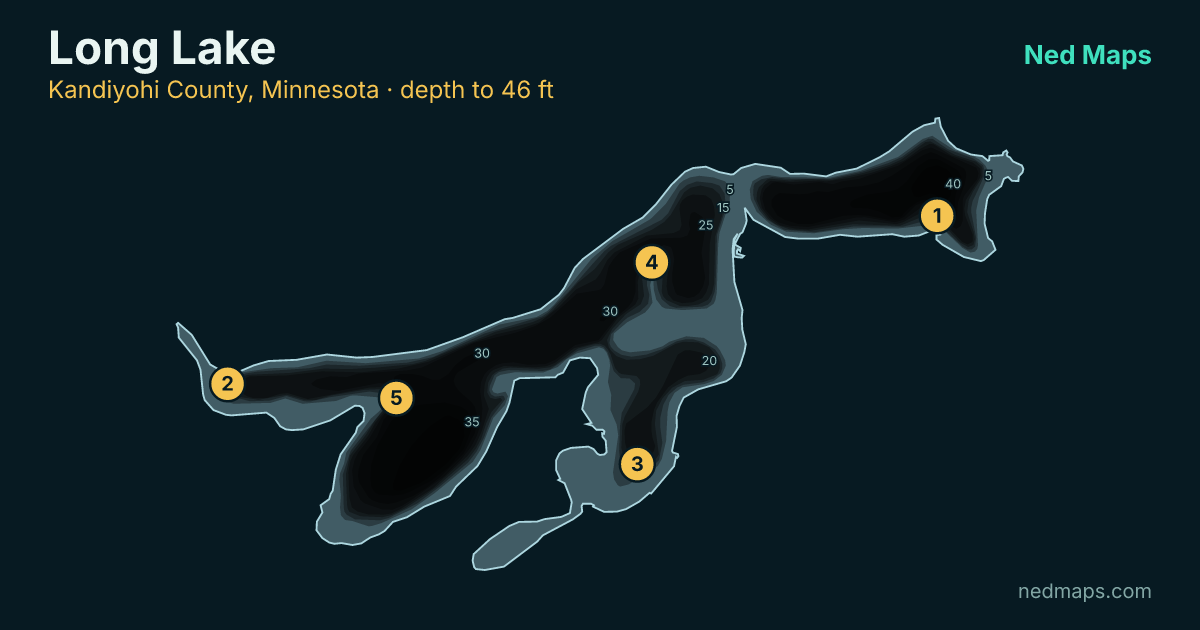
Long Lake depth map
Within 30 miles
Nearby lakes
- Monongalia Lake · 2,290 ac · 3.3 mi
- Calhoun Lake · 647 ac · 4 mi
- Green Lake · 5,569 ac · 5.2 mi
- Nest Lake · 969 ac · 6.5 mi
- Koronis (main lake) · 2,968 ac · 7.6 mi
- George Lake · 228 ac · 8.1 mi
- Andrew Lake · 759 ac · 8.7 mi
- Elkhorn Lake · 79 ac · 8.7 mi
Quick answers
Frequently asked questions
How deep is Long Lake?
Long Lake reaches 46 ft at its deepest point; about 39% of the lake is littoral (15 ft or shallower).
How big is Long Lake?
Long Lake covers 325 acres with about 6.9 miles of shoreline.
How clear is the water in Long Lake?
DNR Secchi readings on Long Lake average 13.7 ft of visibility, clear water for a Minnesota lake.
What fish are in Long Lake?
Minnesota DNR surveys (most recently 2025) record walleye, largemouth bass, northern pike, bluegill, crappie, yellow perch.
Is Long Lake stocked?
Yes. The DNR stocked walleye in 2025; the stocking table on this page lists every year back to 2016.
Does Long Lake have a public access?
Yes. Long Lake has 2 public access sites, including Long Lake, Hawick (E) (trailer launch).
How big do northern pike get in Long Lake?
The biggest northern pike measured in recent DNR surveys taped 28"; the size-history table on this page tracks the biggest fish in each survey back to 2005.
When was Long Lake last surveyed?
The Minnesota DNR last surveyed Long Lake in 2025, the most recent of 17 surveys on record.
Page updated .

Featured guide spot
Your guide service here
One featured guide per lake, with your photo, your writeup and a link straight to your booking page. Free through December 31, 2026.
Then $20 a month from January. Cancel any time.
The live map adds today's conditions and ranked spots for Long Lake, plus a trip plan you can share:
Open Long Lake on the live map → Fished it lately? Write a report