Minnesota · Kandiyohi County
Green Lake Fishing guide
Green Lake covers 5,569 acres in Kandiyohi County, Minnesota, reaching 110 ft at its deepest point. Secchi readings average around 10 ft of visibility. The Minnesota DNR has surveyed the lake 44 times, most recently in 2025, with walleye, largemouth bass, smallmouth bass and northern pike in the nets.
DNR survey data
Fish species
WalleyeLast stocked 2025Excellent numbers9.1per gill net10"Typical28"Biggest
Lengths measured · 1166 fish
Recent · 2021 + 2022 + 2023 + 2024 + 2025Lengths measured · 313 fish
2025Lengths measured · 267 fish
2024Lengths measured · 259 fish
2023Lengths measured · 232 fish
2022Largemouth bassJust a few4.3per hr (electrofishing)6"Typical18"Biggest
Lengths measured · 146 fish
Recent · 2021 + 2022 + 2023 + 2024 + 2025Lengths measured · 37 fish
2025Lengths measured · 16 fish
2024Lengths measured · 28 fish
2023Lengths measured · 27 fish
2022Smallmouth bassJust a few7.9per hr (electrofishing)8"Typical20"Biggest
Lengths measured · 156 fish
Recent · 2021 + 2022 + 2023 + 2024 + 2025Lengths measured · 18 fish
2025Lengths measured · 30 fish
2024Lengths measured · 27 fish
2023Lengths measured · 39 fish
2022Northern pikeJust a few2.8per gill net22"Typical35"Biggest
Lengths measured · 199 fish
Recent · 2021 + 2022 + 2023 + 2024 + 2025Lengths measured · 43 fish
2025Lengths measured · 48 fish
2024Lengths measured · 37 fish
2023Lengths measured · 32 fish
2022Present in recent DNR surveys.
BluegillGood numbers52.1per trap net4"Typical10"Biggest
Lengths measured · 3996 fish
Recent · 2021 + 2022 + 2023 + 2024 + 2025Lengths measured · 425 fish
2025Lengths measured · 324 fish
2024Lengths measured · 732 fish
2023Lengths measured · 1934 fish
2022CrappieJust a few3.4per trap net9"Typical13"Biggest
Lengths measured · 275 fish
Recent · 2021 + 2022 + 2023 + 2024 + 2025Lengths measured · 42 fish
2025Lengths measured · 77 fish
2024Lengths measured · 89 fish
2023Lengths measured · 45 fish
2022Yellow perchLast stocked 2016Good numbers5.8per gill net6"Typical9"Biggest
Lengths measured · 357 fish
Recent · 2021 + 2022 + 2023 + 2024 + 2025Lengths measured · 47 fish
2025Lengths measured · 165 fish
2024Lengths measured · 67 fish
2023Lengths measured · 41 fish
2022Rock bassOne of the best around10.2per gill net6"Typical13"Biggest
Lengths measured · 852 fish
Recent · 2021 + 2022 + 2023 + 2024 + 2025Lengths measured · 166 fish
2025Lengths measured · 285 fish
2024Lengths measured · 88 fish
2023Lengths measured · 197 fish
2022Rates come from standard DNR survey gear (gill nets, trap nets, electrofishing), judged against statewide benchmarks for the same gear, so the same number of fish per net can read differently for two species. Where the standard gear can't count a species reliably, only presence and size are listed. Typical is the middle fish of those measured. Open a row for the full length spread, survey by survey.
How to fish Green Lake through the year
Walleye
- Spring
- Walleye are shallow, on and just off the spawning flats and the first green weeds. At 10 ft of clarity, fish them deeper and lighter than usual.
- Early summer
- Walleye are setting up on the outside weed edge, points and shallow structure.
- Summer
- Walleye are working the weed edge, points and any wind-blown structure. On a lake that drops to 110 ft, check the deep edge of that structure too.
- Fall
- Walleye are packing onto the sharpest breaks and points as the water cools, in big schools with short windows.
Largemouth bass
- Spring
- Largemouth are moving up into the warming bays and flats, staging around wood, docks and new weeds to spawn. At 10 ft of clarity, fish them deeper and lighter than usual.
- Early summer
- Largemouth are on the shallow spawning flats and protected bays, where beds go on firm bottom next to isolated cover.
- Summer
- Largemouth are in and along the weeds: cabbage and milfoil edges, matted cover and shade. On a lake that drops to 110 ft, check the deep edge of that structure too.
- Fall
- Largemouth are chasing bait back onto the flats and into the remaining green weeds, feeding hard and shallow before the freeze.
Season patterns for each species. Open the live map for today's wind, light and water temp.
Size history
Biggest fish by survey year
| Survey year | Walleye | Largemouth bass | Smallmouth bass |
|---|---|---|---|
| 2025 | 26" | 11" | 19" |
| 2024 | 26" | 15" | 20" |
| 2023 | 27" | 16" | 19" |
| 2022 | 28" | 15" | 19" |
| 2021 | 28" | 18" | 18" |
| 2020 | 27" | 15" | 19" |
| 2019 | 28" | 18" | 17" |
| 2018 | 27" | 14" | 17" |
Longest fish measured by DNR survey crews in each year's nets. Survey gear samples the population, so the lake usually holds larger fish than any survey measured.
Suggested tackle
What to bring
Top presentations for this lake's structure and clarity:
Walleye · Live bait

Live-Bait (Lindy) Rig + Leech/Crawler
jumbo leech or half a nightcrawler
Walleye · Trolling
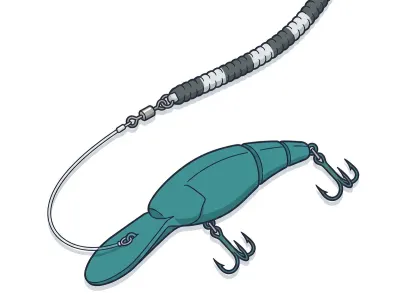
Leadcore Line + Crankbaits
4–5" mid-diving crankbait behind a long leadcore run
Largemouth bass · Soft plastics
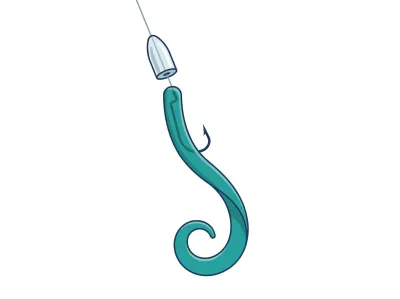
Texas-Rigged Worm
7" ribbon-tail or straight-tail plastic worm
Largemouth bass · Soft plastics
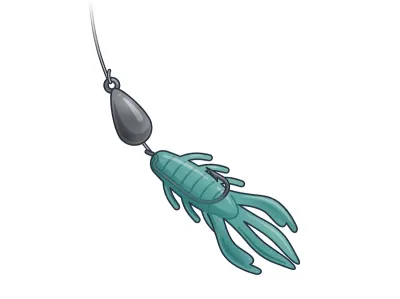
Free Rig
Creature bait or magnum finesse worm
Smallmouth bass · Soft plastics
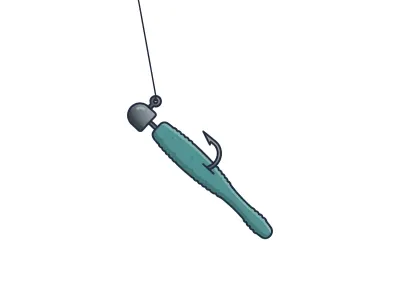
Ned Rig
2.75" finesse stickbait or craw-style Ned bait
Smallmouth bass · Soft plastics
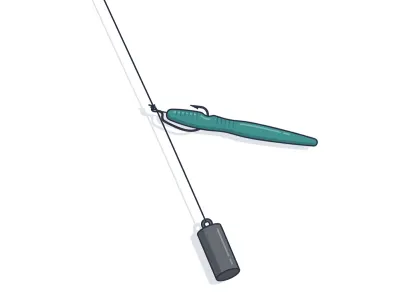
Drop Shot (Finesse Plastic)
4" finesse worm or 3" minnow-profile plastic
Full setups, including hooks, weights and line, are on the live map. As an Amazon Associate I earn from qualifying purchases.
DNR stocking records
Stocking history
| Year | Species | Stocked |
|---|---|---|
| 2025 | Walleye | 99 adults |
| 2024 | Walleye | 40 yearlings · 158 adults |
| 2023 | Walleye | 341 yearlings · 109 adults |
| 2022 | Walleye | 425 fingerlings · 342 yearlings · 115 adults |
| 2021 | Walleye | 656 fingerlings · 1,844 adults |
| 2020 | Walleye | 7,764 yearlings · 39 adults |
| 2019 | Walleye | 701 yearlings · 300 adults |
| 2018 | Walleye | 1,017,086 fry |
| 2017 | Walleye | 17,000 fingerlings · 3,936 yearlings · 192 adults |
| 2016 | Walleye | 1,022,313 fry · 20,555 fingerlings · 10,391 yearlings · 105 adults |
| 2016 | Yellow Perch | 24,000 adults |
MN DNR · in their words
From the 2025 survey
A standard survey in Green Lake was conducted during mid-September of 2025 using lake survey gillnets and trapnets. Standard surveys were done during the last week of July or first week of August prior to 2021. Targeted surveys were conducted to determine if September gillnetting would more effectively sample the Walleye population than the standard July-August surveys in Green Lake during 2017-2020. Current standard surveys have been conducted during or after the fall turnover since 2021. We set 12 gillnets at standard summer stations during mid-September of 2025. A fall night electrofishing survey was conducted on October 17, 2025, to evaluate young of year "YOY" (fingerling sized) Walleye abundance in Green Lake. A targeted Tullibee November gillnetting survey was last conducted in 2023. Creel surveys were recently conducted on Green Lake during the 2019 summer, 2019-2020 winter and 2025-2026 winter. A targeted survey is generally used for sampling a specific kind of fish or time of year (i.e. spawning season, fall season, etc.) unlike a standard survey which samples a wider range of fish species during the summer months using standard methodology (i.e. standard time of year, set sampling stations, taking water clarity readings and oxygen/temperature profiles, etc.) and gears (i.e. lake survey gillnets, trapnets and possibly spring electrofishing for Largemouth Bass).
Green is a large (5,561 acres), deep (110 feet maximum), highly developed (690 homes) and moderately productive lake located in Kandiyohi County. Green is currently infested with invasive species such as Curly-leaf Pondweed, Eurasian Watermilfoil (2000) and Zebra Mussels (2014). Green is a popular fishery for Walleye, Northern Pike, Largemouth Bass, Smallmouth Bass, Black Crappie (recent years) and Bluegill. There are approximately 48 inlets that enter Green Lake. The Middle Fork Crow River is the largest inlet and enters Green along the north shore and exits along the east side eventually flowing into Calhoun Lake. Water levels were low during 2020-2023 but were generally above normal in 2024 and 2025. Direct nutrient runoff into Green is primarily from highway runoff and residential sources, which include lake homes and the city of Spicer. There is also upstream agricultural row crop runoff that enters the Middle Fork Crow River. Total phosphorus was low (0.018 ppm) on September 25, 2025. A thermocline was present below 55 feet during 2025 September survey. The surface temperature was 66.4 F with dissolved oxygen of 7.6 ppm. Dissolved oxygen was at least 6.9 ppm with a temperature of 66.2 F down to 55 feet deep. No oxygen temperature profiles were taken in the 2025 summer by DNR Fisheries. The Middle Fork Crow River Watershed District took oxygen/temperature profiles monthly from May to September of 2025 on Green Lake. Adequate temperatures ( 3 ppm) were present for Tullibee survival at depths of 20-40 feet deep during the critical late July and early August 2023-2025 time periods in Green Lake. The 2023 summer was warmer and drier than normal especially for June, but no tullibee summerkills were observed in Green or Koronis. The 2024 summer was cooler with higher precipitation in June, but with moderate temperatures and drier conditions from July to October. The 2025 summer was warmer with more precipitation than normal. The water clarity was 9.0 feet during the 2025 mid-September survey. The seasonal mean water clarity was 12.1 feet for 2025. Seasonal clarity has recently ranged from a high of 13.5 feet in 2017 to a low of 9.2 feet in 2022. Seasonal mean water clarity prior to Zebra Mussel infestation during 2014 generally varied between 7-10 feet.
Read the full DNR narrative
Submergent vegetation appeared less dense from 2021-2025 than previous survey years. Emergent vegetation such as Hardstem Bulrush is abundant in the outlet bay. A moderate stand of bulrush is present along the southeast shore. Zebra mussels were abundant on shoalwater substrates such as rubble and boulder throughout the littoral areas. Zebra Mussels have decreased free open water green algal abundance. This has resulted in lower densities of zooplankton, shifted energy and nutrient transfers from open water to bottom habitats, altered predator-prey relationships, decreased some fish species condition factors, and increased water clarity since 2014. Several other area lakes (Andrew, Diamond, Eagle, Elkhorn, George, Nest, Norway, and Games) were recently reported as infested with Zebra Mussels during 2017-2018.
Black Crappie abundance was high (2.73 fish/trapnet) in the 2025 trapnets. Black Crappie abundance was low (0.08 fish/gillnet) in 2025 gillnets. The historical average catch rates (1979-present) are 1.13 fish/trapnet and 1.23 fish/gillnet. The 2025 Black Crappie average sizes were moderate for fall gillnets (0.34 pounds and 8.58 inches), but large for fall trapnets (0.63 pounds and 10.23 inches). The historical average lengths are 8.18 inches and 8.36 inches respectively from gillnets and trapnets. Approximately 76% of the Black Crappie captured were 10.00 inches or larger in 2025 survey nets. The largest Black Crappie captured was 11.97 inches in 2025. Black Crappie growth rates were good to excellent for ages 1-5 in Green. The 2022 year class comprised 64% of the 2025 Black Crappie survey catch.
Bluegill abundance (27.07 fish/trapnet) was moderate for Green in 2025. The historical average trapnet catch (1979-present) is 44.48 fish/trapnet. Bluegill average size was small (0.13 pounds and 5.15 inches) from trapnets. The historical average length is 5.56 inches from trapnets. The largest Bluegill captured was 9.06 inches in 2025. About 6% of the Bluegill captured were 8.00 inches or larger in 2025 survey nets.
Largemouth Bass gillnet catch rate (0.58 fish/gillnet) was low in 2025. The historical average gillnet catch (1979-present) is 0.85 fish/gillnet. The 2025 Largemouth Bass gillnet average size was small (0.60 pounds and 10.48 inches). Moderate numbers of small sized Largemouth Bass (2.00 fish/trapnet, 6.66 inches average) were captured in the 2025 fall trapnets. The Largemouth Bass historical average trapnet catch is 0.56 fish/trapnet. The historical average lengths are 10.53 inches and 8.66 inches respectively from gillnets and trapnets.
Northern Pike abundance was moderate (3.33 fish/gillnet) in 2025. The historical average gillnet catch rate (1979-present) is 2.90 fish/gillnet. The 2025 Northern Pike average size was moderate (3.51 pounds and 24.81 inches) from gillnets. The historical average length is 23.24 inches. Approximately 38% of the Northern Pike captured were 26.00 inches or larger in 2025 survey nets. The largest Northern Pike captured was 33.39 inches in 2025. Northern Pike possession limit regulations for Green in the North-central Zone are as follows: anglers can keep 10 Northern Pike, but not more than two Northern Pike longer than 26.00 inches; and all from 22.00 to 26.00 inches must be released. Northern Pike taken by spearing follow the same rules except one Northern Pike may be between 22.00 and 26.00 inches or two larger than 26.00 inches.
Rock Bass abundance was moderate (8.92 fish/gillnet) in 2025. The historical average gillnet catch (1979-present) is 9.37 fish/gillnet. The 2025 Rock Bass average size was small (0.31 pounds and 7.09 inches) from gillnets. The historical average length is 7.76 inches from gillnets. The largest Rock Bass captured was 11.61 inches in 2025.
Smallmouth Bass abundance was low (1.08 fish/gillnet) in 2025. The historical average gillnet catch rate (1979-present) is 1.80 fish/gillnet. The 2025 Smallmouth Bass average size (0.95 pounds and 10.32 inches) was moderate from gillnets. The historical average length is 13.19 inches from gillnets. Approximately 23% of the Smallmouth Bass captured was 14.00 inches or larger in 2025 gillnets. The largest Smallmouth Bass captured was 19.69 inches in 2025.
Northern Crayfish (important prey species for Smallmouth Bass) numbers were moderate during 2025 (9.08 crayfish/gillnet) and 2024 (7.00 crayfish/gillnet), but high during 2023 (10.58 crayfish/gillnet), 2022 (20.50 crayfish/gillnet) and 2021 (16.58 crayfish/gillnet) fall surveys. Crayfish numbers were low in previous surveys from 2002-2020 (<3.00 crayfish/gillnet). Zebra Mussels are an important forage prey for Northern Crayfish. Zebra Mussels may cause a shift to greater numbers of benthic species such as Northern Crayfish and Yellow Perch which would be beneficial to Smallmouth Bass.
Tullibee gillnet catch rate was moderate (0.92 fish/gillnet) in the 2025 fall standard survey. Tullibee numbers were low in 2024 (0.08 fish/gillnet), 2023 (0.67 fish/gillnet), 2022 (0.08 fish/gillnet) and 2021 (0.17 fish/gillnet) fall standard surveys. Tullibee were absent in the 2020 September and summer gillnet catches. The Tullibee historical average standard survey catch rate (1979-present) is 1.66 fish/gillnet for Green Lake. Tullibee numbers were also low in the 2023 November Tullibee survey (4.00 fish/gillnet, 10.77 inches). The Tullibee average size was large (1.11 pounds and 14.43 inches) in the 2025 fall standard survey. The Tullibee historical average length is 10.81 inches. Tullibee growth rates were moderate for ages 1-6 in Green. The 2019 and 2021 year classes each comprised 36.5% of the 2025 tullibee survey catch. The 2022 year class comprised 27% of the 2025 tullibee survey catch.
Yellow Perch abundance was low (3.92 fish/gillnet) in 2025. The historical average gillnet catch rate (1979-present) is 10.47 fish/gillnet. The previous 2024 gillnet catch rate (13.42 fish/gillnet) was the highest recorded value since 2002. The 2025 Yellow Perch average size was moderate (0.14 pounds and 6.76 inches). The historical average length is 6.45 inches. Approximately 4% of the Yellow Perch were 8.00 inches or larger in 2025 gillnets. The largest Yellow Perch captured was 8.15 inches.
Walleye fry have been stocked into Green with mostly Spicer and Pike River strains of varied amounts (0.5 to 2.5 million fish) from 2000-2013. Approximately 1 million Spicer strain fry were recently stocked in 2016 and 2018. Oxytetracycline "OTC" marked fry were stocked in Green during 2000-2013, 2016 and 2018. Various combinations of Walleye fingerlings, yearlings, or adults were stocked annually (2,000-4,000 pounds/year) from 2000-2017 into Green Lake. Pike River was the primary Walleye fingerling strain that was available and stocked into Green from 2000-2014. Spicer Area Walleye fingerling rearing ponds have been stocked with primarily the Spicer strain since 2015. Marked (fin clipped) Walleye adults and yearlings were stocked at (1,700-7,700 fish/per year) during 2017, 2020 and 2021. Low numbers of fin clipped adults and yearlings (200-450 fish/year) were stocked in 2022-2024. No Walleye were stocked into Green during 2025.
Low YOY Walleye numbers (7.50 YOY/hour, 6.13 inches) due to natural reproduction were captured in the 2025 fall night electrofishing survey. The yearling Walleye catch rate was high (64.50 fish/hour, 8.49 inches average) in the 2025 fall night electrofishing survey. Abundant YOY Walleye numbers (45.00 YOY/hour, 6.34 inches) due to natural reproduction were captured in the 2024 fall night electrofishing survey. Abundant numbers of combined Yearling and 2-year-old Walleye (14.00 fish/hour, 9.56 inches) were also captured in the 2024 fall night electrofishing survey. Moderate YOY Walleye numbers (23.40 YOY/hour, 5.13 inches) due to natural reproduction were captured in 2023 fall night electrofishing survey. Yearling Walleye numbers were abundant (31.20 fish/hour, 7.51 inches) in the 2023 fall night electrofishing survey. Growth was slow for the 2022 year class in 2023. YOY Walleye numbers were abundant (65.54 YOY/hour, 5.24 inches) due to natural reproduction in the 2022 fall night electrofishing survey. The 2022 fall night electrofishing survey had the highest historical recorded YOY Walleye catch rate for Green Lake. Young of Year "YOY" (fingerling sized) Walleye numbers due to natural reproduction were moderate (10.50 YOY/hour, 7.39 inches) in 2021. YOY Walleye were absent in the 2020 fall night electrofishing survey. Low YOY Walleye numbers (<5.00 YOY/hour) were captured in 2013-2019 fall night electrofishing surveys.
Walleye abundance was high (12.17 fish/gillnet) in 2025. The historical average catch rate (1979-present) is 8.34 fish/gillnet. The 2025 Walleye average size was moderate (1.35 pounds and 14.49 inches). The historical average length is 14.96 inches from gillnets. Approximately 27% of the Walleye were 15.00 inches or larger in 2025 gillnets. The largest Walleye captured was 26.97 inches in 2025. Walleye growth rates were below the Green Lake normal ranges for ages 1-3, but above the normal ranges for ages 4-8. Growth rates were generally below or near the lower normal range end for Spicer Area Lakes. Walleye year classes have been due mostly to stocking from 2001-2020. Walleye natural reproduction has been primarily responsible for the 2021-2024 year classes. The 2024 Walleye fall standard survey catch was comprised of 2011 (1%), 2012 (1%), 2016 (1%), 2017 (1%), 2018 (6%), 2019 (9%), 2020 (1%), 2021 (9%), 2022 (53%), 2023 (7%) and 2024 (13%) year classes. Stocked fin clipped Walleye accounted for 17% of the combined 2018-2020 year class catches in 2025 survey nets.
Zebra Mussels may negatively affect future Walleye fry stockings or natural reproduction/recruitment by reducing zooplankton food availability, thus causing poor survivability or growth. However, if benthic forage species such as Yellow Perch begin to rebound as indicated in 2024 survey nets, then yearling/adult Walleye recruitment and growth may also respond positively. It is encouraging that good to fair Walleye natural reproduction success was documented in 2022-2025. If fingerling survival to adult size becomes poor, then periodic Walleye yearling stockings may be necessary to maintain adequate Walleye numbers in Green. The new Walleye bag limit was reduced from six to three fish on Green Lake in 2021. Only 1 Walleye over 20 inches is allowed.
Other species captured during the 2025 fall standard survey included low numbers of White Sucker (0.75 fish/gillnet), Common Carp (0.53 fish/trapnet), Hybrid Sunfish (1.07 fish/trapnet), Pumpkinseed Sunfish (0.20 fish/trapnet) and Bigmouth Buffalo (0.07 fish/trapnet). Moderate numbers of large sized Yellow Bullhead (2.83 fish/gillnet, 0.99 pounds) were also captured in the 2025 fall standard survey.
Current fish management activities on Green Lake include monitoring the fish population on an annual basis, assisting aquatic plant management and enforcement personnel with invasive species monitoring and education, protecting native aquatic vegetation through the permit process, participating in local watershed initiatives to maintain or improve water quality, and stocking Walleye as needed to meet long-range goals. The Green Lake fishery will be sampled in the fall of 2026 for YOY Walleye abundance by electrofishing, and mid-September of 2026 for all fish species by standard survey nets. Tullibee will be sampled by November gillnetting in 2027 for both Green and Koronis.
Narrative text from the Minnesota DNR lake survey.
Recent reports
Green Lake fishing reports
Recent reports on Green Lake from guides, tournaments and regular anglers. Anything posted in the last two weeks also bumps the matching spots on the live map, so you'll see a "matches a recent report" tag on them.
Public water access
Getting on the water
- Green Lake (E) (trailer launch)
- Green Lake (NE) (trailer launch)
- Green Lake (NW) (trailer launch)
- Green Lake (S) (trailer launch)
- Green Lake (SW) (trailer launch)
DNR bathymetry
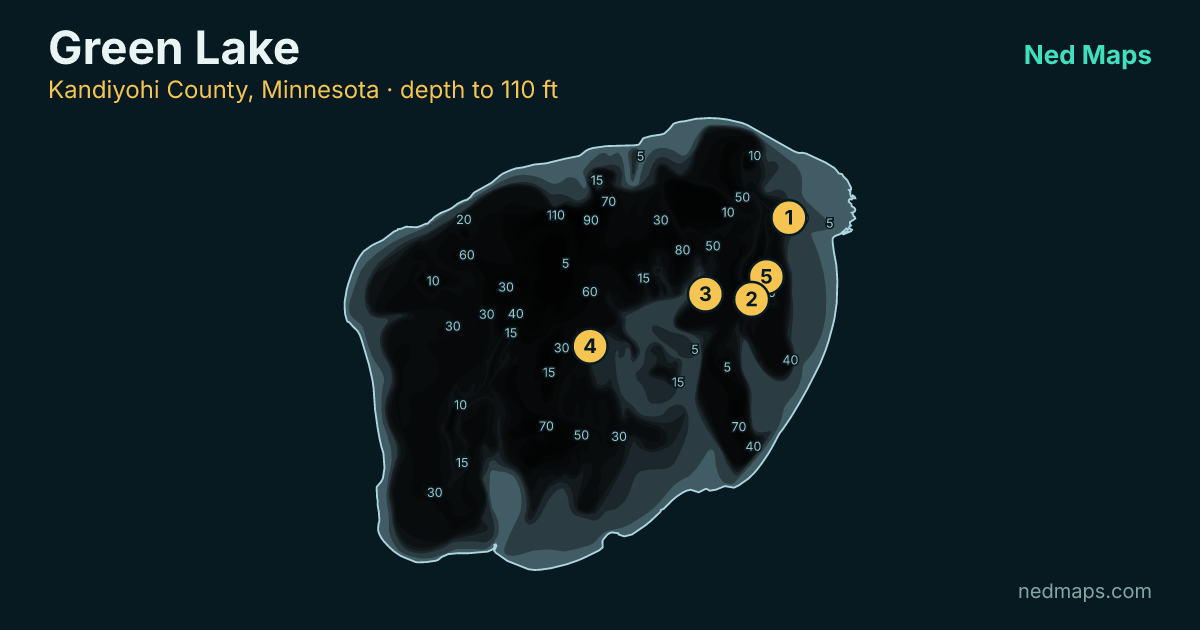
Green Lake depth map
Within 30 miles
Nearby lakes
- Nest Lake · 969 ac · 3 mi
- Calhoun Lake · 647 ac · 3.6 mi
- Elkhorn Lake · 79 ac · 3.6 mi
- George Lake · 228 ac · 4 mi
- Bass Lake · 50 ac · 4.1 mi
- Henderson Lake · 75 ac · 4.8 mi
- Monongalia Lake · 2,290 ac · 4.8 mi
- Long Lake · 325 ac · 5.2 mi
Quick answers
Frequently asked questions
How deep is Green Lake?
Green Lake reaches 110 ft at its deepest point with a mean depth of 21 ft; about 37% of the lake is littoral (15 ft or shallower).
How big is Green Lake?
Green Lake covers 5,569 acres with about 12 miles of shoreline.
How clear is the water in Green Lake?
DNR Secchi readings on Green Lake average 10 ft of visibility, clear water for a Minnesota lake.
What fish are in Green Lake?
Minnesota DNR surveys (most recently 2025) record walleye, largemouth bass, smallmouth bass, northern pike, muskellunge, bluegill, crappie, yellow perch, rock bass, channel catfish.
Is Green Lake stocked?
Yes. The DNR stocked walleye in 2025; the stocking table on this page lists every year back to 2016.
Does Green Lake have a public access?
Yes. Green Lake has 5 public access sites, including Green Lake (E) (trailer launch).
How big do walleye get in Green Lake?
The biggest walleye measured in recent DNR surveys taped 28"; the size-history table on this page tracks the biggest fish in each survey back to 2018.
When was Green Lake last surveyed?
The Minnesota DNR last surveyed Green Lake in 2025, the most recent of 44 surveys on record.
Page updated .

Featured guide spot
Your guide service here
One featured guide per lake, with your photo, your writeup and a link straight to your booking page. Free through December 31, 2026.
Then $20 a month from January. Cancel any time.
The live map adds today's conditions and ranked spots for Green Lake, plus a trip plan you can share:
Open Green Lake on the live map → Fished it lately? Write a report