Minnesota · Stearns County
Koronis (main lake) Fishing guide
Koronis (main lake) is a 2,968-acre lake in Stearns County, Minnesota, reaching 132 ft at its deepest point. Average water clarity runs about 4.7 ft. The Minnesota DNR has surveyed the lake 31 times, most recently in 2025, with walleye, largemouth bass, smallmouth bass and northern pike in the nets.
DNR survey data
Fish species
WalleyeLast stocked 2025One of the best around22.3per gill net9"Typical28"Biggest
Lengths measured · 495 fish
Recent · 2022 + 2024Lengths measured · 154 fish
2025Lengths measured · 316 fish
2024Lengths measured · 92 fish
2023Lengths measured · 179 fish
2022Largemouth bassPresent0.4per gill net7"Typical16"Biggest
Lengths measured · 24 fish
Recent · 2022 + 2024Lengths measured · 12 fish
2024Lengths measured · 12 fish
2022Lengths measured · 9 fish
2019Only 9 fish measured that year — too few to read as a shape.
Lengths measured · 30 fish
2017Smallmouth bassPresent2.1per gill net14"Typical20"Biggest
Lengths measured · 27 fish
Recent · 2022 + 2024Lengths measured · 7 fish
2024Only 7 fish measured that year — too few to read as a shape.
Lengths measured · 20 fish
2022Lengths measured · 6 fish
2019Only 6 fish measured that year — too few to read as a shape.
Lengths measured · 18 fish
2017Northern pikeFair numbers8per gill net25"Typical37"Biggest
Lengths measured · 80 fish
Recent · 2022 + 2024Lengths measured · 31 fish
2024Lengths measured · 49 fish
2022Lengths measured · 33 fish
2019Lengths measured · 47 fish
2017BluegillFair numbers37.1per trap net5"Typical8"Biggest
Lengths measured · 1138 fish
Recent · 2022 + 2024Lengths measured · 554 fish
2024Lengths measured · 584 fish
2022Lengths measured · 644 fish
2019Lengths measured · 241 fish
2017CrappieJust a few2.2per trap net9"Typical12"Biggest
Lengths measured · 134 fish
Recent · 2022 + 2024Lengths measured · 69 fish
2024Lengths measured · 65 fish
2022Lengths measured · 102 fish
2019Lengths measured · 89 fish
2017Yellow perchOne of the best around38.3per gill net6"Typical9"Biggest
Lengths measured · 542 fish
Recent · 2022 + 2024Lengths measured · 329 fish
2024Lengths measured · 213 fish
2022Lengths measured · 108 fish
2019Lengths measured · 721 fish
2019Rock bassGood numbers1.3per trap net7"Typical11"Biggest
Lengths measured · 61 fish
Recent · 2022 + 2024Lengths measured · 39 fish
2024Lengths measured · 22 fish
2022Lengths measured · 15 fish
2019Lengths measured · 25 fish
2017No recent survey rating.
Rates come from standard DNR survey gear (gill nets, trap nets, electrofishing), judged against statewide benchmarks for the same gear, so the same number of fish per net can read differently for two species. Where the standard gear can't count a species reliably, only presence and size are listed. Typical is the middle fish of those measured. Open a row for the full length spread, survey by survey.
How to fish Koronis (main lake) through the year
Walleye
- Spring
- Walleye are shallow, on and just off the spawning flats and the first green weeds.
- Early summer
- Walleye are setting up on the outside weed edge, points and shallow structure.
- Summer
- Walleye are working the weed edge, points and any wind-blown structure. On a lake that drops to 132 ft, check the deep edge of that structure too.
- Fall
- Walleye are packing onto the sharpest breaks and points as the water cools, in big schools with short windows.
Northern pike
- Spring
- Pike are in the shallow bays and along new weed growth.
- Early summer
- Pike are on the outside weed edge and points.
- Summer
- Pike are on the deep weed edge and points near the coolest water they can find. On a lake that drops to 132 ft, check the deep edge of that structure too.
- Fall
- Pike are on the last green weeds and the breaks beside them, feeding heavily as the water drops.
Season patterns for each species. Open the live map for today's wind, light and water temp.
Size history
Biggest fish by survey year
| Survey year | Walleye | Northern pike | Largemouth bass |
|---|---|---|---|
| 2025 | 12" | — | — |
| 2024 | 28" | 37" | 15" |
| 2023 | 11" | — | — |
| 2022 | 27" | 35" | 16" |
| 2021 | 8" | — | — |
| 2020 | 11" | — | — |
| 2019 | 25" | 35" | 17" |
| 2018 | 11" | — | — |
Longest fish measured by DNR survey crews in each year's nets. Survey gear samples the population, so the lake usually holds larger fish than any survey measured.
Suggested tackle
What to bring
Top presentations for this lake's structure and clarity:
Walleye · Live bait
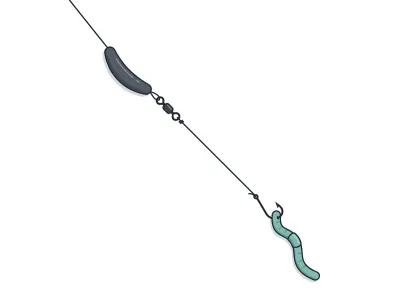
Live-Bait (Lindy) Rig + Leech/Crawler
jumbo leech or half a nightcrawler
Walleye · Trolling
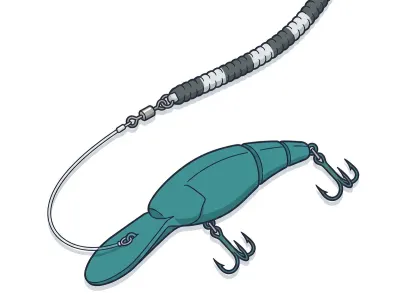
Leadcore Line + Crankbaits
4–5" mid-diving crankbait behind a long leadcore run
Northern pike · Soft plastics

Paddletail Swimbait on Jighead
4–5" paddletail swimbait on a ball-head swimbait jighead
Northern pike · Muskie & pike
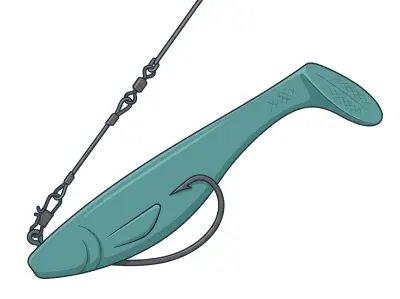
Soft Rubber (Bull Dawg / Medusa)
10" soft rubber body bait
Largemouth bass · Hardbaits
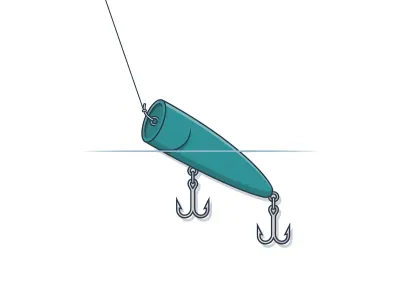
Topwater Popper
2.5–3" concave-face popper
Largemouth bass · Hardbaits
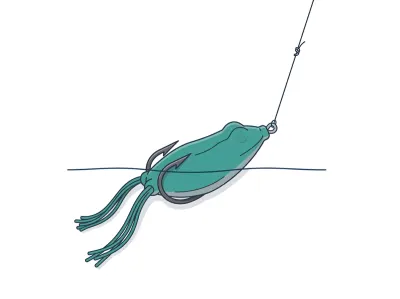
Hollow-Body Frog
3–3.5" hollow-body frog
Full setups, including hooks, weights and line, are on the live map. As an Amazon Associate I earn from qualifying purchases.
DNR stocking records
Stocking history
| Year | Species | Stocked |
|---|---|---|
| 2025 | Walleye | 1,082,016 fry |
| 2024 | Walleye | 403,817 fry |
| 2023 | Walleye | 1,201,133 fry |
| 2022 | Walleye | 1,002,003 fry |
| 2021 | Walleye | 968,348 fry |
| 2019 | Walleye | 1,138,297 fry |
| 2018 | Walleye | 503,406 fry |
| 2017 | Walleye | 1,084,199 fry |
| 2016 | Walleye | 714,804 fry |
MN DNR · in their words
From the 2025 survey
A targeted fall night electrofishing survey was conducted for young of year "YOY" (fingerling sized) Walleye on Koronis during October 23, 2025. A targeted survey is generally used for sampling a specific kind of fish or time of year (i.e. spawning season, fall season, etc.) unlike a standard survey which samples a wider range of fish species during the summer months using standard methodology (i.e. standard time of year, set sampling stations, taking water clarity readings and oxygen/temperature profiles, etc.) and gears (i.e. lake survey gillnets, trapnets, and spring electrofishing for Largemouth Bass). Four electrofishing stations were sampled for a total of 60 minutes. The water temperature was 50.0 F. Clarity was good (3 feet plus). Submergent vegetation density was light. We observed abundant numbers of Bluegill, Largemouth Bass and YOY Yellow Perch. We also observed moderate numbers of Northern Pike, White Sucker, Rocke Bass and Smallmouth Bass in the 2025 fall night electrofishing survey.
Koronis is a large (2,968 acres), deep (132 feet maximum), and productive lake located primarily in Stearns County. Koronis is a popular fishery for Walleye, Northern Pike, Smallmouth Bass, Largemouth Bass, Black Crappie, Tullibee and Bluegill. Koronis receives moderate recreational use during the summer months. The largest inlet is the North Fork of the Crow River, which enters Koronis along the east shore and outlets near the southeast corner. The greatest volume of nutrient loading is delivered to Koronis via the North Fork of the Crow River. Water levels were above normal during 2025. Zebra Mussels were found in 2022 and currently covering most of the hard substrates. An invasive algal species, starry stonewort, was found primarily in the east and outlet bays of Koronis in 2015 and near the south access of Rice Lake in 2016. Efforts to chemically eradicate starry stonewort had been unsuccessful in Koronis. Starry Stonewort has presently spread throughout the lake. However, Starry Stonewort densities appeared less in 2025 due to high water and potential impacts from Zebra Mussels. Aquatic vegetation densities are variable yearly in the lake.
Read the full DNR narrative
Rice Lake is upstream and connects to Lake Koronis via the North Fork of the Crow River. In the past, Walleye from both Rice and Koronis have spawned in the North Fork of the Crow River upstream of Rice Lake. A Walleye egg take station was operated just upstream of Rice Lake in the Crow River from the 1970's to 1992. However, this Walleye spawning run now appears to be considerably reduced. This is based on anecdotal observations of lower opening Walleye fishing activity near the Koronis inlet bay/narrows area especially since the 2000's and recent (2018-2019) ice out hoop netting in the river near the old egg take station. Walleye fishing activity often was higher during late ice off years at the Koronis inlet bay area due to fish returning from upriver spawning around opening weekend. Walleye also spawn adjacent to the east shores of the three islands in Koronis and the east point of Rice. Since 2001, both Rice and Koronis have been periodic "Spicer Strain" Walleye egg take sites for the statewide Walleye propagation program. Other recent Spicer Strain egg take lakes include Green, Diamond and Elizabeth. Historic spawning sites for Walleye in both Koronis and Rice have been degraded in recent years with increased sedimentation, algal and periphyton growth.
Walleye natural reproduction in Koronis has been frequent and often adequate to sustain Walleye numbers based on previous fall and summer surveys and markings. However, natural reproduction contribution has been more variable in recent years due in part to degraded spawning habitat and unfavorable spring conditions. Walleye fry (0.5-2.0 million/year) were stocked during 1996, 2001-2019 and 2021-2025 as a 10% return of Walleye eggs taken for the DNR statewide Walleye hatching program. No Walleye eggs were taken and no fry were stocked in 2020. Approximately 1.1 million fry were stocked during 2025. It is unknown if Walleye fry stocking into upstream Rice Lake is also contributing to the Koronis population due to downstream movement (drift). Walleye fingerlings were stocked in 2004 (2,409 pounds, 48,180 fish). Various combinations of Walleye ages were stocked in 2006 (2,355 pounds, 45,685 fish) and 2010 (867 pounds, 4,887 fish). Walleye eggs were taken recently in 2021 (155.25 quarts), 2022 (98.75 quarts), 2023 (85.25 quarts), 2024 (91.8 quarts) and 2025 (175 quarts) from Koronis. Stocked Walleye fry were marked with Oxytetracycline "OTC" during 2001, 2007, and 2011-17.
YOY Walleye numbers were abundant (61.00 YOY/hour, 6.86 inches) in the 2025 fall night electrofishing survey. Yearling Walleye numbers were also abundant (77.00 fish/hour, 10.19 inches) in 2025. Two-year-old Walleye were also abundant (10.00 fish/hour, 11.93 inches) in the 2025 fall electrofishing survey. YOY Walleye numbers were abundant (163.00 YOY/hour, 6.15 inches) in 2024. Yearling numbers were abundant (19.00 fish/hour, 9.21 inches) in 2024. YOY Walleye numbers were abundant (120.00 YOY/hour, 7.15 inches) in 2023. Yearling numbers were low (4.50 fish/hour) in 2023. YOY Walleye numbers were moderate (39.00 YOY/hour, 6.55 inches) in the 2022 fall night electrofishing survey. Yearling Walleye numbers were abundant (24.00 fish/hour, 10.40 inches) in the 2022 fall electrofishing survey. We also caught 2.00 fish/hour from the 2020 year class in 2022 fall electrofishing survey. YOY Walleye numbers were abundant (65.00 YOY/hour, 7.23 inches) in 2021 fall electrofishing survey. No Yearling Walleye were observed in 2021. Moderate YOY Walleye numbers (23.16 YOY/hour, 7.62 inches) were captured in 2020 fall electrofishing survey. We also observed moderate numbers of yearling (9.47 fish/hour) and age 2+ (23.16 fish/hour) Walleye in the 2020 survey. Low YOY Walleye numbers were captured in 2019 (1.85 YOY/hour). Abundant yearling Walleye were captured in 2019 (13.85 fish/hour, 9.76 inches). Moderate YOY and yearling Walleye numbers were captured in 2018 (20.57 YOY/hour, 7.20 inches; 8.57 yearlings/hour, 9.71 inches). Abundant YOY Walleye numbers were captured in 2017 (65.60 YOY/hour, 6.03 inches). Oxytetracycline "OTC" marked fish accounted for 33% of the YOY Walleye catch in the 2017 fall. Low numbers of yearling Walleye were captured in 2017 (4.80 fish/hour, 9.90 inches). Low YOY Walleye numbers were captured in 2016 (14.18 YOY/hour, 6.51 inches). OTC marked fish accounted for 40% of the 2016 Fall YOY Walleye catch. Yearling and two year old Walleye numbers were abundant (17.45 fish/hour) in 2016. Low YOY Walleye numbers (3.60 YOY/hour, 5.97 inches) were captured in 2015. There were no OTC marked YOY walleye captured in the 2015 fall electrofishing survey. Yearling Walleye numbers were abundant (22.80 fish/hour, 9.45 inches) in 2015. Abundant numbers of YOY Walleye were captured in 2014 (208.09 YOY/hour, 6.39 inches average length) and 2013 (71.25 YOY/hour, 5.79 inches average length). OTC marked fish accounted for 82% of the 2014 Walleye fingerlings captured in the fall electrofishing survey. Approximately 45% of the 2013 fall electrofishing YOY catch were OTC marked (fry stocked). Moderate YOY Walleye numbers (32.83 YOY/hour, 6.97 inches) were captured in the 2012 fall electrofishing survey. Approximately 92% of the 2012 year class fish captured in the 2012 fall electrofishing survey were OTC marked (fry stocked). Abundant numbers of YOY Walleye (205.50 YOY/hour, 6.50 inches) were captured in the 2011 fall electrofishing survey. Approximately 80% (164.40 YOY/hour) were OTC marked fish in the 2011 fall electrofishing survey. The Koronis YOY Walleye historical average catch rate and average length are 48.89 YOY/hour and 6.67 inches.
Walleye abundance was high in 2024 gillnets (27.00 fish/gillnet) compared to the historical average catch rate (1987-present) of 12.86 fish/gillnet for Koronis. The 2024 Walleye average size was moderate (1.83 pounds and 16.68 inches) from gillnets. The Walleye historical average length is 14.39 inches from gillnets. Approximately 69% of the Walleye captured were 15.00 inches or larger in the 2024 survey nets. Walleye growth rates were within the Spicer Area normal ranges for ages 1-4, but below normal for ages 5-8. The 2021 and 2023 year classes (fry stocked and natural reproduction) comprised 40% and 16% respectively of the 2024 Walleye gillnet and trapnet catch. The largest Walleye captured was 28.74 inches in 2024.
Current fish management activities on Koronis include protecting the important aquatic vegetation such as bulrush through the permit process, participating in local watershed projects, assisting aquatic plant management and enforcement personnel with invasive species monitoring and education, stocking various species as needed, and stocking Walleye fingerlings after two consecutive years of poor natural reproduction as documented by fall night electrofishing surveys. The Koronis fishery will be surveyed annually for YOY Walleye in the fall and 2027 summer for a standard survey.
Narrative text from the Minnesota DNR lake survey.
Recent reports
Koronis (main lake) fishing reports
Recent reports on Koronis (main lake) from guides, tournaments and regular anglers. Anything posted in the last two weeks also bumps the matching spots on the live map, so you'll see a "matches a recent report" tag on them.
Public water access
Getting on the water
- Lake Koronis, Veterans Park Fishing Pier (fishing pier)
DNR bathymetry
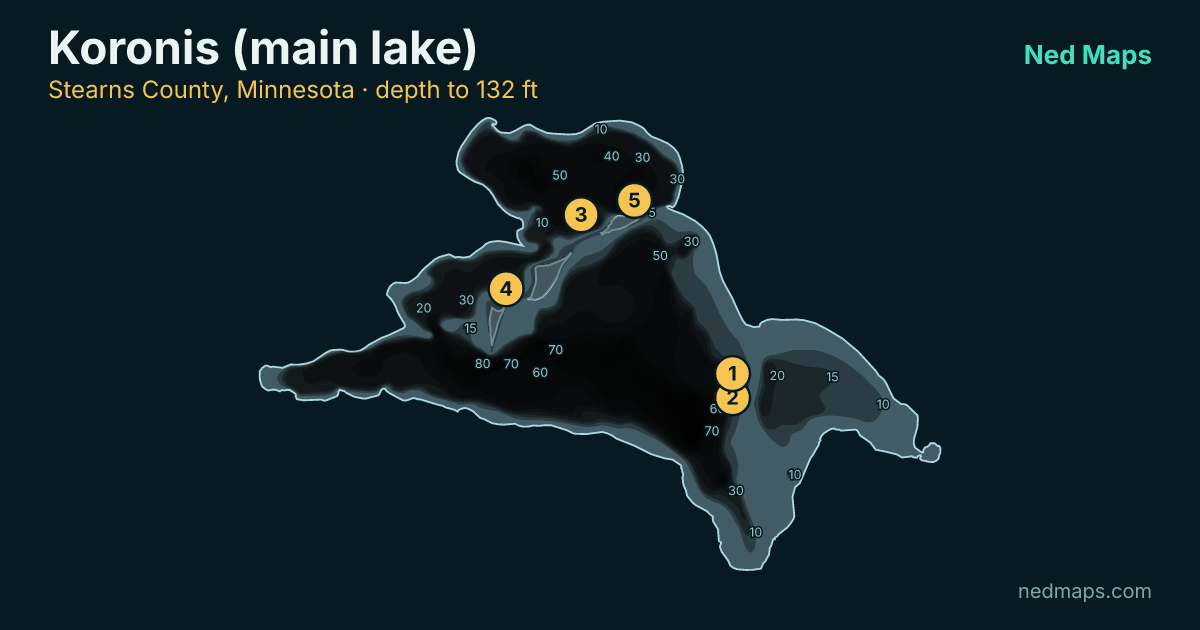
Koronis (main lake) depth map
Within 30 miles
Nearby lakes
- Rice Lake · 1,513 ac · 5.2 mi
- Calhoun Lake · 647 ac · 7.4 mi
- Long Lake · 325 ac · 7.6 mi
- Vails Lake · 161 ac · 8.6 mi
- Eden Lake · 278 ac · 8.9 mi
- North Brown's Lake · 312 ac · 9.1 mi
- Big Lake · 458 ac · 9.1 mi
- Long Lake · 487 ac · 9.9 mi
Quick answers
Frequently asked questions
How deep is Koronis (main lake)?
Koronis (main lake) reaches 132 ft at its deepest point with a mean depth of 29 ft; about 40% of the lake is littoral (15 ft or shallower).
How big is Koronis (main lake)?
Koronis (main lake) covers 2,968 acres with about 15.8 miles of shoreline.
How clear is the water in Koronis (main lake)?
DNR Secchi readings on Koronis (main lake) average 4.7 ft of visibility, middling clarity for a Minnesota lake.
What fish are in Koronis (main lake)?
Minnesota DNR surveys (most recently 2025) record walleye, largemouth bass, smallmouth bass, northern pike, bluegill, crappie, yellow perch, rock bass, channel catfish.
Is Koronis (main lake) stocked?
Yes. The DNR stocked walleye in 2025; the stocking table on this page lists every year back to 2016.
Does Koronis (main lake) have a public access?
Yes. Koronis (main lake) has one public access site: Lake Koronis, Veterans Park Fishing Pier (fishing pier).
How big do walleye get in Koronis (main lake)?
The biggest walleye measured in recent DNR surveys taped 28"; the size-history table on this page tracks the biggest fish in each survey back to 2018.
When was Koronis (main lake) last surveyed?
The Minnesota DNR last surveyed Koronis (main lake) in 2025, the most recent of 31 surveys on record.
Page updated .

Featured guide spot
Your guide service here
One featured guide per lake, with your photo, your writeup and a link straight to your booking page. Free through December 31, 2026.
Then $20 a month from January. Cancel any time.
The live map adds today's conditions and ranked spots for Koronis (main lake), plus a trip plan you can share:
Open Koronis (main lake) on the live map → Fished it lately? Write a report