Minnesota · Stearns County
Rice Lake Fishing guide
Rice Lake covers 1,513 acres in Stearns County, Minnesota, reaching 41 ft at its deepest point. Average water clarity runs about 3.3 ft. The Minnesota DNR has surveyed the lake 26 times, most recently in 2025, with walleye, largemouth bass, smallmouth bass and northern pike in the nets.
DNR survey data
Fish species
WalleyeLast stocked 2025Excellent numbers10.6per gill net12"Typical29"Biggest
Lengths measured · 226 fish
Recent · 2022 + 2024Lengths measured · 11 fish
2025Lengths measured · 175 fish
2024Lengths measured · 28 fish
2023Lengths measured · 51 fish
2022Largemouth bassPresent0.3per gill net6"Typical19"Biggest
Lengths measured · 23 fish
Recent · 2022 + 2024Lengths measured · 16 fish
2024Lengths measured · 7 fish
2022Only 7 fish measured that year — too few to read as a shape.
Lengths measured · 6 fish
2019Only 6 fish measured that year — too few to read as a shape.
Lengths measured · 49 fish
2017Smallmouth bassPresent1.1per gill net15"Typical18"Biggest
Lengths measured · 11 fish
Recent · 2022 + 2024Lengths measured · 2 fish
2024Only 2 fish measured that year — too few to read as a shape.
Lengths measured · 9 fish
2022Only 9 fish measured that year — too few to read as a shape.
Lengths measured · 5 fish
2019Only 5 fish measured that year — too few to read as a shape.
Lengths measured · 5 fish
2017Only 5 fish measured that year — too few to read as a shape.
Northern pikeGood numbers10.3per gill net24"Typical34"Biggest
Lengths measured · 120 fish
Recent · 2022 + 2024Lengths measured · 59 fish
2024Lengths measured · 61 fish
2022Lengths measured · 96 fish
2019Lengths measured · 83 fish
2017BluegillFair numbers29.4per trap net4"Typical9"Biggest
Lengths measured · 961 fish
Recent · 2022 + 2024Lengths measured · 617 fish
2024Lengths measured · 344 fish
2022Lengths measured · 608 fish
2019Lengths measured · 376 fish
2017CrappieJust a few7.6per trap net6"Typical14"Biggest
Lengths measured · 749 fish
Recent · 2022 + 2024Lengths measured · 404 fish
2024Lengths measured · 345 fish
2022Lengths measured · 175 fish
2019Lengths measured · 180 fish
2017Yellow perchExcellent numbers26.7per gill net5"Typical7"Biggest
Lengths measured · 294 fish
Recent · 2022 + 2024Lengths measured · 190 fish
2024Lengths measured · 104 fish
2022Lengths measured · 323 fish
2019Lengths measured · 478 fish
2017Rates come from standard DNR survey gear (gill nets, trap nets, electrofishing), judged against statewide benchmarks for the same gear, so the same number of fish per net can read differently for two species. Where the standard gear can't count a species reliably, only presence and size are listed. Typical is the middle fish of those measured. Open a row for the full length spread, survey by survey.
How to fish Rice Lake through the year
Walleye
- Spring
- Walleye are shallow, on and just off the spawning flats and the first green weeds. In 3.3 ft of visibility, they sit shallower than you think.
- Early summer
- Walleye are setting up on the outside weed edge, points and shallow structure.
- Summer
- Walleye are working the weed edge, points and any wind-blown structure. On a lake that drops to 41 ft, check the deep edge of that structure too.
- Fall
- Walleye are packing onto the sharpest breaks and points as the water cools, in big schools with short windows.
Northern pike
- Spring
- Pike are in the shallow bays and along new weed growth. In 3.3 ft of visibility, they sit shallower than you think.
- Early summer
- Pike are on the outside weed edge and points.
- Summer
- Pike are on the deep weed edge and points near the coolest water they can find. On a lake that drops to 41 ft, check the deep edge of that structure too.
- Fall
- Pike are on the last green weeds and the breaks beside them, feeding heavily as the water drops.
Season patterns for each species. Open the live map for today's wind, light and water temp.
Size history
Biggest fish by survey year
| Survey year | Walleye | Northern pike | Largemouth bass |
|---|---|---|---|
| 2025 | 7" | — | — |
| 2024 | 28" | 33" | 19" |
| 2023 | 10" | — | — |
| 2022 | 29" | 34" | 19" |
| 2020 | 12" | — | — |
| 2019 | 25" | 33" | 19" |
| 2017 | 27" | 32" | 19" |
| 2016 | 10" | — | — |
Longest fish measured by DNR survey crews in each year's nets. Survey gear samples the population, so the lake usually holds larger fish than any survey measured.
Suggested tackle
What to bring
Top presentations for this lake's structure and clarity:
Walleye · Live bait
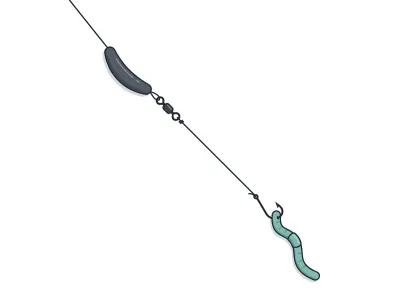
Live-Bait (Lindy) Rig + Leech/Crawler
jumbo leech or half a nightcrawler
Walleye · Trolling
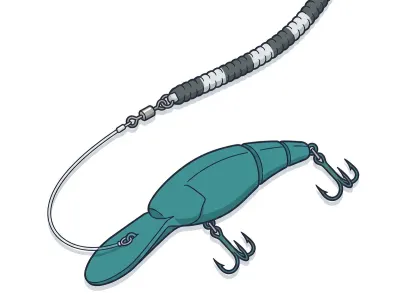
Leadcore Line + Crankbaits
4–5" mid-diving crankbait behind a long leadcore run
Northern pike · Soft plastics
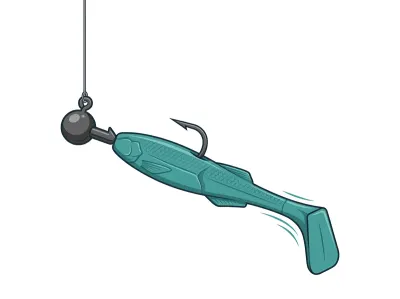
Paddletail Swimbait on Jighead
4–5" paddletail swimbait on a ball-head swimbait jighead
Northern pike · Muskie & pike
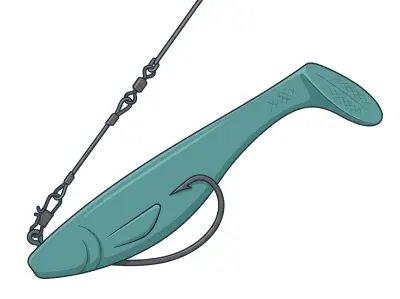
Soft Rubber (Bull Dawg / Medusa)
10" soft rubber body bait
Largemouth bass · Hardbaits
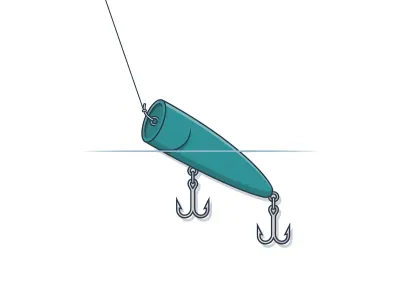
Topwater Popper
2.5–3" concave-face popper
Largemouth bass · Hardbaits
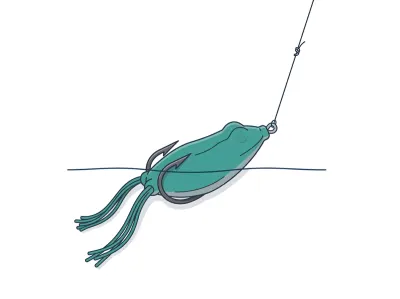
Hollow-Body Frog
3–3.5" hollow-body frog
Full setups, including hooks, weights and line, are on the live map. As an Amazon Associate I earn from qualifying purchases.
DNR stocking records
Stocking history
| Year | Species | Stocked |
|---|---|---|
| 2025 | Walleye | 756,798 fry |
| 2024 | Walleye | 499,870 fry |
| 2023 | Walleye | 1,201,133 fry |
| 2022 | Walleye | 959,635 fry · 63,962 fingerlings |
| 2021 | Walleye | 873,169 fry · 4,571 fingerlings |
| 2019 | Walleye | 1,192,288 fry · 18,815 fingerlings |
| 2018 | Walleye | 505,461 fry · 100 fingerlings · 7,164 yearlings · 125 adults |
| 2017 | Walleye | 710,362 fry |
| 2016 | Walleye | 716,841 fry |
MN DNR · in their words
From the 2025 survey
A targeted fall night electrofishing survey was conducted for young of year "YOY" (fingerling sized) Walleye on Rice Lake during October 22, 2025. A targeted survey is generally used for sampling a specific kind of fish or time of year (i.e. spawning season, fall season, etc.) unlike a standard survey which samples a wider range of fish species during the summer months using standard methodology (i.e. standard time of year, set sampling stations, taking water clarity readings and oxygen/temperature profiles, etc.) and gears (i.e. lake survey gillnets, trapnets and possibly spring electrofishing for Largemouth Bass). The 2025 fall night electrofishing survey was conducted at four stations for a total of 60 minutes. The water temperature was 52 F. Water clarity was poor to moderate. Submergent vegetation densities were light. We observed abundant numbers of Yellow Perch, Largemouth Bass, Sunfish and Brook Silversides. We also saw moderate numbers of Black Crappie, White Sucker and Northern Pike in the 2025 fall night electrofishing survey.
Rice is a large (1,513 acres), moderately deep (41 feet), and productive lake located in Stearns County. Rice is a popular lake for angling (Walleye, bass, Bluegill, Black Crappie) and spearing (Northern Pike). Water levels were above normal in 2025. Aquatic vegetation densities are variable in the lake on a yearly basis. An invasive algal species, Starry Stonewort, was found in low densities near the southwest public access during 2016. However, it has currently spread throughout Rice Lake. Presently, Starry Stonewort has spread throughout the Mud Lake Basin and Lake Koronis since it was found in 2015. Zebra Mussels were found in Koronis during 2022. Zebra Mussels are presumed to be in Rice due to their presence further upstream of the North Fork of Crow River in Grove Lake during 2024. Shoalwater substrates are diverse with boulder and rubble areas near points with soft sediments like silt, marl, detritus and sand found in the near shore and bay areas of Rice Lake.
Read the full DNR narrative
Rice Lake is upstream and connects to Lake Koronis via the North Fork of the Crow River. In the past, Walleye from both Rice and Koronis have spawned in the North Fork of the Crow River upstream of Rice Lake. A Walleye egg take station was operated just upstream of Rice Lake in the Crow River from the 1970's to 1992. However, this Walleye spawning run now appears to be considerably reduced. This is based on anecdotal observations of lower opening Walleye fishing activity near the downstream Koronis inlet bay/narrows area especially since the 2000's and recent (2018-2019) ice out hoop netting in the river near the old egg take station. Walleye also spawn adjacent to the east shores of the three islands in Koronis and the east point of Rice. Since 2001, both Koronis and Rice have been periodic "Spicer Strain" Walleye egg take sites for the statewide Walleye propagation program. Other recent Spicer Strain egg take lakes include Diamond and Elizabeth. Historic spawning sites for Walleye in both Koronis and Rice have been degraded in recent years with increased sedimentation, algal and periphyton growth.
Walleye natural reproduction in Rice was generally both frequent and adequate to sustain Walleye numbers based on previous fall and summer surveys and markings. Various combinations of Walleye fingerlings, yearlings and adults were stocked in Rice after years of consecutive poor natural reproduction or fry stocking success during 2007 (25,310 fish, 2,556 pounds), 2008 (417 fish, 330 pounds), 2010 (15,281 fish, 1,923 pounds), 2018 (7,164 yearlings, 2,044 pounds; 125 adults, 167 pounds; 100 fingerlings, 6 pounds), 2019 (18,815 fingerlings, 1,533 pounds), 2021 (4,571 fingerlings, 976 pounds) and 2022 (63,962 fingerlings, 2,152 pounds). Walleye fry (500K to 2 million each year) were stocked during 2001 2019 as a 10% return of Walleye eggs taken for the DNR statewide Walleye hatching program. No Walleye eggs were taken, and no fry were stocked in 2020. No Walleye eggs were taken, but fry were stocked during 2021 (573,169 fry) in Rice. Walleye fry were also stocked in 2022 (959,635 fry), 2023 (1,201,133 fry), 2024 (499,870 fry) and 2025 (756,796 fry). Walleye eggs were taken recently in 2022 (77.75 quarts), 2023 (154.25 quarts), 2024 (133.5 quarts) and 2025 (105 quarts) from Rice. Stocked Walleye fry were marked with Oxytetracycline "OTC" in 2001, 2007, 2009 and 2011-16.
Low YOY Walleye numbers (11.00/hour, 7.26 inches) were caught in the 2025 fall night electrofishing survey. Low YOY Walleye numbers were also captured in 2024 (9.60 YOY/hour, 6.98 inches) and 2023 (1.50/hour, 7.05 inches) fall night electrofishing surveys. Abundant numbers of Walleye yearlings (42.00/hour, 8.91 inches) were caught in the 2023 fall night electrofishing survey. The Walleye yearlings captured in 2023 were likely from a 2022 stocking of fingerlings. Low YOY Walleye numbers (4.50/hour, 7.38 inches) were caught in the 2022 fall night electrofishing survey. No YOY Walleye were captured during the 2021 fall night electrofishing survey. Low YOY Walleye numbers (0.50 YOY/hour) were observed in the 2020 fall night electrofishing survey. Moderate yearling numbers (15.00 fish/hour, 10.06 inches) were captured in the 2020 fall electrofishing survey. The yearling Walleye captured in 2020 were probably from a 2019 fingerling stocking. No YOY Walleye were captured in the 2019 or 2018 fall electrofishing surveys. Low YOY Walleye numbers were captured in 2017 (3.00 YOY/hour, 7.81 inches). Generally, low YOY Walleye numbers were captured in fall night electrofishing surveys from 2005-2010 and 2012. Moderate YOY Walleye year classes due to natural reproduction or fry stockings were documented in 2003 (42.00 YOY/hour, 6.46 inches), 2004 (55.50 YOY/hour, 6.74 inches), 2011 (150.00 YOY/hour, 6.27 inches), 2013 (37.33 YOY/hour, 6.31 inches), 2014 (82.00 YOY/hour, 5.98 inches), 2015 (36.00 YOY/hour, 6.03 inches) and 2016 (56.00 YOY/hour, 5.81 inches). Approximately 62% of the YOY Walleye captured in the 2011, 2013 and 2014 fall electrofishing surveys were OTC marked fish from fry stockings. OTC marked fish contributed 83% and 44% of the 2015 and 2016 year classes respectively in fall electrofishing surveys. Moderate yearling Walleye numbers were captured in 2017 (16.50 YOY/hour, 9.42 inches) and 2014 (18.00 fish/hour).
Walleye abundance was high in the recent 2024 summer survey (14.25 fish/gillnet) compared to the historical average catch rate (1977-present) of 10.23 fish/gillnet for Rice. The 2024 Walleye average size was moderate (1.67 pounds and 15.67 inches) from gillnets. The Walleye historical average length is 16.29 inches from gillnets. Approximately 52% of the Walleye captured were 15.00 inches and larger in the 2024 survey. The largest Walleye captured was 28.07 inches. Walleye growth rates were below normal compared to area lakes. The 2022 year class comprised 38% of the 2024 summer gillnet and trapnet catch.
Current fish management activities on Rice include protecting important aquatic vegetation through the permit process, participating in local watershed projects, assisting aquatic plant management and enforcement personnel with invasive species monitoring and education, considering potential starry stonewort/curly leaf pondweed management options, operating the Northern Pike spawning area as needed, and stocking Walleye fry or fingerlings as required or needed. The Rice Lake fishery will be surveyed annually during the fall for YOY Walleye by electrofishing and 2027 summer by standard survey gears for all species.
Narrative text from the Minnesota DNR lake survey.
Recent reports
Rice Lake fishing reports
Recent reports on Rice Lake from guides, tournaments and regular anglers. Anything posted in the last two weeks also bumps the matching spots on the live map, so you'll see a "matches a recent report" tag on them.
Public water access
Getting on the water
- Rice Lake (N) (trailer launch)
- Rice Lake (S) (trailer launch)
DNR bathymetry
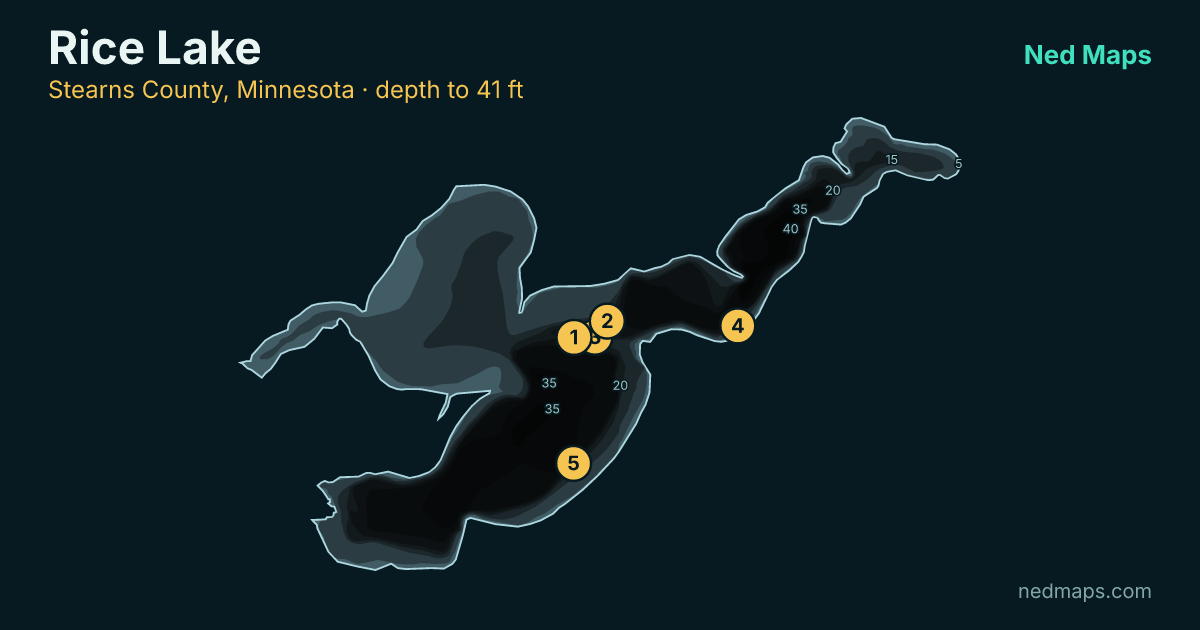
Rice Lake depth map
Within 30 miles
Nearby lakes
- Big Lake · 458 ac · 4 mi
- North Brown's Lake · 312 ac · 4 mi
- Long Lake · 487 ac · 4.7 mi
- Eden Lake · 278 ac · 4.9 mi
- Vails Lake · 161 ac · 5 mi
- Koronis (main lake) · 2,968 ac · 5.2 mi
- Horseshoe Lake · 629 ac · 5.5 mi
- Becker Lake · 221 ac · 6.2 mi
Quick answers
Frequently asked questions
How deep is Rice Lake?
Rice Lake reaches 41 ft at its deepest point; about 63% of the lake is littoral (15 ft or shallower).
How big is Rice Lake?
Rice Lake covers 1,513 acres with about 14.9 miles of shoreline.
How clear is the water in Rice Lake?
DNR Secchi readings on Rice Lake average 3.3 ft of visibility, on the stained end for a Minnesota lake.
What fish are in Rice Lake?
Minnesota DNR surveys (most recently 2025) record walleye, largemouth bass, smallmouth bass, northern pike, bluegill, crappie, yellow perch, rock bass, channel catfish.
Is Rice Lake stocked?
Yes. The DNR stocked walleye in 2025; the stocking table on this page lists every year back to 2016.
Does Rice Lake have a public access?
Yes. Rice Lake has 2 public access sites, including Rice Lake (N) (trailer launch).
How big do walleye get in Rice Lake?
The biggest walleye measured in recent DNR surveys taped 29"; the size-history table on this page tracks the biggest fish in each survey back to 2016.
When was Rice Lake last surveyed?
The Minnesota DNR last surveyed Rice Lake in 2025, the most recent of 26 surveys on record.
Page updated .

Featured guide spot
Your guide service here
One featured guide per lake, with your photo, your writeup and a link straight to your booking page. Free through December 31, 2026.
Then $20 a month from January. Cancel any time.
The live map adds today's conditions and ranked spots for Rice Lake, plus a trip plan you can share:
Open Rice Lake on the live map → Fished it lately? Write a report