Minnesota · Douglas County
Indian Lake Fishing guide
Indian Lake covers 99 acres in Douglas County, Minnesota, reaching 38 ft at its deepest point. Secchi readings average around 4.3 ft of visibility. The Minnesota DNR has surveyed the lake 8 times, most recently in 2025, with walleye, largemouth bass, northern pike and bluegill in the nets.
DNR survey data
Fish species
WalleyeLast stocked 2024Fair numbers3.7per gill net21"Typical28"Biggest
Lengths measured · 13 fish
Recent · 2025Lengths measured · 13 fish
2025Lengths measured · 2 fish
2015Only 2 fish measured that year — too few to read as a shape.
Lengths measured · 6 fish
2005Only 6 fish measured that year — too few to read as a shape.
Largemouth bassFair numbers41.1per hr (electrofishing)16"Typical19"Biggest
Lengths measured · 71 fish
Recent · 2025Lengths measured · 71 fish
2025Lengths measured · 58 fish
2015Lengths measured · 65 fish
2005Lengths measured · 44 fish
2001Northern pikeGood numbers14per gill net21"Typical33"Biggest
Lengths measured · 45 fish
Recent · 2025Lengths measured · 45 fish
2025Lengths measured · 33 fish
2015Lengths measured · 47 fish
2005Lengths measured · 22 fish
2001BluegillJust a few16.4per trap net5"Typical9"Biggest
Lengths measured · 162 fish
Recent · 2025Lengths measured · 162 fish
2025Lengths measured · 183 fish
2015Lengths measured · 312 fish
2005Lengths measured · 45 fish
2001CrappieFair numbers12.8per trap net5"Typical11"Biggest
Lengths measured · 227 fish
Recent · 2025Lengths measured · 227 fish
2025Lengths measured · 132 fish
2015Lengths measured · 13 fish
2005Lengths measured · 21 fish
2001Yellow perchGood numbers10.7per gill net6"Typical8"Biggest
Lengths measured · 83 fish
Recent · 2025Lengths measured · 83 fish
2025Lengths measured · 15 fish
2015Lengths measured · 10 fish
2005Lengths measured · 59 fish
2001Rates come from standard DNR survey gear (gill nets, trap nets, electrofishing), judged against statewide benchmarks for the same gear, so the same number of fish per net can read differently for two species. Where the standard gear can't count a species reliably, only presence and size are listed. Typical is the middle fish of those measured. Open a row for the full length spread, survey by survey.
How to fish Indian Lake through the year
Northern pike
- Spring
- Pike are in the shallow bays and along new weed growth.
- Early summer
- Pike are on the outside weed edge and points.
- Summer
- Pike are on the deep weed edge and points near the coolest water they can find. With 71% of this lake 15 ft or shallower, the weed edge is the main event.
- Fall
- Pike are on the last green weeds and the breaks beside them, feeding heavily as the water drops.
Walleye
- Spring
- Walleye are shallow, on and just off the spawning flats and the first green weeds.
- Early summer
- Walleye are setting up on the outside weed edge, points and shallow structure.
- Summer
- Walleye are working the weed edge, points and any wind-blown structure. With 71% of this lake 15 ft or shallower, the weed edge is the main event.
- Fall
- Walleye are packing onto the sharpest breaks and points as the water cools, in big schools with short windows.
Season patterns for each species. Open the live map for today's wind, light and water temp.
Size history
Biggest fish by survey year
| Survey year | Northern pike | Walleye | Largemouth bass |
|---|---|---|---|
| 2025 | 33" | 28" | 19" |
| 2015 | 28" | 21" | 18" |
| 2005 | 30" | 20" | 19" |
| 2001 | 32" | — | 18" |
| 1995 | 29" | — | 14" |
Longest fish measured by DNR survey crews in each year's nets. Survey gear samples the population, so the lake usually holds larger fish than any survey measured.
Suggested tackle
What to bring
Top presentations for this lake's structure and clarity:
Northern pike · Soft plastics
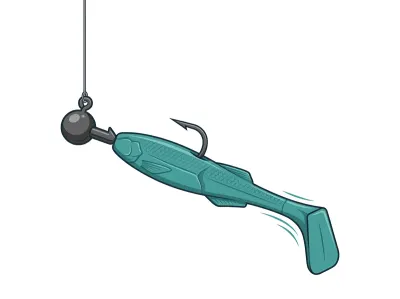
Paddletail Swimbait on Jighead
4–5" paddletail swimbait on a ball-head swimbait jighead
Northern pike · Jigs & bladed
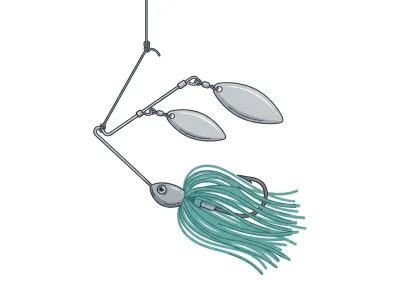
Spinnerbait
3/8–1/2 oz safety-pin spinnerbait with tandem willow-leaf blades
Walleye · Live bait
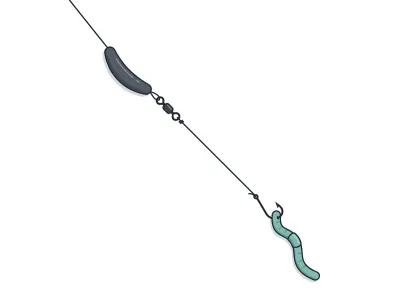
Live-Bait (Lindy) Rig + Leech/Crawler
jumbo leech or half a nightcrawler
Walleye · Trolling
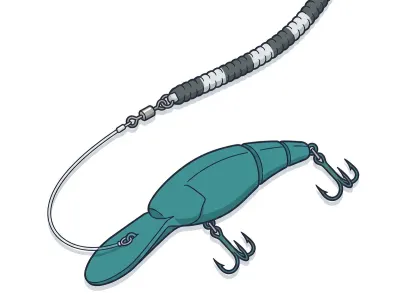
Leadcore Line + Crankbaits
4–5" mid-diving crankbait behind a long leadcore run
Largemouth bass · Soft plastics
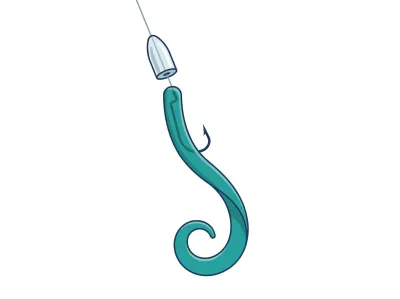
Texas-Rigged Worm
7" ribbon-tail or straight-tail plastic worm
Largemouth bass · Soft plastics
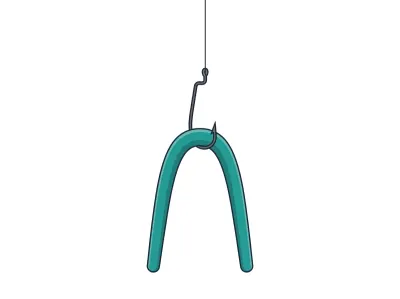
Wacky-Rigged Stickworm
5" stickworm
Full setups, including hooks, weights and line, are on the live map. As an Amazon Associate I earn from qualifying purchases.
DNR stocking records
Stocking history
| Year | Species | Stocked |
|---|---|---|
| 2024 | Walleye | 12 fingerlings · 121 yearlings |
| 2022 | Walleye | 1,610 fingerlings |
MN DNR · in their words
From the 2025 survey
Indian Lake is a small (99 acre) fertile basin located in north-central Douglas County between the towns of Garfield and Leaf Valley. The basin has a maximum depth of 38 feet. Average depth is estimated at 12 feet. Water clarity was moderate (5 feet) at the time of the August survey. A DNR public access is located on the northern shoreline off Indian Lake Road.
A standard fisheries survey was completed in August of 2025 to evaluate abundance and size distribution of gamefish populations. Walleye catches remain low (3.3/gill net) and tended to be large fish, averaging 21.0 inches and 3.7 pounds. Regular Walleye fingerling stockings were discontinued by the MN DNR in 2016 due to extremely poor survival of stocked fingerlings. The current stocking regime prescribes surplus stockings of larger Walleye, when available, to maintain a limited fishery.
Read the full DNR narrative
Largemouth Bass proved to be moderately abundant. Growth rates are well above average with bass reaching 12.0 inches by age 3. Size structure of the electrofishing catch described a quality fishery. Eighty percent of the Largemouth Bass sampled were over 12.0 inches and the largest bass observed was 19.1 inches.
Northern Pike continue to be abundant (14.3 fish/gill net). Average size of pike sampled in 2025 was 22.5 inches. The largest pike measured 33.1 inches, though fish of this size are not common. Anglers are reminded that new pike zone regulations were implemented in 2018. Indian Lake is located in the North-Central Zone. Anglers can now keep up to 10 pike but not more than two can be over 26 inches in length. All pike between 22-26 inches must be immediately released. Harvesting smaller pike will help shift the population back towards larger individuals and reduce the number of predators for young Walleye and other gamefish.
Bluegill catch rates (16.4 fish/trap net) were above average for Indian Lake. Age distribution of Bluegill catches extended to age 6, but 61% of captures were age-3 and younger. Consequently, average size was small (5.3 inches). Growth was rapid and did allow some individuals to reach over 9.0 inches. Black Crappie catch rates increased significantly from the previous two surveys. Crappie catches were 37.0 and 12.8 fish/net for gill nets and trap nets, respectively. Black Crappie growth rates are poor; average length of age 4 fish was 7.5 inches. Due to slow growth and an over abundant population, few Black Crappie exceeded 8.0 inches in length. Adult Yellow Perch numbers were modest during the 2025 survey. Yellow Perch are preferred prey of Walleye, Northern Pike, and Largemouth Bass. Significant predation likely limits the Yellow Perch population from maintaining a size structure appealing to anglers.
Additional species sampled include Golden Shiner, hybrid sunfish, Pumpkinseed, and Brown Bullhead. The next standard fisheries survey is tentatively scheduled for 2035.
Narrative text from the Minnesota DNR lake survey.
Recent reports
Indian Lake fishing reports
Recent reports on Indian Lake from guides, tournaments and regular anglers. Anything posted in the last two weeks also bumps the matching spots on the live map, so you'll see a "matches a recent report" tag on them.
Public water access
Getting on the water
- Indian Lake (trailer launch)
DNR bathymetry
Indian Lake depth map
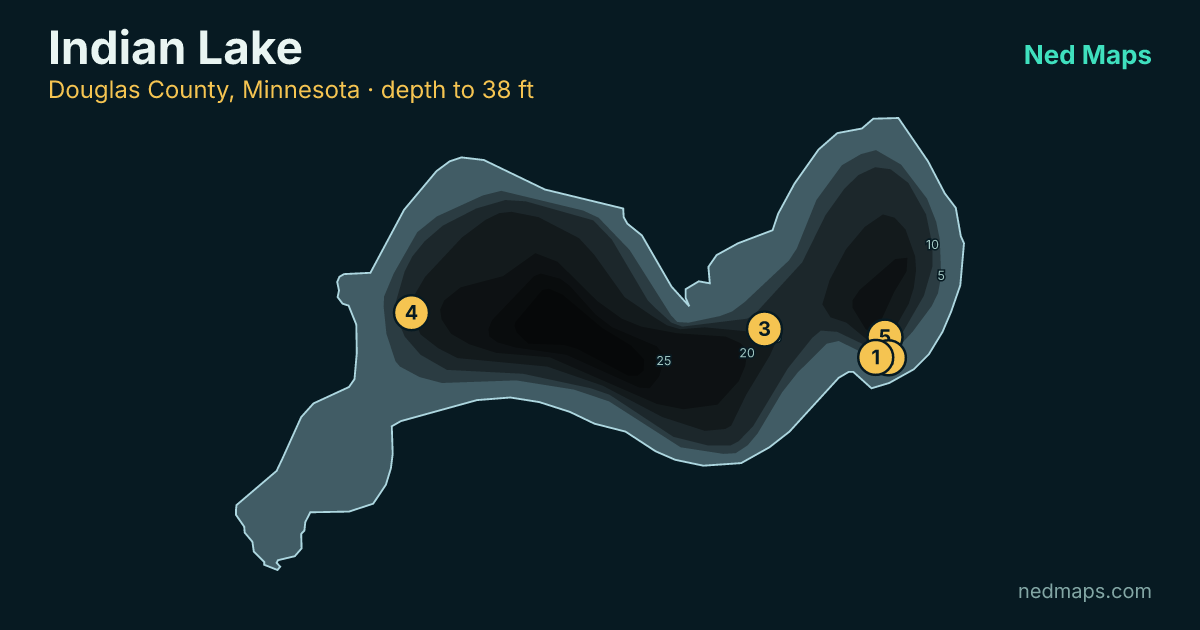
Within 30 miles
Nearby lakes
- Chippewa Lake · 1,186 ac · 3.3 mi
- Lake Ida · 4,445 ac · 3.6 mi
- Lake Miltona · 5,731 ac · 4.9 mi
- Devils Lake · 234 ac · 5.3 mi
- Whiskey Lake · 160 ac · 5.9 mi
- Little Chippewa Lake · 271 ac · 5.9 mi
- Vermont Lake · 342 ac · 6.3 mi
- Lake Aaron · 610 ac · 6.3 mi
Quick answers
Frequently asked questions
How deep is Indian Lake?
Indian Lake reaches 38 ft at its deepest point; about 71% of the lake is littoral (15 ft or shallower).
How big is Indian Lake?
Indian Lake covers 99 acres with about 2.4 miles of shoreline.
How clear is the water in Indian Lake?
DNR Secchi readings on Indian Lake average 4.3 ft of visibility, middling clarity for a Minnesota lake.
What fish are in Indian Lake?
Minnesota DNR surveys (most recently 2025) record walleye, largemouth bass, northern pike, bluegill, crappie, yellow perch.
Is Indian Lake stocked?
Yes. The DNR stocked walleye in 2024; the stocking table on this page lists every year back to 2022.
Does Indian Lake have a public access?
Yes. Indian Lake has one public access site: Indian Lake (trailer launch).
How big do northern pike get in Indian Lake?
The biggest northern pike measured in recent DNR surveys taped 33"; the size-history table on this page tracks the biggest fish in each survey back to 1995.
When was Indian Lake last surveyed?
The Minnesota DNR last surveyed Indian Lake in 2025, the most recent of 8 surveys on record.
Page updated .

Featured guide spot
Your guide service here
One featured guide per lake, with your photo, your writeup and a link straight to your booking page. Free through December 31, 2026.
Then $20 a month from January. Cancel any time.
The live map adds today's conditions and ranked spots for Indian Lake, plus a trip plan you can share:
Open Indian Lake on the live map → Fished it lately? Write a report