Minnesota · Douglas County
Whiskey Lake Fishing guide
Whiskey Lake covers 160 acres in Douglas County, Minnesota, reaching 46 ft at its deepest point. Average water clarity runs about 8.1 ft. The Minnesota DNR has surveyed the lake 12 times, most recently in 2021, with walleye, largemouth bass, northern pike and bluegill in the nets.
DNR survey data
Fish species
Largemouth bassGood numbers82.7per hr (electrofishing)13"Typical18"Biggest
Lengths measured · 163 fish
Recent · 2021Lengths measured · 163 fish
2021Lengths measured · 227 fish
2015Lengths measured · 49 fish
2009Lengths measured · 130 fish
2007Northern pikeFair numbers8.3per gill net18"Typical28"Biggest
Lengths measured · 50 fish
Recent · 2021Lengths measured · 50 fish
2021Lengths measured · 42 fish
2015Lengths measured · 27 fish
2009Lengths measured · 26 fish
2007BluegillJust a few22.7per trap net6"Typical10"Biggest
Lengths measured · 258 fish
Recent · 2021Lengths measured · 258 fish
2021Lengths measured · 296 fish
2015Lengths measured · 579 fish
2009Lengths measured · 677 fish
2007CrappieJust a few9.3per trap net10"Typical13"Biggest
Lengths measured · 102 fish
Recent · 2021Lengths measured · 102 fish
2021Lengths measured · 78 fish
2015Lengths measured · 16 fish
2009Lengths measured · 139 fish
2007Yellow perchFair numbers2.2per gill net7"Typical9"Biggest
Lengths measured · 13 fish
Recent · 2021Lengths measured · 13 fish
2021Lengths measured · 5 fish
2015Only 5 fish measured that year — too few to read as a shape.
Lengths measured · 6 fish
2009Only 6 fish measured that year — too few to read as a shape.
Lengths measured · 31 fish
2007Rates come from standard DNR survey gear (gill nets, trap nets, electrofishing), judged against statewide benchmarks for the same gear, so the same number of fish per net can read differently for two species. Where the standard gear can't count a species reliably, only presence and size are listed. Typical is the middle fish of those measured. Open a row for the full length spread, survey by survey.
How to fish Whiskey Lake through the year
Largemouth bass
- Spring
- Largemouth are moving up into the warming bays and flats, staging around wood, docks and new weeds to spawn.
- Early summer
- Largemouth are on the shallow spawning flats and protected bays, where beds go on firm bottom next to isolated cover.
- Summer
- Largemouth are in and along the weeds: cabbage and milfoil edges, matted cover and shade. On a lake that drops to 46 ft, check the deep edge of that structure too.
- Fall
- Largemouth are chasing bait back onto the flats and into the remaining green weeds, feeding hard and shallow before the freeze.
Walleye
- Spring
- Walleye are shallow, on and just off the spawning flats and the first green weeds.
- Early summer
- Walleye are setting up on the outside weed edge, points and shallow structure.
- Summer
- Walleye are working the weed edge, points and any wind-blown structure. On a lake that drops to 46 ft, check the deep edge of that structure too.
- Fall
- Walleye are packing onto the sharpest breaks and points as the water cools, in big schools with short windows.
Season patterns for each species. Open the live map for today's wind, light and water temp.
Size history
Biggest fish by survey year
| Survey year | Largemouth bass | Walleye | Northern pike |
|---|---|---|---|
| 2021 | 18" | 19" | 28" |
| 2015 | 20" | 28" | 35" |
| 2009 | 19" | 29" | 32" |
| 2007 | 20" | 26" | 34" |
| 2003 | 19" | 27" | 34" |
| 1998 | 16" | 26" | 28" |
| 1993 | 17" | 25" | — |
Longest fish measured by DNR survey crews in each year's nets. Survey gear samples the population, so the lake usually holds larger fish than any survey measured.
Suggested tackle
What to bring
Top presentations for this lake's structure and clarity:
Largemouth bass · Soft plastics
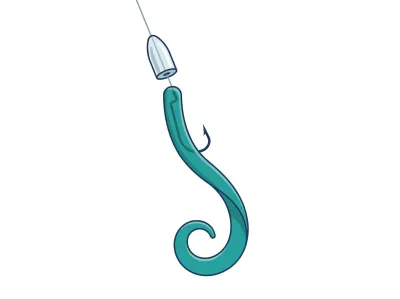
Texas-Rigged Worm
7" ribbon-tail or straight-tail plastic worm
Largemouth bass · Soft plastics
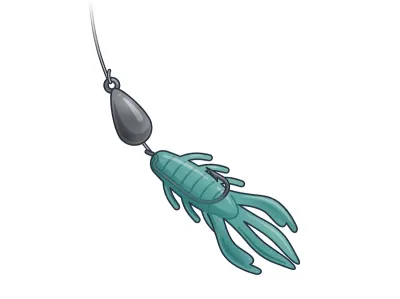
Free Rig
Creature bait or magnum finesse worm
Walleye · Live bait

Live-Bait (Lindy) Rig + Leech/Crawler
jumbo leech or half a nightcrawler
Walleye · Trolling
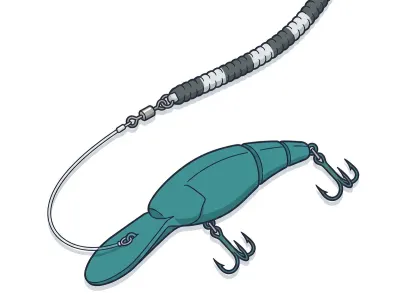
Leadcore Line + Crankbaits
4–5" mid-diving crankbait behind a long leadcore run
Northern pike · Soft plastics
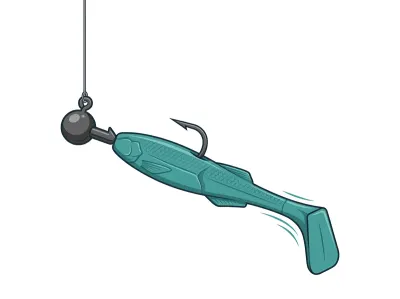
Paddletail Swimbait on Jighead
4–5" paddletail swimbait on a ball-head swimbait jighead
Northern pike · Muskie & pike
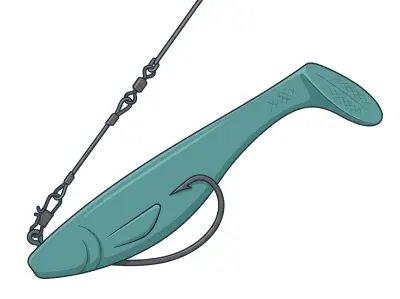
Soft Rubber (Bull Dawg / Medusa)
10" soft rubber body bait
Full setups, including hooks, weights and line, are on the live map. As an Amazon Associate I earn from qualifying purchases.
DNR stocking records
Stocking history
| Year | Species | Stocked |
|---|---|---|
| 2025 | Walleye | 4,380 fingerlings |
| 2024 | Walleye | 2,255 fingerlings |
| 2023 | Walleye | 2,970 fingerlings |
| 2022 | Walleye | 1,595 fingerlings |
| 2020 | Walleye | 1,650 fingerlings |
| 2019 | Walleye | 2,482 fingerlings |
| 2018 | Walleye | 4,098 fingerlings |
| 2017 | Walleye | 1,095 fingerlings |
MN DNR · in their words
From the 2021 survey
Whiskey Lake is a relatively small (158 acres), lightly developed basin located two miles northeast of Brandon in Douglas County. The lake has a maximum depth of 46 feet. Nearly half of the lake area is less than 15 feet deep. Water quality in Whiskey Lake has improved over the past two decades. The lake received discharges from the Brandon wastewater treatment plant until 1988. Excessive nutrient loading resulted in degradation of water quality and fish habitat. Dense algal blooms used to be frequent throughout summer months. Algal blooms can still occur, but with less frequency and severity. Whiskey Lake now supports a diverse and abundant aquatic plant community, which provides key spawning and nursery habitat for quality game fish populations.
The fish community in Whiskey Lake has changed dramatically over the past several decades. Increased water quality and improved habitat conditions have led to a shift in fish species composition. Current fish community attributes more closely reflect that of small, heavily vegetated, bass-panfish lakes of west-central Minnesota. Largemouth Bass, Bluegills, Black Crappie, and Northern Pike are now abundant. These species were practically non-existent throughout the 1980s and early 1990s. A fish survey was completed during spring and summer 2021 to provide updated information on the fish community of Whiskey Lake. Survey components included spring electrofishing to assess Largemouth Bass, spring trap nets to assess panfish and gill nets were utilized during July.
Read the full DNR narrative
This was the first survey on Whiskey Lake that included a spring panfish survey and results will be used as a baseline to evaluate the effects of the new sunfish regulation. Starting in the spring of 2021, a special regulation was implemented that reduced the daily limit of sunfish from 20 to 5. Whiskey Lake supports a quality sunfish population and a number of Bluegill over 9 inches were observed in the survey. Growth rates are fast and Bluegill up to age 11 were sampled in the survey. Large bluegill can be over exploited, especially in such a small system. The reduced bag limit will help maintain and possibly further enhance this quality fishery.
Spring surveys also offer the opportunity to sample larger Black Crappie (>8"), which can be difficult to sample in mid-summer surveys. The size structure of Black Crappie sampled in this survey was very high. Almost 43% of the sample was made up of Black Crappie ranging from 12 to 14 inches in length. Growth rates are only moderate, thus these larger crappies were very old compared to other populations, as most were 10 to 11 years old.
Largemouth Bass are also abundant and provide a quality fishing opportunity. A majority of the bass caught in this survey were from 13 to 17 inches in length. The largest bass in this survey was only 17.2 inches, but fish up to almost 21 inches have been caught in recent surveys. Northern Pike abundance has been increasing, however size structure remains poor. Average length of pike was only 18.7 inches. Walleye catch rates declined to 1.2 fish/net despite continued surplus fingerling stockings in recent years. The increased water clarity and submergent vegetation likely favor the bass/panfish and northern pike populations in Whiskey Lake. No Common Carp have been observed in Whiskey Lake since the lake was reclaimed and Black Bullhead abundance remains low.
Quality fishing opportunities exist for multiple species in Whiskey Lake. Anglers are encouraged to practice selective harvest to help improve and sustain the quality of the fishery. Selective harvest encourages the release of larger fish while promoting harvest of more abundant smaller fish. Releasing medium to large fish will help restore and maintain fish community balance, as well as increase opportunities to catch large fish in the future.
Whiskey Lake was designated as infested after zebra mussels were discovered in 2017. Recreational users should take necessary precautions to prevent the further spread of invasive species. Drain all water and remove all aquatic vegetation from your boat and trailer when leaving any body of water.
Narrative text from the Minnesota DNR lake survey.
Recent reports
Whiskey Lake fishing reports
Recent reports on Whiskey Lake from guides, tournaments and regular anglers. Anything posted in the last two weeks also bumps the matching spots on the live map, so you'll see a "matches a recent report" tag on them.
Public water access
Getting on the water
- Whiskey Lake (trailer launch)
DNR bathymetry
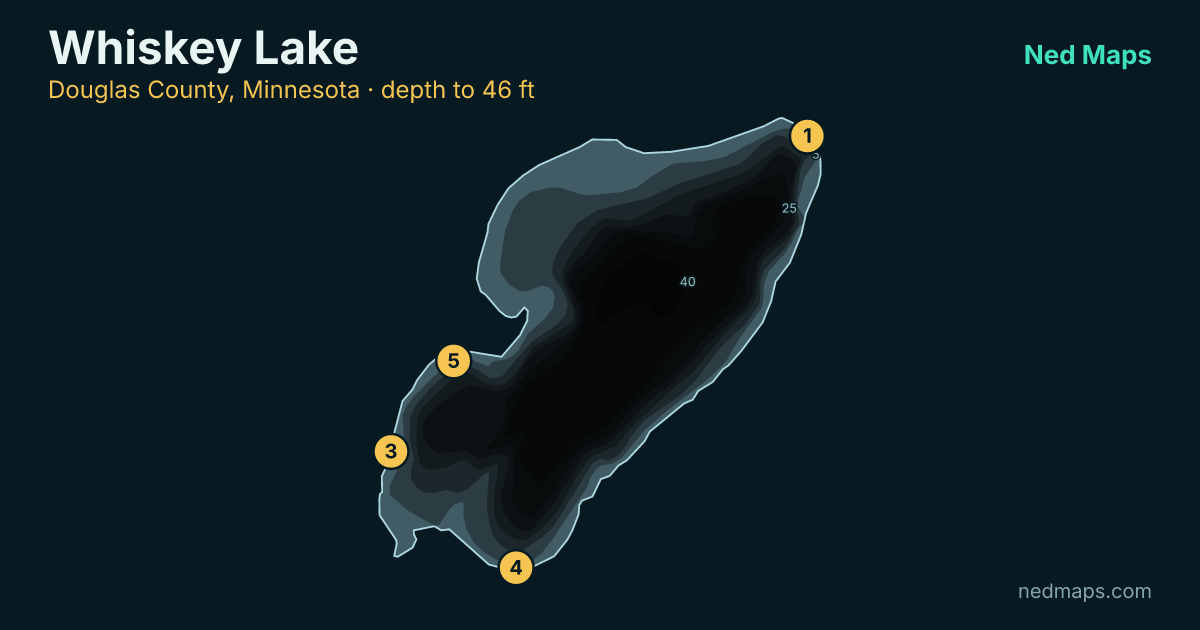
Whiskey Lake depth map
Within 30 miles
Nearby lakes
- Devils Lake · 234 ac · 1.2 mi
- Moon Lake · 139 ac · 1.5 mi
- Little Chippewa Lake · 271 ac · 2 mi
- Chippewa Lake · 1,186 ac · 2.6 mi
- Stowe Lake · 377 ac · 3 mi
- Long Lake · 202 ac · 5.4 mi
- Indian Lake · 99 ac · 5.9 mi
- Lake Moses · 824 ac · 6.2 mi
Quick answers
Frequently asked questions
How deep is Whiskey Lake?
Whiskey Lake reaches 46 ft at its deepest point with a mean depth of 12 ft; about 46% of the lake is littoral (15 ft or shallower).
How big is Whiskey Lake?
Whiskey Lake covers 160 acres with about 2.4 miles of shoreline.
How clear is the water in Whiskey Lake?
DNR Secchi readings on Whiskey Lake average 8.1 ft of visibility, middling clarity for a Minnesota lake.
What fish are in Whiskey Lake?
Minnesota DNR surveys (most recently 2021) record walleye, largemouth bass, northern pike, bluegill, crappie, yellow perch.
Is Whiskey Lake stocked?
Yes. The DNR stocked walleye in 2025; the stocking table on this page lists every year back to 2017.
Does Whiskey Lake have a public access?
Yes. Whiskey Lake has one public access site: Whiskey Lake (trailer launch).
How big do largemouth bass get in Whiskey Lake?
The biggest largemouth bass measured in recent DNR surveys taped 18"; the size-history table on this page tracks the biggest fish in each survey back to 1993.
When was Whiskey Lake last surveyed?
The Minnesota DNR last surveyed Whiskey Lake in 2021, the most recent of 12 surveys on record.
Page updated .

Featured guide spot
Your guide service here
One featured guide per lake, with your photo, your writeup and a link straight to your booking page. Free through December 31, 2026.
Then $20 a month from January. Cancel any time.
The live map adds today's conditions and ranked spots for Whiskey Lake, plus a trip plan you can share:
Open Whiskey Lake on the live map → Fished it lately? Write a report