Minnesota · Stearns County
Grand Lake Fishing guide
Grand Lake covers 651 acres in Stearns County, Minnesota, reaching 34 ft at its deepest point. Average water clarity runs about 5.8 ft. The Minnesota DNR has surveyed the lake 10 times, most recently in 2025, with walleye, largemouth bass, northern pike and bluegill in the nets.
DNR survey data
Fish species
WalleyeLast stocked 2024Excellent numbers7.3per gill net15"Typical25"Biggest
Lengths measured · 81 fish
Recent · 2025Lengths measured · 81 fish
2025Lengths measured · 51 fish
2020Lengths measured · 51 fish
2015Lengths measured · 53 fish
2008Largemouth bassFair numbers48per hr (electrofishing)13"Typical18"Biggest
Lengths measured · 158 fish
Recent · 2025Lengths measured · 158 fish
2025Lengths measured · 21 fish
2020Lengths measured · 61 fish
2015Lengths measured · 66 fish
2008Northern pikeOne of the best around18.1per gill net22"Typical34"Biggest
Lengths measured · 167 fish
Recent · 2025Lengths measured · 167 fish
2025Lengths measured · 163 fish
2020Lengths measured · 130 fish
2015Lengths measured · 135 fish
2008BluegillGood numbers54.5per trap net5"Typical8"Biggest
Lengths measured · 840 fish
Recent · 2025Lengths measured · 840 fish
2025Lengths measured · 564 fish
2020Lengths measured · 504 fish
2015Lengths measured · 182 fish
2008CrappieLast stocked 2025Just a few1.6per trap net8"Typical10"Biggest
Lengths measured · 37 fish
Recent · 2025Lengths measured · 37 fish
2025Lengths measured · 10 fish
2020Lengths measured · 63 fish
2015Lengths measured · 49 fish
2008Rates come from standard DNR survey gear (gill nets, trap nets, electrofishing), judged against statewide benchmarks for the same gear, so the same number of fish per net can read differently for two species. Where the standard gear can't count a species reliably, only presence and size are listed. Typical is the middle fish of those measured. Open a row for the full length spread, survey by survey.
How to fish Grand Lake through the year
Walleye
- Spring
- Walleye are shallow, on and just off the spawning flats and the first green weeds.
- Early summer
- Walleye are setting up on the outside weed edge, points and shallow structure.
- Summer
- Walleye are working the weed edge, points and any wind-blown structure.
- Fall
- Walleye are packing onto the sharpest breaks and points as the water cools, in big schools with short windows.
Northern pike
- Spring
- Pike are in the shallow bays and along new weed growth.
- Early summer
- Pike are on the outside weed edge and points.
- Summer
- Pike are on the deep weed edge and points near the coolest water they can find.
- Fall
- Pike are on the last green weeds and the breaks beside them, feeding heavily as the water drops.
Season patterns for each species. Open the live map for today's wind, light and water temp.
Size history
Biggest fish by survey year
| Survey year | Walleye | Northern pike | Largemouth bass |
|---|---|---|---|
| 2025 | 25" | 34" | 18" |
| 2020 | 28" | 27" | 19" |
| 2015 | 27" | 29" | 17" |
| 2008 | 29" | 37" | 18" |
| 1998 | 27" | 32" | 14" |
Longest fish measured by DNR survey crews in each year's nets. Survey gear samples the population, so the lake usually holds larger fish than any survey measured.
Suggested tackle
What to bring
Top presentations for this lake's structure and clarity:
Walleye · Live bait

Live-Bait (Lindy) Rig + Leech/Crawler
jumbo leech or half a nightcrawler
Walleye · Trolling
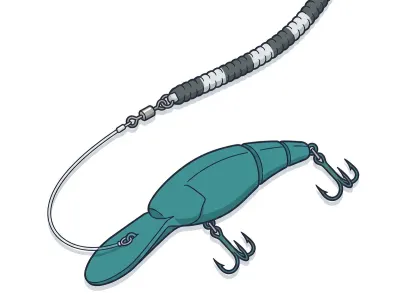
Leadcore Line + Crankbaits
4–5" mid-diving crankbait behind a long leadcore run
Northern pike · Soft plastics
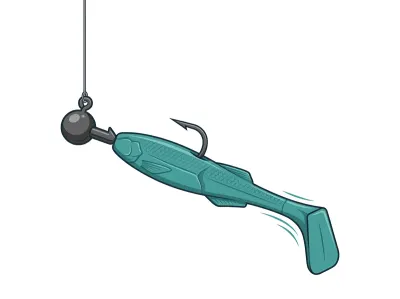
Paddletail Swimbait on Jighead
4–5" paddletail swimbait on a ball-head swimbait jighead
Northern pike · Muskie & pike
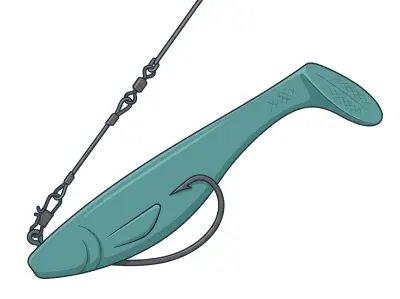
Soft Rubber (Bull Dawg / Medusa)
10" soft rubber body bait
Largemouth bass · Soft plastics
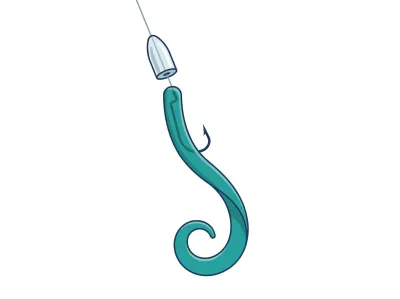
Texas-Rigged Worm
7" ribbon-tail or straight-tail plastic worm
Largemouth bass · Soft plastics
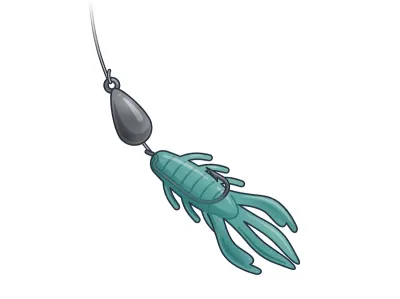
Free Rig
Creature bait or magnum finesse worm
Full setups, including hooks, weights and line, are on the live map. As an Amazon Associate I earn from qualifying purchases.
DNR stocking records
Stocking history
| Year | Species | Stocked |
|---|---|---|
| 2025 | Black Crappie | 700 adults |
| 2024 | Walleye | 2,027 yearlings |
| 2023 | Walleye | 2,050 fingerlings |
| 2022 | Walleye | 7,520 fingerlings |
| 2020 | Walleye | 3,250 yearlings |
| 2018 | Walleye | 2,923 fingerlings · 155 yearlings · 25 adults |
| 2016 | Walleye | 634 fingerlings · 416 yearlings · 370 adults |
MN DNR · in their words
From the 2025 survey
Grand Lake is a 655-acre, highly developed lake located approximately two miles south of Rockville in eastern Stearns County. The lake has moderate to good water quality with an average summer Secchi depth of 8.9 feet, reflecting improved water clarity since the last survey. It is classified as lake class 27. The watershed covers roughly 7,000 acres and land use is dominated by cultivated crops (41%), forest (25%), open water (14%), hay/pasture (8%), wetland (5%), grassland (3%), and residential (3%). A DNR public access is located on the south side of the lake and the lake is designated infested with starry stonewort (2017), and zebra mussels (2022). A standard lake survey was completed in 2025 to update fisheries data last collected in 2020.
Grand Lake continues to support a balanced and moderately productive fishery typical of central Minnesota lakes. The 2025 standard lake survey indicated stable water quality and habitat conditions along with consistent recruitment among major gamefish. The fish community remains dominated by Walleye, Northern Pike, and Bluegill, with Largemouth Bass, Black Crappie, and several other warmwater species providing a variety of quality angler opportunities.
Read the full DNR narrative
Walleye remain the primary managed species in Grand Lake and continue to perform well under the current fingerling stocking program. The 2025 survey documented higher walleye abundance than in 2020 and above the long-term average. Fish ranged from approximately 11 to 26 inches, averaging 16 inches and 1.5 pounds. This reflects strong recruitment from the 2022 and 2024 stocking events, although the larger number of younger fish slightly lowered the average size compared to 2020. Growth remains average, with fish reaching 16 inches by age-3. Overall, the Walleye population provides a consistent and dependable fishery for anglers.
Northern Pike remain abundant. The 2025 survey showed abundance similar to 2020 and continued to be above expected levels for lake class 27. Pike lengths ranged from 16 to 34 inches and averaged about 23 inches and 2.6 pounds, a noticeable improvement in size from the 2020 survey. Seventeen percent of pike sampled were longer than 26 inches compared to just 3% in 2020, suggesting modest gains in size structure. Recent angler harvest of small pike appears to be improving overall balance. The population remains high but offers good angling action with opportunities for larger fish.
Bass sampling resumed in 2025 after being paused in 2020 due to the COVID-19 pandemic. Spring day-time electrofishing in 2025 documented higher bass abundance than in 2015 and above the Sauk Rapids Area day-time average. Bass ranged from 8 to 18 inches and averaged 13 inches in length, with 68% of fish exceeding 12 inches and 19% exceeding 15 inches. The bass population is healthy, self-sustaining, and well balanced, supported by good spawning and rearing habitat along vegetated shorelines.
Bluegill remain one of the most abundant species in Grand Lake. The 2025 survey showed higher bluegill abundance than in 2020 and exceeded the expected lake class values. Bluegill ranged from 3 to 9 inches and averaged 5.4 inches. Thirty-five percent were longer than 6 inches, but only 1 percent exceeded 8 inches. While Bluegill are plentiful, they continue to be dominated by small and medium-sized fish, a common condition in lakes with high competition and predation. The population appears stable with moderate reproduction each year.
Black Crappie abundance increased slightly in 2025 compared to the previous survey. Fish ranged from 5 to 11 inches, averaging 8 inches in length. Crappies remain a popular target for anglers, and current numbers indicate improving fishing opportunities.
Yellow Perch continue to be scarce. The 2025 survey showed similar low abundance compared to the past 3 surveys and remains well below expected values. Only a few individuals were sampled, measuring about six inches each. Their persistently low abundance is likely caused by sustained predation from the abundant Northern Pike and Walleye populations. Yellow Perch are not currently a significant component of the fish community or fishery.
Other fish captured during the survey included Brown and Yellow Bullhead, Bowfin (Dogfish), Hybrid Sunfish, Green Sunfish, Pumpkinseed, and White Sucker.
Grand Lake maintains a healthy and diverse fish community. Walleye continue to perform well under current management, Northern Pike remain abundant and show modest size improvement, and Largemouth Bass populations are strong and well balanced. Bluegill are abundant and small while and Black Crappie populations are average and stable. Yellow Perch remain low but do not appear to affect the overall fishery balance. Habitat and water quality continue to support good spawning and recruitment conditions.
Overall, Grand Lake provides excellent year-round angling potential with consistent Walleye catches, abundant Pike, and stable panfish numbers.
Narrative text from the Minnesota DNR lake survey.
Recent reports
Grand Lake fishing reports
Recent reports on Grand Lake from guides, tournaments and regular anglers. Anything posted in the last two weeks also bumps the matching spots on the live map, so you'll see a "matches a recent report" tag on them.
Public water access
Getting on the water
- Grand Lake (trailer launch)
DNR bathymetry
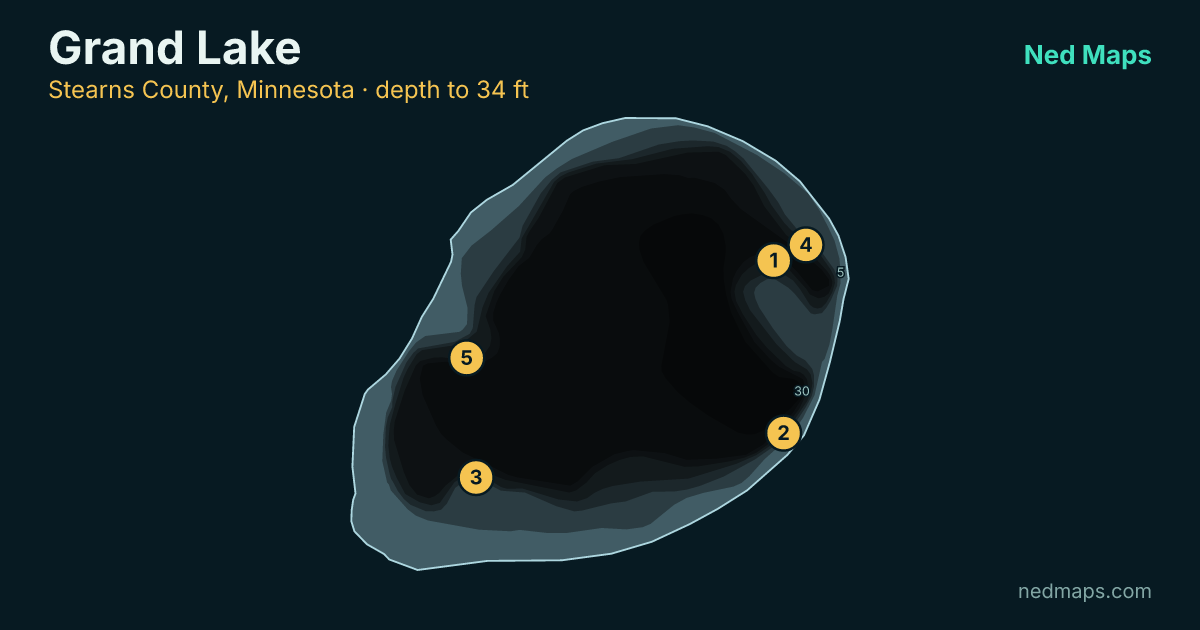
Grand Lake depth map
Within 30 miles
Nearby lakes
- Pearl Lake · 753 ac · 2.8 mi
- Goodners Lake · 191 ac · 3.7 mi
- Beaver Lake · 112 ac · 4.8 mi
- Pleasant Lake · 218 ac · 4.9 mi
- Knaus Lake · 216 ac · 5.4 mi
- Carnelian Lake · 180 ac · 5.6 mi
- Krays Lake · 95 ac · 5.8 mi
- Bolfing Lake · 109 ac · 6.2 mi
Quick answers
Frequently asked questions
How deep is Grand Lake?
Grand Lake reaches 34 ft at its deepest point with a mean depth of 19 ft; about 36% of the lake is littoral (15 ft or shallower).
How big is Grand Lake?
Grand Lake covers 651 acres with about 3.8 miles of shoreline.
How clear is the water in Grand Lake?
DNR Secchi readings on Grand Lake average 5.8 ft of visibility, middling clarity for a Minnesota lake.
What fish are in Grand Lake?
Minnesota DNR surveys (most recently 2025) record walleye, largemouth bass, northern pike, bluegill, crappie, yellow perch.
Is Grand Lake stocked?
Yes. The DNR stocked black crappie in 2025; the stocking table on this page lists every year back to 2016.
Does Grand Lake have a public access?
Yes. Grand Lake has one public access site: Grand Lake (trailer launch).
How big do walleye get in Grand Lake?
The biggest walleye measured in recent DNR surveys taped 25"; the size-history table on this page tracks the biggest fish in each survey back to 1998.
When was Grand Lake last surveyed?
The Minnesota DNR last surveyed Grand Lake in 2025, the most recent of 10 surveys on record.
Page updated .

Featured guide spot
Your guide service here
One featured guide per lake, with your photo, your writeup and a link straight to your booking page. Free through December 31, 2026.
Then $20 a month from January. Cancel any time.
The live map adds today's conditions and ranked spots for Grand Lake, plus a trip plan you can share:
Open Grand Lake on the live map → Fished it lately? Write a report