Minnesota · Stearns County
Knaus Lake Fishing guide
Knaus Lake sits in Stearns County, Minnesota, and covers 216 acres, reaching 20 ft at its deepest point. Average water clarity runs about 3 ft. The Minnesota DNR has surveyed the lake 8 times, most recently in 2024, with walleye, largemouth bass, smallmouth bass and northern pike in the nets.
DNR survey data
Fish species
WalleyeFair numbers3.5per gill net15"Typical20"Biggest
Lengths measured · 14 fish
Recent · 2021 + 2024Lengths measured · 5 fish
2024Only 5 fish measured that year — too few to read as a shape.
Lengths measured · 9 fish
2021Only 9 fish measured that year — too few to read as a shape.
Lengths measured · 11 fish
2018Lengths measured · 6 fish
2013Only 6 fish measured that year — too few to read as a shape.
Largemouth bassGood numbers58.3per hr (electrofishing)8"Typical18"Biggest
Lengths measured · 44 fish
Recent · 2024Lengths measured · 44 fish
2024Lengths measured · 6 fish
2013Only 6 fish measured that year — too few to read as a shape.
Lengths measured · 64 fish
2003Lengths measured · 1 fish
1995Only 1 fish measured that year — too few to read as a shape.
Northern pikeFair numbers6.8per gill net19"Typical30"Biggest
Lengths measured · 27 fish
Recent · 2021 + 2024Lengths measured · 20 fish
2024Lengths measured · 7 fish
2021Only 7 fish measured that year — too few to read as a shape.
Lengths measured · 15 fish
2018Lengths measured · 6 fish
2013Only 6 fish measured that year — too few to read as a shape.
Last recorded in the 2013 survey and not seen since.
BluegillPresent22.5per gill net5"Typical9"Biggest
Lengths measured · 89 fish
Recent · 2021 + 2024Lengths measured · 70 fish
2024Lengths measured · 19 fish
2021Lengths measured · 55 fish
2018Lengths measured · 33 fish
2013CrappiePresent5.8per gill net9"Typical12"Biggest
Lengths measured · 22 fish
Recent · 2021 + 2024Lengths measured · 3 fish
2024Only 3 fish measured that year — too few to read as a shape.
Lengths measured · 19 fish
2021Lengths measured · 67 fish
2018Lengths measured · 175 fish
2013Yellow perchOne of the best around26.8per gill net5"Typical8"Biggest
Lengths measured · 106 fish
Recent · 2024Lengths measured · 106 fish
2024Lengths measured · 7 fish
2018Only 7 fish measured that year — too few to read as a shape.
Lengths measured · 3 fish
2003Only 3 fish measured that year — too few to read as a shape.
Lengths measured · 33 fish
1995Channel catfishElite fishery15per gill net20"Typical28"Biggest
Lengths measured · 60 fish
Recent · 2021 + 2024Lengths measured · 21 fish
2024Lengths measured · 39 fish
2021Lengths measured · 32 fish
2018Lengths measured · 76 fish
2013Rates come from standard DNR survey gear (gill nets, trap nets, electrofishing), judged against statewide benchmarks for the same gear, so the same number of fish per net can read differently for two species. Where the standard gear can't count a species reliably, only presence and size are listed. Typical is the middle fish of those measured. Open a row for the full length spread, survey by survey.
How to fish Knaus Lake through the year
Largemouth bass
- Spring
- Largemouth are moving up into the warming bays and flats, staging around wood, docks and new weeds to spawn. In 3 ft of visibility, they sit shallower than you think.
- Early summer
- Largemouth are on the shallow spawning flats and protected bays, where beds go on firm bottom next to isolated cover.
- Summer
- Largemouth are in and along the weeds: cabbage and milfoil edges, matted cover and shade. With 94% of this lake 15 ft or shallower, the weed edge is the main event.
- Fall
- Largemouth are chasing bait back onto the flats and into the remaining green weeds, feeding hard and shallow before the freeze.
Walleye
- Spring
- Walleye are shallow, on and just off the spawning flats and the first green weeds. In 3 ft of visibility, they sit shallower than you think.
- Early summer
- Walleye are setting up on the outside weed edge, points and shallow structure.
- Summer
- Walleye are working the weed edge, points and any wind-blown structure. With 94% of this lake 15 ft or shallower, the weed edge is the main event.
- Fall
- Walleye are packing onto the sharpest breaks and points as the water cools, in big schools with short windows.
Season patterns for each species. Open the live map for today's wind, light and water temp.
Size history
Biggest fish by survey year
| Survey year | Largemouth bass | Walleye | Northern pike |
|---|---|---|---|
| 2024 | 18" | 19" | 27" |
| 2021 | — | 20" | 30" |
| 2018 | — | 26" | 34" |
| 2013 | 15" | 25" | 35" |
| 2003 | 15" | 25" | 30" |
| 1995 | 4" | 27" | 31" |
Longest fish measured by DNR survey crews in each year's nets. Survey gear samples the population, so the lake usually holds larger fish than any survey measured.
Suggested tackle
What to bring
Top presentations for this lake's structure and clarity:
Largemouth bass · Hardbaits
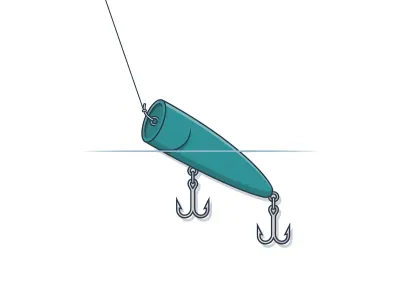
Topwater Popper
2.5–3" concave-face popper
Largemouth bass · Hardbaits
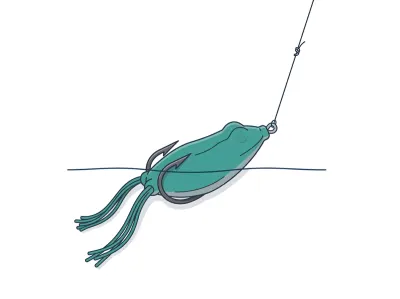
Hollow-Body Frog
3–3.5" hollow-body frog
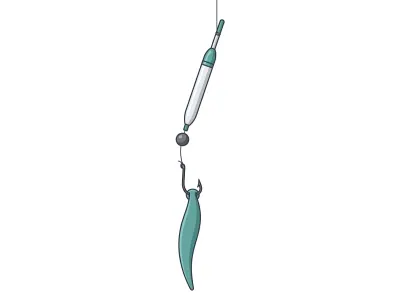
Walleye · Trolling
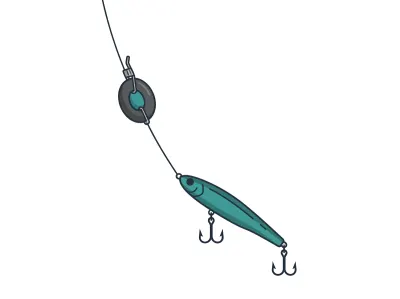
Snap Weights + Stickbaits
4–5" suspending or slow-floating stickbait
Northern pike · Soft plastics
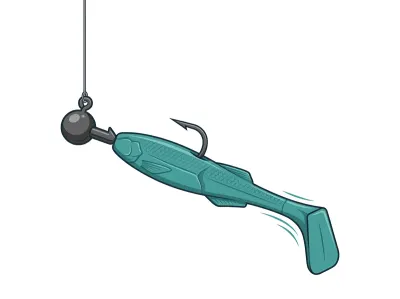
Paddletail Swimbait on Jighead
4–5" paddletail swimbait on a ball-head swimbait jighead
Northern pike · Muskie & pike
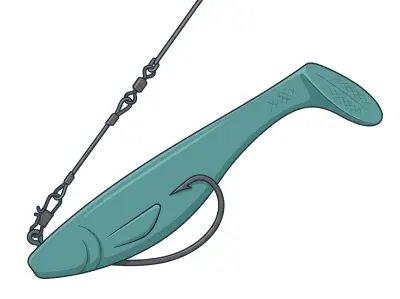
Soft Rubber (Bull Dawg / Medusa)
10" soft rubber body bait
Full setups, including hooks, weights and line, are on the live map. As an Amazon Associate I earn from qualifying purchases.
MN DNR · in their words
From the 2024 survey
The Sauk River Chain of Lakes (SRCL) is located in south-central Stearns County, near the city of Richmond. A dam built in the early 1900's on the Sauk River in Cold Spring created the SRCL a reservoir consisting of nine lakes and approximately 3,200 acres of water. The Sauk River drains a large portion of central Minnesota before flowing through the SRCL and ultimately influences water quality trends within the SRCL. Although non-point source pollution continues to be a concern, some major contributors of nutrient loading, such as municipal wastewater discharge, were greatly reduced in the 1980's and 1990's. Efforts continue to be made to address the existing non-point pollution sources and improve the water quality within SRCL. Zebra mussels were found within the SRCL in 2018, and Eurasian watermilfoil was found in Horseshoe Lake in 2021. Anglers are encouraged to help prevent the spread of aquatic invasive species (AIS) by cleaning, draining, and drying all equipment used in infested waters. The SRCL is managed for Walleye, Muskellunge, and Channel Catfish and a targeted survey was conducted in 2024 using boat electrofishing and gillnets to update data on popular game species last collected in 2021. To provide a larger sample size, all lakes east of County Rd 71 (Zumwalde, Schneider, Great Northern, Krays, Knaus, and Bolfing; SRCL East Lakes) were combined for the analysis and will be referred to as the East Lakes in this report.
Largemouth and Smallmouth Bass were surveyed during the daytime using boat electrofishing from May 13 to May 17, 2024. The Largemouth Bass catch increased (29/hr) while Smallmouth Bass catch decreased (2/hr) compared to the results from the 2018 survey (20/hr and 7/hr). The catch results from 2024 were below the management goal for daytime electrofishing (50/hr) and the lowest on record for Smallmouth Bass. Largemouth Bass ranged in length from three to 19 inches with an average length of 9.2, while Smallmouth Bass ranged in length from 12 to 19 inches with an average length of 17 inches. Despite the poor sampling numbers, the SRCL remains a popular bass fishing destination.
Read the full DNR narrative
Walleye is one of the primary management species within the SRCL. The catch of Walleye in the East Lakes in 2024 (2.5/net) was lower than 2018 (4.2/net), but similar to the long-term average for the East Lakes (2.4/net) and within the ranged of expected values for similar lakes. Walleye ranged in length from nine to 22 inches, with an average length and weight of 16 inches and 1.6 pounds. Anglers can expect decent fishing for eater sized walleye as 65% were longer than 15 inches while only 4% were longer than 20 inches. Walleye growth within the SRCL is average with both males and females reaching 15 inches by age three. Walleye stocking was discontinued on the SRCL after 2017 because natural reproduction was documented by area staff within the SRCL during unstocked years and the abundance of young walleye sampled during fall electrofishing were at or above those levels observed during stocked years.
Northern Pike abundance increased from 3.9/net (2021) to 11.0/net in 2024 and was above the range of expected values for the lakes. Northern Pike lengths ranged from 13 to 31 inches, with an average length and weight of 21.2 inches and 2.2 pounds. Fourteen percent of the Northern Pike sampled were longer than 26 inches, indicating that a lot of "hammer handle" pike are present within East Lakes. Anglers are encouraged to harvest small pike (less than 22.0 inches) to help increase the size structure of the population.
Channel Catfish have historically been abundant within the SRCL and abundance in the East Lakes peaked in 2013 at 26.5/net and has been declining since. The catch in 2024 (6.1/net) was the lowest since 1990 (1.8/net). While catfish abundance has decreased the average size has increased. Catfish sampled ranged in length from 17 to 28 inches, with an average length and weight of 21.6 inches and 3.8 pounds. Anglers will find many Channel Catfish between 17 and 25 inches as 100% of the catfish sampled were longer than 17 inches and 21% were longer than 24 inches during the survey.
Black Crappie gillnet abundance was very high between 1980 and 1995 ranging from 22 - 56/net. Since that time, catch rates have declined and become more realistic ranging from 2.3 - 12/net. The catch in 2024 (2.3/net) was lower than 2021 (5.3/net) but still within the range of expected values for similar lakes. Black Crappie ranged in length from five to 12 inches with an average length of 8.1 inches. Fifty-five percent of the crappie caught were longer than eight inches with 35% being longer than 10 inches. Anglers may have to search, but quality size crappies can be found in the East Lakes.
Yellow Perch catches have been low the past four surveys in the East Lakes of the SRCL, but in 2024 Yellow Perch numbers rebounded significantly with a catch rate of 30.4/net which was the highest catch rate on record. Yellow Perch lengths ranged from five to nine inches and averaged six inches.
Other species sampled in low numbers included: Black Bullhead, Black Redhorse, Bluegill, Common Carp, Greater Redhorse, Hybrid Sunfish, Pumpkinseed, Shorthead Redhorse, Silver Redhorse, White Sucker, and Yellow Bullhead.
Narrative text from the Minnesota DNR lake survey.
Recent reports
Knaus Lake fishing reports
Recent reports on Knaus Lake from guides, tournaments and regular anglers. Anything posted in the last two weeks also bumps the matching spots on the live map, so you'll see a "matches a recent report" tag on them.
Public water access
Getting on the water
- Sauk River Fishing Pier (fishing pier)
DNR bathymetry
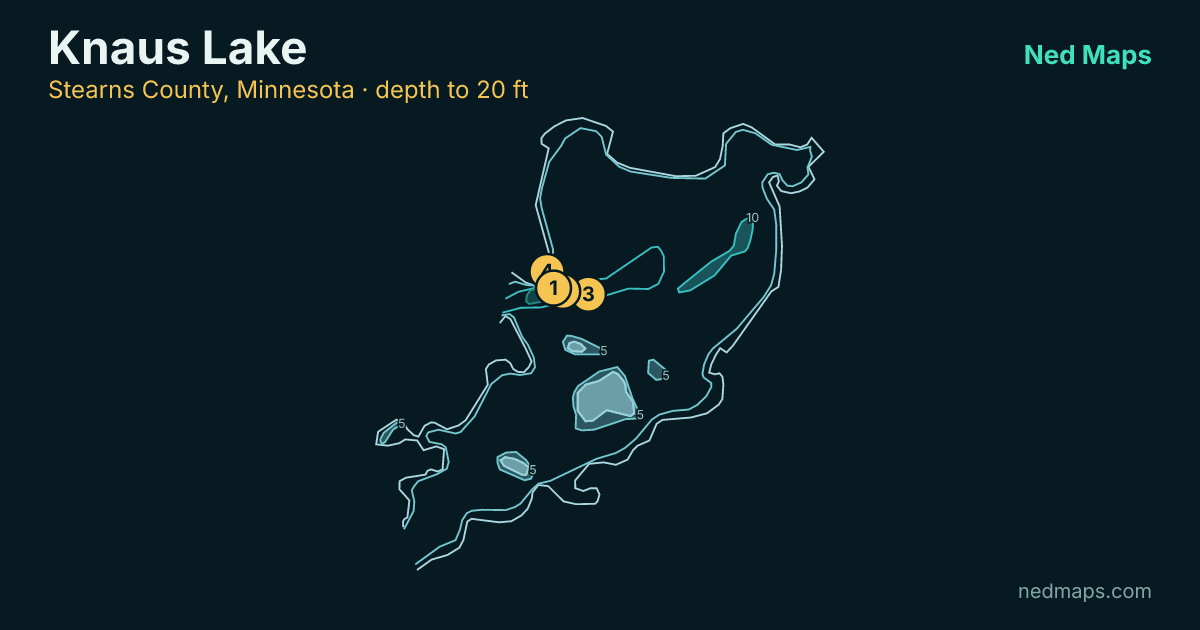
Knaus Lake depth map
Within 30 miles
Nearby lakes
- Krays Lake · 95 ac · 0.4 mi
- Bolfing Lake · 109 ac · 0.8 mi
- Great Northern Lake · 196 ac · 0.8 mi
- Schneider Lake · 60 ac · 1.4 mi
- Zumwalde Lake · 128 ac · 1.8 mi
- Cedar Island Lake · 986 ac · 2.6 mi
- Horseshoe Lake · 629 ac · 3.9 mi
- Becker Lake · 221 ac · 4.2 mi
Quick answers
Frequently asked questions
How deep is Knaus Lake?
Knaus Lake reaches 20 ft at its deepest point with a mean depth of 6.4 ft; about 94% of the lake is littoral (15 ft or shallower).
How big is Knaus Lake?
Knaus Lake covers 216 acres with about 4.5 miles of shoreline.
How clear is the water in Knaus Lake?
DNR Secchi readings on Knaus Lake average 3 ft of visibility, on the stained end for a Minnesota lake.
What fish are in Knaus Lake?
Minnesota DNR surveys (most recently 2024) record walleye, largemouth bass, smallmouth bass, northern pike, muskellunge, bluegill, crappie, yellow perch, channel catfish.
Is Knaus Lake stocked?
No stocking is on record for Knaus Lake in the DNR's stocking database.
Does Knaus Lake have a public access?
Yes. Knaus Lake has one public access site: Sauk River Fishing Pier (fishing pier).
How big do largemouth bass get in Knaus Lake?
The biggest largemouth bass measured in recent DNR surveys taped 18"; the size-history table on this page tracks the biggest fish in each survey back to 1995.
When was Knaus Lake last surveyed?
The Minnesota DNR last surveyed Knaus Lake in 2024, the most recent of 8 surveys on record.
Page updated .

Featured guide spot
Your guide service here
One featured guide per lake, with your photo, your writeup and a link straight to your booking page. Free through December 31, 2026.
Then $20 a month from January. Cancel any time.
The live map adds today's conditions and ranked spots for Knaus Lake, plus a trip plan you can share:
Open Knaus Lake on the live map → Fished it lately? Write a report