Minnesota · Stearns County
Great Northern Lake Fishing guide
Great Northern Lake sits in Stearns County, Minnesota, and covers 196 acres, reaching 16.2 ft at its deepest point. Secchi readings average around 3.1 ft of visibility. The Minnesota DNR has surveyed the lake 19 times, most recently in 2025, with walleye, largemouth bass, smallmouth bass and northern pike in the nets.
DNR survey data
Fish species
WalleyeFair numbers3.3per gill net16"Typical28"Biggest
Lengths measured · 13 fish
Recent · 2021 + 2024Lengths measured · 17 fish
2025Lengths measured · 37 fish
2024Lengths measured · 9 fish
2024Only 9 fish measured that year — too few to read as a shape.
Lengths measured · 79 fish
2023Northern pikeGood numbers10per gill net21"Typical29"Biggest
Lengths measured · 39 fish
Recent · 2021 + 2024Lengths measured · 31 fish
2024Lengths measured · 8 fish
2021Only 8 fish measured that year — too few to read as a shape.
Lengths measured · 2 fish
2018Only 2 fish measured that year — too few to read as a shape.
Lengths measured · 2 fish
2013Only 2 fish measured that year — too few to read as a shape.
Last recorded in the 2018 survey and not seen since.
BluegillPresent11per gill net6"Typical9"Biggest
Lengths measured · 43 fish
Recent · 2021 + 2024Lengths measured · 35 fish
2024Lengths measured · 8 fish
2021Only 8 fish measured that year — too few to read as a shape.
Lengths measured · 62 fish
2018Lengths measured · 39 fish
2013CrappiePresent8per gill net8"Typical11"Biggest
Lengths measured · 33 fish
Recent · 2021 + 2024Lengths measured · 9 fish
2024Only 9 fish measured that year — too few to read as a shape.
Lengths measured · 24 fish
2021Lengths measured · 181 fish
2018Lengths measured · 116 fish
2013Yellow perchExcellent numbers18.3per gill net5"Typical8"Biggest
Lengths measured · 72 fish
Recent · 2021 + 2024Lengths measured · 71 fish
2024Lengths measured · 1 fish
2021Only 1 fish measured that year — too few to read as a shape.
Lengths measured · 7 fish
2018Only 7 fish measured that year — too few to read as a shape.
Lengths measured · 4 fish
2013Only 4 fish measured that year — too few to read as a shape.
Channel catfishOne of the best around14per gill net20"Typical26"Biggest
Lengths measured · 56 fish
Recent · 2021 + 2024Lengths measured · 9 fish
2024Only 9 fish measured that year — too few to read as a shape.
Lengths measured · 47 fish
2021Lengths measured · 52 fish
2018Lengths measured · 1 fish
2015Only 1 fish measured that year — too few to read as a shape.
Rates come from standard DNR survey gear (gill nets, trap nets, electrofishing), judged against statewide benchmarks for the same gear, so the same number of fish per net can read differently for two species. Where the standard gear can't count a species reliably, only presence and size are listed. Typical is the middle fish of those measured. Open a row for the full length spread, survey by survey.
How to fish Great Northern Lake through the year
Northern pike
- Spring
- Pike are in the shallow bays and along new weed growth. In 3.1 ft of visibility, they sit shallower than you think.
- Early summer
- Pike are on the outside weed edge and points.
- Summer
- Pike are on the deep weed edge and points near the coolest water they can find. With 95% of this lake 15 ft or shallower, the weed edge is the main event.
- Fall
- Pike are on the last green weeds and the breaks beside them, feeding heavily as the water drops. A 16.2-ft bowl cools fast, so the fall window comes early here.
Walleye
- Spring
- Walleye are shallow, on and just off the spawning flats and the first green weeds. In 3.1 ft of visibility, they sit shallower than you think.
- Early summer
- Walleye are setting up on the outside weed edge, points and shallow structure.
- Summer
- Walleye are working the weed edge, points and any wind-blown structure. With 95% of this lake 15 ft or shallower, the weed edge is the main event.
- Fall
- Walleye are packing onto the sharpest breaks and points as the water cools, in big schools with short windows. A 16.2-ft bowl cools fast, so the fall window comes early here.
Season patterns for each species. Open the live map for today's wind, light and water temp.
Size history
Biggest fish by survey year
| Survey year | Northern pike | Walleye | Largemouth bass |
|---|---|---|---|
| 2025 | — | 27" | — |
| 2024 | 27" | 22" | 16" |
| 2023 | — | 26" | — |
| 2022 | — | 28" | — |
| 2021 | 29" | 23" | — |
| 2020 | — | 26" | — |
| 2019 | — | 28" | — |
| 2018 | 29" | 24" | 12" |
Longest fish measured by DNR survey crews in each year's nets. Survey gear samples the population, so the lake usually holds larger fish than any survey measured.
Suggested tackle
What to bring
Top presentations for this lake's structure and clarity:
Northern pike · Soft plastics
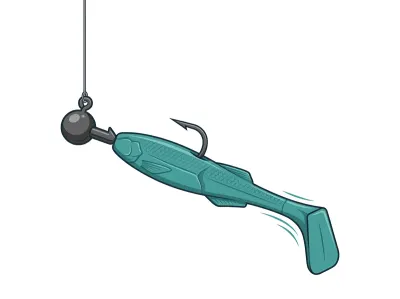
Paddletail Swimbait on Jighead
4–5" paddletail swimbait on a ball-head swimbait jighead
Northern pike · Muskie & pike
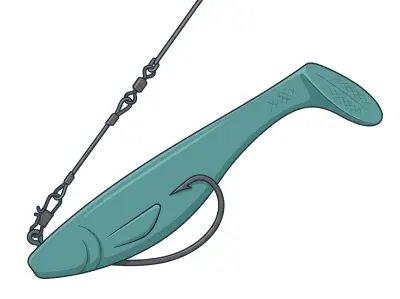
Soft Rubber (Bull Dawg / Medusa)
10" soft rubber body bait
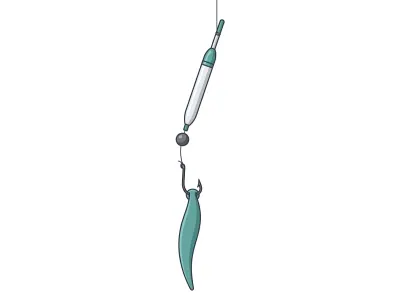
Walleye · Trolling
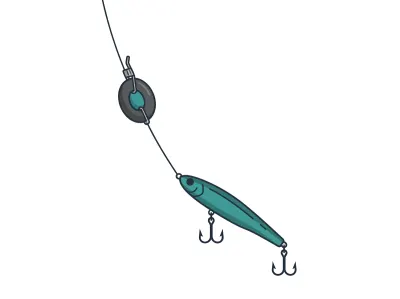
Snap Weights + Stickbaits
4–5" suspending or slow-floating stickbait
Largemouth bass · Hardbaits
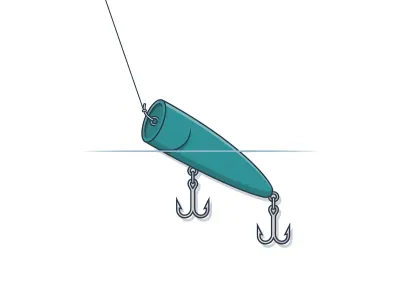
Topwater Popper
2.5–3" concave-face popper
Largemouth bass · Hardbaits
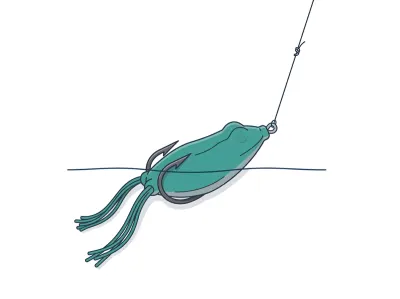
Hollow-Body Frog
3–3.5" hollow-body frog
Full setups, including hooks, weights and line, are on the live map. As an Amazon Associate I earn from qualifying purchases.
MN DNR · in their words
From the 2025 survey
The Sauk River Chain of Lakes (SRCL) is located in south-central Stearns County near the city of Cold Spring. A dam on the Sauk River built in the early 1900s created the SRCL and provides access to over 3,200 acres of connected water, including Bolfing, Great Northern, Knaus, Krays, Schneider, Zumwalde, Cedar Island, and Horseshoe Lakes. Prior to 2001, the Walleye fishery was supported through fingerling stockings during odd-numbered years. In 2001, the stocking strategy switched from fingerling to fry stocking during odd-numbered years and was often supplemented by natural reproduction and fry stocking conducted by the lake association.
Fall electrofishing for young-of-year (YOY) Walleye was initiated in the East Lakes (Bolfing, Great Northern, Knaus, Krays, Schneider, and Zumwalde) in 2015 to monitor the distribution and abundance of YOY Walleye and naturally reproduced fish migrating downstream from Horseshoe and Cedar Island Lakes. Fall electrofishing results indicated strong natural reproduction, leading to the discontinuation of Walleye stocking in 2018.
Read the full DNR narrative
A targeted electrofishing survey was conducted on October 15, 2025, to assess YOY Walleye abundance within the East Lakes complex, represented by Great Northern Lake. During this survey, 17 Walleye were captured, all of which were age-1+ fish. The catch rate was15.8 fish/hour (on-time). Walleye ranged in length from 11.7 to 27.9 inches and averaged 16.6 inches in total length. No YOY Walleye were captured in the 2025 survey.
Since the discontinuance of fry stocking in 2018, YOY Walleye catch rates across the East Lakes have ranged from 0 to 162/hr, with a long-term average of 56.7/hr. Annual fall YOY electrofishing will continue, and if YOY catch rates across the SRCL remain below 25/hr for three consecutive years, fry stocking will take place the following spring as per the Lake Management Plan.
Narrative text from the Minnesota DNR lake survey.
Recent reports
Great Northern Lake fishing reports
Recent reports on Great Northern Lake from guides, tournaments and regular anglers. Anything posted in the last two weeks also bumps the matching spots on the live map, so you'll see a "matches a recent report" tag on them.
Public water access
Getting on the water
- DNR access
DNR bathymetry
Great Northern Lake depth map
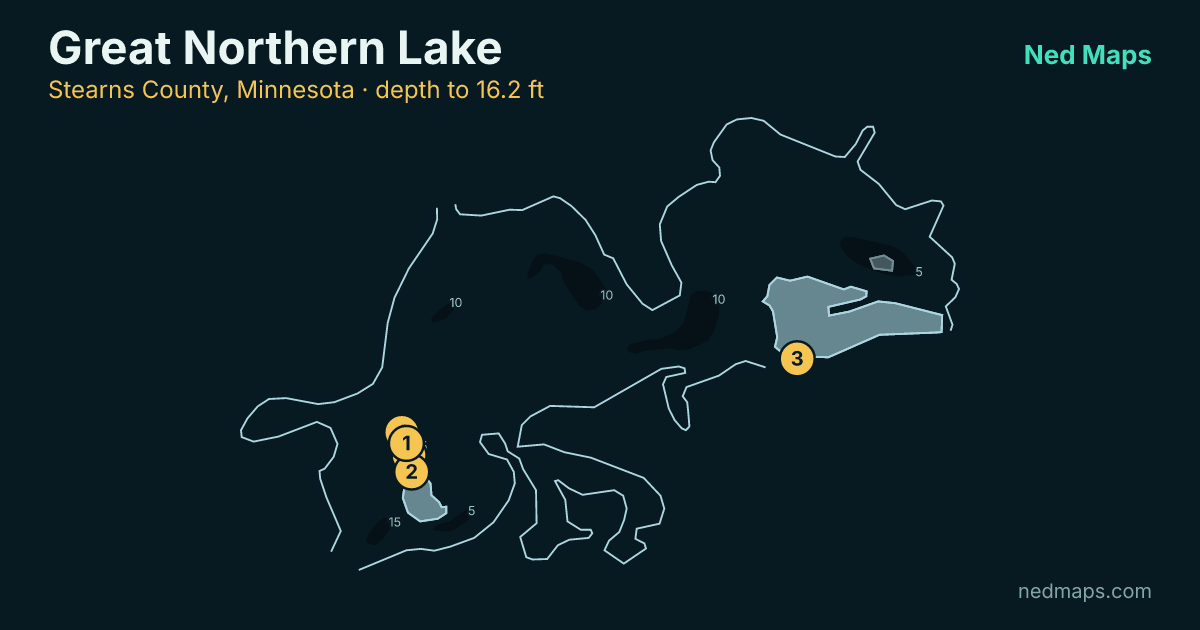
Within 30 miles
Nearby lakes
- Krays Lake · 95 ac · 0.5 mi
- Schneider Lake · 60 ac · 0.6 mi
- Bolfing Lake · 109 ac · 0.6 mi
- Knaus Lake · 216 ac · 0.8 mi
- Zumwalde Lake · 128 ac · 1.1 mi
- Cedar Island Lake · 986 ac · 1.9 mi
- Horseshoe Lake · 629 ac · 3.2 mi
- Becker Lake · 221 ac · 3.5 mi
Quick answers
Frequently asked questions
How deep is Great Northern Lake?
Great Northern Lake reaches 16.2 ft at its deepest point with a mean depth of 6.1 ft; about 95% of the lake is littoral (15 ft or shallower).
How big is Great Northern Lake?
Great Northern Lake covers 196 acres with about 6 miles of shoreline.
How clear is the water in Great Northern Lake?
DNR Secchi readings on Great Northern Lake average 3.1 ft of visibility, on the stained end for a Minnesota lake.
What fish are in Great Northern Lake?
Minnesota DNR surveys (most recently 2025) record walleye, largemouth bass, smallmouth bass, northern pike, muskellunge, bluegill, crappie, yellow perch, channel catfish.
Is Great Northern Lake stocked?
No stocking is on record for Great Northern Lake in the DNR's stocking database.
Does Great Northern Lake have a public access?
Yes. Great Northern Lake has one public access site: DNR access.
How big do northern pike get in Great Northern Lake?
The biggest northern pike measured in recent DNR surveys taped 29"; the size-history table on this page tracks the biggest fish in each survey back to 2018.
When was Great Northern Lake last surveyed?
The Minnesota DNR last surveyed Great Northern Lake in 2025, the most recent of 19 surveys on record.
Page updated .

Featured guide spot
Your guide service here
One featured guide per lake, with your photo, your writeup and a link straight to your booking page. Free through December 31, 2026.
Then $20 a month from January. Cancel any time.
The live map adds today's conditions and ranked spots for Great Northern Lake, plus a trip plan you can share:
Open Great Northern Lake on the live map → Fished it lately? Write a report