Minnesota · Kandiyohi County
Diamond Lake Fishing guide
Diamond Lake sits in Kandiyohi County, Minnesota, and covers 1,610 acres, reaching 27 ft at its deepest point. Secchi readings average around 7.1 ft of visibility. The Minnesota DNR has surveyed the lake 22 times, most recently in 2025, with walleye, largemouth bass, northern pike and bluegill in the nets.
DNR survey data
Fish species
WalleyeLast stocked 2025One of the best around30.3per gill net11"Typical27"Biggest
Lengths measured · 165 fish
Recent · 2023Lengths measured · 15 fish
2025Lengths measured · 6 fish
2024Only 6 fish measured that year — too few to read as a shape.
Lengths measured · 165 fish
2023Lengths measured · 118 fish
2022Northern pikeFair numbers6per gill net23"Typical32"Biggest
Lengths measured · 27 fish
Recent · 2023Lengths measured · 27 fish
2023Lengths measured · 22 fish
2018Lengths measured · 35 fish
2013Lengths measured · 19 fish
2008BluegillJust a few4.5per trap net7"Typical9"Biggest
Lengths measured · 118 fish
Recent · 2022 + 2023Lengths measured · 28 fish
2023Lengths measured · 90 fish
2022Lengths measured · 94 fish
2018Lengths measured · 457 fish
2013CrappieFair numbers11.5per trap net7"Typical13"Biggest
Lengths measured · 345 fish
Recent · 2022 + 2023Lengths measured · 104 fish
2023Lengths measured · 241 fish
2022Lengths measured · 299 fish
2018Lengths measured · 343 fish
2013Yellow perchExcellent numbers13per gill net6"Typical7"Biggest
Lengths measured · 43 fish
Recent · 2023Lengths measured · 43 fish
2023Lengths measured · 295 fish
2018Lengths measured · 321 fish
2013Lengths measured · 955 fish
2008Rates come from standard DNR survey gear (gill nets, trap nets, electrofishing), judged against statewide benchmarks for the same gear, so the same number of fish per net can read differently for two species. Where the standard gear can't count a species reliably, only presence and size are listed. Typical is the middle fish of those measured. Open a row for the full length spread, survey by survey.
How to fish Diamond Lake through the year
Walleye
- Spring
- Walleye are shallow, on and just off the spawning flats and the first green weeds.
- Early summer
- Walleye are setting up on the outside weed edge, points and shallow structure.
- Summer
- Walleye are working the weed edge, points and any wind-blown structure.
- Fall
- Walleye are packing onto the sharpest breaks and points as the water cools, in big schools with short windows.
Largemouth bass
- Spring
- Largemouth are moving up into the warming bays and flats, staging around wood, docks and new weeds to spawn.
- Early summer
- Largemouth are on the shallow spawning flats and protected bays, where beds go on firm bottom next to isolated cover.
- Summer
- Largemouth are in and along the weeds: cabbage and milfoil edges, matted cover and shade.
- Fall
- Largemouth are chasing bait back onto the flats and into the remaining green weeds, feeding hard and shallow before the freeze.
Season patterns for each species. Open the live map for today's wind, light and water temp.
Size history
Biggest fish by survey year
| Survey year | Walleye | Largemouth bass | Northern pike |
|---|---|---|---|
| 2025 | 14" | — | — |
| 2024 | 11" | — | — |
| 2023 | 27" | — | 32" |
| 2022 | 8" | — | — |
| 2021 | 14" | — | — |
| 2020 | 11" | — | — |
| 2019 | 8" | — | — |
| 2018 | 26" | 15" | 33" |
Longest fish measured by DNR survey crews in each year's nets. Survey gear samples the population, so the lake usually holds larger fish than any survey measured.
Suggested tackle
What to bring
Top presentations for this lake's structure and clarity:
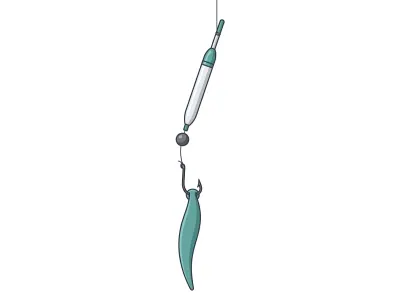
Walleye · Soft plastics
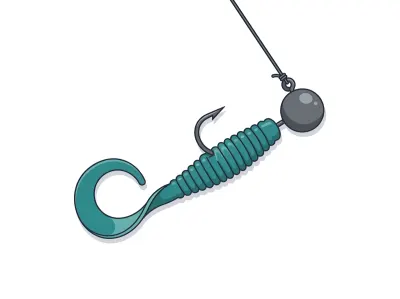
Curly-Tail Grub on Jig
3" curly-tail grub threaded on a round jighead
Largemouth bass · Hardbaits
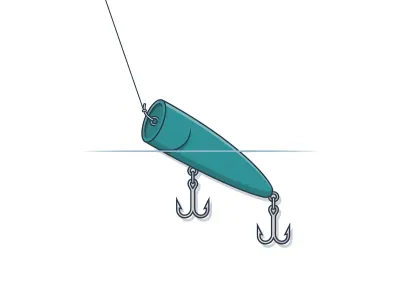
Topwater Popper
2.5–3" concave-face popper
Largemouth bass · Hardbaits
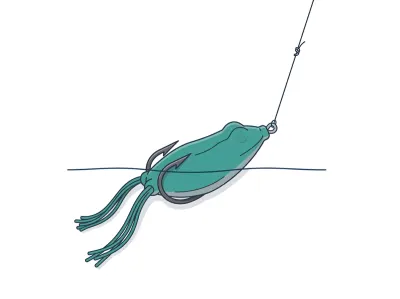
Hollow-Body Frog
3–3.5" hollow-body frog
Northern pike · Soft plastics
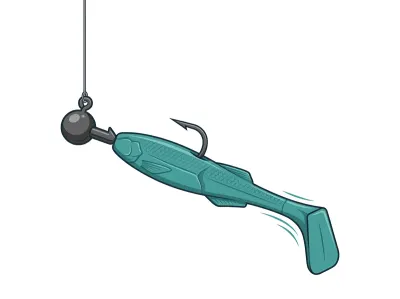
Paddletail Swimbait on Jighead
4–5" paddletail swimbait on a ball-head swimbait jighead
Northern pike · Muskie & pike
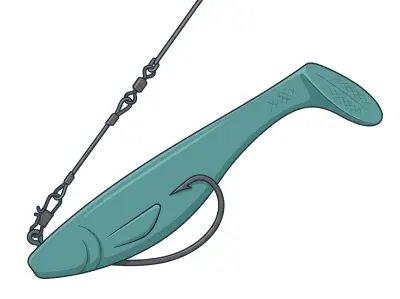
Soft Rubber (Bull Dawg / Medusa)
10" soft rubber body bait
Full setups, including hooks, weights and line, are on the live map. As an Amazon Associate I earn from qualifying purchases.
DNR stocking records
Stocking history
| Year | Species | Stocked |
|---|---|---|
| 2025 | Walleye | 715,890 fry |
| 2024 | Walleye | 11,436 fingerlings |
| 2023 | Walleye | 1,010,477 fry |
| 2022 | Walleye | 636,132 fry |
| 2021 | Walleye | 761,438 fry · 4,588 fingerlings |
| 2019 | Walleye | 751,366 fry |
| 2018 | Walleye | 930,788 fry |
| 2017 | Walleye | 1,081,936 fry · 20,784 yearlings · 207 adults |
| 2016 | Walleye | 1,290,613 fry |
MN DNR · in their words
From the 2025 survey
A targeted fall night electrofishing survey was conducted for young of year "YOY" (fingerling sized) Walleye on Diamond Lake during October 15, 2025. A targeted survey is generally used for sampling a specific kind of fish or time of year (i.e., spawning season, fall season, etc.) unlike a standard survey which samples a wider range of fish species during the summer months using standard methodology (i.e., standard time of year, set sampling stations, taking water clarity readings and oxygen/temperature profiles, etc.) and gears (i.e., lake survey gillnets, trapnets and possibly spring electrofishing for Largemouth Bass). Fall electrofishing surveys prior to 2020 were conducted at three stations for a total of 30 minutes. Six stations were sampled for a total of 120 minutes in 2020-2021 and 2023-2025 surveys. Five stations were sampled for a total of 100 minutes in 2022. The water temperature was 56 F. during the 2025 fall electrofishing survey. Submergent vegetation was moderate to light at all stations in 2025. Windy conditions were present along west stations (EW1, EW5 and EW6). Water clarity was moderate. We observed moderate numbers of adult Walleye, Bluegill, Largemouth Bass, Black Crappie, Brook Silversides and Yellow Perch in the 2025 fall electrofishing survey. We also saw abundant numbers of YOY Black Crappie, YOY Northern Pike, YOY Yellow Perch and YOY Sunfish in the near shore areas.
Diamond is a moderately large (1,607 acres), productive, and moderately deep (27 feet maximum) lake with moderate submergent vegetation densities. It is in Kandiyohi County. Zebra Mussels were first documented in Diamond during 2018. Diamond is currently part of a statewide Zebra Mussel/Walleye study lake. Abundant numbers of small Black Crappie, Yellow Perch and shiner species were observed during previous fall electrofishing surveys. Abundant Northern Pike numbers were noted in the 2013 and 2018 summer surveys (9.00+ fish/gillnet), recent ice out trapnets and fall electrofishing surveys. Walleye egg collection resumed in 2014 on Diamond. Approximately, 60-70 quarts of Walleye eggs were collected for statewide and local quotas during 2014 and 2015. Approximately 191 quarts were collected during the early spring of 2016; 90 quarts in 2017; 25 quarts in 2018; 113 quarts in 2019; 78.75 quarts in 2022; 133.5 quarts in 2023; 72.3 quarts in 2024. Walleye egg take operations were not conducted in 2020, 2021 or 2025 on Diamond Lake. Prior to 2012, consistent and excellent Walleye natural reproduction had occurred in Diamond based on fall electrofishing surveys and oxytetracycline "OTC" markings. In recent years Walleye recruitment from natural reproduction or fry stocking has been variable maybe to a combination of factors such as poor early spring weather conditions, impacts of zebra mussels and an overabundance of predators in Diamond. Typical Walleye spawning occurs during mid-late April with hatching around mid-May. Generally, early ice out years are not conducive for good Walleye fry survival in rearing ponds or lakes if stocked in mid/late April. This is often due to extended cold/cloudy weather periods during April in addition to zebra mussel filtering which may deter phytoplankton production which in turn limits the emergence of early walleye food prey like zooplankton and aquatic insects.
Read the full DNR narrative
Spicer Strain (Diamond, Koronis, and Rice) Walleye fry (800,000 fish per year) were marked with oxytetracycline "OTC" and stocked into Diamond during the springs of 2014 and 2015 as part of a 10% return for egg take. Diamond was stocked with 1.3 million OTC marked fry in 2016. Both OTC marked (475,396 fish) and unmarked (606,540 fish) fry were stocked in 2017. Unmarked Spicer Strain Walleye fry were stocked on May 18, 2018 (930,788 fish) and May 14, 2019 (751,366 fish). No Walleye fry were stocked in 2020 or 2024. Spicer Strain Walleye fry (unmarked) were recently stocked in 2021 (761,438 fish), 2022 (636,132 fish), 2023 (1,010,477 fish) and 2025 (715,890 fish) in Diamond. Walleye fingerlings were recently stocked in 2024 (11,436 fish, 1,624 pounds) and 2021 (4,591 Spicer Strain fish, 935 lbs.) due to consecutive low YOY Walleye catches in 2020-2021 and 2023-2024. Other Walleye fingerling or yearling stockings occurred in 2013 (33,889 fingerlings, 1,405 pounds), 2014 (3,454 yearlings, 359 pounds; 1,314 fingerlings, 146 pounds), 2015 (47,091 fingerlings, 1,917 pounds) and 2017 spring (20,784 yearlings, 1,261 pounds; 207 adults, 84 pounds). Walleye fingerlings/yearlings stocked into Diamond during 2015 and 2017 were from the local Spicer strain (Diamond, Koronis, and Rice) whereas previous fingerling or yearling stockings were from the Pike River Strain.
Low YOY Walleye numbers (4.00 YOY/hour, 7.60 inches) were caught in the 2025 fall night electrofishing survey. Low Walleye yearling numbers were captured in 2025 (2.00 fish/hour, 12.07 inches). No YOY Walleye were captured in the 2024 fall night electrofishing survey. Low Walleye yearling numbers were captured in 2024 (2.50 fish/hour, 9.65 inches). Low YOY Walleye numbers (4.00 fish/hour, 7.15 inches) were caught in the 2023 fall night electrofishing survey. Abundant Walleye yearling numbers (20.50 fish/hour, 10.53 inches) were caught in 2023 fall night electrofishing survey. Abundant YOY Walleye numbers (70.80 YOY/hour, 6.37 inches) were caught in the 2022 fall electrofishing survey (fry stocked). Walleye hatch or fry stocking survival was good in many local lakes during 2022. Moderate numbers of Walleye yearling or two-year-old fish (8.40 fish/hour) were caught in 2022. YOY Walleye numbers were low in the 2021 fall electrofishing survey (4.50 YOY/hour, 6.26 inches). Moderate yearling and adult Walleye numbers (21.00 fish/hour) were caught in 2021. YOY Walleye numbers were also low in the 2020 fall electrofishing survey (0.50 YOY/hour, 7.09 inches). Low yearling Walleye numbers (1.50 fish/hour, 11.13 inches) were caught in 2020. YOY Walleye numbers were abundant in the 2019 fall electrofishing survey (110.00 YOY/hour, 7.03 inches). The YOY Walleye catch rates were low in 2018 (4.00 YOY/hour, 7.68 inches), 2017 (4.00 YOY/hour, 6.24 inches), 2016 (2.40 YOY/hour, 6.89 inches), 2015 (13.33 YOY/hour, 7.13 inches), 2014 (8.00 YOY/hour), 2013 (6.00 YOY/hour) and 2012 (6.00 YOY/hour) fall electrofishing surveys. The Diamond Lake historical average YOY Walleye catch rate is 79.77 YOY/hour. OTC marked Walleye accounted for 100% and 14% respectively of the 2014 and 2015 fall electrofishing YOY Walleye catches. OTC analysis was not done on the few YOY Walleye that were captured in 2016 and 2017 fall surveys.
Walleye abundance was high in the most recent 2023 standard summer survey (30.33 fish/gillnet) compared to the historical average catch rate (18.73 fish/gillnet) for Diamond. The 2023 Walleye average weight and length were 1.53 pounds and 14.70 inches respectively from gillnets. The 2023 catch rate of quality size (15.00 inches and larger) Walleye was high (10.00 fish/gillnet). The 2023 catch rate of preferred size (20.00 inches and larger) Walleye was also high (5.00 fish/gillnet). Walleye growth rates were fair to good. The two prominent Walleye year classes present in the 2023 gillnet and trapnet catch were from 2022 (41%) and 2021 (29%).
Current fish management activities on Diamond include monitoring the fish population on a periodic basis, protecting native aquatic vegetation through the permit process, participating in local watershed initiatives, preventing, and educating about the spread of invasive species, conducting Walleye egg take operations when needed, and stocking various fish species as warranted. Walleye fry will generally be stocked during egg take and odd years. Walleye fingerlings or yearlings will be stocked after two poor fall electrofishing surveys. Special regulations were enacted for Bluegill (5 fish bag limit) in 2021. A targeted trapnet survey of Bluegill occurred in May of 2022. A creel survey was conducted during the 2020-2021 winter and 2021 open water season. A fall night electrofishing survey is scheduled to assess Walleye natural reproduction and/or fry stocking annually. A targeted survey of the Diamond Lake fish population is currently scheduled for May (Bass Electrofishing, Bluegill Trapnets) and August (Gillnets) of 2026.
Narrative text from the Minnesota DNR lake survey.
Recent reports
Diamond Lake fishing reports
Recent reports on Diamond Lake from guides, tournaments and regular anglers. Anything posted in the last two weeks also bumps the matching spots on the live map, so you'll see a "matches a recent report" tag on them.
Public water access
Getting on the water
- Diamond Lake (E) (trailer launch)
- Diamond Lake (W) (trailer launch)
DNR bathymetry
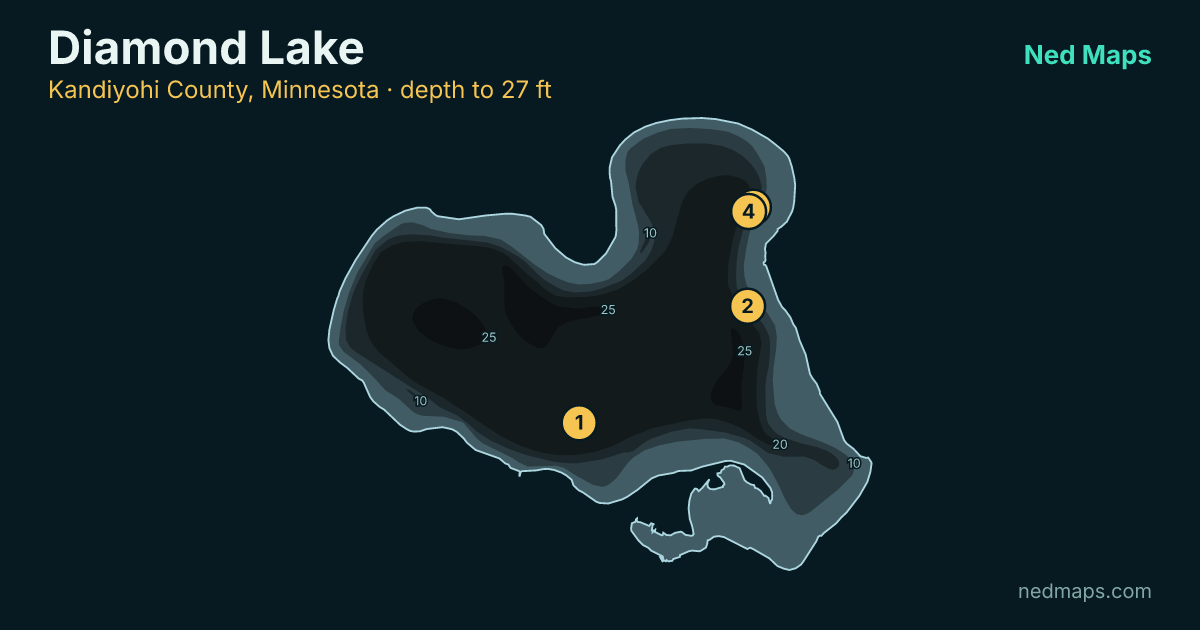
Diamond Lake depth map
Within 30 miles
Nearby lakes
- Bass Lake · 50 ac · 2.4 mi
- Elkhorn Lake · 79 ac · 5.5 mi
- Green Lake · 5,569 ac · 6.1 mi
- Calhoun Lake · 647 ac · 6.4 mi
- Ella Lake · 153 ac · 7 mi
- Minnetaga Lake · 791 ac · 7.2 mi
- Carrie Lake · 89 ac · 7.3 mi
- Eagle Lake · 850 ac · 7.9 mi
Quick answers
Frequently asked questions
How deep is Diamond Lake?
Diamond Lake reaches 27 ft at its deepest point with a mean depth of 16 ft; about 39% of the lake is littoral (15 ft or shallower).
How big is Diamond Lake?
Diamond Lake covers 1,610 acres with about 9.5 miles of shoreline.
How clear is the water in Diamond Lake?
DNR Secchi readings on Diamond Lake average 7.1 ft of visibility, middling clarity for a Minnesota lake.
What fish are in Diamond Lake?
Minnesota DNR surveys (most recently 2025) record walleye, largemouth bass, northern pike, bluegill, crappie, yellow perch.
Is Diamond Lake stocked?
Yes. The DNR stocked walleye in 2025; the stocking table on this page lists every year back to 2016.
Does Diamond Lake have a public access?
Yes. Diamond Lake has 2 public access sites, including Diamond Lake (E) (trailer launch).
How big do walleye get in Diamond Lake?
The biggest walleye measured in recent DNR surveys taped 27"; the size-history table on this page tracks the biggest fish in each survey back to 2018.
When was Diamond Lake last surveyed?
The Minnesota DNR last surveyed Diamond Lake in 2025, the most recent of 22 surveys on record.
Page updated .

Featured guide spot
Your guide service here
One featured guide per lake, with your photo, your writeup and a link straight to your booking page. Free through December 31, 2026.
Then $20 a month from January. Cancel any time.
The live map adds today's conditions and ranked spots for Diamond Lake, plus a trip plan you can share:
Open Diamond Lake on the live map → Fished it lately? Write a report