Minnesota · Martin County
Cedar Lake Fishing guide
Cedar Lake covers 707 acres in Martin County, Minnesota, reaching 7 ft at its deepest point. Average water clarity runs about 2.1 ft. The Minnesota DNR has surveyed the lake 9 times, most recently in 2022, with walleye, largemouth bass, northern pike and bluegill in the nets.
DNR survey data
Fish species
WalleyeLast stocked 2025Fair numbers3.7per gill net16"Typical26"Biggest
Lengths measured · 15 fish
Recent · 2022Lengths measured · 15 fish
2022Lengths measured · 33 fish
2018Lengths measured · 12 fish
2014Lengths measured · 13 fish
2010No recent survey rating.
Northern pikeLast stocked 2025Fair numbers7per gill net24"Typical31"Biggest
Lengths measured · 31 fish
Recent · 2022Lengths measured · 31 fish
2022Lengths measured · 16 fish
2018Lengths measured · 2 fish
2014Only 2 fish measured that year — too few to read as a shape.
Lengths measured · 38 fish
2010CrappieGood numbers24.5per trap net8"Typical14"Biggest
Lengths measured · 342 fish
Recent · 2022Lengths measured · 342 fish
2022Lengths measured · 97 fish
2018Lengths measured · 35 fish
2014Lengths measured · 479 fish
2010Yellow perchFair numbers2.7per gill net6"Typical11"Biggest
Lengths measured · 13 fish
Recent · 2022Lengths measured · 13 fish
2022Lengths measured · 46 fish
2018Lengths measured · 103 fish
2014Lengths measured · 175 fish
2010No recent survey rating.
Rates come from standard DNR survey gear (gill nets, trap nets, electrofishing), judged against statewide benchmarks for the same gear, so the same number of fish per net can read differently for two species. Where the standard gear can't count a species reliably, only presence and size are listed. Typical is the middle fish of those measured. Open a row for the full length spread, survey by survey.
How to fish Cedar Lake through the year
Walleye
- Spring
- Walleye are shallow, on and just off the spawning flats and the first green weeds. In 2.1 ft of visibility, they sit shallower than you think.
- Early summer
- Walleye are setting up on the outside weed edge, points and shallow structure.
- Summer
- Walleye are working the weed edge, points and any wind-blown structure. With 100% of this lake 15 ft or shallower, the weed edge is the main event.
- Fall
- Walleye are packing onto the sharpest breaks and points as the water cools, in big schools with short windows. A 7-ft bowl cools fast, so the fall window comes early here.
Northern pike
- Spring
- Pike are in the shallow bays and along new weed growth. In 2.1 ft of visibility, they sit shallower than you think.
- Early summer
- Pike are on the outside weed edge and points.
- Summer
- Pike are on the deep weed edge and points near the coolest water they can find. With 100% of this lake 15 ft or shallower, the weed edge is the main event.
- Fall
- Pike are on the last green weeds and the breaks beside them, feeding heavily as the water drops. A 7-ft bowl cools fast, so the fall window comes early here.
Season patterns for each species. Open the live map for today's wind, light and water temp.
Size history
Biggest fish by survey year
| Survey year | Walleye | Northern pike | Crappie |
|---|---|---|---|
| 2022 | 26" | 31" | 14" |
| 2018 | 26" | 30" | 11" |
| 2014 | 20" | 26" | 10" |
| 2010 | 19" | 36" | 12" |
| 2004 | 18" | 34" | 13" |
| 2000 | 27" | 30" | 19" |
| 1995 | 21" | 29" | 12" |
Longest fish measured by DNR survey crews in each year's nets. Survey gear samples the population, so the lake usually holds larger fish than any survey measured.
Suggested tackle
What to bring
Top presentations for this lake's structure and clarity:
Walleye · Live bait
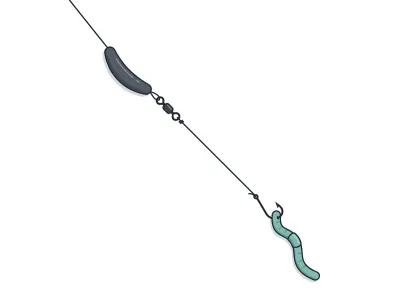
Live-Bait (Lindy) Rig + Leech/Crawler
jumbo leech or half a nightcrawler
Walleye · Soft plastics
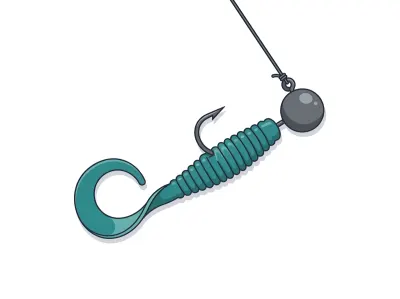
Curly-Tail Grub on Jig
3" curly-tail grub threaded on a round jighead
Northern pike · Jigs & bladed
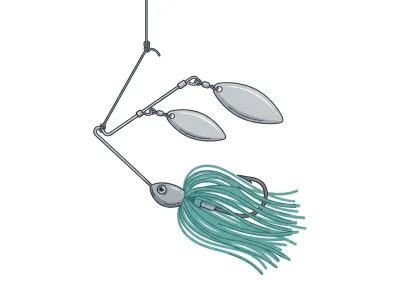
Spinnerbait
3/8–1/2 oz safety-pin spinnerbait with tandem willow-leaf blades
Northern pike · Jigs & bladed
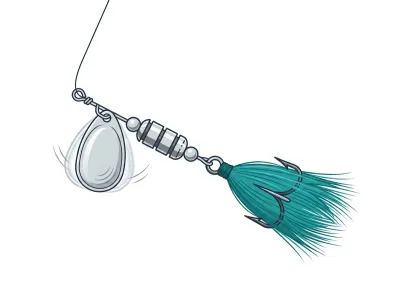
Inline Spinner (Mepps/Blue Fox)
#2–#4 in-line spinner
Crappie · Jigs & bladed
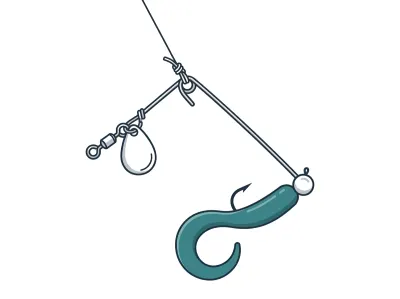
Beetle Spin
1.5–2" curly-tail grub trailer on a small in-line spinner jighead
Crappie · Soft plastics
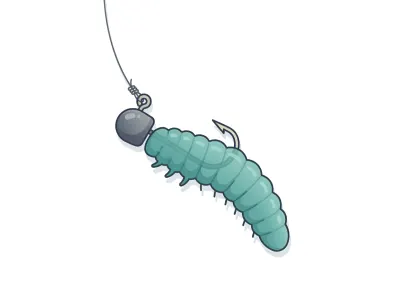
Tungsten Jig + Micro Plastic
1–1.5" micro plastic
Full setups, including hooks, weights and line, are on the live map. As an Amazon Associate I earn from qualifying purchases.
DNR stocking records
Stocking history
| Year | Species | Stocked |
|---|---|---|
| 2025 | Northern Pike | 336 fingerlings |
| 2025 | Walleye | 353,000 fry |
| 2022 | Walleye | 353,000 fry |
| 2021 | Northern Pike | 450 adults |
| 2021 | Walleye | 353,000 fry |
| 2018 | Walleye | 353,000 fry |
| 2016 | Walleye | 710,406 fry |
MN DNR · in their words
From the 2022 survey
Cedar Lake is a shallow (maximum depth of 7.0 ft.), 710-acre lake located near Trimont in Martin County. Cedar Lake has two basins (North Cedar and South Cedar) that are separated by a road, but connected by a large culvert that allows fish passage. Cedar Lake has a history of winterkill, with the most recent occurring during the winter of 2013-2014. Cedar Lake's connectivity to other waterbodies (Fish Lake, Buffalo Lake, Little Twin Lake, several small wetlands) during high water events allows fish to repopulate the lake relatively quickly following a winterkill, and provides favorable spawning habitat for Northern Pike. Cedar Lake is managed primarily for Northern Pike and secondarily for crappie, Walleye and Yellow Perch. Cedar Lake was surveyed the week of June 6, 2022 to monitor fish populations using three gill nets and 12 trap nets.
Cedar Lake has historically been a productive Northern Pike fishery, as catch rates have varied from 0.0 per gill net in 2014 (following a winterkill) to 16.7 per gill net in 2004, and have averaged 6.5 per gill net since 1986. In 2022, the Northern Pike catch rate was 7.0 per gill net, which is near the upper end of the expected range of catch rates for similar lakes (1.1 to 8.0 per gill net). Northern Pike ranged in length from 17.7 to 31.5 inches and averaged 24.4 inches. While the Northern Pike population in Cedar Lake is sustained mostly through natural reproduction in connected lakes and wetlands, supplemental stocking has occurred sporadically when extra Northern Pike are available (2014 and 2021). Mean relative weight of Northern Pike was 80, indicating that pike are in good condition and are foraging successfully. Cedar Lake is within the "southern zone" of the Northern Pike zone regulations, so two Pike longer than 24 inches can be harvested. Northern Pike under 24 inches must be released.
Read the full DNR narrative
The 2022 Walleye catch rate was 3.7 per gill net, which is within the expected range of catch rates for similar lakes (2.3 to 18.1 per gill net), but was a decrease from the 2018 catch rate of 9.3 per gill net. Historically, Walleye catch rates have varied from 3.3 per gill net in 2014 to 9.3 per gill net in 2018, and have averaged 5.5 per gill net since 1995. Three year classes of Walleye were sampled including Walleye from the 2015, 2018, and 2020 year classes. 2020 was a non-stocked year for all lakes in Minnesota due to COVID limitations, thus the 2020 year class was from natural reproduction. Growth of Walleye in Cedar Lake is fast when compared to Walleye growth in other similar lakes across Minnesota, as mean length at age-2 was 12.9 inches and at age-4 was 17.9 inches. Along with fast growth, condition of Walleye was good, as mean relative weight was 89, suggesting that prey resources are abundant. The management goal of providing a secondary Walleye fishing opportunity has been achieved through stocking Walleye fry every other year (2022, 2024, 2026…).
Yellow Perch catch rates have steadily declined from 49.0 per gill net in 2010, to 31.3 per gill net in 2014, to 13.0 per gill net in 2018. The decline continued in 2022 as the catch rate of Yellow Perch was 2.7 per gill net, which is below the long term average of 21.0 per gill net and is near the lower end of the expected range of catch rates for similar lakes (2.6 to 25.0 per gill net). Lengths of Yellow Perch ranged from 5.6 to 11.5 inches and averaged 7.1 inches. Condition of Yellow Perch was good, as relative weight was 89, suggesting that prey is available.
Cedar Lake's Black Crappie population has been highly cyclical, where catch rates were low for several years (lower than 5.0 per trap net; 1986 to 1995), then high for several years (higher than 23.0 per trap net; 2000 to 2010), then low again for a few years (2014 to 2018). Cedar Lake Black Crappie appear to be in the uptick of the cycle, as the 2022 catch rate was 19.6 per trap net, which exceeds the long term average of 13.9 per trap net, and is near the upper end of the expected range of catch rates for similar lakes (1.2 to 20.5 per trap net). Lengths of Black Crappie ranged from 5.2 to 13.1 inches and averaged 7.9 inches. Black Crappie that were 10.0 inches or larger comprised 25 percent of the sample and should provide a great fishery. Black Crappie condition was high, as mean relative weight was 99, indicating that they are foraging successfully.
White Crappie catch rates have been highly variable, ranging from 0.3 per trap net in 2014 to 50.2 per trap net in 1986, averaging 10.3 per trap net since 1986. The 2022 White Crappie catch rate was 4.9 per trap net, which is near the upper end of the expected range of catch rates for similar lakes (0.3 to 5.9 per trap net). White Crappie lengths ranged from 6.4 to 14.1 inches and averaged 11.4 inches. Cedar Lake provides a unique opportunity, as 67 percent of the White Crappie were 12.0 inches or larger. Mean relative weight of White Crappie was high at 88, suggesting that food is available.
The 2022 Black Bullhead catch rate was 182.7 per gill net, exceeding the long-term average of 107.0 per gill net and exceeding the expected range of catch rates for similar lakes (30.3 to 150.6 per gill net). Lengths of Black Bullhead ranged from 4.8 to 12.6 inches and averaged 7.4 inches. The Common Carp catch rate was the highest ever recorded on Cedar Lake at 41.0 per gill net. Lengths of Common Carp ranged from 10.3 to 30.6 inches and averaged 14.9 inches. Based on the lengths of the Common Carp in the gill net it would appear that a majority of them sampled were from 1 year class of fish. Channel Catfish have still not been sampled since the winterkill of 2013-2014. Other species sampled included Bigmouth Buffalo, Bluegill, Freshwater Drum, Golden Shiner, White Sucker, Quillback, and Yellow Bullhead.
Narrative text from the Minnesota DNR lake survey.
Recent reports
Cedar Lake fishing reports
Recent reports on Cedar Lake from guides, tournaments and regular anglers. Anything posted in the last two weeks also bumps the matching spots on the live map, so you'll see a "matches a recent report" tag on them.
Public water access
Getting on the water
- Cedar Lake (trailer launch)
- Cedar Lake Fishing Pier (fishing pier)
DNR bathymetry
Cedar Lake depth map
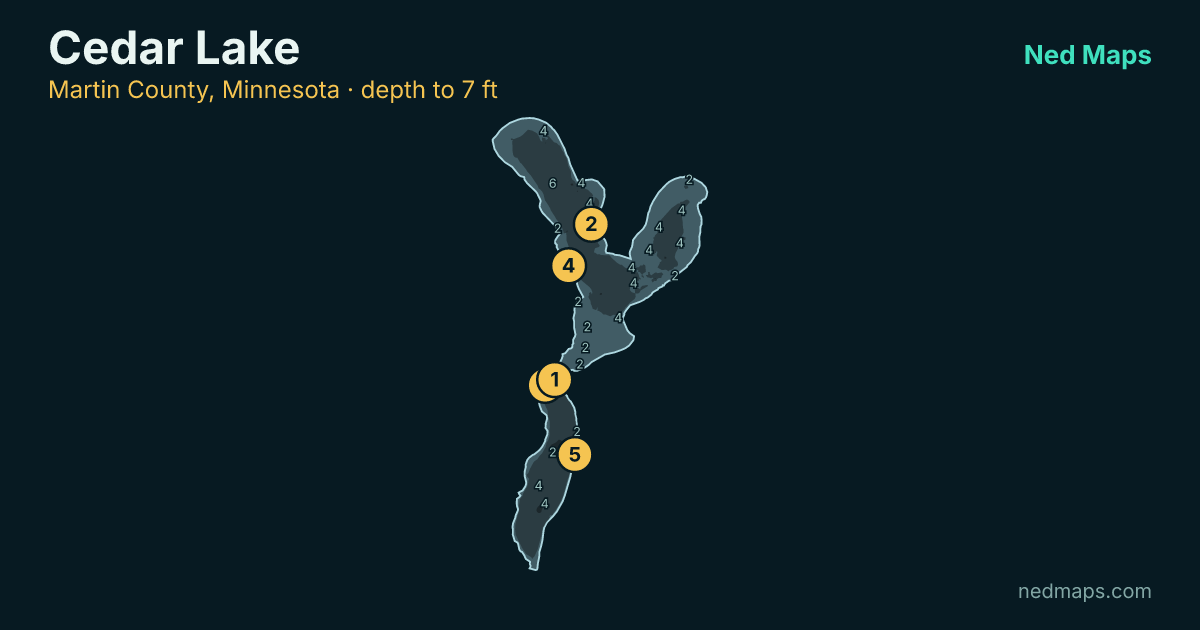
Within 30 miles
Nearby lakes
- Big Twin Lake · 461 ac · 3.8 mi
- Clam Lake · 71 ac · 4.9 mi
- Fox Lake · 951 ac · 7.8 mi
- Long Lake · 263 ac · 8.8 mi
- Kansas Lake · 403 ac · 9 mi
- Temperance Lake · 166 ac · 9.1 mi
- Perch Lake · 174 ac · 12.8 mi
- St. James Lake · 203 ac · 13.3 mi
Quick answers
Frequently asked questions
How deep is Cedar Lake?
Cedar Lake reaches 7 ft at its deepest point; about 100% of the lake is littoral (15 ft or shallower).
How big is Cedar Lake?
Cedar Lake covers 707 acres with about 9.5 miles of shoreline.
How clear is the water in Cedar Lake?
DNR Secchi readings on Cedar Lake average 2.1 ft of visibility, on the stained end for a Minnesota lake.
What fish are in Cedar Lake?
Minnesota DNR surveys (most recently 2022) record walleye, largemouth bass, northern pike, bluegill, crappie, yellow perch, channel catfish.
Is Cedar Lake stocked?
Yes. The DNR stocked northern pike and walleye in 2025; the stocking table on this page lists every year back to 2016.
Does Cedar Lake have a public access?
Yes. Cedar Lake has 2 public access sites, including Cedar Lake (trailer launch).
How big do walleye get in Cedar Lake?
The biggest walleye measured in recent DNR surveys taped 26"; the size-history table on this page tracks the biggest fish in each survey back to 1995.
When was Cedar Lake last surveyed?
The Minnesota DNR last surveyed Cedar Lake in 2022, the most recent of 9 surveys on record.
Page updated .

Featured guide spot
Your guide service here
One featured guide per lake, with your photo, your writeup and a link straight to your booking page. Free through December 31, 2026.
Then $20 a month from January. Cancel any time.
The live map adds today's conditions and ranked spots for Cedar Lake, plus a trip plan you can share:
Open Cedar Lake on the live map → Fished it lately? Write a report