Minnesota · Martin County
Fox Lake Fishing guide
Fox Lake covers 951 acres in Martin County, Minnesota, reaching 20 ft at its deepest point. Average water clarity runs about 1.7 ft. The Minnesota DNR has surveyed the lake 44 times, most recently in 2025, with walleye, largemouth bass, northern pike and muskellunge in the nets.
DNR survey data
Fish species
WalleyePresent0.6per trap net15"Typical25"Biggest
Lengths measured · 33 fish
Recent · 2021 + 2022 + 2023 + 2024 + 2025Lengths measured · 4 fish
2025Only 4 fish measured that year — too few to read as a shape.
Lengths measured · 8 fish
2024Only 8 fish measured that year — too few to read as a shape.
Lengths measured · 4 fish
2023Only 4 fish measured that year — too few to read as a shape.
Lengths measured · 8 fish
2022Only 8 fish measured that year — too few to read as a shape.
No recent survey rating.
Last recorded in the 2019 survey and not seen since.
BluegillJust a few2.5per trap net5"Typical8"Biggest
Lengths measured · 138 fish
Recent · 2021 + 2022 + 2023 + 2024 + 2025Lengths measured · 24 fish
2025Lengths measured · 63 fish
2024Lengths measured · 8 fish
2023Only 8 fish measured that year — too few to read as a shape.
Lengths measured · 29 fish
2022CrappieOne of the best around64.7per trap net6"Typical12"Biggest
Lengths measured · 5267 fish
Recent · 2021 + 2022 + 2023 + 2024 + 2025Lengths measured · 1395 fish
2025Lengths measured · 954 fish
2024Lengths measured · 911 fish
2023Lengths measured · 1089 fish
2022Yellow perchJust a few0.2per gill net5"Typical7"Biggest
Lengths measured · 23 fish
Recent · 2021 + 2022 + 2023 + 2024 + 2025Lengths measured · 4 fish
2025Only 4 fish measured that year — too few to read as a shape.
Lengths measured · 9 fish
2024Only 9 fish measured that year — too few to read as a shape.
Lengths measured · 1 fish
2023Only 1 fish measured that year — too few to read as a shape.
Lengths measured · 8 fish
2022Only 8 fish measured that year — too few to read as a shape.
Channel catfishFair numbers0.7per gill net14"Typical30"Biggest
Lengths measured · 21 fish
Recent · 2021 + 2022 + 2023 + 2024 + 2025Lengths measured · 2 fish
2025Only 2 fish measured that year — too few to read as a shape.
Lengths measured · 4 fish
2024Only 4 fish measured that year — too few to read as a shape.
Lengths measured · 7 fish
2023Only 7 fish measured that year — too few to read as a shape.
Lengths measured · 2 fish
2022Only 2 fish measured that year — too few to read as a shape.
Rates come from standard DNR survey gear (gill nets, trap nets, electrofishing), judged against statewide benchmarks for the same gear, so the same number of fish per net can read differently for two species. Where the standard gear can't count a species reliably, only presence and size are listed. Typical is the middle fish of those measured. Open a row for the full length spread, survey by survey.
How to fish Fox Lake through the year
Walleye
- Spring
- Walleye are shallow, on and just off the spawning flats and the first green weeds. In 1.7 ft of visibility, they sit shallower than you think.
- Early summer
- Walleye are setting up on the outside weed edge, points and shallow structure.
- Summer
- Walleye are working the weed edge, points and any wind-blown structure. With 82% of this lake 15 ft or shallower, the weed edge is the main event.
- Fall
- Walleye are packing onto the sharpest breaks and points as the water cools, in big schools with short windows.
Largemouth bass
- Spring
- Largemouth are moving up into the warming bays and flats, staging around wood, docks and new weeds to spawn. In 1.7 ft of visibility, they sit shallower than you think.
- Early summer
- Largemouth are on the shallow spawning flats and protected bays, where beds go on firm bottom next to isolated cover.
- Summer
- Largemouth are in and along the weeds: cabbage and milfoil edges, matted cover and shade. With 82% of this lake 15 ft or shallower, the weed edge is the main event.
- Fall
- Largemouth are chasing bait back onto the flats and into the remaining green weeds, feeding hard and shallow before the freeze.
Season patterns for each species. Open the live map for today's wind, light and water temp.
Size history
Biggest fish by survey year
| Survey year | Walleye | Largemouth bass | Crappie |
|---|---|---|---|
| 2025 | 25" | 14" | 11" |
| 2024 | 24" | — | 12" |
| 2023 | 24" | 5" | 10" |
| 2022 | 19" | — | 12" |
| 2021 | 15" | — | 10" |
| 2020 | 23" | — | 10" |
| 2019 | 27" | 17" | 12" |
| 2018 | 22" | — | 13" |
Longest fish measured by DNR survey crews in each year's nets. Survey gear samples the population, so the lake usually holds larger fish than any survey measured.
Suggested tackle
What to bring
Top presentations for this lake's structure and clarity:
Walleye · Live bait

Live-Bait (Lindy) Rig + Leech/Crawler
jumbo leech or half a nightcrawler
Walleye · Soft plastics
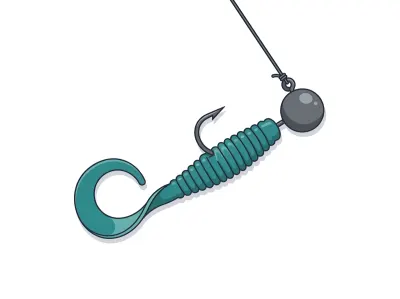
Curly-Tail Grub on Jig
3" curly-tail grub threaded on a round jighead
Largemouth bass · Hardbaits
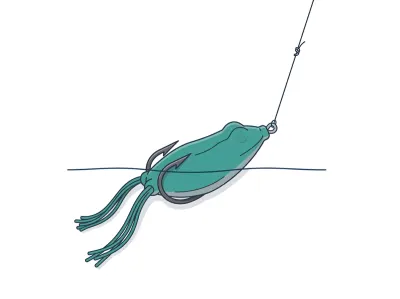
Hollow-Body Frog
3–3.5" hollow-body frog
Largemouth bass · Soft plastics
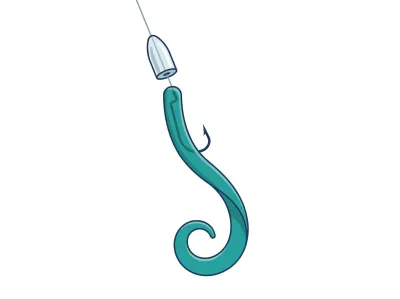
Texas-Rigged Worm
7" ribbon-tail or straight-tail plastic worm
Crappie · Jigs & bladed
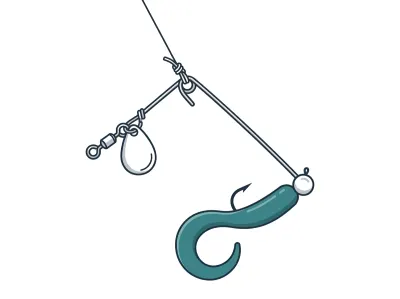
Beetle Spin
1.5–2" curly-tail grub trailer on a small in-line spinner jighead
Crappie · Soft plastics
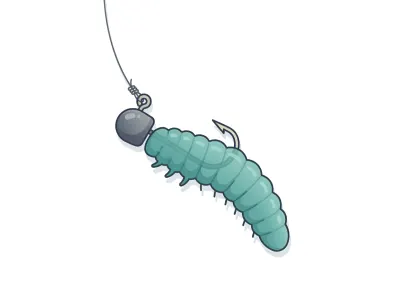
Tungsten Jig + Micro Plastic
1–1.5" micro plastic
Full setups, including hooks, weights and line, are on the live map. As an Amazon Associate I earn from qualifying purchases.
MN DNR · in their words
From the 2025 survey
Fox Lake is a 1,041-acre, class 24 lake located in Martin County near the Town of Sherburn. Fox Lake has a maximum depth of 20 feet and has never been aerated. Fox Lake has a small watershed-to-lake ratio of 4 to 1. Watershed improvements and the closing of a diversion structure have facilitated the return of submerged aquatic vegetation in some years; however, in recent years water quality has been poor, as indicated by a Secchi depth of 0.8 ft. in 2025. Occasionally, Curly-leaf Pondweed becomes abundant in the southeast area of Fox Lake when conditions are favorable. Curly-leaf Pondweed was first documented during a survey in 2006. Fox Lake provides a unique fishery because it is managed primarily for Muskie and Walleye and secondarily for crappie, Yellow Perch, Bluegill, and Largemouth Bass, making it one of two systems in the Windom fisheries management area that are stocked with Muskie. A standard survey was conducted on Fox Lake (starting September 2, 2025) to monitor fish populations using 5 gill nets and 11 trap nets. Surveys have been conducted annually since 1991 resulting in an excellent dataset to observe changes.
Five Walleye were caught in the trap net sample, and no Walleye were caught in the gill nets. From 2015 to 2017 the Fox Lake Walleye catch rate was on a 3-year increasing trend (5.7 in 2015, 9.8 in 2016, and 14.5 in 2017). However, the past 7 years the gill net catch rate has been less than 1.7 per gill net, and 0.0 per gill net in the previous 5 surveys since 2021. Interestingly, the trap net catch rates (# per net) during the past 8 years have been within the expected range (0.3 to 1.2 per trap net). In 2025 the trap net catch rate was 0.5 per net. Walleye ranged in length from 9.3 to 25.9 inches. It is surprising to continue to see the Walleye population struggle in Fox Lake as Walleye adults (1,422 individuals, 1,394 total pounds) were stocked in September and October of 2021 and fingerlings were stocked in 2022 (7,134 individuals, 718 total pounds), 2023 (15,640 individuals, 353 total pounds), 2024 390,000 fry and 76,235 frylings, and 2025 78,659 frylings. With that many Walleye stocked, we would expect more to be sampled, indicating survival of stocked Walleye may be very low. The Walleye population will continue to be monitored annually to assess the effectiveness of Walleye stocking in Fox Lake and determine the correct stocking strategy moving forward. Walleye fryling (fry raised until larger size and stocked in June) have been stocked in 2023, 2024, and 2025. Fryling survived well when they were stocked from 2011 to 2015. Fryling stocking was discontinued because hatchery production was halted from 2016 to 2022. Fryling could help to increase survival of Walleye in Fox Lake.
Read the full DNR narrative
Muskie were first introduced into Fox Lake in 1999 and subsequently stocked in 2001 and have been stocked every other year from 2004 to 2018. The last two stockings were in October 2022 (N=476) and November 2024 (N=496). No Muskie were captured in gill nets or trap nets in the 2025 survey. Gill nets and trap nets are usually ineffective at sampling Muskie during our annual survey in September. Therefore, large frame trap nets are set every 5 years to sample the Muskie population. A survey utilizing the large frame trap nets was done in May 2022. No Muskies were sampled. Five years prior during the 2017 assessment Muskie were captured at a rate of 3.9 per net per day. During 2017, Muskie ranged in length from 10.8 to 50.1 inches and averaged 42.2 inches. The population estimate in 2016 (the last reliable estimate using 2017 as a recapture event) was 250 adults (193 to 307; 95 Percent Confidence Interval). Given the water quality issues, a special targeted LTN assessment was also conducted during the spring of 2021. Five Muskie were caught in 3 days of netting with 2 nets each day (6 net nights). Muskies sampled ranged in length from 39.1 to 48.9 inches with an average length of 42.2 inches. Three males and 2 females were sampled. Therefore, it is strange that 0 Muskie were sampled in LTNs during 2022. We suspect that the adult Muskie population has shifted to a much less abundant population, but Muskies are likely still present. It is very likely that the originally stocked fish in 1999 and the next year class in 2001 are gone from the lake due to natural mortality (old age). Since 2011 when PIT tagging started on Fox Lake, 325 unique adult Muskie have been sampled and PIT-tagged, and 3,446 fingerling Muskie have been PIT-tagged and stocked. In the fall of 2024, 496 PIT tagged fingerling Muskie were stocked in Fox Lake. Electrofishing for Muskie may occur in the next year or two to determine presence and size of individuals in the population.
Black Crappie were captured at a rate of 22.1 per trap net in 2025, which is greater than the expected range (1.8 to 21.2 per trap net) and greater than the long-term average of 17.0 per trap net since 1981. Lengths of Black Crappie ranged from 2.9 to 8.5 inches in gill nets and trap nets and averaged 7.0 inches. Black Crappie appears to be in good health with an average Wr of 103. The White Crappie catch rate in 2025 was 61.9 per trap net, which exceeded the expected range of catch rates for class 24 lakes (0.5 to 6.6) and is the second highest catch rate since 1981. Lengths of White Crappie ranged from 5.0 to 11.8 inches and averaged 6.9 inches. Mean relative weight of White Crappie was also high, averaging 107 across all lengths.
The Yellow Perch catch rate in 2025 was 0.2 per gill net indicating a low abundance of Yellow Perch. Catch rates of Yellow Perch have been characterized by extreme fluctuations from 2011 to 2016 followed by a drastic drop and continued level of low abundance (less than 1 per gill net). This variability in gill net catches is most likely due to environmental conditions and/or niche overlap and competition with increasing Black and White crappie populations. Habitat loss due to lack of submerged vegetation is also a potential cause. Yellow Perch were stocked during the spring of 2022 and again in 2024, but a resulting natural year class has not been observed yet. While Yellow Perch abundance was low, stocking will be continued if the gill net catch rate remains below 2.0 per net in 2026.
The Freshwater Drum catch rate was 40.0 per gill net, less than the long-term average (49.6 per gill net) and above the expected range of 4.0 to 32.3 per gill net for similar lakes. There is some desire among the Fox Lake Association members and Fox Lake Conservation League to remove Freshwater Drum to reduce their relative abundance, however, past studies have shown that this may induce a reproduction response and can increase abundance of Freshwater Drum. Currently, the Freshwater Drum in the gill net and trap net sample range in length from 4.3 to 14.3 inches with an average length of 9.9 inches. Apart from a few of the largest Freshwater Drum in the sample, all these fish are potentially subject to predation by the existing Muskie population. While the current Muskie population is very low abundance and may not suppress the Freshwater Drum enough, a potential consideration is to stock yearling or adult Muskie instead of fingerlings, which will serve 2 purposes. First, larger Muskie will act as a predator right away and larger Muskie have a greater chance of survival to larger sizes.
The Bluegill catch rate in 2025 was 2.2 per trap net, which is below the expected range of catch rates (7.5 to 62.5 per trap net) for class 24 lakes. Lengths of Bluegill ranged from 5.4 to 6.2 inches and averaged 5.8 inches. The turbid water in Fox Lake is likely limiting the potential for a robust Bluegill population given that that typically thrive in lakes with clear water and abundant vegetation.
Additional species sampled included Bigmouth Buffalo, Black Bullhead, Channel Catfish, Common Carp, Golden Shiner, Largemouth Bass, Quillback Carpsucker, and Yellow Bullhead. Bigmouth Buffalo, while native, can overpopulate and act as a source of competition for limited plankton resources due to their filter feeding which can shift the plankton community to one dominated by phytoplankton. They also could suspend sediments while looking for invertebrate food sources that can lead to internal nutrient loading and create poor water quality. The large 2013-2015 year classes of Bigmouth Buffalo appear to be a possible driver of poor water quality on Fox over the last few years. While those year classes of fish continue to grow and move through the fish community, their growth appears to be slower than other populations in the Windom area. Continued monitoring will be done to track changes in numbers and species caught in Fox Lake.
Narrative text from the Minnesota DNR lake survey.
Recent reports
Fox Lake fishing reports
Recent reports on Fox Lake from guides, tournaments and regular anglers. Anything posted in the last two weeks also bumps the matching spots on the live map, so you'll see a "matches a recent report" tag on them.
Public water access
Getting on the water
- Fox Lake (NE) (trailer launch)
- Fox Lake (SE) (trailer launch)
- Fox Lake Fishing Pier (fishing pier)
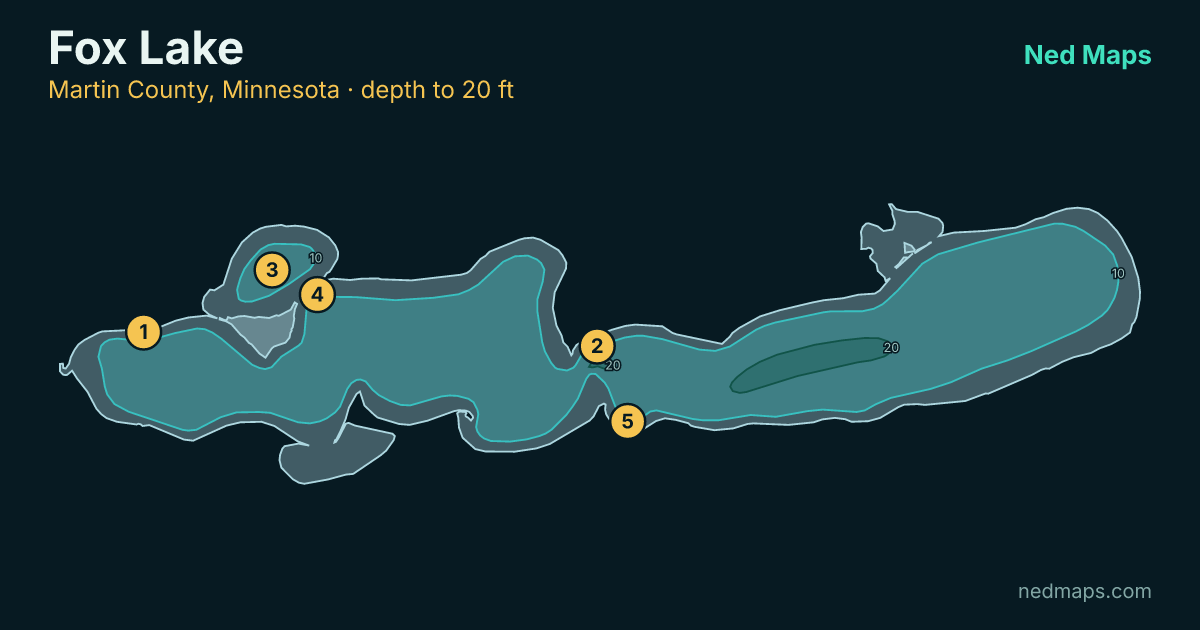
DNR bathymetry
Fox Lake depth map
Within 30 miles
Nearby lakes
- Temperance Lake · 166 ac · 1.5 mi
- Clam Lake · 71 ac · 4.1 mi
- Big Twin Lake · 461 ac · 4.5 mi
- Cedar Lake · 707 ac · 7.8 mi
- Bright Lake · 639 ac · 10.2 mi
- Clear Lake · 267 ac · 10.6 mi
- George Lake · 83 ac · 11.8 mi
- Sisseton Lake · 138 ac · 11.8 mi
Quick answers
Frequently asked questions
How deep is Fox Lake?
Fox Lake reaches 20 ft at its deepest point; about 82% of the lake is littoral (15 ft or shallower).
How big is Fox Lake?
Fox Lake covers 951 acres with about 11.3 miles of shoreline.
How clear is the water in Fox Lake?
DNR Secchi readings on Fox Lake average 1.7 ft of visibility, on the stained end for a Minnesota lake.
What fish are in Fox Lake?
Minnesota DNR surveys (most recently 2025) record walleye, largemouth bass, northern pike, muskellunge, bluegill, crappie, yellow perch, channel catfish.
Is Fox Lake stocked?
No stocking is on record for Fox Lake in the DNR's stocking database.
Does Fox Lake have a public access?
Yes. Fox Lake has 3 public access sites, including Fox Lake (NE) (trailer launch).
How big do walleye get in Fox Lake?
The biggest walleye measured in recent DNR surveys taped 25"; the size-history table on this page tracks the biggest fish in each survey back to 2018.
When was Fox Lake last surveyed?
The Minnesota DNR last surveyed Fox Lake in 2025, the most recent of 44 surveys on record.
Page updated .

Featured guide spot
Your guide service here
One featured guide per lake, with your photo, your writeup and a link straight to your booking page. Free through December 31, 2026.
Then $20 a month from January. Cancel any time.
The live map adds today's conditions and ranked spots for Fox Lake, plus a trip plan you can share:
Open Fox Lake on the live map → Fished it lately? Write a report