Minnesota · Aitkin County
Wolf Lake Fishing guide
Wolf Lake is a 173-acre lake in Aitkin County, Minnesota, reaching 31 ft at its deepest point. Secchi readings average around 1.5 ft of visibility. The Minnesota DNR has surveyed the lake 5 times, most recently in 2012, with northern pike, bluegill, crappie and yellow perch in the nets. That survey is 14 years old now.
DNR survey data
Fish species
Northern pikeFair numbers9per gill net14"Typical28"Biggest
Lengths measured · 42 fish
Recent · 2012Lengths measured · 42 fish
2012Lengths measured · 31 fish
2000Lengths measured · 1 fish
1995Only 1 fish measured that year — too few to read as a shape.
CrappieJust a few2.9per trap net6"Typical11"Biggest
Lengths measured · 74 fish
Recent · 2012Lengths measured · 74 fish
2012Lengths measured · 112 fish
2000Lengths measured · 12 fish
1995Yellow perchGood numbers4.7per gill net2"Typical10"Biggest
Lengths measured · 61 fish
Recent · 2012Lengths measured · 61 fish
2012Lengths measured · 80 fish
2000Lengths measured · 67 fish
1995Rates come from standard DNR survey gear (gill nets, trap nets, electrofishing), judged against statewide benchmarks for the same gear, so the same number of fish per net can read differently for two species. Where the standard gear can't count a species reliably, only presence and size are listed. Typical is the middle fish of those measured. Open a row for the full length spread, survey by survey.
How to fish Wolf Lake through the year
Northern pike
- Spring
- Pike are in the shallow bays and along new weed growth. In 1.5 ft of visibility, they sit shallower than you think.
- Early summer
- Pike are on the outside weed edge and points.
- Summer
- Pike are on the deep weed edge and points near the coolest water they can find. With 93% of this lake 15 ft or shallower, the weed edge is the main event.
- Fall
- Pike are on the last green weeds and the breaks beside them, feeding heavily as the water drops.
Yellow perch
- Spring
- Perch are draping eggs over flooded cover and weed stems on the shallow flats. In 1.5 ft of visibility, they sit shallower than you think.
- Early summer
- Perch are spread over sand-grass flats and the first weed edges in loose packs.
- Summer
- Perch are over deeper soft-bottom flats and the basin, on the bottom and in schools. With 93% of this lake 15 ft or shallower, the weed edge is the main event.
- Fall
- Perch are roaming the mid-depth flats in loose schools, chasing young-of-year bait while it is still shallow.
Season patterns for each species. Open the live map for today's wind, light and water temp.
Size history
Biggest fish by survey year
| Survey year | Northern pike | Yellow perch | Bluegill |
|---|---|---|---|
| 2012 | 28" | 10" | 5" |
| 2000 | 34" | 11" | — |
| 1995 | 31" | 10" | — |
Longest fish measured by DNR survey crews in each year's nets. Survey gear samples the population, so the lake usually holds larger fish than any survey measured.
Suggested tackle
What to bring
Top presentations for this lake's structure and clarity:
Northern pike · Soft plastics
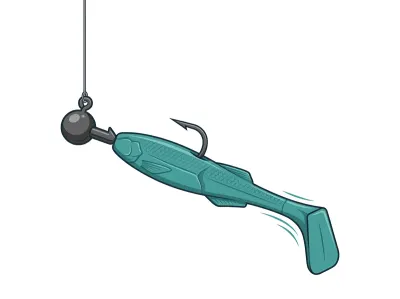
Paddletail Swimbait on Jighead
4–5" paddletail swimbait on a ball-head swimbait jighead
Northern pike · Muskie & pike
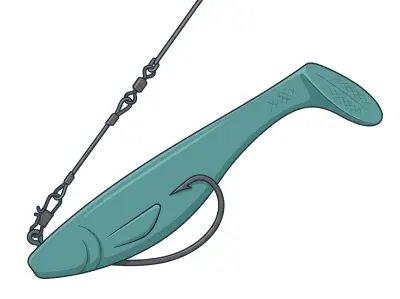
Soft Rubber (Bull Dawg / Medusa)
10" soft rubber body bait
Yellow perch · Soft plastics
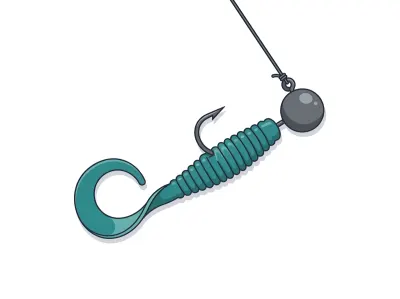
Curly-Tail Grub on Jig
3" curly-tail grub threaded on a round jighead
Yellow perch · Live bait
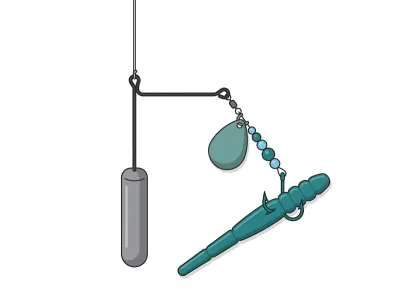
Bottom Bouncer + Spinner Harness
full nightcrawler on a 2–3 hook
Bluegill · Live bait
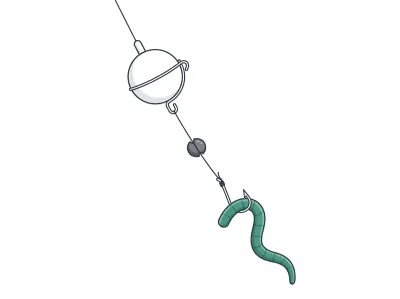
Clip-On Bobber + Worm
half to whole garden nightcrawler
Bluegill · Soft plastics
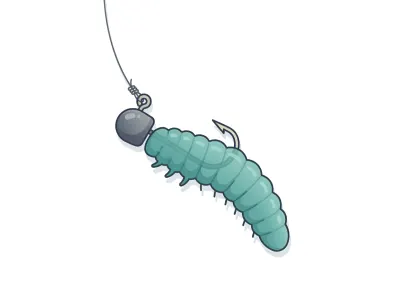
Tungsten Jig + Micro Plastic
1–1.5" micro plastic
Full setups, including hooks, weights and line, are on the live map. As an Amazon Associate I earn from qualifying purchases.
MN DNR · in their words
From the 2012 survey
Wolf Lake is located along the Continental Divide between the Mississippi River and Lake Superior watersheds and is entirely within Savanna Portage State Park in eastern Aitkin County. A state park permit is required to access the lake. It is the only lake in the Saint Louis River drainage surveyed by Aitkin area fisheries staff. The shoreline is completely undeveloped and the land adjacent to the lake is primarily a mix of wetlands and lowland spruce forest. Most of the lake is shallow, less than ten feet deep, except for one hole that reaches a maximum of 31 feet. Low winter oxygen conditions have occurred in past winters resulting in fish kills, but apparently not in recent years.
The fish community is relatively simple with ten species observed during the 2012 survey, which included standard survey nets and additional sampling for non-game fish. The most popular game fishes to target are northern pike and black crappie. Northern pike, which have reestablished a naturally reproducing population since being stocked in 1997 and 1998 due to low abundance, have a poor size structure with most fish less than 24 inches long. Research suggests that production of large predator biomass is relatively low and harvest of only a few large pike from a lake of this size can greatly impact the population. Anglers are encouraged to release larger pike and keep the smaller fish for a meal. Recycling the quality sized fish is also the best way to ensure a quality sized fish in your next trip.
Read the full DNR narrative
Black crappie have also become established since being introduced to the lake in 1995. They are naturally a reproducing population with a good size structure. The 2012 catch of 8.7 per gill net was above the normal range for similar lakes. Size in standard survey gear ranged from 4.5 to 11.5 inches and averaged 7.6 inches with 29% greater than 10 inches.
Yellow perch may also provide some angling opportunities although their abundance is below the normal range for similar lakes. Size of fish was good with an average of 9.1 inches. Other fish species sampled, in 2012, include bluegill, brown bullhead, golden shiner, Iowa darter, tadpole madtom, and white sucker.
Narrative text from the Minnesota DNR lake survey.
Recent reports
Wolf Lake fishing reports
Recent reports on Wolf Lake from guides, tournaments and regular anglers. Anything posted in the last two weeks also bumps the matching spots on the live map, so you'll see a "matches a recent report" tag on them.
Public water access
Getting on the water
- Wolf Lake (trailer launch)
DNR bathymetry
Wolf Lake depth map
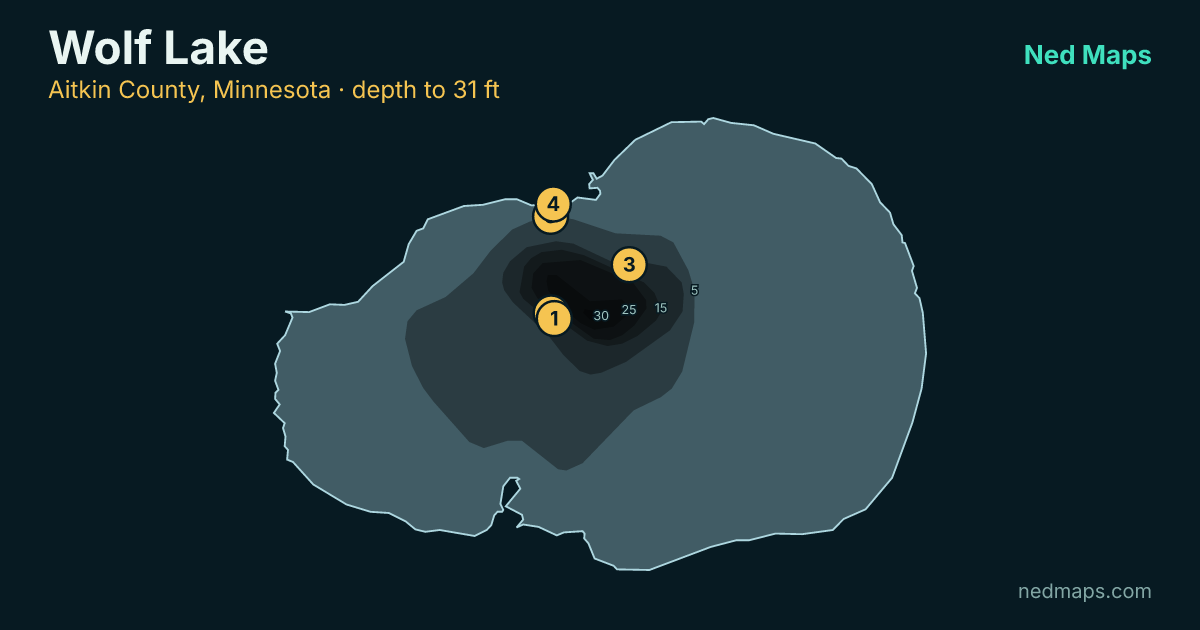
Within 30 miles
Nearby lakes
- Savanna Lake · 101 ac · 0.9 mi
- Shumway Lake · 74 ac · 1.6 mi
- Loon Lake · 34 ac · 2.1 mi
- Remote Lake · 134 ac · 2.9 mi
- Wakefield Lake · 164 ac · 3.3 mi
- Boot Lake · 80 ac · 4.3 mi
- Glacier Lake · 135 ac · 4.9 mi
- Blackface Lake · 192 ac · 6.7 mi
Quick answers
Frequently asked questions
How deep is Wolf Lake?
Wolf Lake reaches 31 ft at its deepest point; about 93% of the lake is littoral (15 ft or shallower).
How big is Wolf Lake?
Wolf Lake covers 173 acres with about 2.3 miles of shoreline.
How clear is the water in Wolf Lake?
DNR Secchi readings on Wolf Lake average 1.5 ft of visibility, on the stained end for a Minnesota lake.
What fish are in Wolf Lake?
Minnesota DNR surveys (most recently 2012) record northern pike, bluegill, crappie, yellow perch.
Is Wolf Lake stocked?
No stocking is on record for Wolf Lake in the DNR's stocking database.
Does Wolf Lake have a public access?
Yes. Wolf Lake has one public access site: Wolf Lake (trailer launch).
How big do northern pike get in Wolf Lake?
The biggest northern pike measured in recent DNR surveys taped 28"; the size-history table on this page tracks the biggest fish in each survey back to 1995.
When was Wolf Lake last surveyed?
The Minnesota DNR last surveyed Wolf Lake in 2012, the most recent of 5 surveys on record. A survey that old is a starting point, not a current reading.
Page updated .

Featured guide spot
Your guide service here
One featured guide per lake, with your photo, your writeup and a link straight to your booking page. Free through December 31, 2026.
Then $20 a month from January. Cancel any time.
The live map adds today's conditions and ranked spots for Wolf Lake, plus a trip plan you can share:
Open Wolf Lake on the live map → Fished it lately? Write a report