Minnesota · Cass County
Winnibigoshish Lake Fishing guide
Winnibigoshish Lake sits in Cass County, Minnesota, and covers 56,471 acres, reaching 69.8 ft at its deepest point. Average water clarity runs about 12.6 ft. The Minnesota DNR has surveyed the lake 39 times, most recently in 2025, with walleye, largemouth bass, northern pike and muskellunge in the nets.
DNR survey data
Fish species
WalleyeLast stocked 2024Good numbers5.7per gill net6"Typical25"Biggest
Lengths measured · 2245 fish
Recent · 2021 + 2022 + 2023 + 2024 + 2025Lengths measured · 320 fish
2025Lengths measured · 181 fish
2024Lengths measured · 311 fish
2023Lengths measured · 529 fish
2022Largemouth bassPresent16.2per seine haul1"Typical19"Biggest
Lengths measured · 196 fish
Recent · 2022 + 2024 + 2025Lengths measured · 173 fish
2025Lengths measured · 22 fish
2024Lengths measured · 169 fish
2023Lengths measured · 1 fish
2022Only 1 fish measured that year — too few to read as a shape.
Northern pikeJust a few2.4per gill net20"Typical36"Biggest
Lengths measured · 754 fish
Recent · 2021 + 2022 + 2023 + 2024 + 2025Lengths measured · 446 fish
2025Lengths measured · 77 fish
2024Lengths measured · 103 fish
2023Lengths measured · 60 fish
2022Present in recent DNR surveys.
BluegillJust a few2.9per trap net8"Typical10"Biggest
Lengths measured · 66 fish
Recent · 2024 + 2025Lengths measured · 49 fish
2025Lengths measured · 17 fish
2024Lengths measured · 1 fish
2017Only 1 fish measured that year — too few to read as a shape.
CrappieJust a few0.3per trap net10"Typical13"Biggest
Lengths measured · 32 fish
Recent · 2024 + 2025Lengths measured · 9 fish
2025Only 9 fish measured that year — too few to read as a shape.
Lengths measured · 23 fish
2024Lengths measured · 16 fish
2023Lengths measured · 2 fish
2018Only 2 fish measured that year — too few to read as a shape.
Yellow perchGood numbers9per gill net1"Typical12"Biggest
Lengths measured · 12231 fish
Recent · 2021 + 2022 + 2023 + 2024 + 2025Lengths measured · 3558 fish
2025Lengths measured · 636 fish
2024Lengths measured · 7666 fish
2023Lengths measured · 105 fish
2022Rock bassExcellent numbers1.4per seine haul10"Typical12"Biggest
Lengths measured · 10 fish
Recent · 2023 + 2024 + 2025Lengths measured · 3 fish
2025Only 3 fish measured that year — too few to read as a shape.
Lengths measured · 4 fish
2024Only 4 fish measured that year — too few to read as a shape.
Lengths measured · 3 fish
2023Only 3 fish measured that year — too few to read as a shape.
Lengths measured · 1 fish
2020Only 1 fish measured that year — too few to read as a shape.
Rates come from standard DNR survey gear (gill nets, trap nets, electrofishing), judged against statewide benchmarks for the same gear, so the same number of fish per net can read differently for two species. Where the standard gear can't count a species reliably, only presence and size are listed. Typical is the middle fish of those measured. Open a row for the full length spread, survey by survey.
How to fish Winnibigoshish Lake through the year
Walleye
- Spring
- Walleye are shallow, on and just off the spawning flats and the first green weeds. At 12.6 ft of clarity, fish them deeper and lighter than usual.
- Early summer
- Walleye are setting up on the outside weed edge, points and shallow structure.
- Summer
- Walleye are working the weed edge, points and any wind-blown structure. On a lake that drops to 69.8 ft, check the deep edge of that structure too.
- Fall
- Walleye are packing onto the sharpest breaks and points as the water cools, in big schools with short windows.
Largemouth bass
- Spring
- Largemouth are moving up into the warming bays and flats, staging around wood, docks and new weeds to spawn. At 12.6 ft of clarity, fish them deeper and lighter than usual.
- Early summer
- Largemouth are on the shallow spawning flats and protected bays, where beds go on firm bottom next to isolated cover.
- Summer
- Largemouth are in and along the weeds: cabbage and milfoil edges, matted cover and shade. On a lake that drops to 69.8 ft, check the deep edge of that structure too.
- Fall
- Largemouth are chasing bait back onto the flats and into the remaining green weeds, feeding hard and shallow before the freeze.
Season patterns for each species. Open the live map for today's wind, light and water temp.
Size history
Biggest fish by survey year
| Survey year | Walleye | Largemouth bass | Northern pike |
|---|---|---|---|
| 2025 | 25" | 19" | 36" |
| 2024 | 24" | 18" | 34" |
| 2023 | 25" | 3" | 35" |
| 2022 | 25" | 5" | 32" |
| 2021 | 25" | — | 30" |
| 2020 | 26" | 6" | 28" |
| 2019 | 26" | — | 32" |
| 2018 | 23" | 14" | 33" |
Longest fish measured by DNR survey crews in each year's nets. Survey gear samples the population, so the lake usually holds larger fish than any survey measured.
Suggested tackle
What to bring
Top presentations for this lake's structure and clarity:
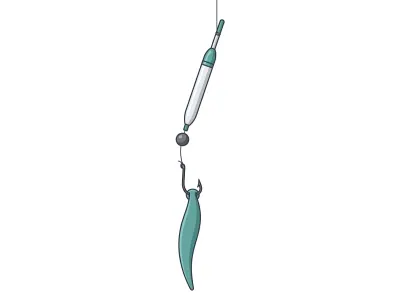
Walleye · Soft plastics
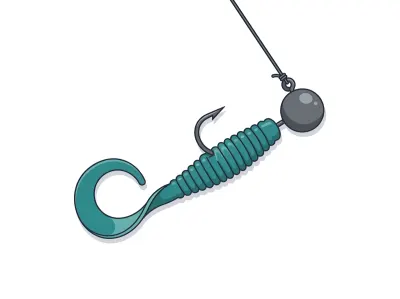
Curly-Tail Grub on Jig
3" curly-tail grub threaded on a round jighead
Largemouth bass · Soft plastics
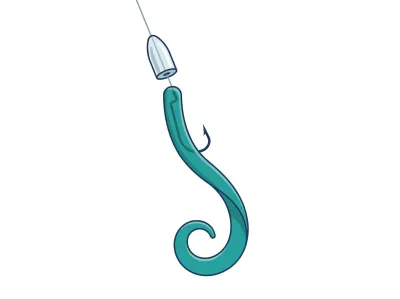
Texas-Rigged Worm
7" ribbon-tail or straight-tail plastic worm
Largemouth bass · Soft plastics
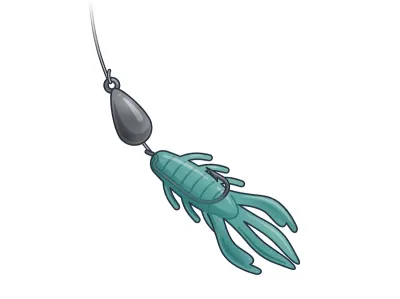
Free Rig
Creature bait or magnum finesse worm
Northern pike · Soft plastics

Paddletail Swimbait on Jighead
4–5" paddletail swimbait on a ball-head swimbait jighead
Northern pike · Muskie & pike
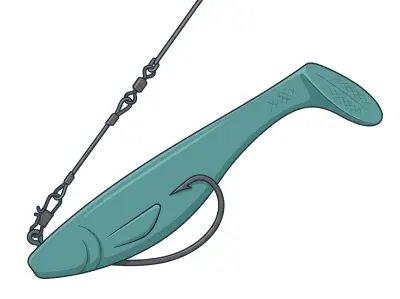
Soft Rubber (Bull Dawg / Medusa)
10" soft rubber body bait
Full setups, including hooks, weights and line, are on the live map. As an Amazon Associate I earn from qualifying purchases.
DNR stocking records
Stocking history
| Year | Species | Stocked |
|---|---|---|
| 2024 | Walleye | 14,200,000 fry |
| 2022 | Walleye | 7,500,000 fry |
| 2021 | Walleye | 9,500,000 fry |
| 2019 | Walleye | 13,921,000 fry |
| 2018 | Walleye | 16,785,675 fry |
| 2017 | Walleye | 15,221,700 fry |
MN DNR · in their words
From the 2025 survey
Lake Winnibigoshish, otherwise known as Winnie or Big Winnie, is a large reservoir located immediately north of the community of Bena, Minnesota. Winnie was a natural lake that was impounded in the 1880's with a dam controlled by the U.S. Army Corps of Engineers (USACE). Today the USACE maintains water levels within a narrow band of elevation that gives the lake its current surface area of approximately 56,472 acres and a maximum depth of 69 feet. The surrounding geology contains a high proportion of sandy soils, providing an abundance of sandy shoreline with gradual slopes. With approximately 11 miles of open water between the north and south shores, the lake is prone to high wave action and frequent mixing of the water column when exposed to high winds. During the open water season, this keeps temperatures and oxygen levels much more uniform from the surface to the bottom of the lake, in comparison to smaller, more protected lakes with similar water depth. Sugar Lake, Cut Foot Sioux Lake, and Little Cut Foot Sioux Lake are all directly connected to Winnie. Some of the major tributaries include the First River flowage through Cut Foot Sioux Lake, the Third River, and the Mississippi River.
Winnibigoshish is often thought of as a premier Walleye and Yellow Perch destination, but this lake offers angling opportunities for multiple species. Acknowledging the importance of this fishery, Winnibigoshish was included as one of ten lakes in the Large Lake Monitoring Program, which was developed by the Minnesota Department of Natural Resources (MN DNR) in 1983. Surveys are conducted on these lakes annually and typically include a suite of sampling methods that track trends in water quality, zooplankton, juvenile fish, periodic creel (angler) surveys, and the status of game fish targeted by anglers.
Read the full DNR narrative
Major changes have been occurring within the system over the past 15 years. These changes began around the time of the discovery of invasive Faucet Snails in 2007, followed by the detection of larval Zebra Mussels in 2012, and adult Zebra Mussels in 2016. These invasives are filter feeders that can dramatically increase water clarity and reduce the abundance of plankton available to fish. Prior to the introduction of these invasives, water clarity (measured with a Secchi disc) averaged 6 to 7 feet and the highest ever recorded was 10 feet. There has been a post-invasion trend of increasing water clarity in Winnibigoshish. Secchi disc readings in 2025 were not as high as the previous two years, but still well above average with a range of 7 to 22 feet. Increasing water clarity tends to improve habitat for Bass, Sunfish, and Northern Pike while decreasing habitat suitability for Walleye.
Walleye is the primary management species in Winnie, and a large proportion of the field work completed is dedicated toward tracking the status of this species. The most important tool to assess the Walleye population is a gill net survey that is completed annually in September. The Walleye catch rate in the gill net survey was up from the 2024 survey year but still less than the historic average. Walleye recruitment (survival to the fishery) is naturally variable in any lake, and Winnie is no exception. Two year classes make up the majority of the Walleye in the lake. The 2023 year class averaged 14 inches in the fall of 2025 and are currently providing the majority of the harvest opportunities for anglers. The other most commonly caught age group is the 2019 year class. These have now mostly grown into the protected slot, with males averaging 18 inches and females averaging 20 inches. These two year classes are the most prolific in the lake currently but there were a total of 12 year classes sampled during the 2025 fall gill net survey, with the oldest being a 17 year old male.
There is a history of high angling pressure on Yellow Perch in Winnibigoshish. Perch are also a valuable prey item for predators such as Walleye and Northern Pike. Perch catch rates in gill net surveys have been declining for about two decades. It is thought that the decline in Perch abundance is closely related to the decline in Tullibee, which are an important prey fish for Walleye and Northern Pike in Winnie. In more recent history, there were several years of poor Perch recruitment leading up to a record low gill net catch rate in 2022. However, in the past three years there has been good recruitment of young fish and catches have increased since then. Growth has been increasing the past several years and has now reached the point where some are reaching harvestable size two years earlier than average.
Northern Pike is another popular species amongst Winnibigoshish anglers and spearers. Tributary inlet areas and connected waters provide a great deal of spawning habitat, which results in consistent recruitment of Northern Pike to the fishery. The population is generally characterized as having high abundance and relatively poor to moderate size structure when compared to other large lakes. In 2025 the fall gill net catch rate was low compared to historical catches for Winnibigoshish, but still within the expected range for similar lakes. The population peaked in abundance in 2017 and has stabilized at a lower level the past few years, which is likely one of the biggest factors in the recovery of the Perch population. Pike averaged 22 to 23 inches and ranged from about 16 to 33 inches during the fall gill net survey. An additional targeted survey was completed shortly after ice-out in 2025. Sizes caught during that survey ranged from 8 to 37 inches. Winnibigoshish is part of the north-central zone for Northern Pike regulations that includes a protected slot of 22 to 26 inches. Release of Northern Pike over 26 inches is encouraged to help improve the overall size structure of the population.
Tullibee, otherwise known as Cisco, are an important prey fish in lakes where they occur, and at times can be a popular species for anglers to target. The population in Winnibigoshish has fluctuated over time, but has generally been trending down since annual surveys began in 1983. Over the past 15 years there has been a sharp decline in abundance. The gill net catch rate in 2025 was well below average for Winnie. The decline in the population is attributed to several factors. Tullibee feed primarily on zooplankton, which has decreased due to the presence of Zebra Mussels. Tullibee also require cold water and in some years the water temperatures in Winnibigoshish can surpass stressful or even lethal thresholds. The decline in Tullibee has changed the diet of predators such as Walleye and Northern Pike, which now primarily feed on Yellow Perch instead of Tullibees.
Other species that may be of interest to anglers include Bluegill, Black Crappie, Burbot, Largemouth Bass, Rock Bass, and Muskellunge. Panfish and Bass in Winnie are typically low in abundance, with most of the population concentrated in certain areas of the lake where vegetation is abundant. Sunfish species are more commonly targeted in the Cut Foot Sioux chain. The popularity of that fishery and the high-quality size structure of the population led to the addition of a 5 fish bag limit for Sunfish throughout the entire Winnie reservoir. Muskellunge are difficult to sample in Winnie with traditional survey gear, making relatively accurate population estimates nearly impossible. It is generally accepted that this is a low-density population, and it is completely sustained by natural reproduction. Burbot are also difficult to assess with traditional open-water survey nets but appear to be popular with some anglers during the ice fishing season.
Invasive species cause economic or environmental harm, or harm to human health. They are illegal to introduce into or move between state waters and can impact energy flow, food chains, and fish species assemblages. Current known invasive species in Winnibigoshish include Zebra Mussels, Faucet and Mystery Snails, and Starry Stonewort. Rusty Crayfish are found in Cass Lake upstream of Winnie, and one was found in a net immediately upstream of the lake in the Mississippi River in 2025. Crayfish are incidentally caught in gill nets and over the past three years over 1400 have been inspected to search for evidence of the presence of Rusty Crayfish. No Rusty Crayfish have been found in the lake as of 2025, but it is likely that this invasive will be found in Winnie in the near future.
Changes in environmental conditions affect fish habitat and behavior, which likely affect fish sampling and angling success. Movement of any type of equipment that can trap or hold contaminated water, plant fragments or aquatic organisms can be a potential vector of spread if precautions are not taken. To avoid the spread of these unwanted species, ensure that all equipment is thoroughly cleaned and dried before moving to a new body of water. More information is available at https://www.dnr.state.mn.us/invasives/ais/index.html
Narrative text from the Minnesota DNR lake survey.
Recent reports
Winnibigoshish Lake fishing reports
Recent reports on Winnibigoshish Lake from guides, tournaments and regular anglers. Anything posted in the last two weeks also bumps the matching spots on the live map, so you'll see a "matches a recent report" tag on them.
Open the live map → Fished it lately? Write a report
All Winnibigoshish Lake fishing reports → · Cass County reports
Public water access
Getting on the water
- Lake Winnibigoshish (W) (trailer launch)
- Lake Winnibigoshish, Birches (trailer launch)
- Lake Winnibigoshish, Plughat Point (trailer launch)
- Lake Winnibigoshish, Richards Townsite (trailer launch)
- Lake Winnibigoshish, Tamarack Point (trailer launch)
- Third River Flowage (trailer launch)
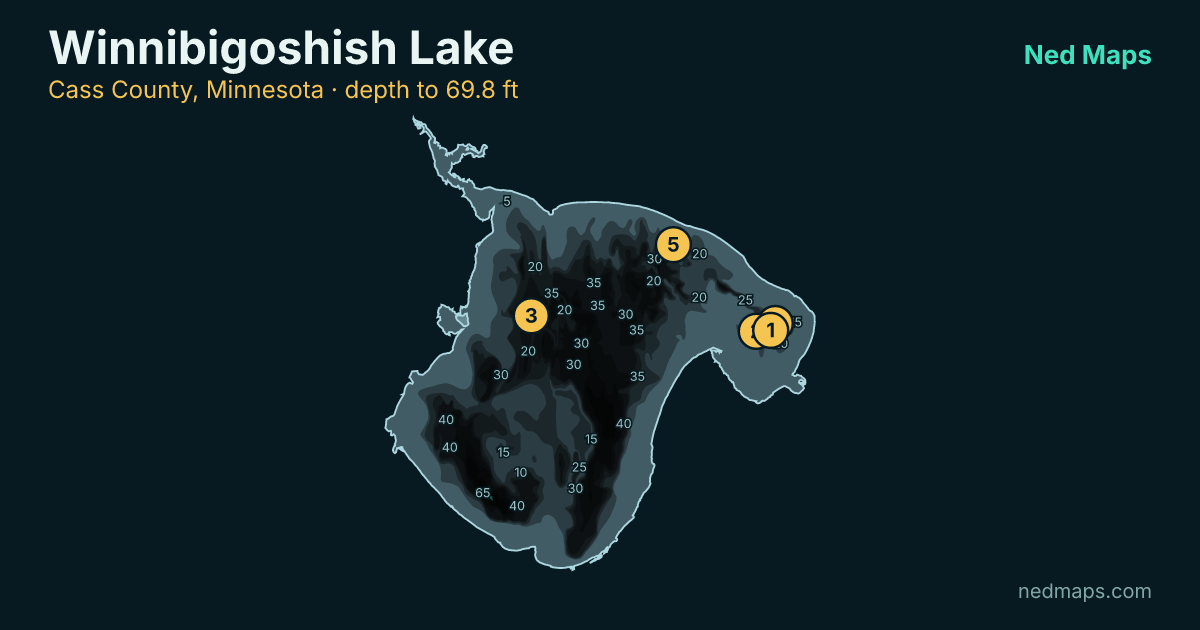
DNR bathymetry
Winnibigoshish Lake depth map
Within 30 miles
Nearby lakes
- Sunken Lake · 45 ac · 7.4 mi
- Cut Foot Sioux Lake · 2,771 ac · 7.5 mi
- Little Cut Foot Sioux Lake · 619 ac · 9.2 mi
- Portage Lake · 1,539 ac · 9.7 mi
- Little Winnibigoshish Lake · 1,002 ac · 9.8 mi
- Dixon Lake · 622 ac · 10 mi
- Round Lake · 2,860 ac · 10.9 mi
- Little Ball Club Lake · 185 ac · 11 mi
Quick answers
Frequently asked questions
How deep is Winnibigoshish Lake?
Winnibigoshish Lake reaches 69.8 ft at its deepest point with a mean depth of 15.1 ft; about 33% of the lake is littoral (15 ft or shallower).
How big is Winnibigoshish Lake?
Winnibigoshish Lake covers 56,471 acres with about 69.8 miles of shoreline.
How clear is the water in Winnibigoshish Lake?
DNR Secchi readings on Winnibigoshish Lake average 12.6 ft of visibility, clear water for a Minnesota lake.
What fish are in Winnibigoshish Lake?
Minnesota DNR surveys (most recently 2025) record walleye, largemouth bass, northern pike, muskellunge, bluegill, crappie, yellow perch, rock bass.
Is Winnibigoshish Lake stocked?
Yes. The DNR stocked walleye in 2024; the stocking table on this page lists every year back to 2017.
Does Winnibigoshish Lake have a public access?
Yes. Winnibigoshish Lake has 6 public access sites, including Lake Winnibigoshish (W) (trailer launch).
How big do walleye get in Winnibigoshish Lake?
The biggest walleye measured in recent DNR surveys taped 25"; the size-history table on this page tracks the biggest fish in each survey back to 2018.
When was Winnibigoshish Lake last surveyed?
The Minnesota DNR last surveyed Winnibigoshish Lake in 2025, the most recent of 39 surveys on record.
Page updated .

Featured guide spot
Your guide service here
One featured guide per lake, with your photo, your writeup and a link straight to your booking page. Free through December 31, 2026.
Then $20 a month from January. Cancel any time.
The live map adds today's conditions and ranked spots for Winnibigoshish Lake, plus a trip plan you can share:
Open Winnibigoshish Lake on the live map → Fished it lately? Write a report