Minnesota · Le Sueur County
Upper Sakatah Lake Fishing guide
Upper Sakatah Lake is a 892-acre lake in Le Sueur County, Minnesota, reaching 12 ft at its deepest point. Average water clarity runs about 2.5 ft. The Minnesota DNR has surveyed the lake 9 times, most recently in 2020, with walleye, largemouth bass, smallmouth bass and northern pike in the nets. That survey is 6 years old now.
DNR survey data
Fish species
WalleyeLast stocked 2025Good numbers5.9per gill net11"Typical23"Biggest
Lengths measured · 94 fish
Recent · 2014 + 2020Lengths measured · 85 fish
2020Lengths measured · 9 fish
2014Only 9 fish measured that year — too few to read as a shape.
Lengths measured · 27 fish
2009Lengths measured · 54 fish
2004No recent survey rating.
Northern pikeJust a few2.3per gill net22"Typical34"Biggest
Lengths measured · 38 fish
Recent · 2014 + 2020Lengths measured · 14 fish
2020Lengths measured · 24 fish
2014Lengths measured · 24 fish
2009Lengths measured · 12 fish
2004BluegillJust a few0.1per trap net6"Typical8"Biggest
Lengths measured · 26 fish
Recent · 2014 + 2020Lengths measured · 19 fish
2020Lengths measured · 7 fish
2014Only 7 fish measured that year — too few to read as a shape.
Lengths measured · 151 fish
2009Lengths measured · 73 fish
2004CrappieJust a few0.3per trap net6"Typical11"Biggest
Lengths measured · 97 fish
Recent · 2014 + 2020Lengths measured · 77 fish
2020Lengths measured · 20 fish
2014Lengths measured · 34 fish
2009Lengths measured · 11 fish
2004Yellow perchGood numbers12.7per gill net6"Typical11"Biggest
Lengths measured · 200 fish
Recent · 2014 + 2020Lengths measured · 137 fish
2020Lengths measured · 63 fish
2014Lengths measured · 241 fish
2009Lengths measured · 72 fish
2004White bassExcellent numbers9.9per gill net5"Typical17"Biggest
Lengths measured · 160 fish
Recent · 2014 + 2020Lengths measured · 132 fish
2020Lengths measured · 28 fish
2014Lengths measured · 86 fish
2009Lengths measured · 123 fish
2004Rates come from standard DNR survey gear (gill nets, trap nets, electrofishing), judged against statewide benchmarks for the same gear, so the same number of fish per net can read differently for two species. Where the standard gear can't count a species reliably, only presence and size are listed. Typical is the middle fish of those measured. Open a row for the full length spread, survey by survey.
How to fish Upper Sakatah Lake through the year
Walleye
- Spring
- Walleye are shallow, on and just off the spawning flats and the first green weeds. In 2.5 ft of visibility, they sit shallower than you think.
- Early summer
- Walleye are setting up on the outside weed edge, points and shallow structure.
- Summer
- Walleye are working the weed edge, points and any wind-blown structure. With 100% of this lake 15 ft or shallower, the weed edge is the main event.
- Fall
- Walleye are packing onto the sharpest breaks and points as the water cools, in big schools with short windows. A 12-ft bowl cools fast, so the fall window comes early here.
Largemouth bass
- Spring
- Largemouth are moving up into the warming bays and flats, staging around wood, docks and new weeds to spawn. In 2.5 ft of visibility, they sit shallower than you think.
- Early summer
- Largemouth are on the shallow spawning flats and protected bays, where beds go on firm bottom next to isolated cover.
- Summer
- Largemouth are in and along the weeds: cabbage and milfoil edges, matted cover and shade. With 100% of this lake 15 ft or shallower, the weed edge is the main event.
- Fall
- Largemouth are chasing bait back onto the flats and into the remaining green weeds, feeding hard and shallow before the freeze. A 12-ft bowl cools fast, so the fall window comes early here.
Season patterns for each species. Open the live map for today's wind, light and water temp.
Size history
Biggest fish by survey year
| Survey year | Walleye | Largemouth bass | Northern pike |
|---|---|---|---|
| 2020 | 23" | 6" | 34" |
| 2014 | 21" | 15" | 32" |
| 2009 | 17" | 18" | 31" |
| 2004 | 23" | 3" | 31" |
| 1999 | 25" | 20" | 27" |
| 1994 | 20" | 5" | 32" |
Longest fish measured by DNR survey crews in each year's nets. Survey gear samples the population, so the lake usually holds larger fish than any survey measured.
Suggested tackle
What to bring
Top presentations for this lake's structure and clarity:
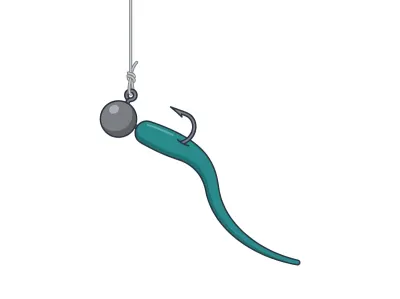
Walleye · Soft plastics
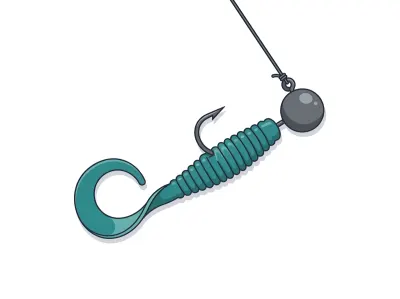
Curly-Tail Grub on Jig
3" curly-tail grub threaded on a round jighead
Largemouth bass · Soft plastics

Texas-Rigged Worm
7" ribbon-tail or straight-tail plastic worm
Largemouth bass · Jigs & bladed
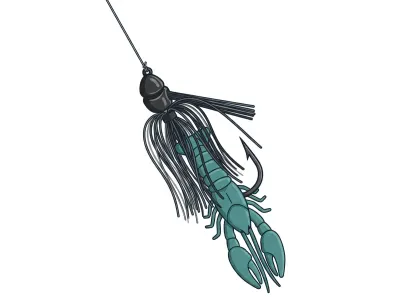
Skirted Casting Jig + Craw Trailer
3.5–4" craw-style trailer on a skirted casting/flipping jig
Northern pike · Soft plastics
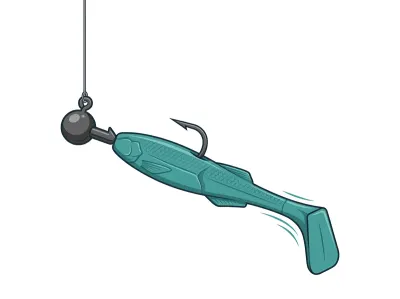
Paddletail Swimbait on Jighead
4–5" paddletail swimbait on a ball-head swimbait jighead
Northern pike · Jigs & bladed
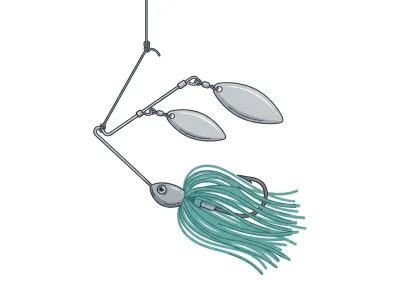
Spinnerbait
3/8–1/2 oz safety-pin spinnerbait with tandem willow-leaf blades
Full setups, including hooks, weights and line, are on the live map. As an Amazon Associate I earn from qualifying purchases.
DNR stocking records
Stocking history
| Year | Species | Stocked |
|---|---|---|
| 2025 | Walleye | 220,250 fry |
| 2024 | Walleye | 220,250 fry |
| 2023 | Walleye | 220,250 fry |
| 2022 | Walleye | 440,500 fry |
| 2021 | Walleye | 440,500 fry |
| 2019 | Walleye | 440,500 fry |
| 2018 | Walleye | 440,500 fry |
| 2016 | Walleye | 1,317,440 fry |
MN DNR · in their words
From the 2020 survey
Upper Sakatah Lake is an 881-acre lake located on the east side of the town of Waterville in Le Sueur County. It has a maximum depth of 12 feet. A boat access is located in Sakatah State Park on the south shore but it can also be accessed via the Cannon River. Upper Sakatah Lake is primarily managed for Walleye and secondarily for Bluegill, Black Crappie, and Northern Pike. The current management plan calls for stocking 500 Walleye fry/littoral acre (n = 440,500) annually. A 50:50 mix of LMS and MIS strain fry are stocked to accommodate the ongoing research project involving Cannon River Walleye stocks. Upper Sakatah Lake is designated as a Tier-2 Lake and will be surveyed as part of a regularly scheduled monitoring program at a frequency of every 6 years.
A targeted survey was completed the week of August 3, 2020 using 8 gill nets. Trap nets and spring boat electrofishing targeting Largemouth Bass were not completed due to COVID-19 restrictions. Water quality parameters were also measured. Results of this survey can be compared to historical standard surveys because standardized methods were used.
Read the full DNR narrative
A total of 85 Walleyes were sampled for a catch rate of 10.6/net, indicating moderate to high numbers were present. In the three surveys prior to 2020 Walleye numbers were on a downward trend with catch rate of 5.0/net in 2004, 3.1/net in 2009, and 1.3/net in 2014. Since 1994, catch rates have varied from 1.3/net to 17.3/net with an average of 8.8/net. Lengths in 2020 ranged from 8.8 to 23.4 inches with an average of 12.8 inches. Approximately 25% of Walleye sampled were greater than 15 inches. Ages ranged from 1 to 6 years old with 5 year classes present. Approximately 95% of Walleye sampled were 1 or 2 years old. Growth was rapid with 17 inches exceeded by year 3. The fast growing 2018 and 2019 year classes should provide a welcome quality opportunity for anglers in coming years after experiencing a slump in Walleye numbers over the past 15 years or so.
A total of 19 Bluegills ranging from 3.7 to 6.6 inches were sampled with the gill nets for a catch rate of 2.4/net. Bluegills are better sampled with trap nets and caution should be used before drawing conclusions about the Bluegill population in Upper Sakatah Lake using the 2020 survey.
A total of 77 Black Crappies were sampled for a catch rate of 9.6/net, indicating moderate to high numbers were present. This was the highest catch rate from 1994 to 2020 (n = 6). The average during that time was just 3.5/net. Lengths in 2020 ranged from 2.6 to 11.9 inches with an average of 7.0 inches. Approximately 31% of Black Crappies sampled were larger than 8 inches and just 1% were larger than 10 inches. With the exception of one 6 year old fish, all were 1 or 2 years old. Growth was fast with fish reaching around 7 inches between year 2 and 3.
Northern Pike were sampled in low numbers in 2020 with a total of 14 caught for a catch rate of 1.8/net, indicating low numbers were present. This was right at the 1994 to 2020 average catch rate of 1.8/net. The previous catch rate of 2.9/net in 2014 represented the high mark for that time. Lengths in 2020 ranged from 19.5 to 34.1 inches with an average of 25.4 inches. Most Northern Pike sampled were larger than 21 inches and approximately 75% of the sample exceeded the legal minimum length limit of 24 inches. Ages ranged from 1 to 5 years old with 6 year classes present. Growth was fast with fish surpassing 22 inches around year 2. Upper Sakatah Lake is located in the Southern Northern Pike management zone. In order to harvest a Northern Pike the fish must be over 24.0 inches in length. The daily bag limit in this zone is 2 Northern Pike per day.
Yellow Perch were common in 2020 with a catch rate of 17.6/net, indicating high numbers were present. From 1994 to 2020, catch rates have varied from 7.8/net to 26.5/net with an average of 13.5/net. The previous catch rate was 7.8/net in 2014. Lengths ranged from 5.4 to 11.2 inches with an average of 7.3 inches. Only 26% of Yellow Perch sampled exceeded 8 inches and 2% exceeded 10 inches. Ages ranged from 1 to 3 years old with 3 year classes present. The 2019 year class accounted for 70% of the sample. Growth was moderate with a length of 7.2 inches reached by year 2.
White Bass remained a common member of the Upper Sakatah fish community in 2020. A total of 133 White Bass ranging from 4.7 to 17.3 inches were sampled at a rate of 16.6/net, indicating high numbers were present. From 1994 to 2020, catch rates varied from 3.3/net to 17.2/net with an average of 11.3/net. Although most of the 2020 sample was small and young, there were fish in the 13 to 18 inch range that offer an additional target for anglers.
A total of 55 Freshwater Drum were sampled at a rate of 6.9/net. The long term average catch rate was 12.5/net between 1994 and 2020. Lengths ranged from 3.1 to 19.1 inches with an average of 12.1 inches. Freshwater Drum are often caught by anglers while targeting other species. For the open-minded angler, they offer an additional fishing target and are surprisingly good table fare.
Just a single Black Bullhead was sampled in 2020 for a catch rate of 0.1/net. Catch rates have fallen dramatically in recent surveys with catch rates of 116.7/net in 2004, 9.1/net in 2009, and 3.0/net in 2014. Typically, Black Bullheads are abundant in lakes like Upper Sakatah but the lack of winterkill events in recent years has prevented Black Bullheads from producing dominant year classes in Upper Sakatah Lake.
Common Carp were sampled at a rate of 1.3/net, which was below the long term average of 1.8/net. High Common Carp numbers are detrimental to lake water quality and habitat but they appear mostly stable at moderate to low numbers in Upper Sakatah Lake.
Other Species sampled in 2020 include Bigmouth Buffalo, Bowfin (dogfish), Golden Shiner, Largemouth Bass, and White Sucker.
Water clarity was poor with a secchi depth of 1.8 feet. Dissolved oxygen and water temperature readings ranged from 10.4 ppm and 76.1 degrees Fahrenheit at the surface to 8.7 ppm and 76.5 degrees Fahrenheit at 12 feet. No thermocline was detected due to the shallow, windswept nature of the lake.
Shoreline property owners also play an important role in the overall health of an aquatic ecosystem, including the fish population. Natural shorelines, including vegetation, woody debris, and bottom substrates, provide valuable habitat for fish and wildlife, help maintain water quality, and reduce bank erosion. Cattails and bulrushes are particularly beneficial for fish spawning, rearing, and feeding. By leaving natural shorelines unaltered or restoring them to natural conditions, shoreline property owners are doing their part to maintain or improve a healthy ecosystem in the lake and protect the resource for future generations.
- Sky Wigen, Fisheries Specialist
Narrative text from the Minnesota DNR lake survey.
Recent reports
Upper Sakatah Lake fishing reports
Recent reports on Upper Sakatah Lake from guides, tournaments and regular anglers. Anything posted in the last two weeks also bumps the matching spots on the live map, so you'll see a "matches a recent report" tag on them.
Public water access
Getting on the water
- Upper Sakatah Lake (trailer launch)
- Upper Sakatah Fishing Pier (fishing pier)
DNR bathymetry
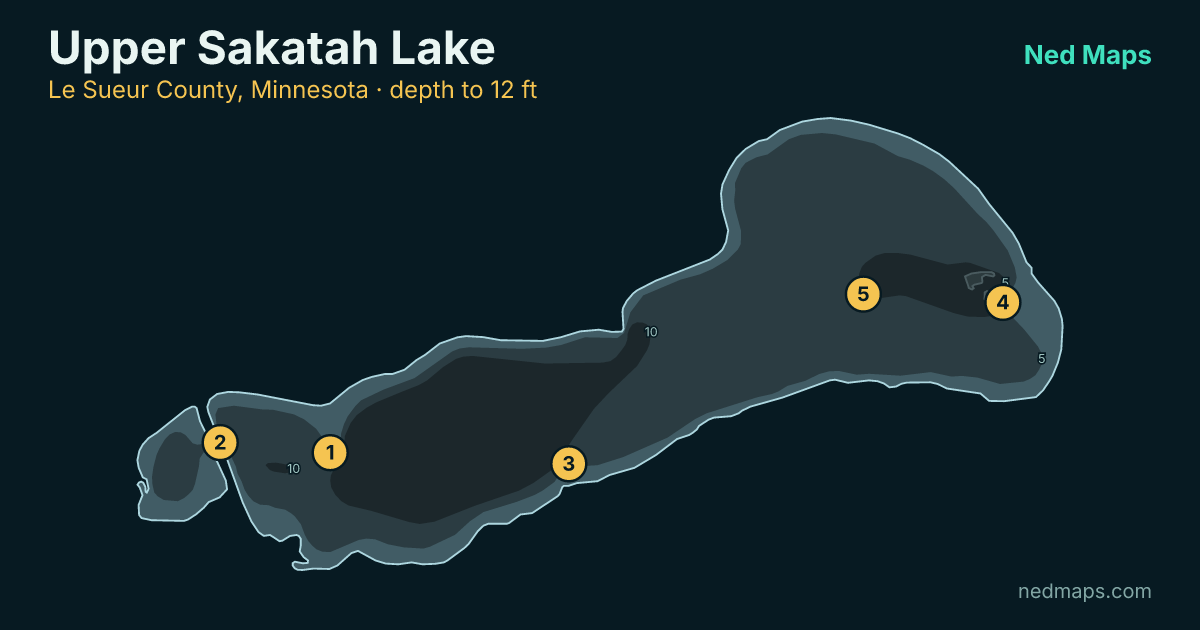
Upper Sakatah Lake depth map
Within 30 miles
Nearby lakes
- Lower Sakatah Lake · 372 ac · 2.5 mi
- Tetonka Lake · 1,358 ac · 2.8 mi
- Horseshoe Lake · 417 ac · 3 mi
- Reeds Lake · 195 ac · 4.2 mi
- Sunfish Lake · 121 ac · 4.5 mi
- Lily Lake · 114 ac · 5 mi
- Fish Lake · 77 ac · 5.8 mi
- Rays Lake · 169 ac · 6.5 mi
Quick answers
Frequently asked questions
How deep is Upper Sakatah Lake?
Upper Sakatah Lake reaches 12 ft at its deepest point; about 100% of the lake is littoral (15 ft or shallower).
How big is Upper Sakatah Lake?
Upper Sakatah Lake covers 892 acres with about 8 miles of shoreline.
How clear is the water in Upper Sakatah Lake?
DNR Secchi readings on Upper Sakatah Lake average 2.5 ft of visibility, on the stained end for a Minnesota lake.
What fish are in Upper Sakatah Lake?
Minnesota DNR surveys (most recently 2020) record walleye, largemouth bass, smallmouth bass, northern pike, bluegill, crappie, yellow perch, channel catfish, white bass.
Is Upper Sakatah Lake stocked?
Yes. The DNR stocked walleye in 2025; the stocking table on this page lists every year back to 2016.
Does Upper Sakatah Lake have a public access?
Yes. Upper Sakatah Lake has 2 public access sites, including Upper Sakatah Lake (trailer launch).
How big do walleye get in Upper Sakatah Lake?
The biggest walleye measured in recent DNR surveys taped 23"; the size-history table on this page tracks the biggest fish in each survey back to 1994.
When was Upper Sakatah Lake last surveyed?
The Minnesota DNR last surveyed Upper Sakatah Lake in 2020, the most recent of 9 surveys on record. A survey that old is a starting point, not a current reading.
Page updated .

Featured guide spot
Your guide service here
One featured guide per lake, with your photo, your writeup and a link straight to your booking page. Free through December 31, 2026.
Then $20 a month from January. Cancel any time.
The live map adds today's conditions and ranked spots for Upper Sakatah Lake, plus a trip plan you can share:
Open Upper Sakatah Lake on the live map → Fished it lately? Write a report