Minnesota · Rice County
Shields Lake Fishing guide
Shields Lake sits in Rice County, Minnesota, and covers 941 acres, reaching 42 ft at its deepest point. Average water clarity runs about 2.8 ft. The Minnesota DNR has surveyed the lake 13 times, most recently in 2023, with walleye, largemouth bass, northern pike and bluegill in the nets.
DNR survey data
Fish species
Largemouth bassFair numbers44.4per hr (electrofishing)11"Typical18"Biggest
Lengths measured · 24 fish
Recent · 2023Lengths measured · 24 fish
2023Lengths measured · 1 fish
2020Only 1 fish measured that year — too few to read as a shape.
Lengths measured · 48 fish
2017Lengths measured · 7 fish
2012Only 7 fish measured that year — too few to read as a shape.
Northern pikeJust a few2.6per gill net26"Typical39"Biggest
Lengths measured · 27 fish
Recent · 2023Lengths measured · 27 fish
2023Lengths measured · 42 fish
2020Lengths measured · 27 fish
2017Lengths measured · 31 fish
2012BluegillJust a few3.1per trap net6"Typical9"Biggest
Lengths measured · 75 fish
Recent · 2023Lengths measured · 75 fish
2023Lengths measured · 114 fish
2020Lengths measured · 433 fish
2017Lengths measured · 120 fish
2012CrappieJust a few1.4per trap net8"Typical12"Biggest
Lengths measured · 119 fish
Recent · 2023Lengths measured · 119 fish
2023Lengths measured · 294 fish
2020Lengths measured · 269 fish
2017Lengths measured · 24 fish
2012Yellow perchFair numbers2.9per gill net7"Typical10"Biggest
Lengths measured · 31 fish
Recent · 2023Lengths measured · 31 fish
2023Lengths measured · 57 fish
2020Lengths measured · 478 fish
2017Lengths measured · 127 fish
2012White bassGood numbers1.5per gill net17"Typical18"Biggest
Lengths measured · 12 fish
Recent · 2023Lengths measured · 12 fish
2023Lengths measured · 17 fish
2020Lengths measured · 1 fish
2017Only 1 fish measured that year — too few to read as a shape.
Lengths measured · 1 fish
2012Only 1 fish measured that year — too few to read as a shape.
Rates come from standard DNR survey gear (gill nets, trap nets, electrofishing), judged against statewide benchmarks for the same gear, so the same number of fish per net can read differently for two species. Where the standard gear can't count a species reliably, only presence and size are listed. Typical is the middle fish of those measured. Open a row for the full length spread, survey by survey.
How to fish Shields Lake through the year
Walleye
- Spring
- Walleye are shallow, on and just off the spawning flats and the first green weeds. In 2.8 ft of visibility, they sit shallower than you think.
- Early summer
- Walleye are setting up on the outside weed edge, points and shallow structure.
- Summer
- Walleye are working the weed edge, points and any wind-blown structure. On a lake that drops to 42 ft, check the deep edge of that structure too.
- Fall
- Walleye are packing onto the sharpest breaks and points as the water cools, in big schools with short windows.
Largemouth bass
- Spring
- Largemouth are moving up into the warming bays and flats, staging around wood, docks and new weeds to spawn. In 2.8 ft of visibility, they sit shallower than you think.
- Early summer
- Largemouth are on the shallow spawning flats and protected bays, where beds go on firm bottom next to isolated cover.
- Summer
- Largemouth are in and along the weeds: cabbage and milfoil edges, matted cover and shade. On a lake that drops to 42 ft, check the deep edge of that structure too.
- Fall
- Largemouth are chasing bait back onto the flats and into the remaining green weeds, feeding hard and shallow before the freeze.
Season patterns for each species. Open the live map for today's wind, light and water temp.
Size history
Biggest fish by survey year
| Survey year | Walleye | Largemouth bass | Northern pike |
|---|---|---|---|
| 2023 | 26" | 18" | 39" |
| 2020 | 25" | 20" | 35" |
| 2017 | 21" | 20" | 32" |
| 2012 | 21" | 17" | 27" |
| 2006 | 24" | 17" | 24" |
| 2001 | 18" | 18" | 34" |
| 1998 | 26" | 18" | 35" |
| 1993 | 26" | 10" | 25" |
Longest fish measured by DNR survey crews in each year's nets. Survey gear samples the population, so the lake usually holds larger fish than any survey measured.
Suggested tackle
What to bring
Top presentations for this lake's structure and clarity:
Walleye · Live bait
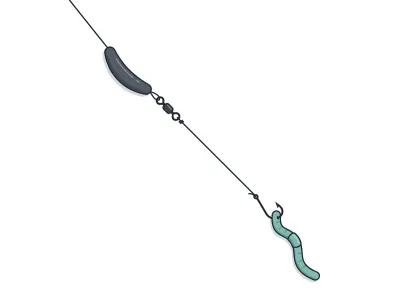
Live-Bait (Lindy) Rig + Leech/Crawler
jumbo leech or half a nightcrawler
Walleye · Trolling
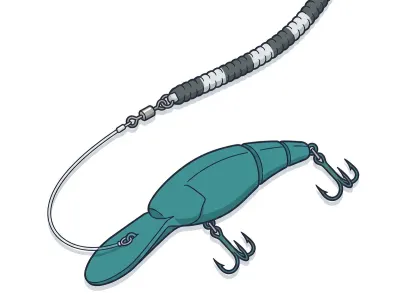
Leadcore Line + Crankbaits
4–5" mid-diving crankbait behind a long leadcore run
Largemouth bass · Hardbaits
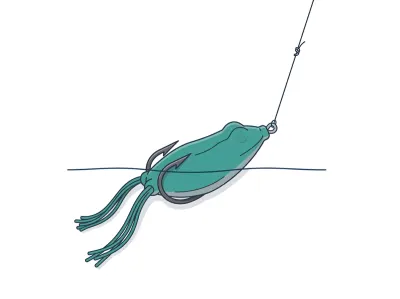
Hollow-Body Frog
3–3.5" hollow-body frog
Largemouth bass · Soft plastics

Texas-Rigged Worm
7" ribbon-tail or straight-tail plastic worm
Northern pike · Soft plastics
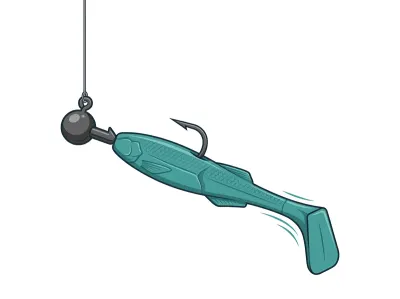
Paddletail Swimbait on Jighead
4–5" paddletail swimbait on a ball-head swimbait jighead
Northern pike · Muskie & pike
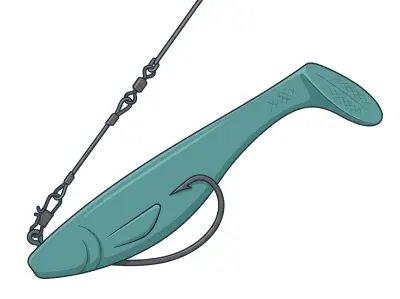
Soft Rubber (Bull Dawg / Medusa)
10" soft rubber body bait
Full setups, including hooks, weights and line, are on the live map. As an Amazon Associate I earn from qualifying purchases.
DNR stocking records
Stocking history
| Year | Species | Stocked |
|---|---|---|
| 2025 | Walleye | 164,500 fry |
| 2024 | Walleye | 164,500 fry |
| 2023 | Walleye | 164,500 fry |
| 2022 | Walleye | 329,000 fry |
| 2021 | Walleye | 301,500 fry |
| 2019 | Walleye | 329,000 fry |
| 2018 | Walleye | 329,000 fry |
| 2016 | Walleye | 986,258 fry · 14,487 fingerlings |
MN DNR · in their words
From the 2023 survey
Shields Lake (headwater of the Cannon River) is an 872-acre lake located near the town of Shieldsville in Rice County. Residential development has disturbed and altered much of Shields Lake's shoreline. In areas with residential development, lawns are typically maintained to the water's edge and shorelines are altered with rock rip rap or sand blankets, thereby disrupting the natural riparian buffer. Remaining natural shoreline is limited to the area east of the boat ramp, the islands, and the west shore of the lake. A DNR owned access is located on the north shore of the lake in the northernmost bay, and a county owned access is located in McCullough Park in the north bay. The sport fish community is comprised of Black Crappie, Bluegill, Walleye, Largemouth Bass, Northern Pike, and Yellow Perch. Primary management species on Shields Lake include Bluegill and Black crappie. Secondary management species include Largemouth Bass, Northern Pike, and Walleye. Shields Lake has been stocked extensively with Walleyes to maintain the Walleye population. Walleye (fry, fingerlings, yearlings, or adults) have been stocked over time. The current management plans call for Walleye fry to be stocked annually. Shields Lake has been designated a Tier I lake in the Waterville area and future surveys will be conducted every three years.
A standard survey was conducted the week of 17 July 2023 to monitor the sport fish populations in Shields Lake using 8 gill net and 11 trap nets.
Read the full DNR narrative
Black Crappie relative abundance declined from 10.6/trap net in 2017, to 1.4/ trap net in 2023. Eight year classes were present (2014-2022), with age-3 fish representing 42% of Black Crappie sampled. Black Crappie sampled in gill nets averaged 7.6 inches and ranged from 4.1 inches to 11.8 inches. Black Crappies sampled with trap nets averaged 8.4 inches and ranged from 4.2 inches to 12.8 inches.
Bluegill relative abundance in 2023 of 3.1/trap net was the lowest since 1993 (1.9/ Trap net) and down from 14.0/trap net during the 2017 survey. Bluegill ages were estimated using scales and otoliths. Age estimates indicated 8-year classes of Bluegill sampled in Shields Lake (2014-2022), with age-4 or younger fish representing 80% of the Bluegill captured. Size structure of trap netted Bluegill was small, ranging in length from 3.1 to 9.5 inches and averaging 4.0 inches. Bluegills captured in gill nets were larger, ranging in length from 3.9 to 9.7 inches and averaging 7.3 inches.
Northern Pike relative abundance has been variable in Shields Lake for the last 3 decades, ranging between 1.6 and 5.4/gill net. In 2023, Northern Pike were captured at a rate of 2.6/gill net. Northern Pike averaged 27.8 inches and ranged from 22.6 to 39.2 inches in length. Eighty-six percent of Northern Pike sampled exceeded the 24-inch minimum length limit.
Daytime electrofishing was conducted on 30 May 2023 to assess Largemouth Bass relative abundance and size structure. Largemouth Bass were sampled at a rate of 44.4/hour. Largemouth Bass averaged 9.9 inches and ranged from 4.6 inches to 18.2 inches total length.
Walleye relative abundance has historically been low in Shields Lake, not surpassing a catch rate of 7.3/gill net (1993). The trend continued in 2023, as Walleye were caught at a rate of 1.1/gill net. Four year classes of Walleye were present (2010, 2013, 2014, and 2016). Walleyes sampled with gill nets averaged 24.0 inches total length and ranged from 22.1 inches to 26.2 inches.
Yellow perch catch rates have varied from 3.6/gill net in 1981 to 140.6/gill net in 1987. Relative abundance in 2023 was 2.9/gill net. The 2023 relative abundance was the lowest abundance on record for Shields Lake. Size structure of Yellow Perch was small, as lengths ranged from 5.3 to 10.9 inches in length and averaged 7.6 inches.
The 2023 Freshwater Drum (sheepshead) gill net relative abundance (3.9/trap net) decreased from the 2020 assessment (14.1/gill net). Historically, Freshwater Drum have been very abundant in Shields Lake.
Black Bullhead relative abundance 13.9/gill was near the 2020 abundance of 14.1/gill net. However, Yellow Bullhead relative abundance has nearly doubled since the 2020 survey abundance of 14.0/ gill net. Black Bullheads averaged 11.5 inches and ranged from 8.1 inches to 15.6 inches total length. Yellow Bullheads averaged 11.7 inches and ranged from 8.1 to 16.2 inches in length. Two Brown Bullheads were also sampled in 2023.
Bigmouth Buffalo, Bowfin (dogfish), Common Carp, White Bass, and Golden Shiners were present, but occurred in low numbers.
Water quality metrics were collected on 7/17/2023. Shields Lake was experiencing an algae bloom as the water appeared brown/green, and had a secchi depth of 2.5 ft. Dissolved oxygen ranged from 6.1 ppm at the surface to 0.0 ppm at 36.0 ft. The water temperature at the surface was 72.1 degrees, the highest temperature was 73.0 degrees at 9 ft of depth, the lowest temperature was 52.7 degrees at 36 ft. Thermal stratification of the water column occurred at 17 ft of depth as evidenced by a drop in temperature from 71.2 to 66.2 degrees Fahrenheit at 18 ft.
Shoreline property owners also play an important role in the overall health of an aquatic ecosystem, including the fish population. Natural shorelines, including vegetation, woody debris, and bottom substrates, provide valuable habitat for fish and wildlife, help maintain water quality, and reduce bank erosion. Cattails and bulrushes are particularly beneficial for fish spawning, rearing, and feeding. By leaving natural shorelines unaltered or restoring them to natural conditions, shoreline property owners are doing their part to maintain or improve a healthy ecosystem in the lake and protect the resource for future generations.
-Tyler Fellows, fisheries specialist
Narrative text from the Minnesota DNR lake survey.
Recent reports
Shields Lake fishing reports
Recent reports on Shields Lake from guides, tournaments and regular anglers. Anything posted in the last two weeks also bumps the matching spots on the live map, so you'll see a "matches a recent report" tag on them.
Public water access
Getting on the water
- Shields Lake (trailer launch)
DNR bathymetry
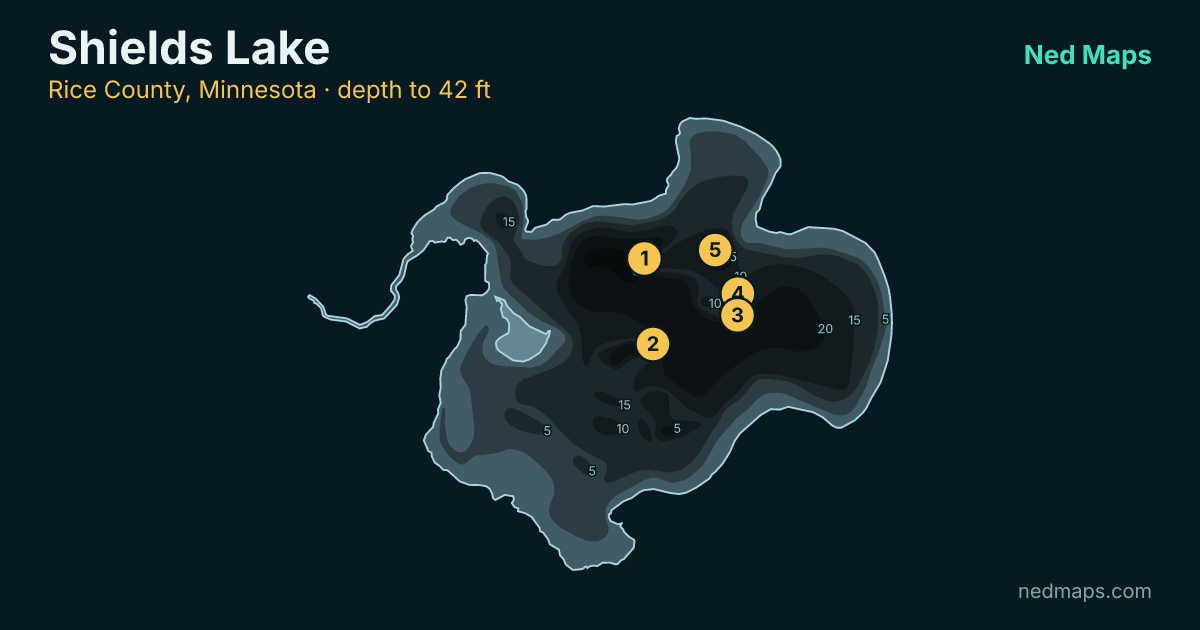
Shields Lake depth map
Within 30 miles
Nearby lakes
- Mazaska Lake · 688 ac · 2.5 mi
- Hunt Lake · 176 ac · 2.7 mi
- Rice Lake · 331 ac · 3.4 mi
- French Lake · 876 ac · 3.5 mi
- Kelly & Dudley Lake · 128 ac · 4 mi
- Caron Lake · 319 ac · 4.9 mi
- Cedar Lake · 902 ac · 5.1 mi
- Roberds Lake · 632 ac · 5.7 mi
Quick answers
Frequently asked questions
How deep is Shields Lake?
Shields Lake reaches 42 ft at its deepest point; about 70% of the lake is littoral (15 ft or shallower).
How big is Shields Lake?
Shields Lake covers 941 acres with about 9 miles of shoreline.
How clear is the water in Shields Lake?
DNR Secchi readings on Shields Lake average 2.8 ft of visibility, on the stained end for a Minnesota lake.
What fish are in Shields Lake?
Minnesota DNR surveys (most recently 2023) record walleye, largemouth bass, northern pike, bluegill, crappie, yellow perch, white bass.
Is Shields Lake stocked?
Yes. The DNR stocked walleye in 2025; the stocking table on this page lists every year back to 2016.
Does Shields Lake have a public access?
Yes. Shields Lake has one public access site: Shields Lake (trailer launch).
How big do walleye get in Shields Lake?
The biggest walleye measured in recent DNR surveys taped 26"; the size-history table on this page tracks the biggest fish in each survey back to 1993.
When was Shields Lake last surveyed?
The Minnesota DNR last surveyed Shields Lake in 2023, the most recent of 13 surveys on record.
Page updated .

Featured guide spot
Your guide service here
One featured guide per lake, with your photo, your writeup and a link straight to your booking page. Free through December 31, 2026.
Then $20 a month from January. Cancel any time.
The live map adds today's conditions and ranked spots for Shields Lake, plus a trip plan you can share:
Open Shields Lake on the live map → Fished it lately? Write a report