Minnesota · Itasca County
Rice Lake Fishing guide
Rice Lake sits in Itasca County, Minnesota, and covers 791 acres, reaching 5 ft at its deepest point. The Minnesota DNR has surveyed the lake 1 time, most recently in 2009, with walleye, largemouth bass, northern pike and bluegill in the nets. That survey is 17 years old now.
DNR survey data
Fish species
Northern pikePresent2.3per trap net17"Typical24"Biggest
Lengths measured · 27 fish
BluegillJust a few2.8per trap net6"Typical9"Biggest
Lengths measured · 33 fish
Yellow perchPresent1.8per trap net8"Typical11"Biggest
Lengths measured · 22 fish
Rates come from standard DNR survey gear (gill nets, trap nets, electrofishing), judged against statewide benchmarks for the same gear, so the same number of fish per net can read differently for two species. Where the standard gear can't count a species reliably, only presence and size are listed. Typical is the middle fish of those measured. Open a row for the full length spread, survey by survey.
How to fish Rice Lake through the year
Walleye
- Spring
- Walleye are shallow, on and just off the spawning flats and the first green weeds.
- Early summer
- Walleye are setting up on the outside weed edge, points and shallow structure.
- Summer
- Walleye are working the weed edge, points and any wind-blown structure. With 100% of this lake 15 ft or shallower, the weed edge is the main event.
- Fall
- Walleye are packing onto the sharpest breaks and points as the water cools, in big schools with short windows. A 5-ft bowl cools fast, so the fall window comes early here.
Largemouth bass
- Spring
- Largemouth are moving up into the warming bays and flats, staging around wood, docks and new weeds to spawn.
- Early summer
- Largemouth are on the shallow spawning flats and protected bays, where beds go on firm bottom next to isolated cover.
- Summer
- Largemouth are in and along the weeds: cabbage and milfoil edges, matted cover and shade. With 100% of this lake 15 ft or shallower, the weed edge is the main event.
- Fall
- Largemouth are chasing bait back onto the flats and into the remaining green weeds, feeding hard and shallow before the freeze. A 5-ft bowl cools fast, so the fall window comes early here.
Season patterns for each species. Open the live map for today's wind, light and water temp.
Suggested tackle
What to bring
Top presentations for this lake's structure and clarity:
Walleye · Live bait
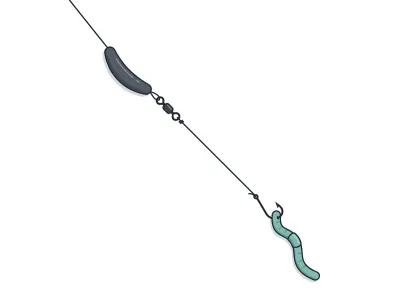
Live-Bait (Lindy) Rig + Leech/Crawler
jumbo leech or half a nightcrawler
Walleye · Soft plastics
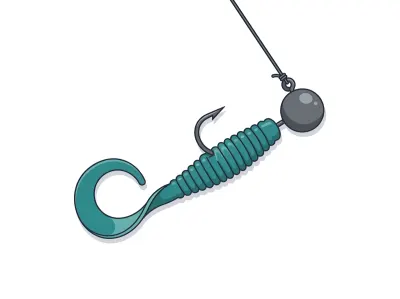
Curly-Tail Grub on Jig
3" curly-tail grub threaded on a round jighead
Largemouth bass · Hardbaits
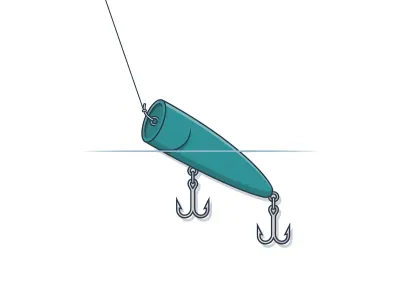
Topwater Popper
2.5–3" concave-face popper
Largemouth bass · Hardbaits
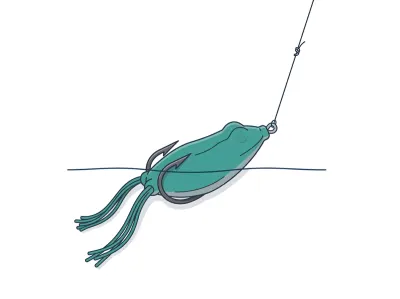
Hollow-Body Frog
3–3.5" hollow-body frog
Northern pike · Jigs & bladed
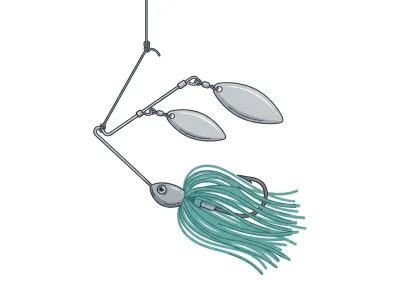
Spinnerbait
3/8–1/2 oz safety-pin spinnerbait with tandem willow-leaf blades
Northern pike · Hardbaits
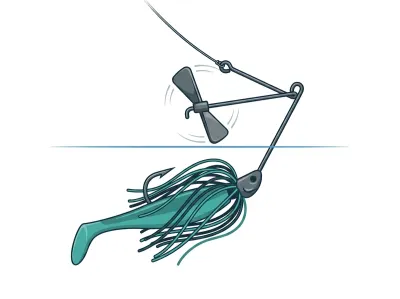
Buzzbait
3/8–1/2 oz buzzbait with a clacker blade and skirted single hook
Full setups, including hooks, weights and line, are on the live map. As an Amazon Associate I earn from qualifying purchases.
MN DNR · in their words
From the 2009 survey
Rice Lake is an 817-acre lake located 4 miles northeast of Squaw Lake, MN. The lake is very shallow with a maximum depth of 5 ft. The Bowstring River enters the lake from Little Sand Lake on the south shore and outlets on the north shore. The lake was undeveloped except for a duck camp on the northwest shore. There was a concrete access on the inlet and a carry down access on the outlet. The lake is known mostly for duck hunting and wild rice harvesting, however, anglers fish for walleye, northern pike, and sunfish in the spring. This survey set 12 trap nets; gill nets were not set due to shallow water.
Walleye trap-net catch was 0.6/net and was similar to the average for similar lakes. The last survey was conducted in 1957 and used 12 nets of slightly different construction than were used in this assessment. In that survey the walleye catch rate was 0.4/net. Although walleye were not abundant, size structure was good and fish varied from 18 to 23 inches. Growth was similar to the statewide average with fish averaging 14 inches by age 3. It is likely that the walleye population in Rice Lake fluctuates, with walleye migrating upstream from Little Sand Lake in the spring and moving back downstream as water temperatures increase in summer. The substrate in Rice Lake is entirely muck and walleye natural reproduction is unlikely.
Read the full DNR narrative
Northern pike trap-net catch was 2.3/net and was similar to the catch rate of 1.5/net in 1957. Size structure was poor and no fish larger than 24 inches were sampled. Growth was slow, but greater than 85% of the statewide average with fish averaging 23 inches in six years. Since Rice Lake is shallow, it likely serves as a spawning and nursery area for young northern pike. However, most adult fish are likely to migrate to deeper waters after the spawning season.
Bluegill trap-net catch was 2.8/net and was similar to the first quartile of 2.5/net. Bluegill were listed as a species present in the 1957 survey, but there was no mention of how many were sampled. Size structure was good with fish up to 9 inches sampled. Growth was fast, but still within 15% of the lake class average. Bluegill averaged 7.2 inches at age 4.
Pumpkinseed sunfish were the most abundant species sampled and had a catch rate of 9.7/trap net. Size structure was good with many fish sampled greater than 7 inches.
Yellow perch catch rate was 1.8/trap net and was similar to the expected range. Although not very abundant, yellow perch had good size structure with fish up to 11 inches sampled. Growth was similar to the statewide average with fish averaging 8.8 inches at age 5.
Brown bullhead were sampled at 5.8/trap net and were much less than the catch rate of 33.7/trap net sampled in 1957. At one time, Rice Lake was commercially netted for bullheads.
Other species sampled include black and yellow bullhead, bowfin, largemouth bass, shorthead and silver redhorse, tadpole madtom, and white sucker.
Narrative text from the Minnesota DNR lake survey.
Recent reports
Rice Lake fishing reports
Recent reports on Rice Lake from guides, tournaments and regular anglers. Anything posted in the last two weeks also bumps the matching spots on the live map, so you'll see a "matches a recent report" tag on them.
Public water access
Getting on the water
- DNR access
- US Forest Service access
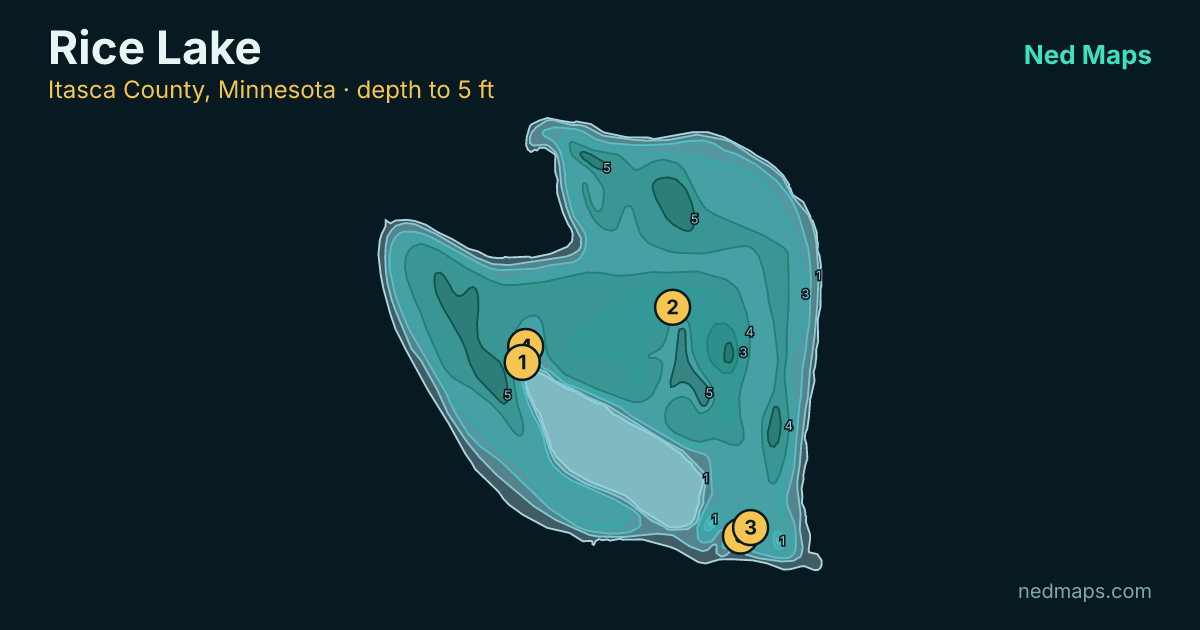
DNR bathymetry
Rice Lake depth map
Within 30 miles
Nearby lakes
- Little Sand Lake · 353 ac · 1.5 mi
- Little Whitefish Lake · 160 ac · 2.8 mi
- Natures Lake · 2,249 ac · 3.3 mi
- Cedar Lake · 178 ac · 3.8 mi
- Sand Lake · 3,579 ac · 4 mi
- Whitefish Lake · 564 ac · 4.1 mi
- Rush Island Lake · 297 ac · 5 mi
- Bird's Eye Lake · 80 ac · 5.1 mi
Quick answers
Frequently asked questions
How deep is Rice Lake?
Rice Lake reaches 5 ft at its deepest point with a mean depth of 2 ft; about 100% of the lake is littoral (15 ft or shallower).
How big is Rice Lake?
Rice Lake covers 791 acres with about 8.1 miles of shoreline.
What fish are in Rice Lake?
Minnesota DNR surveys (most recently 2009) record walleye, largemouth bass, northern pike, bluegill, yellow perch.
Is Rice Lake stocked?
No stocking is on record for Rice Lake in the DNR's stocking database.
Does Rice Lake have a public access?
Yes. Rice Lake has 2 public access sites, including a DNR access.
How big do walleye get in Rice Lake?
The biggest walleye measured in recent DNR surveys taped 23".
When was Rice Lake last surveyed?
The Minnesota DNR last surveyed Rice Lake in 2009. A survey that old is a starting point, not a current reading.
Page updated .

Featured guide spot
Your guide service here
One featured guide per lake, with your photo, your writeup and a link straight to your booking page. Free through December 31, 2026.
Then $20 a month from January. Cancel any time.
The live map adds today's conditions and ranked spots for Rice Lake, plus a trip plan you can share:
Open Rice Lake on the live map → Fished it lately? Write a report