Minnesota · Freeborn County
Pickeral Lake Fishing guide
Pickeral Lake sits in Freeborn County, Minnesota, and covers 588 acres, reaching 6 ft at its deepest point. Secchi readings average around 1.4 ft of visibility. The Minnesota DNR has surveyed the lake 5 times, most recently in 2013, with northern pike, bluegill, crappie and yellow perch in the nets. That survey is 13 years old now.
DNR survey data
Fish species
Northern pikeLast stocked 2023Good numbers14.5per gill net24"Typical33"Biggest
Lengths measured · 48 fish
BluegillFair numbers46.3per trap net7"Typical8"Biggest
Lengths measured · 520 fish
Recent · 2013Lengths measured · 520 fish
2013Lengths measured · 28 fish
1993CrappieJust a few2.8per trap net8"Typical11"Biggest
Lengths measured · 33 fish
Recent · 2013Lengths measured · 33 fish
2013Lengths measured · 71 fish
2008Lengths measured · 356 fish
1993Yellow perchElite fishery63per gill net8"Typical12"Biggest
Lengths measured · 127 fish
Recent · 2013Lengths measured · 127 fish
2013Lengths measured · 249 fish
2008Lengths measured · 240 fish
1993No recent survey rating.
Rates come from standard DNR survey gear (gill nets, trap nets, electrofishing), judged against statewide benchmarks for the same gear, so the same number of fish per net can read differently for two species. Where the standard gear can't count a species reliably, only presence and size are listed. Typical is the middle fish of those measured. Open a row for the full length spread, survey by survey.
How to fish Pickeral Lake through the year
Northern pike
- Spring
- Pike are in the shallow bays and along new weed growth. In 1.4 ft of visibility, they sit shallower than you think.
- Early summer
- Pike are on the outside weed edge and points.
- Summer
- Pike are on the deep weed edge and points near the coolest water they can find. With 100% of this lake 15 ft or shallower, the weed edge is the main event.
- Fall
- Pike are on the last green weeds and the breaks beside them, feeding heavily as the water drops. A 6-ft bowl cools fast, so the fall window comes early here.
Yellow perch
- Spring
- Perch are draping eggs over flooded cover and weed stems on the shallow flats. In 1.4 ft of visibility, they sit shallower than you think.
- Early summer
- Perch are spread over sand-grass flats and the first weed edges in loose packs.
- Summer
- Perch are over deeper soft-bottom flats and the basin, on the bottom and in schools. With 100% of this lake 15 ft or shallower, the weed edge is the main event.
- Fall
- Perch are roaming the mid-depth flats in loose schools, chasing young-of-year bait while it is still shallow. A 6-ft bowl cools fast, so the fall window comes early here.
Season patterns for each species. Open the live map for today's wind, light and water temp.
Size history
Biggest fish by survey year
| Survey year | Northern pike | Yellow perch | Bluegill |
|---|---|---|---|
| 2013 | 33" | 12" | 8" |
| 2008 | — | 8" | — |
| 1993 | — | 8" | 7" |
Longest fish measured by DNR survey crews in each year's nets. Survey gear samples the population, so the lake usually holds larger fish than any survey measured.
Suggested tackle
What to bring
Top presentations for this lake's structure and clarity:
Northern pike · Jigs & bladed
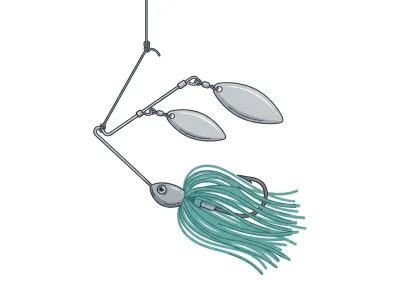
Spinnerbait
3/8–1/2 oz safety-pin spinnerbait with tandem willow-leaf blades
Northern pike · Jigs & bladed
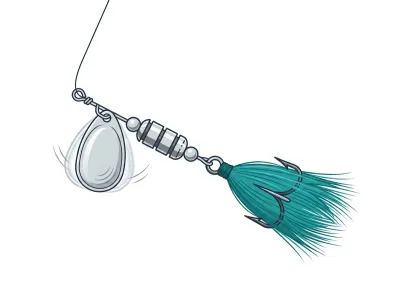
Inline Spinner (Mepps/Blue Fox)
#2–#4 in-line spinner
Yellow perch · Live bait
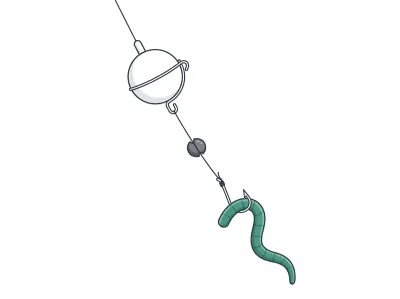
Clip-On Bobber + Worm
half to whole garden nightcrawler
Yellow perch · Soft plastics
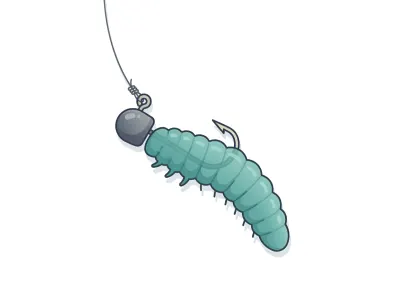
Tungsten Jig + Micro Plastic
1–1.5" micro plastic
Bluegill · Live bait
Clip-On Bobber + Worm
half to whole garden nightcrawler
Bluegill · Soft plastics
Tungsten Jig + Micro Plastic
1–1.5" micro plastic
Full setups, including hooks, weights and line, are on the live map. As an Amazon Associate I earn from qualifying purchases.
DNR stocking records
Stocking history
| Year | Species | Stocked |
|---|---|---|
| 2023 | Northern Pike | 113,458 fry |
| 2021 | Northern Pike | 117,571 fry |
| 2016 | Northern Pike | 80,892 fry |
MN DNR · in their words
From the 2013 survey
Pickeral Lake is a shallow, 620 acre lake in Freeborn County. Mean depth is 3.5 feet and maximum depth is 6 feet. The city of Albert Lea is immediately northeast of Pickeral Lake. A city-owned earthen public access is located on the southeast corner of the lake off highway 69. The lake was reclaimed in fall of 2009 and experienced a partial winterkill during winter 2010-2011. The shallow water column of Pickeral Lake makes it prone to frequent winterkill events. Thus it is managed as a boom and bust northern pike and yellow perch fishery, where northern pike fry, pre-spawn yellow perch, and sometimes adult bluegills are stocked after reclamations or winterkill events. These fish then exhibit rapid growth due to the abundance of forage coupled with lack of predation, creating a quality fishery within two or three years following the reclamation or winterkill event.
Pickeral Lake was surveyed the week of July 15th, 2013 as part of a regular monitoring program conducted by Minnesota DNR. This survey consisted of deploying trap and gill nets to monitor the fish community. The partial winterkill during 2010-2011 likely contributed to black bullhead being the most abundant fish sampled in the 2013 assessment. Black bullhead averaged 282.0 fish/gill net, which is above average compared to similar lakes in Minnesota. Average total length of black bullhead was 7.0 inches for both gear types, which was below an acceptable size to most anglers. The second-most abundant species sampled in 2013 was bluegill, which averaged 46.0 fish/trap net and had a mean length of about 7.0 inches. The abundances and weights of bluegill were both above what was considered a normal range for similar lakes in Minnesota. The size and number of bluegills present in Pickeral Lake should provide quality opportunities for angling.
Read the full DNR narrative
Pickeral Lake features a high abundance of northern pike. Northern pike averaged 14.5 fish/gill net, which was above average for this lake type. Northern pike captured in gill nets ranged in total length from 15.0 to 33.0 inches, with the average total length of 24.0 inches. The average pike weight was 3.7 pounds, which was above normal for similar lakes in Minnesota. Most of the northern pike sampled during 2013 were from the 2010-2011 year classes.
Yellow perch were also prevalent in the 2013 survey with a gill net catch rate of 63.0 fish/net. The abundance of yellow perch during 2013 was well above average compared to similar Minnesota lakes. Yellow perch ranged from 5.0 to 12.0 inches with the majority categorized as an acceptable size to most anglers. Mean weight was 0.4 pounds, which is above average compared to similar lakes in Minnesota. The yellow perch population looks to provide sufficient opportunity for anglers. Black crappie, however, were observed in low numbers; mean length was 8.9 inches. Other fish observed during the 2013 survey included green sunfish, and hybrid sunfish.
Pickeral lake is shallow and hypereutrophic with sparse submergent vegetation. It is one of many shallow satellite lakes around the city of Albert Lea and maintains an intermittent connection to the Shell Rock River just north of the lake. Pickeral Lake's fish community is heavily influenced by this connection. Shoreline areas on the land and into the shallow water provide essential habitat for fish and wildlife that live in or near Minnesota's lakes. Shoreline habitat consists of aquatic plants, woody plants, and natural lake bottom soils. Plants in the water and at the water's edge provide habitat, prevent erosion, and absorb excess nutrients. By leaving a buffer strip of natural vegetation along the shoreline, property owners can reduce erosion, help maintain water quality, and provide habitat and travel corridors for wildlife.
-Prepared by: Matt Mork (Fisheries Specialist) and Craig Soupir (Area Fisheries Supervisor).
Narrative text from the Minnesota DNR lake survey.
Recent reports
Pickeral Lake fishing reports
Recent reports on Pickeral Lake from guides, tournaments and regular anglers. Anything posted in the last two weeks also bumps the matching spots on the live map, so you'll see a "matches a recent report" tag on them.
Public water access
Getting on the water
- Pickerel Lake (trailer launch)
DNR bathymetry
Pickeral Lake depth map
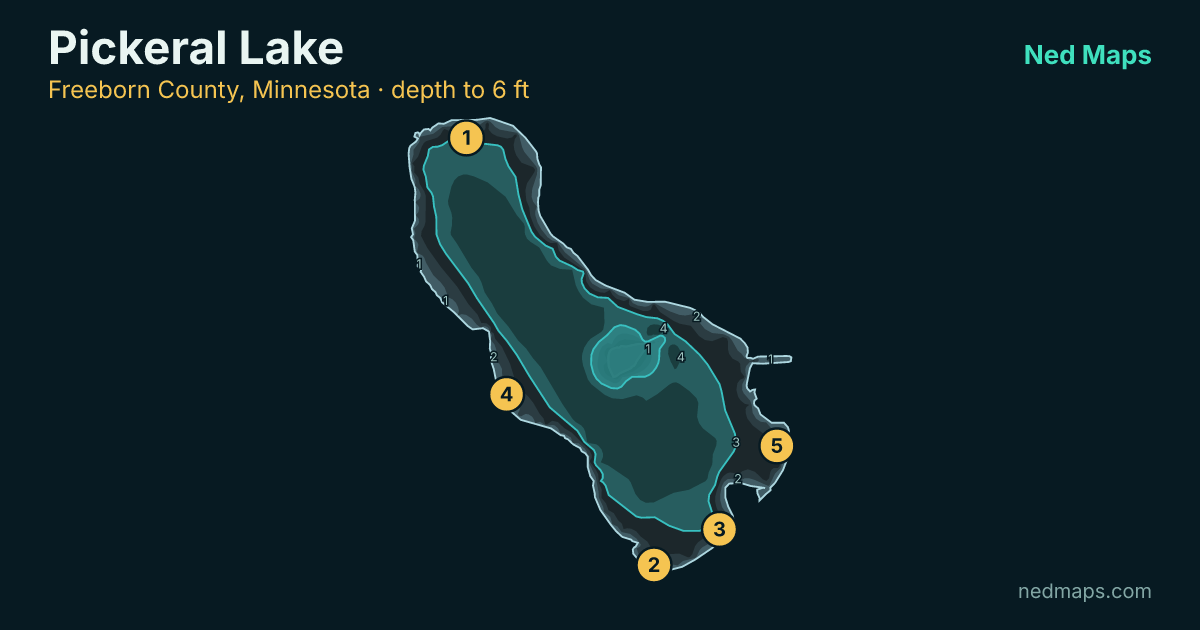
Within 30 miles
Nearby lakes
- White Lake · 168 ac · 2.2 mi
- Fountain Lake · 522 ac · 2.5 mi
- Albert Lea Lake · 2,669 ac · 5 mi
- Bear Lake · 1,033 ac · 7.4 mi
- State Line Lake · 372 ac · 9 mi
- Morin Lake · 21 ac · 9 mi
- Freeborn Lake · 2,034 ac · 11 mi
- Rice Lake · 266 ac · 16.3 mi
Quick answers
Frequently asked questions
How deep is Pickeral Lake?
Pickeral Lake reaches 6 ft at its deepest point with a mean depth of 3.5 ft; about 100% of the lake is littoral (15 ft or shallower).
How big is Pickeral Lake?
Pickeral Lake covers 588 acres with about 5.7 miles of shoreline.
How clear is the water in Pickeral Lake?
DNR Secchi readings on Pickeral Lake average 1.4 ft of visibility, on the stained end for a Minnesota lake.
What fish are in Pickeral Lake?
Minnesota DNR surveys (most recently 2013) record northern pike, bluegill, crappie, yellow perch, channel catfish.
Is Pickeral Lake stocked?
Yes. The DNR stocked northern pike in 2023; the stocking table on this page lists every year back to 2016.
Does Pickeral Lake have a public access?
Yes. Pickeral Lake has one public access site: Pickerel Lake (trailer launch).
How big do northern pike get in Pickeral Lake?
The biggest northern pike measured in recent DNR surveys taped 33"; the size-history table on this page tracks the biggest fish in each survey back to 1993.
When was Pickeral Lake last surveyed?
The Minnesota DNR last surveyed Pickeral Lake in 2013, the most recent of 5 surveys on record. A survey that old is a starting point, not a current reading.
Page updated .

Featured guide spot
Your guide service here
One featured guide per lake, with your photo, your writeup and a link straight to your booking page. Free through December 31, 2026.
Then $20 a month from January. Cancel any time.
The live map adds today's conditions and ranked spots for Pickeral Lake, plus a trip plan you can share:
Open Pickeral Lake on the live map → Fished it lately? Write a report