Minnesota · St. Louis County
McQuade Lake Fishing guide
McQuade Lake is a 173-acre lake in St. Louis County, Minnesota, reaching 21 ft at its deepest point. Average water clarity runs about 5 ft. The Minnesota DNR has surveyed the lake 7 times, most recently in 2021, with walleye, largemouth bass, northern pike and bluegill in the nets.
DNR survey data
Fish species
WalleyeLast stocked 2025Fair numbers2.2per gill net19"Typical23"Biggest
Lengths measured · 11 fish
Recent · 2021Lengths measured · 11 fish
2021Lengths measured · 7 fish
2013Only 7 fish measured that year — too few to read as a shape.
Lengths measured · 9 fish
2000Only 9 fish measured that year — too few to read as a shape.
Northern pikeGood numbers13.2per gill net21"Typical30"Biggest
Lengths measured · 66 fish
Recent · 2021Lengths measured · 66 fish
2021Lengths measured · 45 fish
2013Lengths measured · 43 fish
2000CrappiePresent5.6per gill net6"Typical9"Biggest
Lengths measured · 28 fish
Recent · 2021Lengths measured · 28 fish
2021Lengths measured · 38 fish
2013Lengths measured · 12 fish
2000Yellow perchGood numbers8per gill net6"Typical7"Biggest
Lengths measured · 40 fish
Recent · 2021Lengths measured · 40 fish
2021Lengths measured · 25 fish
2013Lengths measured · 15 fish
2000Rates come from standard DNR survey gear (gill nets, trap nets, electrofishing), judged against statewide benchmarks for the same gear, so the same number of fish per net can read differently for two species. Where the standard gear can't count a species reliably, only presence and size are listed. Typical is the middle fish of those measured. Open a row for the full length spread, survey by survey.
How to fish McQuade Lake through the year
Northern pike
- Spring
- Pike are in the shallow bays and along new weed growth.
- Early summer
- Pike are on the outside weed edge and points.
- Summer
- Pike are on the deep weed edge and points near the coolest water they can find. With 91% of this lake 15 ft or shallower, the weed edge is the main event.
- Fall
- Pike are on the last green weeds and the breaks beside them, feeding heavily as the water drops.
Walleye
- Spring
- Walleye are shallow, on and just off the spawning flats and the first green weeds.
- Early summer
- Walleye are setting up on the outside weed edge, points and shallow structure.
- Summer
- Walleye are working the weed edge, points and any wind-blown structure. With 91% of this lake 15 ft or shallower, the weed edge is the main event.
- Fall
- Walleye are packing onto the sharpest breaks and points as the water cools, in big schools with short windows.
Season patterns for each species. Open the live map for today's wind, light and water temp.
Size history
Biggest fish by survey year
| Survey year | Northern pike | Walleye | Largemouth bass |
|---|---|---|---|
| 2021 | 30" | 23" | 11" |
| 2013 | 36" | 28" | — |
| 2000 | 44" | 30" | 3" |
Longest fish measured by DNR survey crews in each year's nets. Survey gear samples the population, so the lake usually holds larger fish than any survey measured.
Suggested tackle
What to bring
Top presentations for this lake's structure and clarity:
Northern pike · Soft plastics
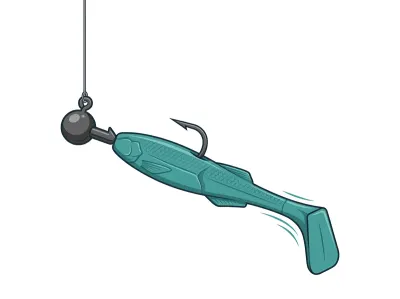
Paddletail Swimbait on Jighead
4–5" paddletail swimbait on a ball-head swimbait jighead
Northern pike · Muskie & pike
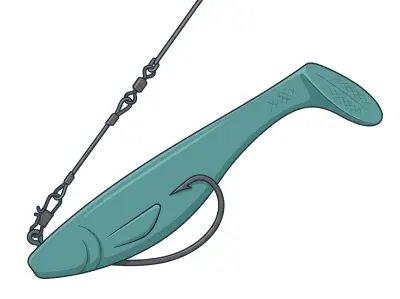
Soft Rubber (Bull Dawg / Medusa)
10" soft rubber body bait
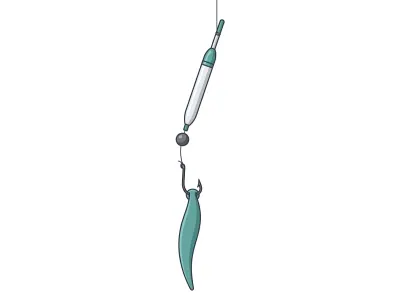
Walleye · Trolling
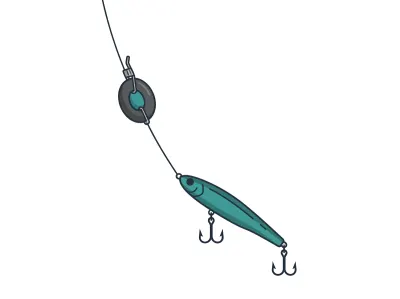
Snap Weights + Stickbaits
4–5" suspending or slow-floating stickbait
Largemouth bass · Soft plastics
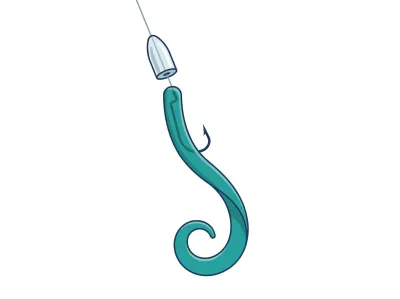
Texas-Rigged Worm
7" ribbon-tail or straight-tail plastic worm
Largemouth bass · Soft plastics
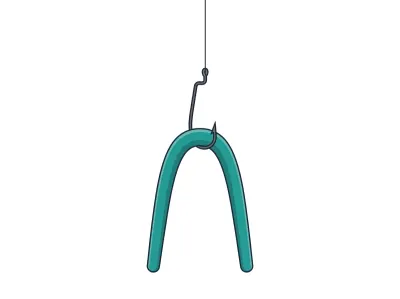
Wacky-Rigged Stickworm
5" stickworm
Full setups, including hooks, weights and line, are on the live map. As an Amazon Associate I earn from qualifying purchases.
DNR stocking records
Stocking history
| Year | Species | Stocked |
|---|---|---|
| 2025 | Walleye | 157,000 fry |
| 2023 | Walleye | 157,000 fry |
| 2021 | Walleye | 157,000 fry |
| 2019 | Walleye | 157,000 fry |
| 2017 | Walleye | 200,000 fry |
MN DNR · in their words
From the 2021 survey
McQuade Lake is a small lake located about eight miles east of Hibbing, Minnesota off County Road #592. McQuade Lake is 164 acres with a littoral area of 157 acres (96%) and a maximum depth of 21 feet. It has very hard water (alkalinity=148) and high phosphorus fertility (0.071 ppm). The water has a slight bog stain and Secchi disk readings of four to five feet. The lake receives water from a creek and outlets to the St. Louis River.
The Minnesota Pollution Control Agency has calculated a Carlson Trophic Status Index of 59 from data collected from 2003 to 2017, indicating a eutrophic state (cf.pca.state.mn.us). Eutrophic lakes often produce algae blooms that may be a nuisance for landowners and recreators. MPCA listed the overall condition as "Not always suitable for swimming and wading due to low clarity or excessive algae caused by the presence of nutrients such as phosphorus in the water".
Read the full DNR narrative
The fisheries lake management plan (LMP) was last revised in 2014. Northern Pike and Black Crappie were considered primary management species because they were well suited to the lake. Walleye and Bluegill were considered secondary species because they were less well suited but popular with anglers. Increasing the Walleye gill net catch to the lake class median value of 2.6 per gill net was among plan objectives. To meet this objective, Walleye fry stocking was recommended, and Pike River Walleye fry were stocked in the springs of 2015, 2017, and 2019. A targeted survey using 5 gill nets was conducted in July of 2021 to evaluate the status of the fish community, determine suitability for Walleye management and evaluate recent Walleye fry stocking.
Walleye were initially stocked in McQuade Lake in the 1980s with hopes of producing a self-sustaining population. Walleye have occurred in low numbers since that time. It should be noted that lakes with similar habitats to McQuade do not typically produce large Walleye populations. The 2021 catch rate of 2.2 per net was the highest observed for the lake but remained below the lake class median and failed to achieve the management plan goal of 2.6 fish per net. Like previous surveys, most Walleye were relatively large, suggesting poor recruitment. Walleye ranged from 14 to 23.8 inches and averaged 19.6 inches. Too few Walleyes were captured to confidently determine age and growth but only 3 of 10 aged fish appeared to correspond to a fry stocked year class. The presence of fish from non-stocked years suggests a small population is maintained via natural reproduction.
The Walleye population in McQuade Lake remained low despite three fry stocking efforts and it appeared that conditions for Walleye management were poor. Low oxygen below eight feet limits summer habitat. Northern Pike numbers have increased in McQuade Lake over time and high pike densities likely limit Walleye through competition and predation. Northern Pike were generally sampled in low numbers prior to a 2000 survey but catches exceeded the lake class median in the past three surveys. The catch of 13.2 per net in 2021 was above the typical range for similar lakes and the highest observed for McQuade Lake. Size structure was moderate, as lengths ranged from 15.8 to 30.2 inches with an average of 21.4 inches.
The prey base may also limit the Walleye fishery. Yellow Perch have declined over time and were near or below the lake class first quartile value in four of the last five surveys. The improved catch of 8 per net in 2021 was near the lake class median and was the highest observed since 1977. A catch of 8 per net is generally considered adequate for Walleye management but may be an anomaly in McQuade Lake. Young White Sucker and Shorthead Redhorse appear to be important prey species in McQuade Lake but captured fish have generally been too large to be prey for Walleye.
Narrative text from the Minnesota DNR lake survey.
Recent reports
McQuade Lake fishing reports
Recent reports on McQuade Lake from guides, tournaments and regular anglers. Anything posted in the last two weeks also bumps the matching spots on the live map, so you'll see a "matches a recent report" tag on them.
Public water access
Getting on the water
- McQuade Lake (N) (trailer launch)
- McQuade Lake (W) (trailer launch)
DNR bathymetry
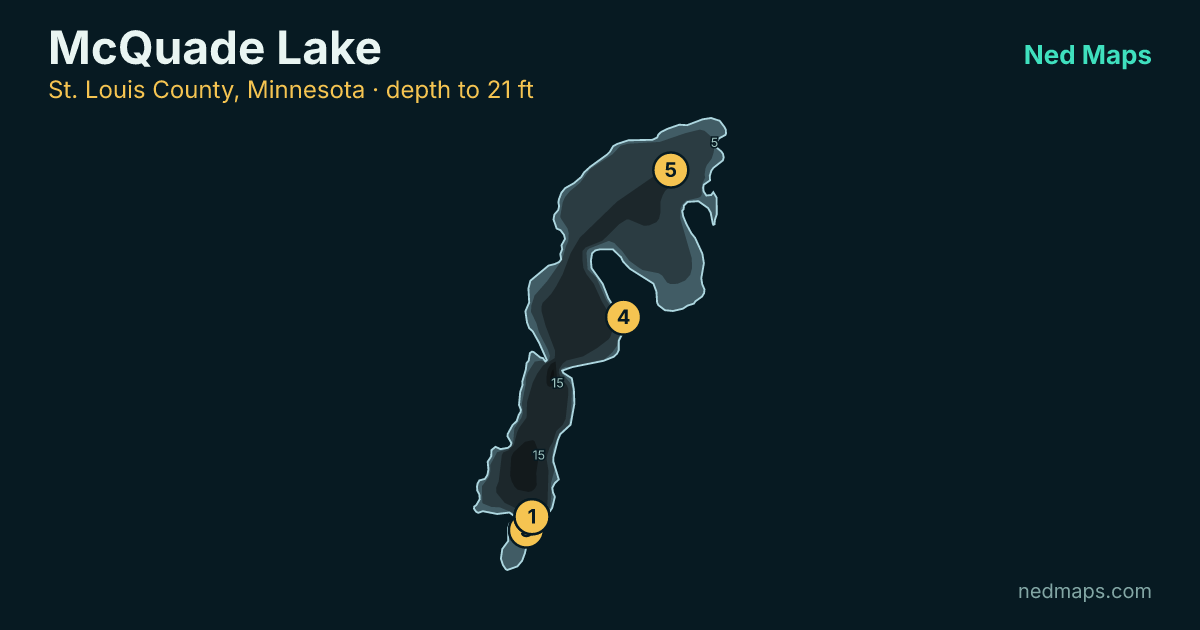
McQuade Lake depth map
Within 30 miles
Nearby lakes
- Carey Lake · 145 ac · 2.6 mi
- Judson Mine Pit · 20 ac · 4.6 mi
- Iron Chief Complex Lake · 207 ac · 5.6 mi
- Kinney Lake · 45 ac · 6.7 mi
- Little Elbow Lake · 5 ac · 6.9 mi
- Longyear Lake · 151 ac · 6.9 mi
- West Two Rivers Reservoir · 967 ac · 6.9 mi
- Elbow Lake · 169 ac · 7 mi
Quick answers
Frequently asked questions
How deep is McQuade Lake?
McQuade Lake reaches 21 ft at its deepest point; about 91% of the lake is littoral (15 ft or shallower).
How big is McQuade Lake?
McQuade Lake covers 173 acres with about 4.2 miles of shoreline.
How clear is the water in McQuade Lake?
DNR Secchi readings on McQuade Lake average 5 ft of visibility, middling clarity for a Minnesota lake.
What fish are in McQuade Lake?
Minnesota DNR surveys (most recently 2021) record walleye, largemouth bass, northern pike, bluegill, crappie, yellow perch, rock bass.
Is McQuade Lake stocked?
Yes. The DNR stocked walleye in 2025; the stocking table on this page lists every year back to 2017.
Does McQuade Lake have a public access?
Yes. McQuade Lake has 2 public access sites, including McQuade Lake (N) (trailer launch).
How big do northern pike get in McQuade Lake?
The biggest northern pike measured in recent DNR surveys taped 30"; the size-history table on this page tracks the biggest fish in each survey back to 2000.
When was McQuade Lake last surveyed?
The Minnesota DNR last surveyed McQuade Lake in 2021, the most recent of 7 surveys on record.
Page updated .

Featured guide spot
Your guide service here
One featured guide per lake, with your photo, your writeup and a link straight to your booking page. Free through December 31, 2026.
Then $20 a month from January. Cancel any time.
The live map adds today's conditions and ranked spots for McQuade Lake, plus a trip plan you can share:
Open McQuade Lake on the live map → Fished it lately? Write a report