Minnesota · Todd County
Maple Lake Fishing guide
Maple Lake is a 388-acre lake in Todd County, Minnesota, reaching 23 ft at its deepest point. Average water clarity runs about 6.9 ft. The Minnesota DNR has surveyed the lake 18 times, most recently in 2025, with walleye, largemouth bass, northern pike and bluegill in the nets.
DNR survey data
Fish species
WalleyeLast stocked 2025Fair numbers1.8per gill net19"Typical27"Biggest
Lengths measured · 23 fish
Recent · 2021 + 2022 + 2024 + 2025Lengths measured · 2 fish
2025Only 2 fish measured that year — too few to read as a shape.
Lengths measured · 5 fish
2024Only 5 fish measured that year — too few to read as a shape.
Lengths measured · 5 fish
2022Only 5 fish measured that year — too few to read as a shape.
Lengths measured · 11 fish
2021Largemouth bassJust a few13.1per hr (electrofishing)17"Typical18"Biggest
Lengths measured · 16 fish
Recent · 2022 + 2024 + 2025Lengths measured · 2 fish
2025Only 2 fish measured that year — too few to read as a shape.
Lengths measured · 12 fish
2024Lengths measured · 2 fish
2022Only 2 fish measured that year — too few to read as a shape.
Lengths measured · 2 fish
2019Only 2 fish measured that year — too few to read as a shape.
Northern pikeFair numbers7.7per gill net25"Typical36"Biggest
Lengths measured · 60 fish
Recent · 2021 + 2022 + 2024 + 2025Lengths measured · 6 fish
2025Only 6 fish measured that year — too few to read as a shape.
Lengths measured · 7 fish
2024Only 7 fish measured that year — too few to read as a shape.
Lengths measured · 1 fish
2022Only 1 fish measured that year — too few to read as a shape.
Lengths measured · 46 fish
2021BluegillPresent94.8per gill net7"Typical9"Biggest
Lengths measured · 1569 fish
Recent · 2021 + 2022 + 2024 + 2025Lengths measured · 530 fish
2025Lengths measured · 287 fish
2024Lengths measured · 184 fish
2022Lengths measured · 568 fish
2021CrappiePresent6per gill net8"Typical12"Biggest
Lengths measured · 1262 fish
Recent · 2021 + 2022 + 2024 + 2025Lengths measured · 361 fish
2025Lengths measured · 660 fish
2024Lengths measured · 205 fish
2022Lengths measured · 36 fish
2021Yellow perchOne of the best around124.3per gill net6"Typical9"Biggest
Lengths measured · 760 fish
Recent · 2021 + 2025Lengths measured · 13 fish
2025Lengths measured · 747 fish
2021Lengths measured · 11 fish
2018Lengths measured · 22 fish
2015No recent survey rating.
Rates come from standard DNR survey gear (gill nets, trap nets, electrofishing), judged against statewide benchmarks for the same gear, so the same number of fish per net can read differently for two species. Where the standard gear can't count a species reliably, only presence and size are listed. Typical is the middle fish of those measured. Open a row for the full length spread, survey by survey.
How to fish Maple Lake through the year
Walleye
- Spring
- Walleye are shallow, on and just off the spawning flats and the first green weeds.
- Early summer
- Walleye are setting up on the outside weed edge, points and shallow structure.
- Summer
- Walleye are working the weed edge, points and any wind-blown structure.
- Fall
- Walleye are packing onto the sharpest breaks and points as the water cools, in big schools with short windows.
Northern pike
- Spring
- Pike are in the shallow bays and along new weed growth.
- Early summer
- Pike are on the outside weed edge and points.
- Summer
- Pike are on the deep weed edge and points near the coolest water they can find.
- Fall
- Pike are on the last green weeds and the breaks beside them, feeding heavily as the water drops.
Season patterns for each species. Open the live map for today's wind, light and water temp.
Size history
Biggest fish by survey year
| Survey year | Walleye | Northern pike | Largemouth bass |
|---|---|---|---|
| 2025 | 25" | 30" | 18" |
| 2024 | 26" | 32" | 18" |
| 2022 | 27" | 33" | 17" |
| 2021 | 27" | 36" | — |
| 2019 | 22" | 17" | 13" |
| 2018 | 28" | 35" | 16" |
| 2015 | 27" | 35" | 19" |
| 2009 | 28" | 29" | — |
Longest fish measured by DNR survey crews in each year's nets. Survey gear samples the population, so the lake usually holds larger fish than any survey measured.
Suggested tackle
What to bring
Top presentations for this lake's structure and clarity:
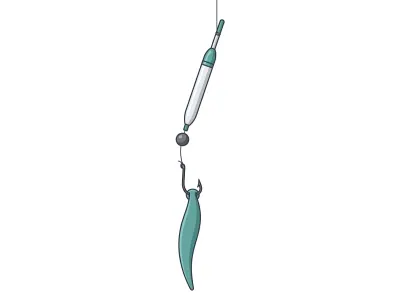
Walleye · Trolling
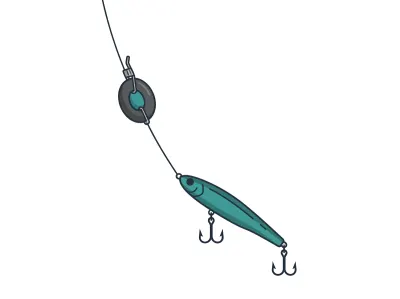
Snap Weights + Stickbaits
4–5" suspending or slow-floating stickbait
Northern pike · Soft plastics
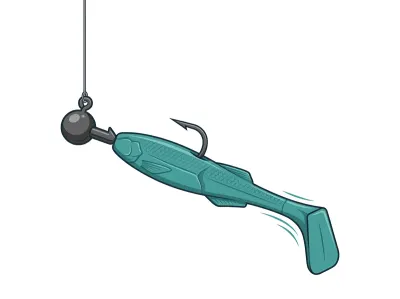
Paddletail Swimbait on Jighead
4–5" paddletail swimbait on a ball-head swimbait jighead
Northern pike · Muskie & pike
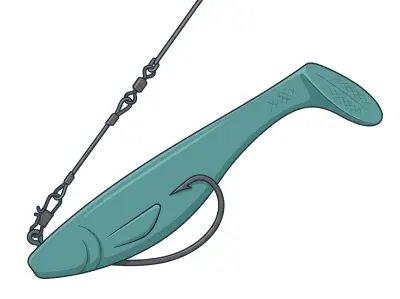
Soft Rubber (Bull Dawg / Medusa)
10" soft rubber body bait
Largemouth bass · Hardbaits
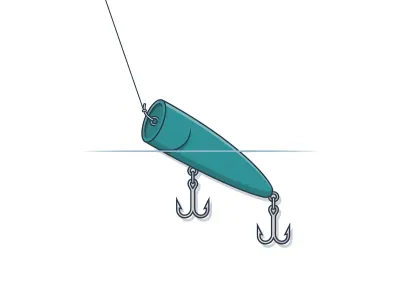
Topwater Popper
2.5–3" concave-face popper
Largemouth bass · Hardbaits
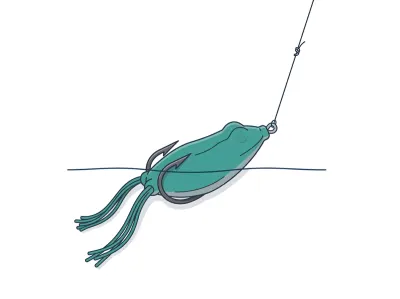
Hollow-Body Frog
3–3.5" hollow-body frog
Full setups, including hooks, weights and line, are on the live map. As an Amazon Associate I earn from qualifying purchases.
DNR stocking records
Stocking history
| Year | Species | Stocked |
|---|---|---|
| 2025 | Walleye | 79 fingerlings · 1,270 yearlings |
| 2024 | Walleye | 150,000 fry |
| 2023 | Walleye | 1,860 fingerlings |
| 2022 | Walleye | 150,000 fry |
| 2021 | Walleye | 2,028 fingerlings |
| 2019 | Walleye | 6,440 fingerlings |
| 2018 | Walleye | 150,000 fry · 600 yearlings |
| 2017 | Walleye | 136 fingerlings |
MN DNR · in their words
From the 2025 survey
Maple (DOW# 77-0181-00; Lake Class 31) is a 367-acre lake located near Gutches Grove, Minnesota. A Minnesota Department of Natural Resources (MNDNR) concrete boat ramp is located on the north end of the lake. Maple has 3.64 miles of shoreline and a maximum depth of 23 feet. The lake is primarily managed for Walleye and Bluegill, and secondarily for Largemouth Bass, Black Crappie, and Northern Pike.
Spring trap netting was performed to provide data on the Bluegill size structure and evaluate the effects of a 10 fish bag limit on sunfish which was implemented on March 1st, 2016. Spring trap netting is the preferred method for evaluating panfish populations and has been conducted on Maple 7 times since 2003. Future evaluations relating to the 10 sunfish bag limit will incorporate spring trap netting to provide proper comparisons.
Read the full DNR narrative
Spring trap netting in 2025 captured 533 Bluegill, of which 297 were measured. Spring sample sizes have historically ranged from 184 to 726 fish. Spring trap net catches are variable and heavily influenced by conditions and changes in catch rate are not typically indicative of a population change. Bluegill in 2025 ranged in length from 3.8 to 8.5 inches and averaged 6.95 inches. Fish exceeding 7 inches comprised 60 percent of the sample and fish over 8 inches made up 3.4 percent. Both of these quality metrics were slightly below 2024, when fish over 7 and 8 inches comprised 68 and 7.7 percent of the sample, respectively. These values are still an improvement from 2022 (36 percent; 1 percent) and 2019 (31 percent; 3.6 percent). Fish exceeding 9 inches have been absent in surveys since 2013. Bluegill size structure goals aim for at least 50% of the sample to exceed 7 inches, 10% to exceed 8 inches, 2% over 9 inches and the presence of fish 10 inches or longer. The 2024 and 2025 surveys have revealed progress towards goals for fish between 7 and 8 inches, however maximum size continues to fall below 9 inches. Other metrics used in evaluating the effects of a reduced bag limit include mean length, catch rate of fish over 8 inches, and mean length of the top 10 percent of the sample. Four combined pre-regulation surveys produced a mean length of 6.57 inches, catch rate of fish over 8 inches of 2.14/trap net, and mean length of top 10 percent of 8.06 inches. When combining 2024 and 2025 surveys, mean length was 7.1 inches, catch rate of fish over 8 inches was 1.61/trap net, and the average length of the top 10 percent was 8.05 inches. These metrics portray limited quality improvement following the implementation of the 10 fish bag limit.
No Bluegill were aged from the 2024 sampling. Otoliths were extracted in the 2019 spring trap net assessment with most fish displaying moderate growth up to 7.5 inches and then slowing considerably with few reaching 8 inches at age 9. Otoliths were also collected from angled fish during the winter of 2021-22. These fish ranged in age from 5 to 7 and averaged 7.25 inches at Age 7, displaying slow growth in comparison to Area means. These age and growth characteristics may help to explain why management goals of providing more 8 to 10 inch Bluegill have been difficult to achieve.
Black Crappie are abundant in Maple, but catches are variable in spring trap nets. Spring trap net surveys in Maple prior to 2025 have ranged from 36 to 658 and averaged 315 fish. A total of 361 Black Crappie were captured in 2025 ranging in length from 3.7 inches to 11.3 inches. Fish exceeding 12 inches were captured in 2022 but have not been present in most spring assessments. The mean length of the 227 Black Crappie measured in 2025 was 8.5 inches, which is within the historical range for this metric (5.4 inches to 9.6 inches) and similar to 2024 (8.3 inches). Fish over 10 inches in 2025 comprised 13% of the sample, which falls within the historical range (3.1% to 40.7%) and is similar to 2024 (13.3%).
Otoliths were extracted from Black Crappie in 2022 with a mean length of 9.1 inches at Age 5 observed. Growth slowed appreciably once the fish reached 10 inches. The most prominent year class in the sample was Age 11 with these fish averaging 10.7 inches long. The oldest fish sampled was 13 years old.
Two Walleye were captured (10.4 inches and 25 inches). Six Northern Pike were also captured with lengths ranging from 21.5 inches to 30.8 inches and averaging 24.7 inches.
Narrative text from the Minnesota DNR lake survey.
Recent reports
Maple Lake fishing reports
Recent reports on Maple Lake from guides, tournaments and regular anglers. Anything posted in the last two weeks also bumps the matching spots on the live map, so you'll see a "matches a recent report" tag on them.
Public water access
Getting on the water
- Maple Lake (trailer launch)
DNR bathymetry
Maple Lake depth map
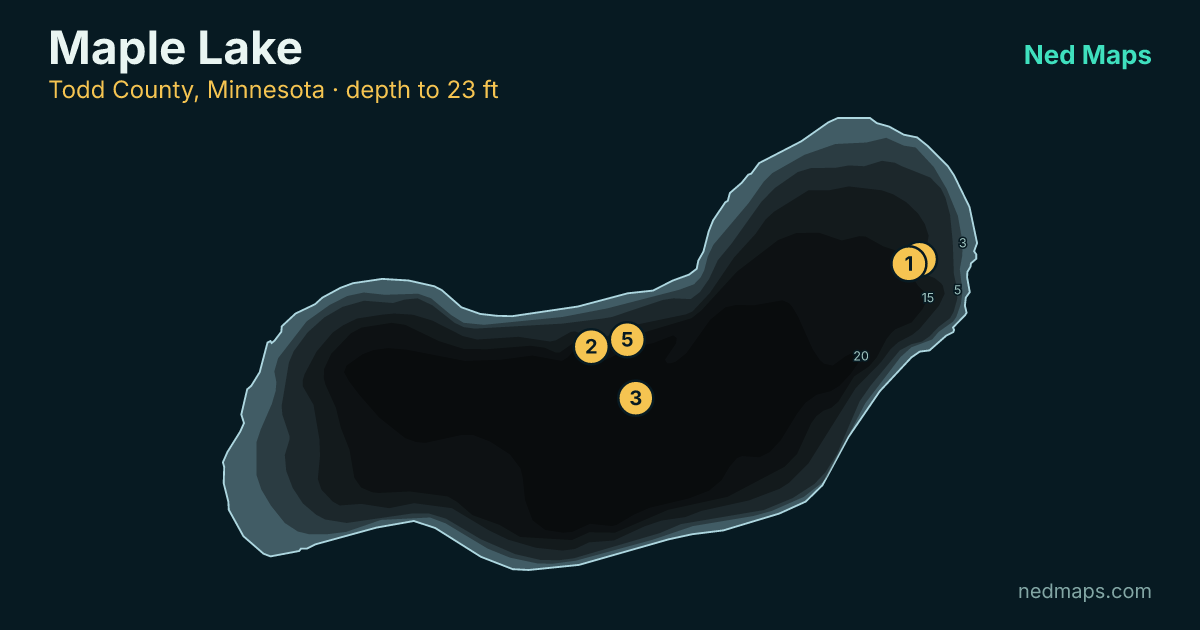
Within 30 miles
Nearby lakes
- Little Sauk Lake · 278 ac · 3.6 mi
- Juergens Lake · 117 ac · 4.5 mi
- Lake Osakis · 6,389 ac · 5.3 mi
- Guernsey Lake · 121 ac · 5.4 mi
- Cedar Lake · 139 ac · 5.6 mi
- Long Lake · 107 ac · 6.6 mi
- Latimer Lake · 202 ac · 7.3 mi
- Charlotte Lake · 144 ac · 7.3 mi
Quick answers
Frequently asked questions
How deep is Maple Lake?
Maple Lake reaches 23 ft at its deepest point with a mean depth of 16.6 ft; about 39% of the lake is littoral (15 ft or shallower).
How big is Maple Lake?
Maple Lake covers 388 acres with about 3.6 miles of shoreline.
How clear is the water in Maple Lake?
DNR Secchi readings on Maple Lake average 6.9 ft of visibility, middling clarity for a Minnesota lake.
What fish are in Maple Lake?
Minnesota DNR surveys (most recently 2025) record walleye, largemouth bass, northern pike, bluegill, crappie, yellow perch, rock bass.
Is Maple Lake stocked?
Yes. The DNR stocked walleye in 2025; the stocking table on this page lists every year back to 2017.
Does Maple Lake have a public access?
Yes. Maple Lake has one public access site: Maple Lake (trailer launch).
How big do walleye get in Maple Lake?
The biggest walleye measured in recent DNR surveys taped 27"; the size-history table on this page tracks the biggest fish in each survey back to 2009.
When was Maple Lake last surveyed?
The Minnesota DNR last surveyed Maple Lake in 2025, the most recent of 18 surveys on record.
Page updated .

Featured guide spot
Your guide service here
One featured guide per lake, with your photo, your writeup and a link straight to your booking page. Free through December 31, 2026.
Then $20 a month from January. Cancel any time.
The live map adds today's conditions and ranked spots for Maple Lake, plus a trip plan you can share:
Open Maple Lake on the live map → Fished it lately? Write a report