Minnesota · Todd County
Lake Osakis Fishing guide
Lake Osakis sits in Todd County, Minnesota, and covers 6,389 acres, reaching 73 ft at its deepest point. Average water clarity runs about 3.4 ft. The Minnesota DNR has surveyed the lake 18 times, most recently in 2025, with walleye, largemouth bass, smallmouth bass and northern pike in the nets.
DNR survey data
Fish species
WalleyeLast stocked 2025Excellent numbers6.5per gill net15"Typical27"Biggest
Lengths measured · 157 fish
Recent · 2022 + 2025Lengths measured · 81 fish
2025Lengths measured · 76 fish
2022Lengths measured · 2 fish
2019Only 2 fish measured that year — too few to read as a shape.
Lengths measured · 79 fish
2018Largemouth bassJust a few16.5per hr (electrofishing)13"Typical19"Biggest
Lengths measured · 45 fish
Recent · 2022 + 2025Lengths measured · 4 fish
2025Only 4 fish measured that year — too few to read as a shape.
Lengths measured · 41 fish
2022Lengths measured · 11 fish
2019Lengths measured · 173 fish
2018Smallmouth bassPresent0.5per gill net15"Typical19"Biggest
Lengths measured · 12 fish
Recent · 2022 + 2025Lengths measured · 2 fish
2025Only 2 fish measured that year — too few to read as a shape.
Lengths measured · 10 fish
2022Lengths measured · 53 fish
2018Lengths measured · 3 fish
2014Only 3 fish measured that year — too few to read as a shape.
Northern pikeJust a few5.3per gill net24"Typical36"Biggest
Lengths measured · 130 fish
Recent · 2022 + 2025Lengths measured · 62 fish
2025Lengths measured · 68 fish
2022Lengths measured · 8 fish
2019Only 8 fish measured that year — too few to read as a shape.
Lengths measured · 129 fish
2018BluegillJust a few17.3per trap net6"Typical9"Biggest
Lengths measured · 932 fish
Recent · 2021 + 2022 + 2025Lengths measured · 338 fish
2025Lengths measured · 247 fish
2022Lengths measured · 347 fish
2021Lengths measured · 192 fish
2019CrappieJust a few2.4per trap net8"Typical14"Biggest
Lengths measured · 131 fish
Recent · 2021 + 2022 + 2025Lengths measured · 22 fish
2025Lengths measured · 65 fish
2022Lengths measured · 44 fish
2021Lengths measured · 15 fish
2019Yellow perchExcellent numbers13per gill net6"Typical9"Biggest
Lengths measured · 310 fish
Recent · 2022 + 2025Lengths measured · 72 fish
2025Lengths measured · 238 fish
2022Lengths measured · 19 fish
2019Lengths measured · 549 fish
2018Rock bassFair numbers0.8per gill net8"Typical10"Biggest
Lengths measured · 19 fish
Recent · 2022 + 2025Lengths measured · 9 fish
2025Only 9 fish measured that year — too few to read as a shape.
Lengths measured · 10 fish
2022Lengths measured · 2 fish
2019Only 2 fish measured that year — too few to read as a shape.
Lengths measured · 4 fish
2018Only 4 fish measured that year — too few to read as a shape.
Rates come from standard DNR survey gear (gill nets, trap nets, electrofishing), judged against statewide benchmarks for the same gear, so the same number of fish per net can read differently for two species. Where the standard gear can't count a species reliably, only presence and size are listed. Typical is the middle fish of those measured. Open a row for the full length spread, survey by survey.
How to fish Lake Osakis through the year
Walleye
- Spring
- Walleye are shallow, on and just off the spawning flats and the first green weeds. In 3.4 ft of visibility, they sit shallower than you think.
- Early summer
- Walleye are setting up on the outside weed edge, points and shallow structure.
- Summer
- Walleye are working the weed edge, points and any wind-blown structure. On a lake that drops to 73 ft, check the deep edge of that structure too.
- Fall
- Walleye are packing onto the sharpest breaks and points as the water cools, in big schools with short windows.
Largemouth bass
- Spring
- Largemouth are moving up into the warming bays and flats, staging around wood, docks and new weeds to spawn. In 3.4 ft of visibility, they sit shallower than you think.
- Early summer
- Largemouth are on the shallow spawning flats and protected bays, where beds go on firm bottom next to isolated cover.
- Summer
- Largemouth are in and along the weeds: cabbage and milfoil edges, matted cover and shade. On a lake that drops to 73 ft, check the deep edge of that structure too.
- Fall
- Largemouth are chasing bait back onto the flats and into the remaining green weeds, feeding hard and shallow before the freeze.
Season patterns for each species. Open the live map for today's wind, light and water temp.
Size history
Biggest fish by survey year
| Survey year | Walleye | Largemouth bass | Smallmouth bass |
|---|---|---|---|
| 2025 | 27" | 18" | 17" |
| 2022 | 26" | 19" | 19" |
| 2019 | 23" | 17" | — |
| 2018 | 24" | 18" | 18" |
| 2014 | 27" | 18" | 16" |
| 2010 | 23" | 17" | 16" |
| 2006 | 28" | 18" | 13" |
| 2002 | 27" | 18" | 14" |
Longest fish measured by DNR survey crews in each year's nets. Survey gear samples the population, so the lake usually holds larger fish than any survey measured.
Suggested tackle
What to bring
Top presentations for this lake's structure and clarity:
Walleye · Live bait

Live-Bait (Lindy) Rig + Leech/Crawler
jumbo leech or half a nightcrawler
Walleye · Trolling
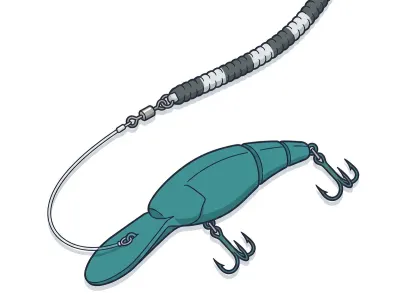
Leadcore Line + Crankbaits
4–5" mid-diving crankbait behind a long leadcore run
Largemouth bass · Hardbaits
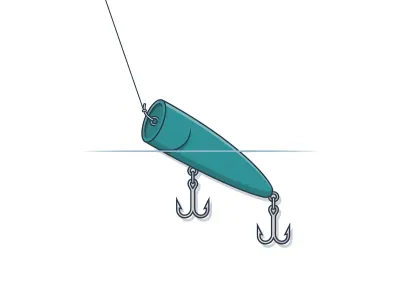
Topwater Popper
2.5–3" concave-face popper
Largemouth bass · Hardbaits
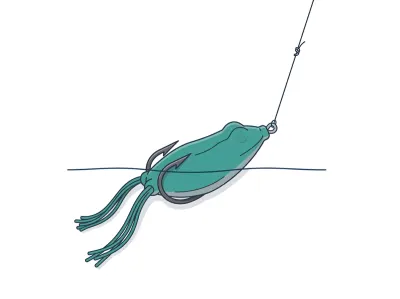
Hollow-Body Frog
3–3.5" hollow-body frog
Smallmouth bass · Soft plastics
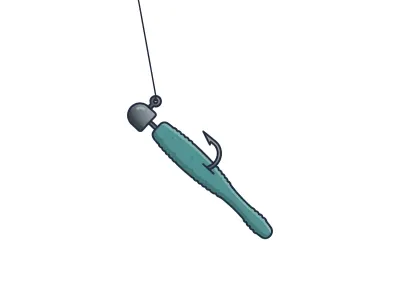
Ned Rig
2.75" finesse stickbait or craw-style Ned bait
Smallmouth bass · Soft plastics
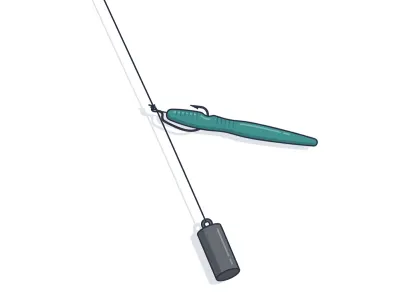
Drop Shot (Finesse Plastic)
4" finesse worm or 3" minnow-profile plastic
Full setups, including hooks, weights and line, are on the live map. As an Amazon Associate I earn from qualifying purchases.
DNR stocking records
Stocking history
| Year | Species | Stocked |
|---|---|---|
| 2025 | Walleye | 3,389,000 fry · 11,880 fingerlings |
| 2024 | Walleye | 3,389,000 fry · 15,910 fingerlings · 238 yearlings |
| 2023 | Walleye | 3,389,000 fry · 12,060 fingerlings |
| 2022 | Walleye | 3,389,000 fry · 11,250 fingerlings |
| 2021 | Walleye | 3,389,000 fry · 25,847 fingerlings · 3,600 yearlings |
| 2020 | Walleye | 7,400 fingerlings |
| 2019 | Walleye | 3,389,000 fry · 15,050 fingerlings |
| 2018 | Walleye | 3,400,000 fry · 7,650 fingerlings |
| 2017 | Walleye | 3,390,000 fry · 5,434 fingerlings · 274 yearlings |
| 2016 | Walleye | 3,389,000 fry · 18,720 fingerlings · 390 yearlings · 677 adults |
MN DNR · in their words
From the 2025 survey
Lake Osakis (6,389 acres) is a nutrient-rich, highly productive basin located in both Douglas and Todd counties. Due to high nutrient levels, water quality can be seasonally impaired with periodic algal blooms and low water clarity (<3.5 feet). Lake Osakis supports a diverse and robust fishery in part due to a variety of fish habitats that include large, expansive bulrush beds, mid-lake flats, and rocky bars and shorelines. Multiple public accesses are available, including a fishing pier located at Battle Point Park. Caution should be used when navigating near Moon Bar (south of Battle Point) to avoid large rocks (some are marked with hazard buoys). Due to the popularity of Osakis' fish resources, recreational activity can be high during both open water and winter seasons. Sunfish harvest is regulated with a reduced daily bag limit of 10 fish and Walleye harvest is regulated with a 15-inch minimum length limit.
In August 2025 a targeted fish survey was completed to gain current information on the fish community in Lake Osakis. Walleye catch rates were similar to the previous two surveys at 6.8 fish/gill net. Young Walleye are stocked each year by the DNR and Osakis Lake Association to supplement natural reproduction, although assessing contributions from natural reproduction and the different stockings that take place is difficult due to the high frequency of Walleye stocking events. This survey will be part of a four year study determining the level of natural reproduction and contributions from stocking in Lake Osakis. Recently, moderate sized year classes were recorded in four consecutive years from 2021 through 2024. Approximately 50% of Walleye caught in this survey exceeded 15 inches and were legal to harvest. On average, Walleye reach the 15-inch minimum length limit at around 3 years old.
Read the full DNR narrative
Northern Pike abundance was near the long-term average for Lake Osakis. Gill net catches averaged 5.2 fish/gill net, which is lower than many lakes in the area, but more desirable when hoping to maintain better Northern Pike size structure and higher Walleye abundance. The number of moderate to larger sized Northern Pike appears to be improving. The largest pike caught measured 36.1 inches. Anglers are encouraged to take advantage of expanded harvest opportunities within the North-central Harvest Zone to increase harvest of small (<22 inches) Northern Pike.
Lake Osakis supports high quality bass and panfish fishing opportunities. Black Crappie catch rates were still above the long-term average for Lake Osakis. An extremely large Black Crappie year class from 2010 elevated crappie numbers to historic proportions during past surveys. While crappie fisheries tend to be cyclical in nature, these very large year classes can impact recruitment of other species, especially Walleye. The moderate abundance of Black Crappie currently in Lake Osakis will still provide excellent crappie fishing, while likely providing room for the Walleye population to rebound. Many of the crappie caught during this survey were smaller, but they grow fast in Lake Osakis and should soon reach harvestable sizes. Bluegill catch rates were high during this survey, with many fish over 8 inches observed. Lake Osakis has the potential to grow very large Bluegill, but excessive harvest can greatly reduce the number of fish that live long enough to make it to larger sizes. Anglers supported the implementation of a reduced daily bag limit of 10 sunfish that took effect in 2021. The regulation is intended to help improve the size structure of Bluegill in Lake Osakis.
Yellow Perch numbers decreased in the 2025 survey, and were below average for Lake Osakis. While few fish appear to reach harvestable size, perch provide a great food source for predators such as Walleyes and Northern Pike.
Lake Osakis is designated as an infested waterbody due to the presence of zebra mussels. For more information regarding aquatic invasive species in Minnesota see the following: https://www.dnr.state.mn.us/invasives/aquatic/index.html.
Narrative text from the Minnesota DNR lake survey.
Recent reports
Lake Osakis fishing reports
Recent reports on Lake Osakis from guides, tournaments and regular anglers. Anything posted in the last two weeks also bumps the matching spots on the live map, so you'll see a "matches a recent report" tag on them.
Public water access
Getting on the water
- Osakis Lake (NW) (trailer launch)
- Osakis Lake (S) (trailer launch)
- Osakis Lake, Battle Point (trailer launch)
- Lake Osakis Fishing Pier (fishing pier)
- Osakis Lake (S) Fishing Pier (fishing pier)
DNR bathymetry
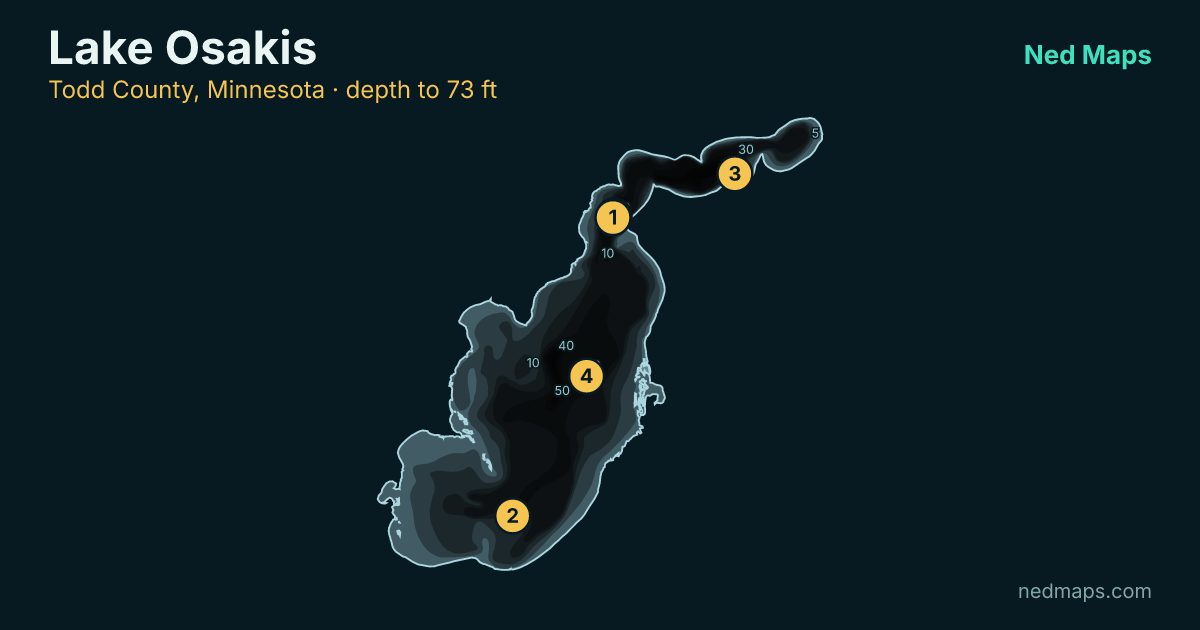
Lake Osakis depth map
Within 30 miles
Nearby lakes
- Maple Lake · 388 ac · 5.3 mi
- Guernsey Lake · 121 ac · 6.6 mi
- Little Sauk Lake · 278 ac · 7.1 mi
- Smith Lake · 666 ac · 7.8 mi
- Juergens Lake · 117 ac · 9.2 mi
- Long Lake · 107 ac · 9.2 mi
- Lily Lake · 66 ac · 9.7 mi
- Cedar Lake · 139 ac · 9.9 mi
Quick answers
Frequently asked questions
How deep is Lake Osakis?
Lake Osakis reaches 73 ft at its deepest point with a mean depth of 20 ft; about 53% of the lake is littoral (15 ft or shallower).
How big is Lake Osakis?
Lake Osakis covers 6,389 acres with about 26.8 miles of shoreline.
How clear is the water in Lake Osakis?
DNR Secchi readings on Lake Osakis average 3.4 ft of visibility, on the stained end for a Minnesota lake.
What fish are in Lake Osakis?
Minnesota DNR surveys (most recently 2025) record walleye, largemouth bass, smallmouth bass, northern pike, bluegill, crappie, yellow perch, rock bass.
Is Lake Osakis stocked?
Yes. The DNR stocked walleye in 2025; the stocking table on this page lists every year back to 2016.
Does Lake Osakis have a public access?
Yes. Lake Osakis has 5 public access sites, including Osakis Lake (NW) (trailer launch).
How big do walleye get in Lake Osakis?
The biggest walleye measured in recent DNR surveys taped 27"; the size-history table on this page tracks the biggest fish in each survey back to 2002.
When was Lake Osakis last surveyed?
The Minnesota DNR last surveyed Lake Osakis in 2025, the most recent of 18 surveys on record.
Page updated .

Featured guide spot
Your guide service here
One featured guide per lake, with your photo, your writeup and a link straight to your booking page. Free through December 31, 2026.
Then $20 a month from January. Cancel any time.
The live map adds today's conditions and ranked spots for Lake Osakis, plus a trip plan you can share:
Open Lake Osakis on the live map → Fished it lately? Write a report