Minnesota · Otter Tail County
Franklin Lake Fishing guide
Franklin Lake covers 1,088 acres in Otter Tail County, Minnesota, reaching 48 ft at its deepest point. Average water clarity runs about 8.3 ft. The Minnesota DNR has surveyed the lake 15 times, most recently in 2025, with walleye, largemouth bass, smallmouth bass and northern pike in the nets.
DNR survey data
Fish species
WalleyeLast stocked 2025Good numbers4.2per gill net17"Typical24"Biggest
Lengths measured · 37 fish
Recent · 2024Lengths measured · 37 fish
2024Lengths measured · 58 fish
2020Lengths measured · 87 fish
2016Lengths measured · 87 fish
2012Northern pikeJust a few4.8per gill net19"Typical31"Biggest
Lengths measured · 43 fish
Recent · 2024Lengths measured · 43 fish
2024Lengths measured · 54 fish
2020Lengths measured · 76 fish
2016Lengths measured · 277 fish
2012BluegillPresent3.8per gill net7"Typical9"Biggest
Lengths measured · 262 fish
Recent · 2021 + 2024Lengths measured · 34 fish
2024Lengths measured · 143 fish
2024Lengths measured · 85 fish
2021Lengths measured · 173 fish
2020CrappiePresent0.9per gill net11"Typical12"Biggest
Lengths measured · 128 fish
Recent · 2021 + 2024 + 2025Lengths measured · 46 fish
2025Lengths measured · 8 fish
2024Only 8 fish measured that year — too few to read as a shape.
Lengths measured · 74 fish
2021Lengths measured · 8 fish
2020Only 8 fish measured that year — too few to read as a shape.
Yellow perchFair numbers3.3per gill net6"Typical6"Biggest
Lengths measured · 30 fish
Recent · 2024Lengths measured · 30 fish
2024Lengths measured · 24 fish
2020Lengths measured · 41 fish
2016Lengths measured · 35 fish
2012Rates come from standard DNR survey gear (gill nets, trap nets, electrofishing), judged against statewide benchmarks for the same gear, so the same number of fish per net can read differently for two species. Where the standard gear can't count a species reliably, only presence and size are listed. Typical is the middle fish of those measured. Open a row for the full length spread, survey by survey.
How to fish Franklin Lake through the year
Walleye
- Spring
- Walleye are shallow, on and just off the spawning flats and the first green weeds.
- Early summer
- Walleye are setting up on the outside weed edge, points and shallow structure.
- Summer
- Walleye are working the weed edge, points and any wind-blown structure. On a lake that drops to 48 ft, check the deep edge of that structure too.
- Fall
- Walleye are packing onto the sharpest breaks and points as the water cools, in big schools with short windows.
Largemouth bass
- Spring
- Largemouth are moving up into the warming bays and flats, staging around wood, docks and new weeds to spawn.
- Early summer
- Largemouth are on the shallow spawning flats and protected bays, where beds go on firm bottom next to isolated cover.
- Summer
- Largemouth are in and along the weeds: cabbage and milfoil edges, matted cover and shade. On a lake that drops to 48 ft, check the deep edge of that structure too.
- Fall
- Largemouth are chasing bait back onto the flats and into the remaining green weeds, feeding hard and shallow before the freeze.
Season patterns for each species. Open the live map for today's wind, light and water temp.
Size history
Biggest fish by survey year
| Survey year | Walleye | Largemouth bass | Smallmouth bass |
|---|---|---|---|
| 2024 | 24" | 15" | 15" |
| 2020 | 26" | 18" | 17" |
| 2016 | 27" | 13" | 13" |
| 2012 | 26" | 17" | 15" |
| 2007 | 26" | 17" | 15" |
| 2003 | 25" | 16" | — |
| 1999 | 23" | 12" | — |
Longest fish measured by DNR survey crews in each year's nets. Survey gear samples the population, so the lake usually holds larger fish than any survey measured.
Suggested tackle
What to bring
Top presentations for this lake's structure and clarity:
Walleye · Live bait

Live-Bait (Lindy) Rig + Leech/Crawler
jumbo leech or half a nightcrawler
Walleye · Trolling
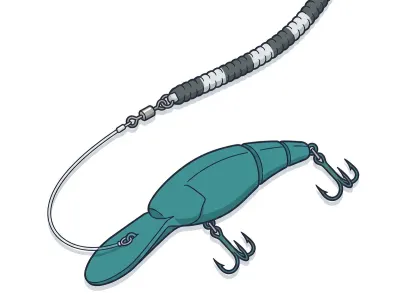
Leadcore Line + Crankbaits
4–5" mid-diving crankbait behind a long leadcore run
Largemouth bass · Hardbaits
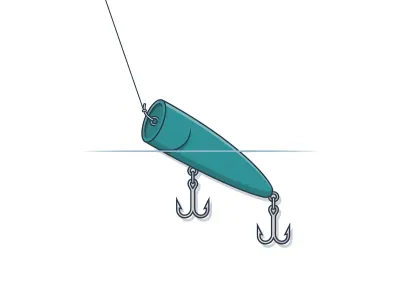
Topwater Popper
2.5–3" concave-face popper
Largemouth bass · Hardbaits
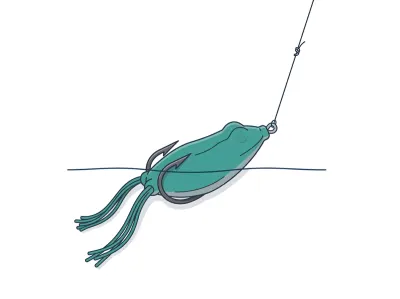
Hollow-Body Frog
3–3.5" hollow-body frog
Smallmouth bass · Soft plastics
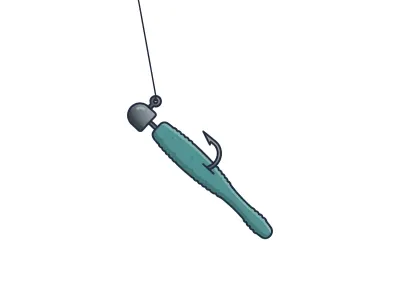
Ned Rig
2.75" finesse stickbait or craw-style Ned bait
Smallmouth bass · Soft plastics
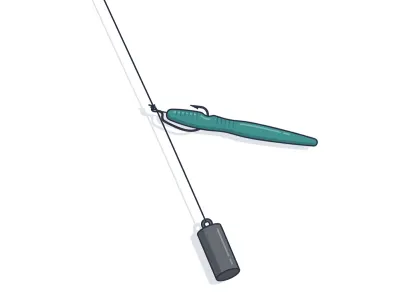
Drop Shot (Finesse Plastic)
4" finesse worm or 3" minnow-profile plastic
Full setups, including hooks, weights and line, are on the live map. As an Amazon Associate I earn from qualifying purchases.
DNR stocking records
Stocking history
| Year | Species | Stocked |
|---|---|---|
| 2025 | Walleye | 5,825 fingerlings |
| 2024 | Walleye | 749,000 fry |
| 2023 | Walleye | 3,689 fingerlings |
| 2022 | Walleye | 749,000 fry |
| 2021 | Walleye | 749,000 fry · 4,883 fingerlings |
| 2019 | Walleye | 4,625 fingerlings |
| 2018 | Walleye | 749,000 fry |
| 2017 | Walleye | 5,000 fingerlings |
| 2016 | Walleye | 1,498,000 fry |
MN DNR · in their words
From the 2025 survey
Franklin Lake is a 1,336-acre mesotrophic (moderately fertile) lake located in northwestern Otter Tail County approximately ten miles northeast of Pelican Rapids, MN. The immediate watershed is composed primarily of hardwood woodlots. The maximum depth is 48 feet; however, 56% of the lake is less than 15 feet deep. There is a shallow, unnavigable outlet along the south shoreline that flows into Crystal Lake. Historical Secchi disk readings have ranged from 5.1 to 14.5 feet.
Residential development is scattered around the entire shoreline of the lake. The development consists primarily of homes and cottages. DNR owned public water accesses are located on the east and north shorelines. Shoal water substrates in the main lake basin consist primarily of sand and gravel with muck being the prevalent substrate in the three western bays. Stands of Hardstem Bulrush, Common Cattail, and other emergent plants are scattered throughout the lake. Emergent aquatic plants such as bulrush and cattail provide valuable fish and wildlife habitat and are critical for maintaining good water quality. They protect shorelines and lake bottoms and absorb and break down polluting chemicals. Emergent plants provide spawning areas for fish such as Northern Pike, Largemouth Bass, and panfish. They also serve as important nursery areas for all species of fish. Because of their ecological value, emergent plants may not be removed without a DNR permit. To maintain the excellent water quality and angling that this lake has to offer, it is imperative to preserve the quality of the aquatic habitat.
Read the full DNR narrative
A 10.0-inch minimum length limit for Black Crappie, along with a reduced daily limit of five was implemented in 2006 to maintain the size structure of the Black Crappie population. A special spring trap netting survey was conducted in 2025 to analyze the Black Crappie population. Catch data indicate that Black Crappies are moderately abundant. The 2020-year class is strong and should provide consistently good Black Crappie angling for several years. Fish sampled ranged in size from 7.0 to 12.0 inches in length, with an average length of 10.7 inches. Ninety-three percent of the crappies were 10.0 inches or greater in length. Crappie growth rates are good with an average length of 10.9 inches at five years of age.
Anglers can also maintain the quality of fishing by practicing selective harvest. Selective harvest encourages the release of medium to large size fish while allowing the harvest of the more abundant smaller fish for table fare. Releasing the medium to large fish will ensure that the lake will have enough spawning age fish on an annual basis and will provide anglers with more opportunities to catch large fish in the future.
Franklin Lake was listed as infested with zebra mussels in 2016. Aquatic invasive species are threatening Minnesota waters. Aquatic invasive species can potentially harm water quality, water recreation, aquatic habitat, native species, and fish populations. Anglers can help prevent the introduction and spread of invasive species by following watercraft transportation laws.
Narrative text from the Minnesota DNR lake survey.
Recent reports
Franklin Lake fishing reports
Recent reports on Franklin Lake from guides, tournaments and regular anglers. Anything posted in the last two weeks also bumps the matching spots on the live map, so you'll see a "matches a recent report" tag on them.
Public water access
Getting on the water
- Franklin Lake (N) (trailer launch)
- Franklin Lake (NE) (trailer launch)
DNR bathymetry
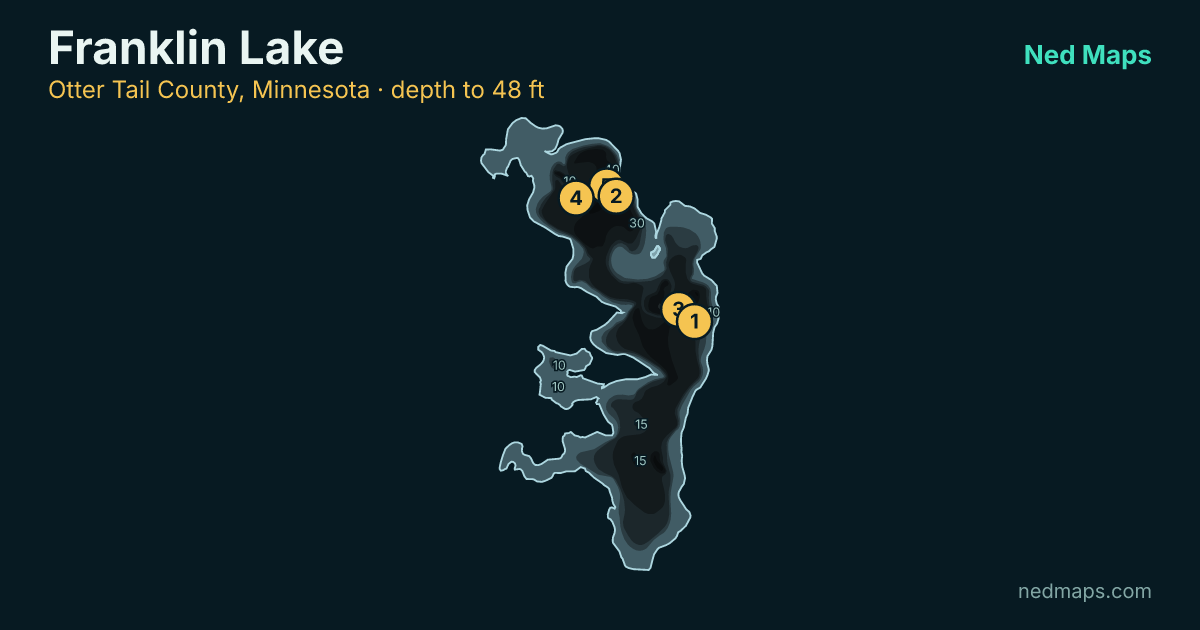
Franklin Lake depth map
Within 30 miles
Nearby lakes
- Lizzie (north portion) Lake · 1,913 ac · 1.8 mi
- Crystal Lake · 1,413 ac · 2.2 mi
- Fish Lake · 293 ac · 2.9 mi
- Otter Lake · 77 ac · 3.4 mi
- North Lida Lake · 5,523 ac · 4.1 mi
- Pelican Lake · 3,962 ac · 4.3 mi
- Little Pelican Lake · 366 ac · 4.6 mi
- Tamarac Lake · 445 ac · 5.3 mi
Quick answers
Frequently asked questions
How deep is Franklin Lake?
Franklin Lake reaches 48 ft at its deepest point; about 69% of the lake is littoral (15 ft or shallower).
How big is Franklin Lake?
Franklin Lake covers 1,088 acres with about 12.7 miles of shoreline.
How clear is the water in Franklin Lake?
DNR Secchi readings on Franklin Lake average 8.3 ft of visibility, middling clarity for a Minnesota lake.
What fish are in Franklin Lake?
Minnesota DNR surveys (most recently 2025) record walleye, largemouth bass, smallmouth bass, northern pike, bluegill, crappie, yellow perch, rock bass.
Is Franklin Lake stocked?
Yes. The DNR stocked walleye in 2025; the stocking table on this page lists every year back to 2016.
Does Franklin Lake have a public access?
Yes. Franklin Lake has 2 public access sites, including Franklin Lake (N) (trailer launch).
How big do walleye get in Franklin Lake?
The biggest walleye measured in recent DNR surveys taped 24"; the size-history table on this page tracks the biggest fish in each survey back to 1999.
When was Franklin Lake last surveyed?
The Minnesota DNR last surveyed Franklin Lake in 2025, the most recent of 15 surveys on record.
Page updated .

Featured guide spot
Your guide service here
One featured guide per lake, with your photo, your writeup and a link straight to your booking page. Free through December 31, 2026.
Then $20 a month from January. Cancel any time.
The live map adds today's conditions and ranked spots for Franklin Lake, plus a trip plan you can share:
Open Franklin Lake on the live map → Fished it lately? Write a report