Minnesota · Pine County
Cross Lake Fishing guide
Cross Lake is a 925-acre lake in Pine County, Minnesota, reaching 30 ft at its deepest point. Average water clarity runs about 4.9 ft. The Minnesota DNR has surveyed the lake 13 times, most recently in 2025, with walleye, largemouth bass, smallmouth bass and northern pike in the nets.
DNR survey data
Fish species
WalleyeLast stocked 2025Fair numbers1.4per gill net14"Typical23"Biggest
Lengths measured · 22 fish
Recent · 2022 + 2025Lengths measured · 4 fish
2025Only 4 fish measured that year — too few to read as a shape.
Lengths measured · 18 fish
2022Lengths measured · 64 fish
2018Lengths measured · 198 fish
2015Largemouth bassJust a few18.6per hr (electrofishing)12"Typical15"Biggest
Lengths measured · 23 fish
Recent · 2022Lengths measured · 23 fish
2022Lengths measured · 15 fish
2018Lengths measured · 40 fish
2015Lengths measured · 5 fish
2010Only 5 fish measured that year — too few to read as a shape.
Northern pikeJust a few3.1per gill net21"Typical33"Biggest
Lengths measured · 38 fish
Recent · 2022Lengths measured · 38 fish
2022Lengths measured · 24 fish
2018Lengths measured · 111 fish
2015Lengths measured · 10 fish
2014Present and managed by the DNR.
BluegillJust a few4.4per trap net8"Typical10"Biggest
Lengths measured · 405 fish
Recent · 2022 + 2025Lengths measured · 314 fish
2025Lengths measured · 91 fish
2022Lengths measured · 137 fish
2018Lengths measured · 193 fish
2014CrappieJust a few7per trap net9"Typical18"Biggest
Lengths measured · 497 fish
Recent · 2022 + 2025Lengths measured · 287 fish
2025Lengths measured · 210 fish
2022Lengths measured · 160 fish
2018Lengths measured · 100 fish
2014Yellow perchGood numbers11.5per gill net7"Typical9"Biggest
Lengths measured · 154 fish
Recent · 2022Lengths measured · 154 fish
2022Lengths measured · 97 fish
2018Lengths measured · 85 fish
2014Lengths measured · 152 fish
2010Lake sturgeonPresentPresent in recent DNR surveys.
Present in recent DNR surveys.
Lengths measured · 39 fish
Recent · 2022Lengths measured · 39 fish
2022Lengths measured · 4 fish
2018Only 4 fish measured that year — too few to read as a shape.
Lengths measured · 5 fish
2015Only 5 fish measured that year — too few to read as a shape.
Lengths measured · 2 fish
2014Only 2 fish measured that year — too few to read as a shape.
Channel catfishGood numbers1.9per gill net20"Typical29"Biggest
Lengths measured · 23 fish
Recent · 2022Lengths measured · 23 fish
2022Lengths measured · 28 fish
2018Lengths measured · 201 fish
2015Lengths measured · 11 fish
2014Rates come from standard DNR survey gear (gill nets, trap nets, electrofishing), judged against statewide benchmarks for the same gear, so the same number of fish per net can read differently for two species. Where the standard gear can't count a species reliably, only presence and size are listed. Typical is the middle fish of those measured. Open a row for the full length spread, survey by survey.
How to fish Cross Lake through the year
Walleye
- Spring
- Walleye are shallow, on and just off the spawning flats and the first green weeds.
- Early summer
- Walleye are setting up on the outside weed edge, points and shallow structure.
- Summer
- Walleye are working the weed edge, points and any wind-blown structure.
- Fall
- Walleye are packing onto the sharpest breaks and points as the water cools, in big schools with short windows.
Largemouth bass
- Spring
- Largemouth are moving up into the warming bays and flats, staging around wood, docks and new weeds to spawn.
- Early summer
- Largemouth are on the shallow spawning flats and protected bays, where beds go on firm bottom next to isolated cover.
- Summer
- Largemouth are in and along the weeds: cabbage and milfoil edges, matted cover and shade.
- Fall
- Largemouth are chasing bait back onto the flats and into the remaining green weeds, feeding hard and shallow before the freeze.
Season patterns for each species. Open the live map for today's wind, light and water temp.
Size history
Biggest fish by survey year
| Survey year | Walleye | Largemouth bass | Smallmouth bass |
|---|---|---|---|
| 2025 | 23" | — | — |
| 2022 | 21" | 15" | 13" |
| 2018 | 22" | 19" | 14" |
| 2015 | 28" | 20" | 17" |
| 2014 | 21" | — | — |
| 2010 | 23" | 13" | 5" |
| 2005 | 23" | 12" | 7" |
| 2000 | 24" | 19" | 11" |
Longest fish measured by DNR survey crews in each year's nets. Survey gear samples the population, so the lake usually holds larger fish than any survey measured.
Suggested tackle
What to bring
Top presentations for this lake's structure and clarity:
Walleye · Live bait
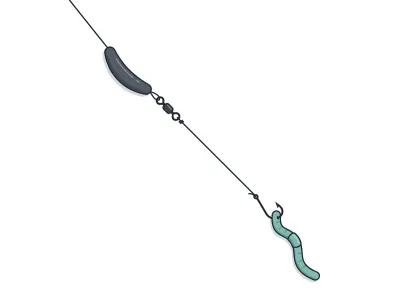
Live-Bait (Lindy) Rig + Leech/Crawler
jumbo leech or half a nightcrawler
Walleye · Trolling
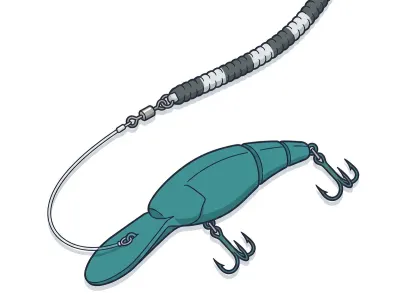
Leadcore Line + Crankbaits
4–5" mid-diving crankbait behind a long leadcore run
Largemouth bass · Soft plastics

Texas-Rigged Worm
7" ribbon-tail or straight-tail plastic worm
Largemouth bass · Soft plastics
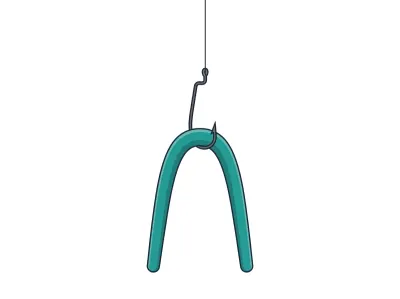
Wacky-Rigged Stickworm
5" stickworm
Smallmouth bass · Soft plastics
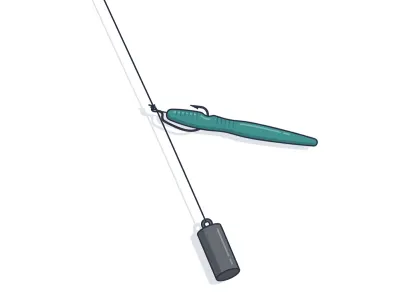
Drop Shot (Finesse Plastic)
4" finesse worm or 3" minnow-profile plastic
Smallmouth bass · Jigs & bladed
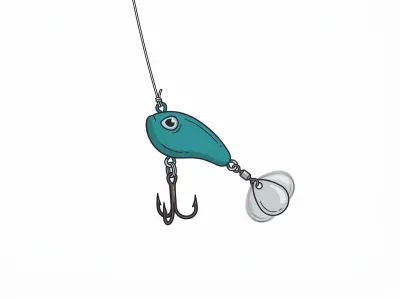
Tail Spinner
Compact lead body with a free-spinning blade on the tail
Full setups, including hooks, weights and line, are on the live map. As an Amazon Associate I earn from qualifying purchases.
DNR stocking records
Stocking history
| Year | Species | Stocked |
|---|---|---|
| 2025 | Muskellunge | 100 yearlings |
| 2025 | Walleye | 127,000 fry · 4,460 fingerlings · 229 yearlings · 260 adults |
| 2024 | Muskellunge | 500 fingerlings |
| 2024 | Walleye | 127,000 fry |
| 2023 | Muskellunge | 37 fingerlings |
| 2023 | Walleye | 254,000 fry · 19,430 fingerlings |
| 2022 | Muskellunge | 500 fingerlings |
| 2021 | Walleye | 22,090 fingerlings |
| 2019 | Muskellunge | 1,011 fingerlings |
| 2019 | Walleye | 3,804 fingerlings · 6,444 yearlings |
| 2018 | Muskellunge | 39 fingerlings |
| 2017 | Muskellunge | 500 fingerlings |
Stocking records before 2017 omitted.
MN DNR · in their words
From the 2025 survey
Cross Lake is a 943-acre lake located on the east side of Pine City and is within the Snake River watershed. It has a maximum depth of 30 feet, has an average depth of 14 feet, and is 54% littoral (depths less than 15 feet, 507 acres). It's long-narrow shape, steep drop offs, and river connectivity make it a unique lake in the area. The Snake River is the one main inlet and outlet at the southern end of the lake that flows from west to east. Nine other small inlets are present, most of which only flow after precipitation events. No other outlets are present. The lake is highly developed, with homes lining almost 100% of the shoreline. Phosphorous levels are high, with algae blooms commonly occurring from May through October. Aquatic vegetation is dense nearshore but generally sparse in the main lake due to water clarity limiting plant growth to depths less than 5 feet. Sand and gravel are common throughout most of the lake which provides good spawning substrates for crappie and Bluegill. There are two public accesses on Cross Lake, one on the northern bank of the Snake River as it enters the lake and one on the northern bank of the Snake River as it exits the lake. The western access is paved and has 17 double spaces, while the eastern access is gravel and has roughly 24 double spaces.
Past standard lake surveys on Cross Lake have occurred in late-June and consistently observed a low-density Bluegill population with some larger individuals over 9 inches present. Two previous surveys targeting spawning Bluegill occurred in 2019 and 2021, to evaluate if a special regulation was appropriate. Due to interest in quality size Bluegill and the results of these two surveys, a ten sunfish bag limit was initiated in 2022 to help maintain size quality.
Read the full DNR narrative
In 2025, a survey targeting spawning Bluegill was conducted using 12 trap nets set over 7 days (Figure 1, 80 net nights) to evaluate the current Bluegill population and examine for changes that may have occurred since special regulations were implemented. Initial sampling occurred May 19 - 22, 2025 when water temperatures were 62 °F degrees and warming, but a rapid drop in water temperatures to 52 °F limited Bluegill movement and net effectiveness. Consequently, additional sampling occurred June 9 - 12, 2025 just prior to Bluegill spawning as water temperatures warmed again (range 68-71 °F).
A total of 314 Bluegill were caught in 2025 for a catch rate of 3.9/net. This is lower than the catch rate of 5.8/net in 2019 and 13.4/net in 2021; however, the duration sampled was longer in 2025 due to the cold front the first week. Bluegill lengths ranged from 3.3 to 10.0 inches with an average length of 7.4 inches. This is similar to the average lengths in 2019 and 2021, which were both 7.5 inches. Fifty percent of Bluegill caught in 2025 exceeded 8 inches, compared to 28% in 2019 and 47% in 2021. Overall, Cross appears to continue to support a low-density Bluegill population with good size structure.
Other species sampled in 2025 included Black Crappie, White Crappie, and Pumpkinseed. A total of 264 black crappie were caught for a catch rate of 3.3/net. Lengths ranged from 7.1 to 14.4 inches with an average length of 9.9 inches. Forty-four percent of black crappie caught in 2025 exceeded 10 inches. Only Bluegills were counted and measured in the 2019 and 2021 surveys, so comparisons to other species cannot be made. In 2025, a total of 22 white crappie were caught for a catch rate of 0.3/net. Lengths ranged from 8.7 to 12.4 inches with an average length of 10.7 inches. A total of 16 pumpkinseed were caught for a catch rate of 0.2/net. Lengths ranged from 5.7 to 7.0 inches with an average of 6.3 inches.
Narrative text from the Minnesota DNR lake survey.
Recent reports
Cross Lake fishing reports
Recent reports on Cross Lake from guides, tournaments and regular anglers. Anything posted in the last two weeks also bumps the matching spots on the live map, so you'll see a "matches a recent report" tag on them.
Public water access
Getting on the water
- Snake River, Cross Lake (trailer launch)
- Cross/Pine River Fishing Pier (fishing pier)
DNR bathymetry
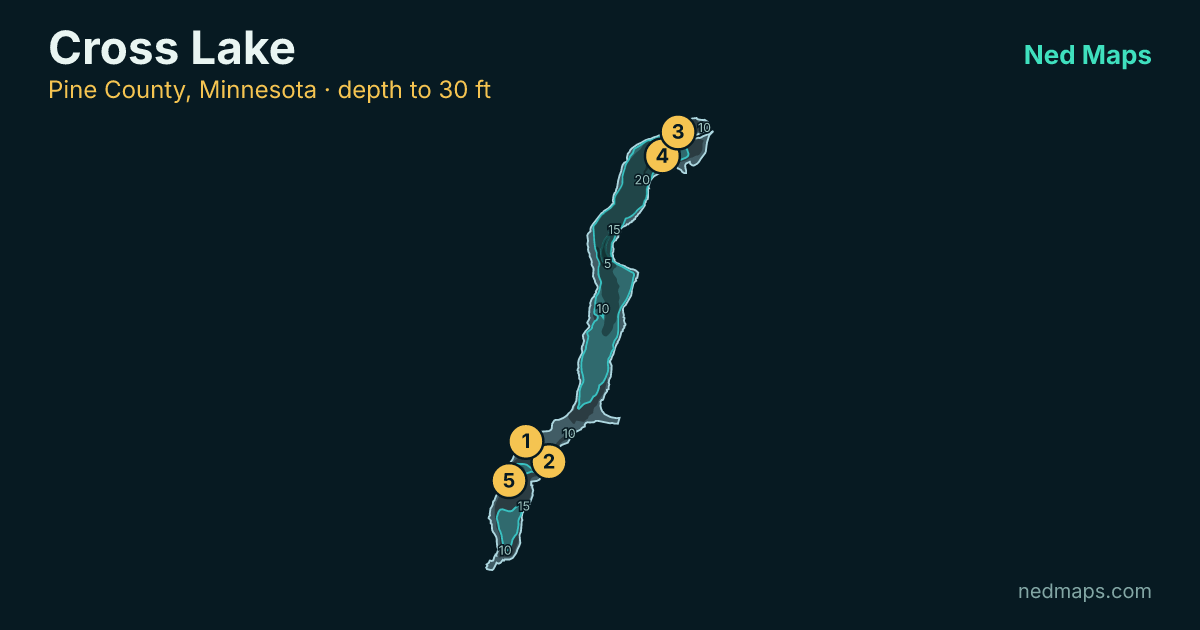
Cross Lake depth map
Within 30 miles
Nearby lakes
- Pokegama Lake · 1,522 ac · 4.8 mi
- Quamba Lake · 226 ac · 11.6 mi
- East Rush Lake · 1,494 ac · 12.5 mi
- West Rush Lake · 1,594 ac · 13 mi
- Pomroy Lake · 412 ac · 16.1 mi
- Neander Lake · 57 ac · 16.4 mi
- Goose Lake · 732 ac · 17 mi
- Fish Lake · 506 ac · 17.9 mi
Quick answers
Frequently asked questions
How deep is Cross Lake?
Cross Lake reaches 30 ft at its deepest point with a mean depth of 14.3 ft; about 55% of the lake is littoral (15 ft or shallower).
How big is Cross Lake?
Cross Lake covers 925 acres with about 12.8 miles of shoreline.
How clear is the water in Cross Lake?
DNR Secchi readings on Cross Lake average 4.9 ft of visibility, middling clarity for a Minnesota lake.
What fish are in Cross Lake?
Minnesota DNR surveys (most recently 2025) record walleye, largemouth bass, smallmouth bass, northern pike, muskellunge, bluegill, crappie, yellow perch, lake sturgeon, rock bass, channel catfish, white bass.
Is Cross Lake stocked?
Yes. The DNR stocked muskellunge and walleye in 2025; the stocking table on this page lists every year back to 2017.
Does Cross Lake have a public access?
Yes. Cross Lake has 2 public access sites, including Snake River, Cross Lake (trailer launch).
How big do walleye get in Cross Lake?
The biggest walleye measured in recent DNR surveys taped 23"; the size-history table on this page tracks the biggest fish in each survey back to 2000.
When was Cross Lake last surveyed?
The Minnesota DNR last surveyed Cross Lake in 2025, the most recent of 13 surveys on record.
Page updated .

Featured guide spot
Your guide service here
One featured guide per lake, with your photo, your writeup and a link straight to your booking page. Free through December 31, 2026.
Then $20 a month from January. Cancel any time.
The live map adds today's conditions and ranked spots for Cross Lake, plus a trip plan you can share:
Open Cross Lake on the live map → Fished it lately? Write a report