Minnesota · Itasca County
Coon-Sandwick Lake Fishing guide
Coon-Sandwick Lake is a 594-acre lake in Itasca County, Minnesota, reaching 36 ft at its deepest point. Secchi readings average around 12.5 ft of visibility. The Minnesota DNR has surveyed the lake 8 times, most recently in 2022, with walleye, largemouth bass, northern pike and bluegill in the nets.
DNR survey data
Fish species
Largemouth bassPresent1per trap net14"Typical19"Biggest
Lengths measured · 11 fish
Recent · 2022Lengths measured · 11 fish
2022Lengths measured · 21 fish
2013Lengths measured · 41 fish
2005Lengths measured · 23 fish
2000Northern pikeGood numbers11.8per gill net23"Typical31"Biggest
Lengths measured · 80 fish
Recent · 2022Lengths measured · 80 fish
2022Lengths measured · 130 fish
2013Lengths measured · 147 fish
2005Lengths measured · 97 fish
2000BluegillJust a few15.1per trap net5"Typical8"Biggest
Lengths measured · 191 fish
Recent · 2022Lengths measured · 191 fish
2022Lengths measured · 137 fish
2013Lengths measured · 425 fish
2005Lengths measured · 346 fish
2000CrappieJust a few2.3per trap net6"Typical9"Biggest
Lengths measured · 49 fish
Recent · 2022Lengths measured · 49 fish
2022Lengths measured · 44 fish
2013Lengths measured · 22 fish
2005Lengths measured · 38 fish
2000Yellow perchExcellent numbers13per gill net6"Typical7"Biggest
Lengths measured · 78 fish
Recent · 2022Lengths measured · 78 fish
2022Lengths measured · 111 fish
2013Lengths measured · 185 fish
2005Lengths measured · 149 fish
2000Rates come from standard DNR survey gear (gill nets, trap nets, electrofishing), judged against statewide benchmarks for the same gear, so the same number of fish per net can read differently for two species. Where the standard gear can't count a species reliably, only presence and size are listed. Typical is the middle fish of those measured. Open a row for the full length spread, survey by survey.
How to fish Coon-Sandwick Lake through the year
Northern pike
- Spring
- Pike are in the shallow bays and along new weed growth. At 12.5 ft of clarity, fish them deeper and lighter than usual.
- Early summer
- Pike are on the outside weed edge and points.
- Summer
- Pike are on the deep weed edge and points near the coolest water they can find. With 85% of this lake 15 ft or shallower, the weed edge is the main event.
- Fall
- Pike are on the last green weeds and the breaks beside them, feeding heavily as the water drops.
Walleye
- Spring
- Walleye are shallow, on and just off the spawning flats and the first green weeds. At 12.5 ft of clarity, fish them deeper and lighter than usual.
- Early summer
- Walleye are setting up on the outside weed edge, points and shallow structure.
- Summer
- Walleye are working the weed edge, points and any wind-blown structure. With 85% of this lake 15 ft or shallower, the weed edge is the main event.
- Fall
- Walleye are packing onto the sharpest breaks and points as the water cools, in big schools with short windows.
Season patterns for each species. Open the live map for today's wind, light and water temp.
Size history
Biggest fish by survey year
| Survey year | Northern pike | Walleye | Largemouth bass |
|---|---|---|---|
| 2022 | 31" | 25" | 19" |
| 2013 | 34" | 22" | 17" |
| 2005 | 36" | 21" | 17" |
| 2000 | 33" | 27" | 17" |
Longest fish measured by DNR survey crews in each year's nets. Survey gear samples the population, so the lake usually holds larger fish than any survey measured.
Suggested tackle
What to bring
Top presentations for this lake's structure and clarity:
Northern pike · Hardbaits
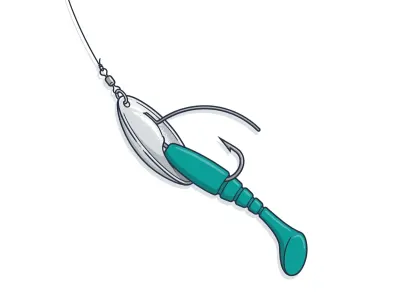
Weedless Spoon + Trailer (Silver Minnow)
3/8–1/2 oz weedless spoon
Northern pike · Soft plastics

Paddletail Swimbait on Jighead
4–5" paddletail swimbait on a ball-head swimbait jighead
Walleye · Live bait
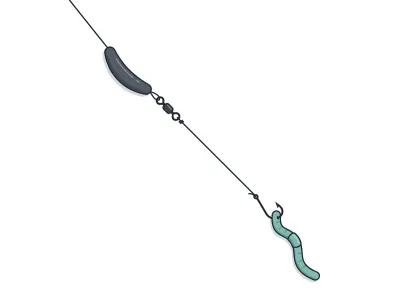
Live-Bait (Lindy) Rig + Leech/Crawler
jumbo leech or half a nightcrawler
Walleye · Trolling
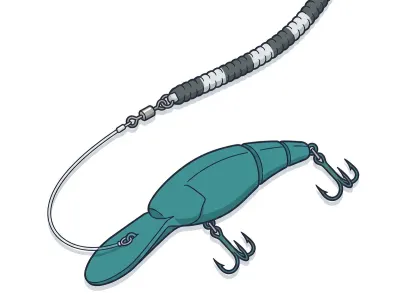
Leadcore Line + Crankbaits
4–5" mid-diving crankbait behind a long leadcore run
Largemouth bass · Soft plastics
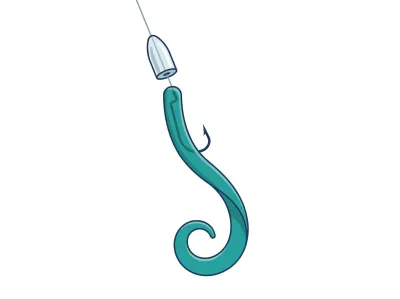
Texas-Rigged Worm
7" ribbon-tail or straight-tail plastic worm
Largemouth bass · Jigs & bladed
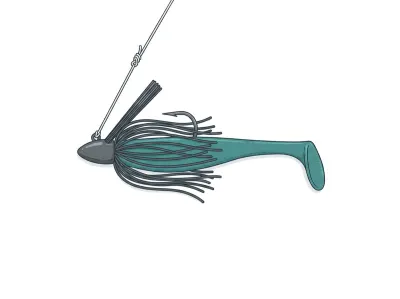
Swim Jig + Paddletail Trailer
3.5–4.5" paddletail trailer on a bullet-nosed swim jig
Full setups, including hooks, weights and line, are on the live map. As an Amazon Associate I earn from qualifying purchases.
DNR stocking records
Stocking history
| Year | Species | Stocked |
|---|---|---|
| 2023 | Walleye | 500,000 fry |
MN DNR · in their words
From the 2022 survey
Coon-Sandwick Lake is a 627-acre lake located six miles southeast of Bigfork in north-central Itasca County. The lake is located entirely within Scenic State Park and there is no residential development on the lakeshore, other than the State Park campgrounds. Two boat accesses and a fishing pier are located within the park, which also offer boat and canoe rentals. State Park workers indicated that fishing is popular with park guests and most anglers target panfish and Northern Pike.
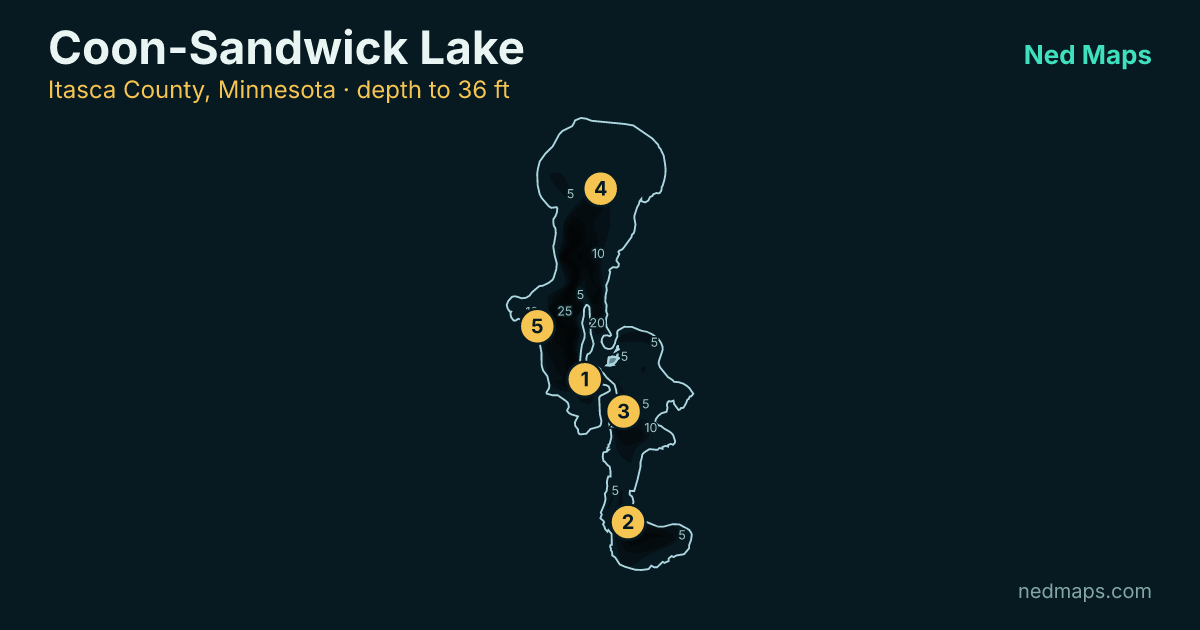
The lake consists of a north basin (Coon) that has a maximum depth of 36 feet, and a south basin (Sandwick) with a maximum depth of 23 feet. The two basins are broadly connected and have been managed as a single water body. The principal difference between the two basins is a more irregularly shaped shoreline in Sandwick than in Coon. Most of the water is shallow (540 littoral acres) and fewer than 200 acres exceed a depth of 10 feet. The lake has clear water, as Secchi disc readings have ranged from 11 to 15 feet. The lake has moderately soft water and is mesotrophic with moderate fertility. There are no defined inlets or outlets. Coon-Sandwick supports a diverse aquatic plant community that provides valuable fish and wildlife habitat.
Read the full DNR narrative
Coon-Sandwick has a history of poor Northern Pike size structure. Special regulations have been in place since the early 1990s to improve the pike size structure and provide better angling for larger pike. Most recently, a 24-to-36-inch protected slot has been in place since 2007. The Lake Management Plan (LMP) was last revised in 2014. The goal of the LMP was to reduce the Northern Pike gill-net catch to 6.8/net (lake class average) with the proportion of fish exceeding 21 and 28 inches exceeding 50 and 25, with fish over 34 inches present. A standard lake survey was completed in 2022 to evaluate the effectiveness of the special Pike regulation and determine the status of the fish community. This assessment consisted of 6 gill nets and 9 trap nets compared to previous surveys which have used as many as 12 gill nets. The number of gill nets was reduced from 12 to 6 due to high pike catches and a concern for mortality of quality sized pike, and due to limited water >9 feet deep for setting gill nets. Catch rate data should be interpreted cautiously, given this reduction in gill net effort.
The Northern Pike catch rate of 11.8 per gill net was lower than the previous survey but was still high compared to similar lakes and above average for Coon-Sandwick. When Northern Pike occur at high densities, average size is typically small, and growth is often poor. Pike from Coon-Sandwick contradict this general trend, however, as size structure was favorable and length indices improved substantially compared to pre-regulation sampling. Pike ranged from 11.2 to 31.4 inches and averaged 23.2 inches in 2022. Seventy-six percent of the sampled pike exceeded 21 inches and 13% exceeded 28 inches. Over fifty percent of the sampled pike exceeded 24 inches and 4.2% exceeded 30 inches. Ages 1 through 9 were represented in the sample and growth was considered average. Pike averaged 23.8 inches after 5 years of growth. It appears that the special regulation has continued to contribute to exceptional angling opportunities for catching quality-sized fish.
Yellow Perch were the most common fish in the gill net catch. Coon-Sandwick has a history of moderate perch catches with a population dominated by small, slowing growing fish. The catch of 13 per gill net was typical compared to similar lakes and average for Coon-Sandwick. Size structure was poor as perch ranged from 5.5 to 7.8 inches. Although perch from Coon-Sandwick are too small to interest most anglers, they provide an important prey item for predators such as Northern Pike and Walleye. Given the relatively good catch rate compared to past sampling, Yellow Perch appear to be sustaining themselves despite high Northern Pike abundance.
Coon-Sandwick has a history of poor Walleye catches, despite frequent DNR stocking. It should be noted that lakes with habitats like Coon-Sandwick typically do not produce large Walleye populations. The catch in 2022 (1.5/net) was typical for similar lakes and average for Coon-Sandwick. Too few Walleye were captured to accurately assess age and size structure, but at least some quality fish were present, as Walleye up to 25.7 inches were captured.
Bluegills were the most common fish present in the trap net and the catch of 15.1 per net was typical compared to similar lakes and for Coon-Sandwick. Lakes with similar habitats typically produce slow growing Bluegill with limited growth potential and poor size structures. Size structure in Coon-Sandwick has historically been poor and remained so in 2022. Trap net caught Bluegill ranged from 3.2 to 8.3 inches with a mean of 5.7 inches. Only 1% of Bluegill exceeded 8 inches. The popularity of the Bluegill fishery is likely limited by poor growth rates and size structure.
Black Crappie have been captured in moderate numbers in past assessments and size structure has been described as poor. Crappie were captured in average numbers in 2022, as both gill net and trap net catches resembled those from lakes with similar habitats. Size structure remained generally poor; gill-net sampled crappie ranged from 4.8 to 9.9 inches with an average of around 7 inches. Crappie populations often exhibit irregular recruitment resulting in dominant year classes, shifting age and size structures, and inconsistent angler success. Ages 2 through 5 were represented in the sample and growth was considered average. Crappie averaged 7.1 inches after 4 years of growth. Coon-Sandwick likely has the potential to sporadically produce a quality crappie fishery, but high angler harvest and inconsistent recruitment may limit the number of quality fish.
Largemouth Bass were captured in relatively high numbers from trap nets (1/net) compared to similar lakes. Size structure was good as bass ranged from 6.7 to 19.1 inches with a mean of 12.7 inches. Largemouth Bass are difficult to sample with standard netting and the presence of bass in the trap nets suggest that bass are likely an important component of the fishery. The habitat and Bluegill prey base suggest good conditions for Largemouth Bass and favorable angling opportunities likely exist.
Coon-Sandwick is infested with Eurasian Water Milfoil. Anglers and boaters are reminded to help stop the spread of invasive species by removing all aquatic plants from boats, trailers, and equipment. All drain plugs must be removed, and live and bait wells must be drained before leaving the access. Anglers and boaters are encouraged to power wash and thoroughly dry all equipment prior to use in another water body.
Narrative text from the Minnesota DNR lake survey.
Recent reports
Coon-Sandwick Lake fishing reports
Recent reports on Coon-Sandwick Lake from guides, tournaments and regular anglers. Anything posted in the last two weeks also bumps the matching spots on the live map, so you'll see a "matches a recent report" tag on them.
Public water access
Getting on the water
- Coon Lake (N) (trailer launch)
- Coon Lake (S) (carry-in)
DNR bathymetry
Coon-Sandwick Lake depth map
Within 30 miles
Nearby lakes
- Lake of Isles · 70 ac · 1.4 mi
- Gale Lake · 86 ac · 4.2 mi
- Batson Lake · 114 ac · 5.5 mi
- Connors Lake · 142 ac · 5.5 mi
- Anderson Lake · 295 ac · 5.8 mi
- East Lake · 192 ac · 6.5 mi
- Burns Lake · 181 ac · 6.9 mi
- Horseshoe Lake · 260 ac · 6.9 mi
Quick answers
Frequently asked questions
How deep is Coon-Sandwick Lake?
Coon-Sandwick Lake reaches 36 ft at its deepest point; about 85% of the lake is littoral (15 ft or shallower).
How big is Coon-Sandwick Lake?
Coon-Sandwick Lake covers 594 acres with about 9.3 miles of shoreline.
How clear is the water in Coon-Sandwick Lake?
DNR Secchi readings on Coon-Sandwick Lake average 12.5 ft of visibility, clear water for a Minnesota lake.
What fish are in Coon-Sandwick Lake?
Minnesota DNR surveys (most recently 2022) record walleye, largemouth bass, northern pike, bluegill, crappie, yellow perch.
Is Coon-Sandwick Lake stocked?
Yes. The DNR stocked walleye in 2023.
Does Coon-Sandwick Lake have a public access?
Yes. Coon-Sandwick Lake has 2 public access sites, including Coon Lake (N) (trailer launch).
How big do northern pike get in Coon-Sandwick Lake?
The biggest northern pike measured in recent DNR surveys taped 31"; the size-history table on this page tracks the biggest fish in each survey back to 2000.
When was Coon-Sandwick Lake last surveyed?
The Minnesota DNR last surveyed Coon-Sandwick Lake in 2022, the most recent of 8 surveys on record.
Page updated .

Featured guide spot
Your guide service here
One featured guide per lake, with your photo, your writeup and a link straight to your booking page. Free through December 31, 2026.
Then $20 a month from January. Cancel any time.
The live map adds today's conditions and ranked spots for Coon-Sandwick Lake, plus a trip plan you can share:
Open Coon-Sandwick Lake on the live map → Fished it lately? Write a report