Minnesota · Aitkin County
Cedar Lake Fishing guide
Cedar Lake sits in Aitkin County, Minnesota, and covers 249 acres, reaching 18 ft at its deepest point. The Minnesota DNR has surveyed the lake 3 times, most recently in 2001, with walleye, largemouth bass, northern pike and bluegill in the nets. That survey is 25 years old now.
DNR survey data
Fish species
The DNR last surveyed Cedar Lake in 2001. Ratings need a survey from the last 20 years, so this page lists the species from that older record without numbers.
- Walleye
- Largemouth bass
- Northern pike
- Bluegill
- Crappie
- Yellow perch
- Rock bass
How to fish Cedar Lake through the year
Walleye
- Spring
- Walleye are shallow, on and just off the spawning flats and the first green weeds.
- Early summer
- Walleye are setting up on the outside weed edge, points and shallow structure.
- Summer
- Walleye are working the weed edge, points and any wind-blown structure. With 86% of this lake 15 ft or shallower, the weed edge is the main event.
- Fall
- Walleye are packing onto the sharpest breaks and points as the water cools, in big schools with short windows. A 18-ft bowl cools fast, so the fall window comes early here.
Yellow perch
- Spring
- Perch are draping eggs over flooded cover and weed stems on the shallow flats.
- Early summer
- Perch are spread over sand-grass flats and the first weed edges in loose packs.
- Summer
- Perch are over deeper soft-bottom flats and the basin, on the bottom and in schools. With 86% of this lake 15 ft or shallower, the weed edge is the main event.
- Fall
- Perch are roaming the mid-depth flats in loose schools, chasing young-of-year bait while it is still shallow. A 18-ft bowl cools fast, so the fall window comes early here.
Season patterns for each species. Open the live map for today's wind, light and water temp.
Suggested tackle
What to bring
Top presentations for this lake's structure and clarity:
Walleye · Soft plastics
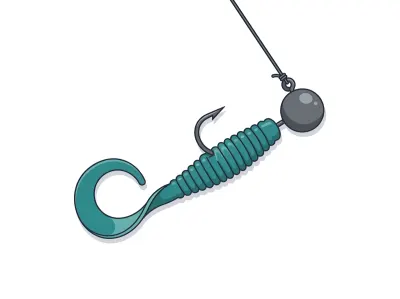
Curly-Tail Grub on Jig
3" curly-tail grub threaded on a round jighead
Yellow perch · Soft plastics
Curly-Tail Grub on Jig
3" curly-tail grub threaded on a round jighead
Yellow perch · Live bait
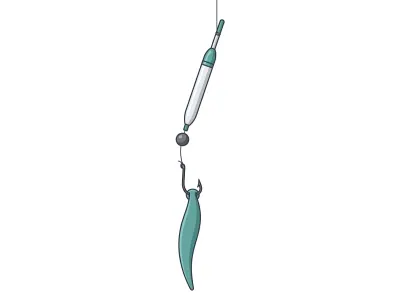
Slip Bobber + Leech
jumbo or large leech
Largemouth bass · Soft plastics

Texas-Rigged Worm
7" ribbon-tail or straight-tail plastic worm
Largemouth bass · Soft plastics
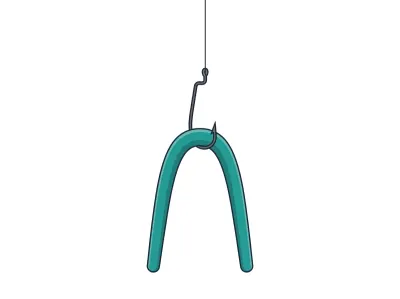
Wacky-Rigged Stickworm
5" stickworm
Full setups, including hooks, weights and line, are on the live map. As an Amazon Associate I earn from qualifying purchases.
DNR stocking records
Stocking history
| Year | Species | Stocked |
|---|---|---|
| 2025 | Walleye | 600 adults |
| 2024 | GOS | 4,500 adults |
| 2024 | Yellow Perch | 4,000 adults |
MN DNR · in their words
From the 2001 survey
Cedar Lake is a moderately fertile 232 acre lake located in south central Aitkin County just east of Mille Lacs Lake. Because a public access is currently not available, anglers will have to gain access through private land owners. The shoreline surrounding the lake is minimally developed with most of the shoreline composed of undeveloped forest or woodland, marshland, and grassland. The surrounding watershed is characterized by the following land uses listed in order of abundance: undeveloped forest or woodland, bogs, rural residential development, marshland, and grassland. Since shallow water depths are characteristic of this basin along with good fertility, this type of lake may experience low oxygen levels during the winter season which can cause partial or complete fish winterkills. According to historical DNR Fisheries surveys, known fish winterkills occurred in 1978/79 and 1988/89. Since 1993, the Cedar Lake Association has operated an aeration system as an effort to prevent or reduce winterkill. Due to the varying intensities of winterkill and the unknown effectiveness of the current aeration system, small partial winterkills may go undetected. Hence, the fish community in Cedar Lake may be subject to consistent change and periodically dominated by an abundance of low oxygen tolerant species such as bullhead. Currently, Cedar Lake is managed for black crappie and bluegill sunfish with northern pike as the secondary management species.During the open water season of 2001, a standard lake survey was conducted to evaluate the present status of the fish population, the physical, chemical, and biological factors concerning habitat, and the water quality. The evaluation of the fishery used gill nets, trap nets, and late summer shoreline seining. The selected gear types were chosen based on guidelines from the MN DNR Manual of Instructions for Lake Survey. Habitat and water quality data also collected based on these guidelines. Bluegill sunfish and black crappie numbers were found at normal levels for lakes of this type, but their sizes were small. Northern pike abundance was found at a normal level along with the average weight, at 2.5 pounds. Measured northern pike ranged from 17.3 to 27.5 inches with an average length of 22.8 inches. Walleye were first sampled in Cedar Lake in 1992 which was before any type of walleye stocking took place. These fish most likely originated in Mille Lacs Lake and entered Cedar lake via Cedar Creek during spring high water levels. Since the DNR does not stock walleye in lakes without a public access, the Cedar Lake Association began walleye stocking in 1993 after obtaining a permit from DNR Fisheries. A total of 1,200 walleye fingerlings were stocked in 1993 and 350,000 walleye fry in 2000. During the 2001 survey, four walleye from the 1993 year class were sampled with their lengths ranging from 18.9 to 21.9 inches. Five largemouth bass that ranged from 5.5 to 18.4 inches were captured in gill and trap nets. Since the sampling methods utilized are not the most effective for sampling largemouth bass, the sampled fish probably do not adequately represent the true population. Yellow perch, an important forage species for northern pike and walleye, were found in low numbers. The sampled fish community also included black and brown bullhead, dog fish, common carp, hybrid sunfish, and pumpkinseed sunfish. When compared to similar lakes, black and brown bullhead, dog fish, common carp, and pumpkinseed sunfish were within a normal abundance range.An angler fishing Cedar Lake may encounter a nice sized northern pike, an occasional nice walleye or largemouth bass, an abundance of small sunfish, or a fair number of smaller crappie. Since Cedar Lake is a moderately fertile lake and land uses within a watershed surrounding a lake can influence a lakes water quality, additional nutrient input may decrease this lakes water quality and ultimately its overall health. Shoreline property owners and other land users within the watershed can improve or maintain water quality by protecting or re-establishing buffer strips along the shoreline of lakes with native plant species; updating failing or outdated septic systems; using phosphorus free fertilizer (if needed) on surrounding lawns, gardens, or crop land; utilizing farming practices that reduce run-off; limiting aquatic plant removal or disturbance; and limiting construction of impervious surfaces near the shoreline.
Narrative text from the Minnesota DNR lake survey.
Recent reports
Cedar Lake fishing reports
Recent reports on Cedar Lake from guides, tournaments and regular anglers. Anything posted in the last two weeks also bumps the matching spots on the live map, so you'll see a "matches a recent report" tag on them.
DNR bathymetry
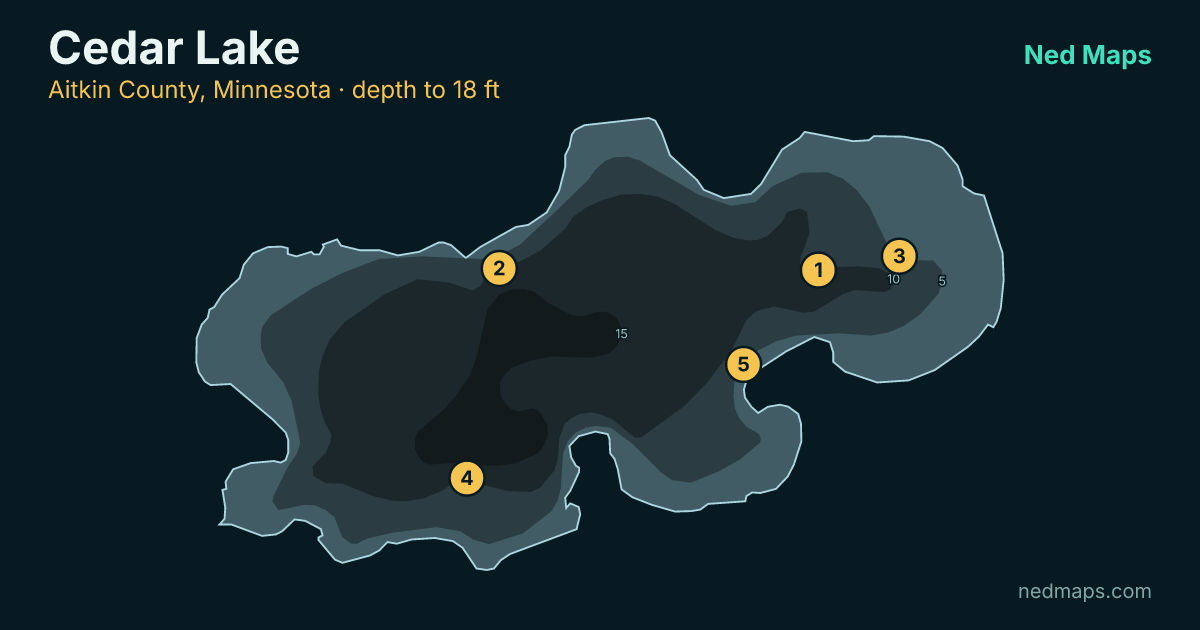
Cedar Lake depth map
Within 30 miles
Nearby lakes
- Mille Lacs Lake · 128,250 ac · 9.7 mi
- Porcupine Lake · 51 ac · 11.8 mi
- Five Lake · 44 ac · 13.7 mi
- Sugar Lake · 416 ac · 13.9 mi
- Clear Lake · 574 ac · 15.2 mi
- Black Bass Lake · 32 ac · 15.7 mi
- Pine Lake · 378 ac · 15.9 mi
- Eleven Lake · 315 ac · 16.4 mi
Quick answers
Frequently asked questions
How deep is Cedar Lake?
Cedar Lake reaches 18 ft at its deepest point with a mean depth of 8 ft; about 86% of the lake is littoral (15 ft or shallower).
How big is Cedar Lake?
Cedar Lake covers 249 acres with about 3.7 miles of shoreline.
What fish are in Cedar Lake?
Minnesota DNR surveys (most recently 2001) record walleye, largemouth bass, northern pike, bluegill, crappie, yellow perch, rock bass.
Is Cedar Lake stocked?
Yes. The DNR stocked walleye in 2025; the stocking table on this page lists every year back to 2024.
When was Cedar Lake last surveyed?
The Minnesota DNR last surveyed Cedar Lake in 2001, the most recent of 3 surveys on record. That is more than 20 years ago, so this page lists species without ratings.
Page updated .

Featured guide spot
Your guide service here
One featured guide per lake, with your photo, your writeup and a link straight to your booking page. Free through December 31, 2026.
Then $20 a month from January. Cancel any time.
The live map adds today's conditions and ranked spots for Cedar Lake, plus a trip plan you can share:
Open Cedar Lake on the live map → Fished it lately? Write a report