Minnesota · Itasca County
Caribou Lake Fishing guide
Caribou Lake is a 247-acre lake in Itasca County, Minnesota, reaching 152 ft at its deepest point. Average water clarity runs about 30.8 ft. The Minnesota DNR has surveyed the lake 8 times, most recently in 2022, with walleye, largemouth bass, smallmouth bass and northern pike in the nets.
DNR survey data
Fish species
No recent survey rating.
Smallmouth bassPresent2.6per gill net11"Typical17"Biggest
Lengths measured · 23 fish
Recent · 2022Lengths measured · 23 fish
2022Lengths measured · 3 fish
2017Only 3 fish measured that year — too few to read as a shape.
Lengths measured · 18 fish
2015Lengths measured · 1 fish
2009Only 1 fish measured that year — too few to read as a shape.
Yellow perchFair numbers4.3per gill net8"Typical12"Biggest
Lengths measured · 39 fish
Recent · 2022Lengths measured · 39 fish
2022Lengths measured · 8 fish
2015Only 8 fish measured that year — too few to read as a shape.
Lengths measured · 11 fish
2007Lake troutLast stocked 2017Present, stockedPresent and managed by the DNR.
Present and managed by the DNR.
Lengths measured · 25 fish
Recent · 2022Lengths measured · 25 fish
2022Lengths measured · 58 fish
2017Lengths measured · 15 fish
2015Lengths measured · 38 fish
2009Rock bassExcellent numbers3.2per gill net7"Typical10"Biggest
Lengths measured · 29 fish
Recent · 2022Lengths measured · 29 fish
2022Lengths measured · 32 fish
2015Lengths measured · 1 fish
2009Only 1 fish measured that year — too few to read as a shape.
Lengths measured · 44 fish
2007Rates come from standard DNR survey gear (gill nets, trap nets, electrofishing), judged against statewide benchmarks for the same gear, so the same number of fish per net can read differently for two species. Where the standard gear can't count a species reliably, only presence and size are listed. Typical is the middle fish of those measured. Open a row for the full length spread, survey by survey.
How to fish Caribou Lake through the year
Largemouth bass
- Spring
- Largemouth are moving up into the warming bays and flats, staging around wood, docks and new weeds to spawn. At 30.8 ft of clarity, fish them deeper and lighter than usual.
- Early summer
- Largemouth are on the shallow spawning flats and protected bays, where beds go on firm bottom next to isolated cover.
- Summer
- Largemouth are in and along the weeds: cabbage and milfoil edges, matted cover and shade. On a lake that drops to 152 ft, check the deep edge of that structure too.
- Fall
- Largemouth are chasing bait back onto the flats and into the remaining green weeds, feeding hard and shallow before the freeze.
Smallmouth bass
- Spring
- Smallmouth are on shallow rock, gravel and sand where they spawn. At 30.8 ft of clarity, fish them deeper and lighter than usual.
- Early summer
- Smallmouth are post-spawn on rock points, gravel bars and the adjacent breaks.
- Summer
- Smallmouth are on rock humps, points and hard-bottom breaks. On a lake that drops to 152 ft, check the deep edge of that structure too.
- Fall
- Smallmouth are bunched tight on deep rock, so find one and you have found the school.
Season patterns for each species. Open the live map for today's wind, light and water temp.
Size history
Biggest fish by survey year
| Survey year | Largemouth bass | Smallmouth bass | Lake trout |
|---|---|---|---|
| 2022 | 18" | 17" | 32" |
| 2017 | 18" | 17" | 31" |
| 2015 | 15" | 17" | 23" |
| 2009 | — | 15" | 33" |
| 2007 | 7" | 15" | 30" |
Longest fish measured by DNR survey crews in each year's nets. Survey gear samples the population, so the lake usually holds larger fish than any survey measured.
Suggested tackle
What to bring
Top presentations for this lake's structure and clarity:
Largemouth bass · Soft plastics
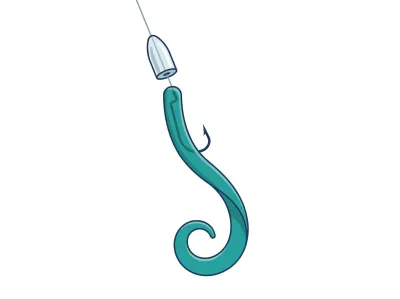
Texas-Rigged Worm
7" ribbon-tail or straight-tail plastic worm
Largemouth bass · Soft plastics
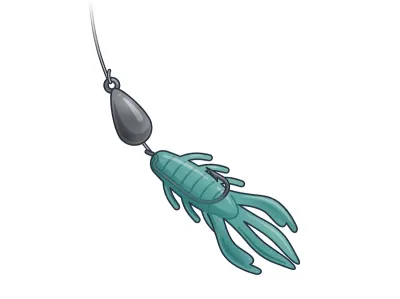
Free Rig
Creature bait or magnum finesse worm
Smallmouth bass · Soft plastics
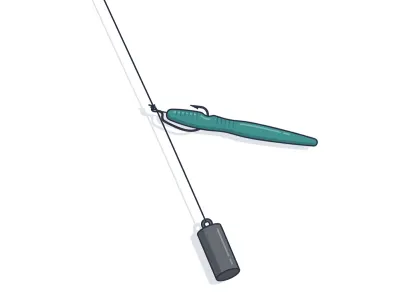
Drop Shot (Finesse Plastic)
4" finesse worm or 3" minnow-profile plastic
Smallmouth bass · Soft plastics
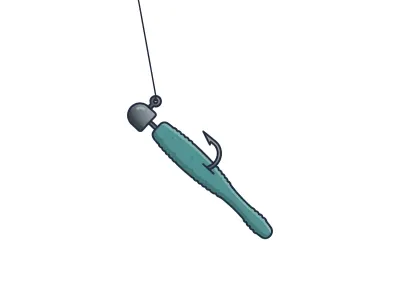
Ned Rig
2.75" finesse stickbait or craw-style Ned bait
Lake trout · Trolling
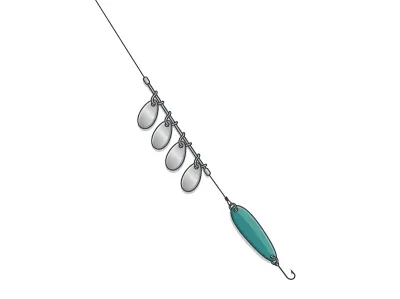
Trout Trolling (spoons/cowbells)
2–3in trolling spoon behind a small cowbell/dodger string
Lake trout · Jigs & bladed
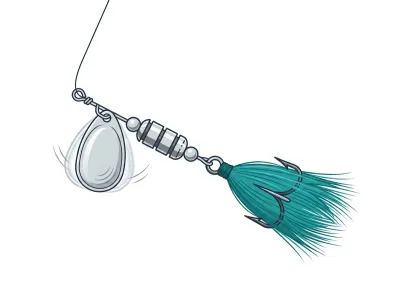
Inline Spinner (Mepps/Blue Fox)
#2–#4 in-line spinner
Full setups, including hooks, weights and line, are on the live map. As an Amazon Associate I earn from qualifying purchases.
DNR stocking records
Stocking history
| Year | Species | Stocked |
|---|---|---|
| 2017 | Lake Trout | 1,313 yearlings |
MN DNR · in their words
From the 2022 survey
Caribou Lake is located about six miles south of Marcell and in the Chippewa National Forest. Fish production is limited due to low fertility associated with oligotrophic conditions. Caribou Lake has a long history of trout management and has been primarily managed for Lake Trout since 1942. Management has consisted mainly of numerous stockings. Most stocked fish were given a specific fin clip to help differentiate between stocked fish and natural reproduction since 1990. Stocking was discontinued after 2017 due to poor returns from stocking and because natural reproduction appeared capable of maintaining the fishery.
The 2016 lake management plan (LMP) lists Lake Trout as a primary management species, with a deep-water gill net goal of 3.0/net. Because quality size Smallmouth Bass have been sampled in most surveys, the plan includes a goal of maintaining the presence of Smallmouth Bass greater than 17 inches. The 2022 targeted survey was conducted to evaluate the status of the Lake Trout population as well as to collect additional pre-regulation data. An experimental Lake Trout regulation will be implemented in the spring, 2023. Lake Trout will have a minimum harvest size limit of 20 inches with a one fish bag limit.
Read the full DNR narrative
Lake Trout are seldom abundant due to the nature of the cold, infertile lakes they inhabit. They often occupy deep, open water area difficult to sample, so low catch rates are not uncommon. Catches in deep-water gill nets have ranged from 1.0 to 4.8/net since 1987. The 2022 catch of 3.3/net attained the management plan goal. No fin clipped fish were sampled. Trout ranged from 7.9 to 32.6 inches with an average length of 17.4 inches in deep-water gill nets. The wide range of lengths suggests recruitment has been consistent. The lack of fin clips indicated these fish originated from natural reproduction.
Past surveys suggest Yellow Perch, especially their early life stages, are an important prey species for Lake Trout in Caribou Lake. Perch were sampled at a rate of 4.3/net in deep-water gill nets. Catches in deep-water gill nets have ranged from 0 to 5.4/net but have averaged about two per net. Lengths ranged from 6.5 to 12.2 inches with an average length of 8.4 inches, suggesting a modest size distribution.
Catches in deep-water gill nets tend to be low and may not reflect the numbers of other species. Three gill nets were set above the thermocline at depths more suitable for cool-water species. Smallmouth Bass were sampled at a rate of 6.0/net, well above catches for comparable lakes yet similar to the previous survey (5.7/net). Lengths ranged from 6.1 to 16.7 inches with an average length of 12.1 inches. A few fish from the shallower gill nets were near 17 inches and one from the deep-water gill nets exceeded 17 inches so the LMP goal was met.
Lake Trout were also sampled in the shallower gill nets at a rate of 1.7/net, suggesting they are utilizing the entire available habitat. The five sampled fish ranged from 16.2 to 32.5 inches.
Other species sampled include Bluegill, Largemouth Bass, Rock Bass, White Sucker and Yellow Perch. The species composition was the same between gear types.
Narrative text from the Minnesota DNR lake survey.
Recent reports
Caribou Lake fishing reports
Recent reports on Caribou Lake from guides, tournaments and regular anglers. Anything posted in the last two weeks also bumps the matching spots on the live map, so you'll see a "matches a recent report" tag on them.
Public water access
Getting on the water
- Caribou Lake (trailer launch)
DNR bathymetry
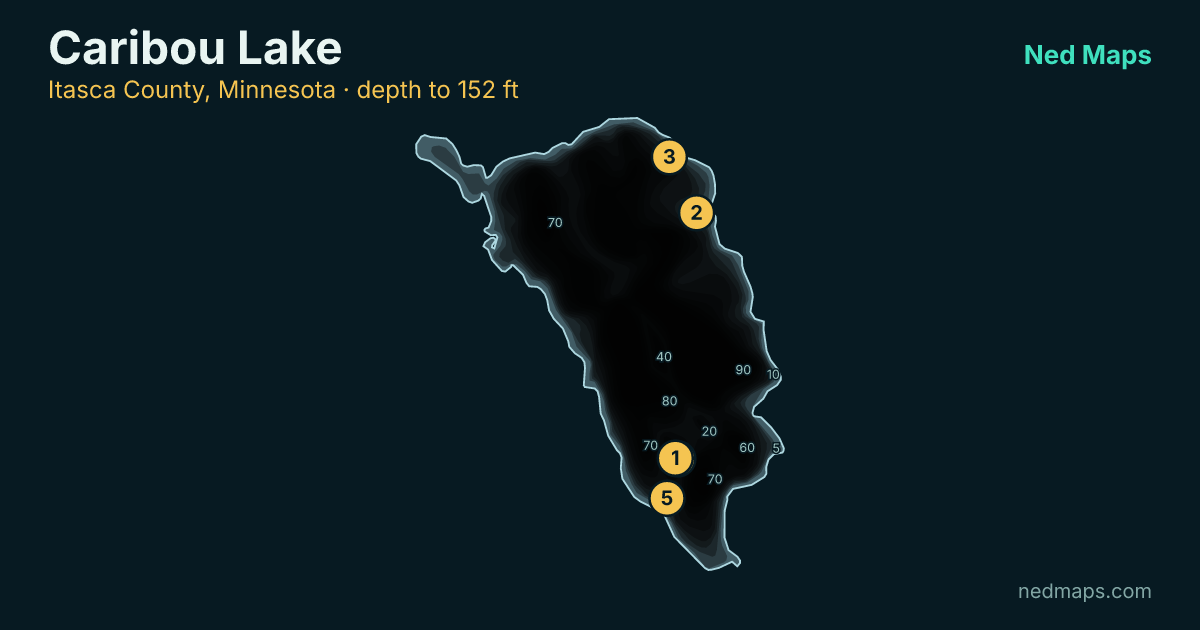
Caribou Lake depth map
Within 30 miles
Nearby lakes
- East Smith Lake · 152 ac · 1.6 mi
- Dead Horse Lake · 105 ac · 1.7 mi
- North Star Lake · 832 ac · 2.1 mi
- Dock Lake · 30 ac · 2.4 mi
- Grave Lake · 525 ac · 2.4 mi
- Big Ole Lake · 217 ac · 3 mi
- Day Lake · 49 ac · 3.2 mi
- Big Island Lake · 244 ac · 3.6 mi
Quick answers
Frequently asked questions
How deep is Caribou Lake?
Caribou Lake reaches 152 ft at its deepest point; about 18% of the lake is littoral (15 ft or shallower).
How big is Caribou Lake?
Caribou Lake covers 247 acres with about 3.5 miles of shoreline.
How clear is the water in Caribou Lake?
DNR Secchi readings on Caribou Lake average 30.8 ft of visibility, clear water for a Minnesota lake.
What fish are in Caribou Lake?
Minnesota DNR surveys (most recently 2022) record walleye, largemouth bass, smallmouth bass, northern pike, bluegill, yellow perch, lake trout, rock bass.
Is Caribou Lake stocked?
Yes. The DNR stocked lake trout in 2017.
Does Caribou Lake have a public access?
Yes. Caribou Lake has one public access site: Caribou Lake (trailer launch).
How big do largemouth bass get in Caribou Lake?
The biggest largemouth bass measured in recent DNR surveys taped 18"; the size-history table on this page tracks the biggest fish in each survey back to 2007.
When was Caribou Lake last surveyed?
The Minnesota DNR last surveyed Caribou Lake in 2022, the most recent of 8 surveys on record.
Page updated .

Featured guide spot
Your guide service here
One featured guide per lake, with your photo, your writeup and a link straight to your booking page. Free through December 31, 2026.
Then $20 a month from January. Cancel any time.
The live map adds today's conditions and ranked spots for Caribou Lake, plus a trip plan you can share:
Open Caribou Lake on the live map → Fished it lately? Write a report