Minnesota · Hubbard County
Boulder Lake Fishing guide
Boulder Lake covers 341 acres in Hubbard County, Minnesota, reaching 28 ft at its deepest point. Average water clarity runs about 11.1 ft. The Minnesota DNR has surveyed the lake 12 times, most recently in 2023, with walleye, largemouth bass, smallmouth bass and northern pike in the nets.
DNR survey data
Fish species
WalleyeLast stocked 2024Fair numbers2.9per gill net18"Typical26"Biggest
Lengths measured · 32 fish
Recent · 2023Lengths measured · 32 fish
2023Lengths measured · 60 fish
2018Lengths measured · 58 fish
2013Lengths measured · 68 fish
2008Largemouth bassOne of the best around118.9per hr (electrofishing)13"Typical18"Biggest
Lengths measured · 266 fish
Recent · 2023Lengths measured · 266 fish
2023Lengths measured · 181 fish
2018Lengths measured · 87 fish
2013Lengths measured · 88 fish
2008Smallmouth bassGood numbers29.5per hr (electrofishing)10"Typical17"Biggest
Lengths measured · 59 fish
Recent · 2023Lengths measured · 59 fish
2023Lengths measured · 23 fish
2018Lengths measured · 35 fish
2013Lengths measured · 20 fish
2008Northern pikeFair numbers6.2per gill net21"Typical30"Biggest
Lengths measured · 56 fish
Recent · 2023Lengths measured · 56 fish
2023Lengths measured · 25 fish
2018Lengths measured · 79 fish
2013Lengths measured · 59 fish
2008BluegillJust a few4.9per trap net6"Typical8"Biggest
Lengths measured · 68 fish
Recent · 2023Lengths measured · 68 fish
2023Lengths measured · 165 fish
2018Lengths measured · 114 fish
2013Lengths measured · 141 fish
2008CrappieJust a few2per trap net8"Typical11"Biggest
Lengths measured · 49 fish
Recent · 2023Lengths measured · 49 fish
2023Lengths measured · 32 fish
2018Lengths measured · 124 fish
2013Lengths measured · 38 fish
2008Yellow perchGood numbers11.1per gill net7"Typical10"Biggest
Lengths measured · 118 fish
Recent · 2023Lengths measured · 118 fish
2023Lengths measured · 473 fish
2018Lengths measured · 95 fish
2013Lengths measured · 53 fish
2008Rates come from standard DNR survey gear (gill nets, trap nets, electrofishing), judged against statewide benchmarks for the same gear, so the same number of fish per net can read differently for two species. Where the standard gear can't count a species reliably, only presence and size are listed. Typical is the middle fish of those measured. Open a row for the full length spread, survey by survey.
How to fish Boulder Lake through the year
Largemouth bass
- Spring
- Largemouth are moving up into the warming bays and flats, staging around wood, docks and new weeds to spawn. At 11.1 ft of clarity, fish them deeper and lighter than usual.
- Early summer
- Largemouth are on the shallow spawning flats and protected bays, where beds go on firm bottom next to isolated cover.
- Summer
- Largemouth are in and along the weeds: cabbage and milfoil edges, matted cover and shade.
- Fall
- Largemouth are chasing bait back onto the flats and into the remaining green weeds, feeding hard and shallow before the freeze.
Smallmouth bass
- Spring
- Smallmouth are on shallow rock, gravel and sand where they spawn. At 11.1 ft of clarity, fish them deeper and lighter than usual.
- Early summer
- Smallmouth are post-spawn on rock points, gravel bars and the adjacent breaks.
- Summer
- Smallmouth are on rock humps, points and hard-bottom breaks.
- Fall
- Smallmouth are bunched tight on deep rock, so find one and you have found the school.
Season patterns for each species. Open the live map for today's wind, light and water temp.
Size history
Biggest fish by survey year
| Survey year | Largemouth bass | Smallmouth bass | Walleye |
|---|---|---|---|
| 2023 | 18" | 17" | 26" |
| 2018 | 17" | 14" | 26" |
| 2013 | 18" | 15" | 26" |
| 2008 | 19" | 16" | 26" |
| 2003 | 18" | 16" | 21" |
| 1998 | 18" | 7" | 22" |
| 1993 | 14" | — | 25" |
Longest fish measured by DNR survey crews in each year's nets. Survey gear samples the population, so the lake usually holds larger fish than any survey measured.
Suggested tackle
What to bring
Top presentations for this lake's structure and clarity:
Largemouth bass · Soft plastics
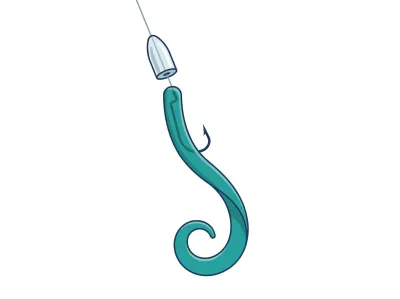
Texas-Rigged Worm
7" ribbon-tail or straight-tail plastic worm
Largemouth bass · Soft plastics
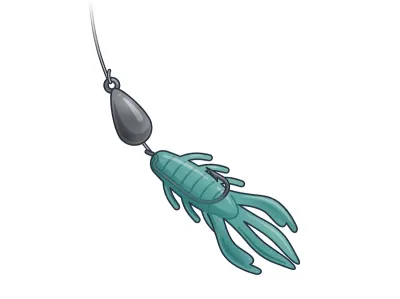
Free Rig
Creature bait or magnum finesse worm
Smallmouth bass · Soft plastics
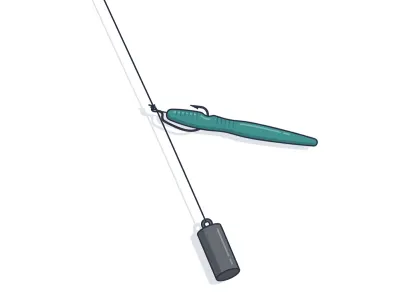
Drop Shot (Finesse Plastic)
4" finesse worm or 3" minnow-profile plastic
Smallmouth bass · Jigs & bladed
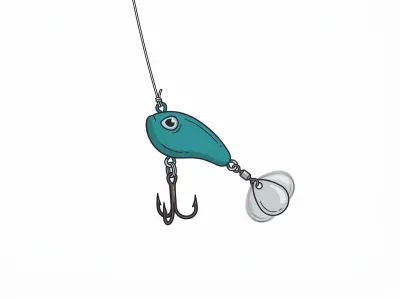
Tail Spinner
Compact lead body with a free-spinning blade on the tail
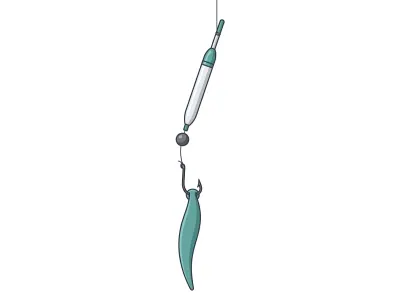
Walleye · Soft plastics
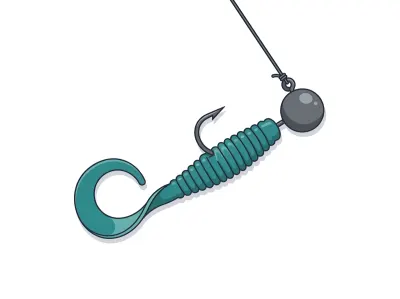
Curly-Tail Grub on Jig
3" curly-tail grub threaded on a round jighead
Full setups, including hooks, weights and line, are on the live map. As an Amazon Associate I earn from qualifying purchases.
DNR stocking records
Stocking history
| Year | Species | Stocked |
|---|---|---|
| 2024 | Walleye | 881 fingerlings · 445 yearlings |
| 2022 | Walleye | 3,960 fingerlings |
| 2020 | Walleye | 4,500 fingerlings |
| 2018 | Walleye | 5,558 fingerlings |
| 2016 | Walleye | 4,608 fingerlings |
MN DNR · in their words
From the 2023 survey
Boulder Lake is located in southern Hubbard County, 1.5 miles northeast of Dorset. Boulder has a surface area of 340 acres and a maximum depth of 28 feet. A public access with a concrete ramp is located on the west shore. Boulder provides angling opportunities for Walleye, Northern Pike, panfish, Largemouth Bass, and Smallmouth Bass.
The Minnesota Department of Natural Resources (DNR) has classified Minnesota's lakes into 43 different types based on physical, chemical, and other characteristics. Boulder is in lake class 31. Class 31 lakes generally have hard water and a regularly shaped shoreline. Other class 31 lakes in the Park Rapids management area include Second, Fifth, Sixth, and Seventh Crow Wing Lakes, Duck, Evergreen, Hattie, Hinds, and Lower Twin.
Read the full DNR narrative
Walleye abundance was down from past surveys but within the range typical for this lake class. Sampled Walleye ranged in length from 9.2 to 26.6 inches and had an average length of 17.4 inches. Yellow Perch, an important forage species for Walleye were sampled in moderate numbers with fish measured up to 10.2 inches.
Northern Pike were sampled in moderate numbers for this lake class, similar to past surveys. Sampled Northern Pike had an average length of 21.7 inches with fish measured up to 30.1 inches.
Boulder supports both Largemouth Bass and Smallmouth Bass with Largemouth Bass the more abundant of the two species. Anglers will find good numbers of bass in the 12-15 inch size range. Boulder has good water quality, submerged and emergent vegetation that provides excellent habitat for bass and panfish.
Present and past surveys have shown the panfish population to fluctuate from low to moderate numbers. Anglers will find good numbers of Bluegill and Pumpkinseed in the 6-8 inch size range and Black Crappie in the 9-10 inch size range.
Other species sampled included moderate numbers of White Sucker and Yellow Bullhead, and low numbers of Rock Bass.
Faucet snails, an aquatic invasive species (AIS) have been identified in Boulder. To avoid spreading AIS, lake users are required to remove all aquatic plants and animals from their watercraft and drain all water from their boat before leaving the lake.
Narrative text from the Minnesota DNR lake survey.
Recent reports
Boulder Lake fishing reports
Recent reports on Boulder Lake from guides, tournaments and regular anglers. Anything posted in the last two weeks also bumps the matching spots on the live map, so you'll see a "matches a recent report" tag on them.
Public water access
Getting on the water
- Boulder Lake (trailer launch)
DNR bathymetry
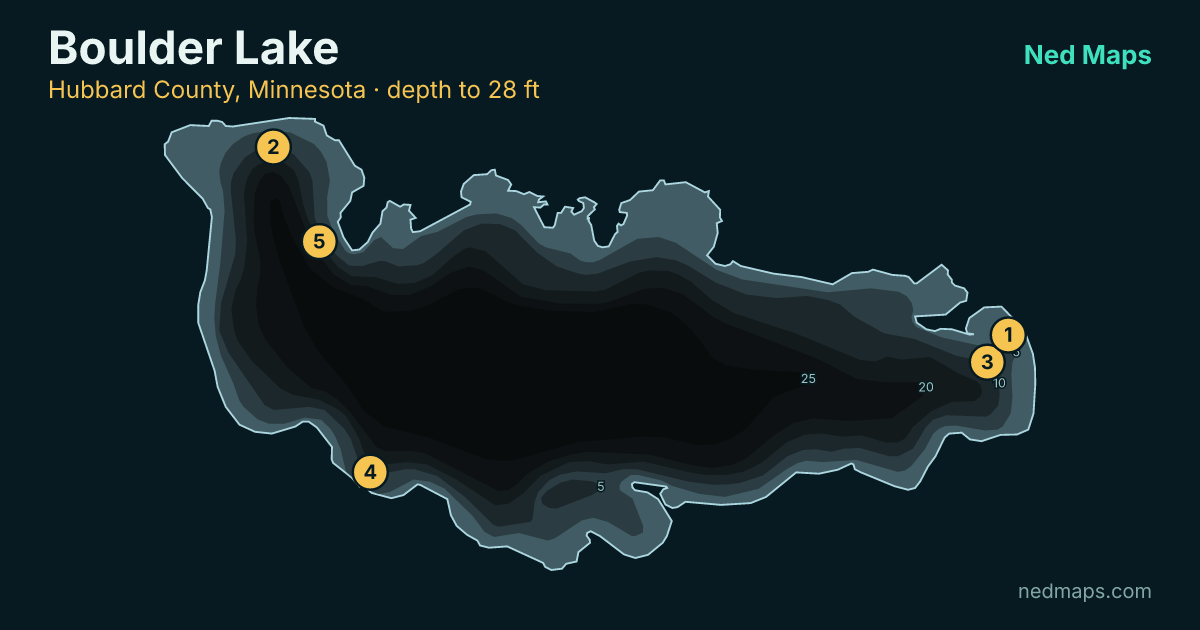
Boulder Lake depth map
Within 30 miles
Nearby lakes
- Round Lake · 45 ac · 0.8 mi
- Ida Lake · 75 ac · 1.5 mi
- Little Sand Lake · 410 ac · 1.6 mi
- Loon Lake · 82 ac · 2 mi
- Shallow Lake · 284 ac · 2.4 mi
- Gilmore Lake · 93 ac · 2.5 mi
- Belle Taine Lake · 1,497 ac · 2.5 mi
- Big Sand Lake · 1,639 ac · 2.7 mi
Quick answers
Frequently asked questions
How deep is Boulder Lake?
Boulder Lake reaches 28 ft at its deepest point; about 53% of the lake is littoral (15 ft or shallower).
How big is Boulder Lake?
Boulder Lake covers 341 acres with about 4.9 miles of shoreline.
How clear is the water in Boulder Lake?
DNR Secchi readings on Boulder Lake average 11.1 ft of visibility, clear water for a Minnesota lake.
What fish are in Boulder Lake?
Minnesota DNR surveys (most recently 2023) record walleye, largemouth bass, smallmouth bass, northern pike, bluegill, crappie, yellow perch, rock bass.
Is Boulder Lake stocked?
Yes. The DNR stocked walleye in 2024; the stocking table on this page lists every year back to 2016.
Does Boulder Lake have a public access?
Yes. Boulder Lake has one public access site: Boulder Lake (trailer launch).
How big do largemouth bass get in Boulder Lake?
The biggest largemouth bass measured in recent DNR surveys taped 18"; the size-history table on this page tracks the biggest fish in each survey back to 1993.
When was Boulder Lake last surveyed?
The Minnesota DNR last surveyed Boulder Lake in 2023, the most recent of 12 surveys on record.
Page updated .

Featured guide spot
Your guide service here
One featured guide per lake, with your photo, your writeup and a link straight to your booking page. Free through December 31, 2026.
Then $20 a month from January. Cancel any time.
The live map adds today's conditions and ranked spots for Boulder Lake, plus a trip plan you can share:
Open Boulder Lake on the live map → Fished it lately? Write a report