Minnesota · Martin County
Amber Lake Fishing guide
Amber Lake sits in Martin County, Minnesota, and covers 182 acres, reaching 19 ft at its deepest point. Secchi readings average around 1.6 ft of visibility. The Minnesota DNR has surveyed the lake 12 times, most recently in 2022, with walleye, largemouth bass, northern pike and bluegill in the nets.
DNR survey data
Fish species
WalleyeLast stocked 2025Fair numbers2.5per gill net15"Typical26"Biggest
Lengths measured · 22 fish
Recent · 2022Lengths measured · 22 fish
2022Lengths measured · 9 fish
2018Only 9 fish measured that year — too few to read as a shape.
Lengths measured · 22 fish
2011Lengths measured · 3 fish
2005Only 3 fish measured that year — too few to read as a shape.
No recent survey rating.
BluegillJust a few13.9per trap net7"Typical9"Biggest
Lengths measured · 125 fish
Recent · 2022Lengths measured · 125 fish
2022Lengths measured · 5 fish
2018Only 5 fish measured that year — too few to read as a shape.
Lengths measured · 7 fish
2011Only 7 fish measured that year — too few to read as a shape.
Lengths measured · 10 fish
2005CrappieFair numbers10.7per trap net9"Typical12"Biggest
Lengths measured · 112 fish
Recent · 2022Lengths measured · 112 fish
2022Lengths measured · 141 fish
2018Lengths measured · 360 fish
2011Lengths measured · 298 fish
2005Channel catfishGood numbers4.5per gill net16"Typical24"Biggest
Lengths measured · 15 fish
Recent · 2022Lengths measured · 15 fish
2022Lengths measured · 27 fish
2018Lengths measured · 18 fish
2011Lengths measured · 4 fish
2005Only 4 fish measured that year — too few to read as a shape.
Rates come from standard DNR survey gear (gill nets, trap nets, electrofishing), judged against statewide benchmarks for the same gear, so the same number of fish per net can read differently for two species. Where the standard gear can't count a species reliably, only presence and size are listed. Typical is the middle fish of those measured. Open a row for the full length spread, survey by survey.
How to fish Amber Lake through the year
Walleye
- Spring
- Walleye are shallow, on and just off the spawning flats and the first green weeds. In 1.6 ft of visibility, they sit shallower than you think.
- Early summer
- Walleye are setting up on the outside weed edge, points and shallow structure.
- Summer
- Walleye are working the weed edge, points and any wind-blown structure.
- Fall
- Walleye are packing onto the sharpest breaks and points as the water cools, in big schools with short windows. A 19-ft bowl cools fast, so the fall window comes early here.
Largemouth bass
- Spring
- Largemouth are moving up into the warming bays and flats, staging around wood, docks and new weeds to spawn. In 1.6 ft of visibility, they sit shallower than you think.
- Early summer
- Largemouth are on the shallow spawning flats and protected bays, where beds go on firm bottom next to isolated cover.
- Summer
- Largemouth are in and along the weeds: cabbage and milfoil edges, matted cover and shade.
- Fall
- Largemouth are chasing bait back onto the flats and into the remaining green weeds, feeding hard and shallow before the freeze. A 19-ft bowl cools fast, so the fall window comes early here.
Season patterns for each species. Open the live map for today's wind, light and water temp.
Size history
Biggest fish by survey year
| Survey year | Walleye | Largemouth bass | Channel catfish |
|---|---|---|---|
| 2022 | 26" | 19" | 24" |
| 2018 | 21" | — | 24" |
| 2011 | 19" | 16" | 21" |
| 2005 | 7" | — | 16" |
| 2001 | 16" | — | 21" |
| 1997 | 18" | 17" | 23" |
| 1993 | 23" | 19" | 32" |
Longest fish measured by DNR survey crews in each year's nets. Survey gear samples the population, so the lake usually holds larger fish than any survey measured.
Suggested tackle
What to bring
Top presentations for this lake's structure and clarity:
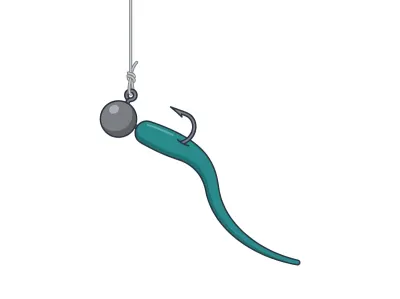
Walleye · Trolling
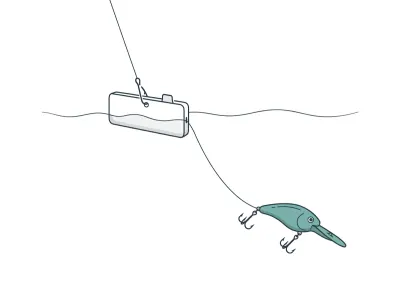
Planer Board Spread
4–6" crankbait or a 5–6 ft crawler harness run out to the side on an in-line planer board
Largemouth bass · Hardbaits
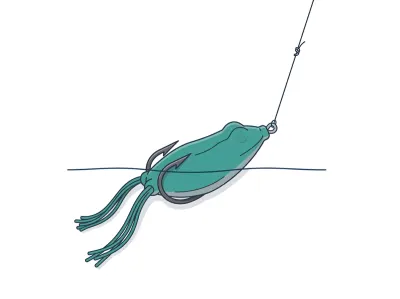
Hollow-Body Frog
3–3.5" hollow-body frog
Largemouth bass · Soft plastics

Texas-Rigged Worm
7" ribbon-tail or straight-tail plastic worm
Channel catfish · Live bait
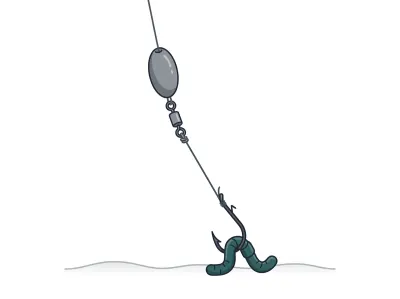
Bullhead Bottom Rig
nightcrawler chunk or whole worm
Full setups, including hooks, weights and line, are on the live map. As an Amazon Associate I earn from qualifying purchases.
DNR stocking records
Stocking history
| Year | Species | Stocked |
|---|---|---|
| 2025 | Walleye | 54,000 fry |
| 2024 | Muskellunge | 48 fingerlings |
| 2024 | Walleye | 54,000 fry · 146 yearlings |
| 2023 | Walleye | 54,000 fry |
| 2022 | Muskellunge | 48 fingerlings |
| 2022 | Walleye | 54,000 fry |
| 2021 | Muskellunge | 48 fingerlings |
| 2021 | Walleye | 54,000 fry |
| 2019 | Walleye | 54,000 fry · 2,214 fingerlings |
| 2018 | Muskellunge | 48 fingerlings |
| 2018 | Walleye | 179 fingerlings · 141 yearlings |
| 2016 | Muskellunge | 48 fingerlings |
Stocking records before 2016 omitted.
MN DNR · in their words
From the 2022 survey
Amber Lake is a 180 acre lake with a max depth of 19 feet and 108 acres of littoral zone (15 feet or less). Amber Lake is part of the "Fairmont Chain of Lakes" and is within the city limits of Fairmont. The Fairmont Chain of Lakes (from headwaters to mouth) is comprised of Amber Lake, Hall Lake, Budd Lake, Sisseton Lake, and George Lake which are natural impoundments of Center Creek in the Blue Earth River Watershed. A dam built on George Lake 1939 increased water storage and depth of each lake. Dredging in the 1970's to early 1990's also increased the depth of Budd and Hall Lakes. Amber Lake is the first lake and one of the deepest of the lakes with a watershed-to-lake ratio of 59 to 1 indicating a large influence of the watershed effects in the lake. The watershed has many factors that contribute to degraded conditions within Amber Lake. Agriculture and municipal sources of pollution are both present within the watershed. Many miles of agricultural tile move nutrient rich water to Amber Lake without wetland treatment and the city of Fairmont operates a storm water runoff system that empties roadway drainage into the lakes. These are the same lakes that the city of Fairmont draws drinking water (Budd Lake directly downstream), so it is imperative to reduce negative influences of water impairments to improve the water quality in the Fairmont Chain of Lakes.
Amber Lake is managed primarily for Walleye and Muskellunge while Yellow Perch, Black Crappie and Bluegill are managed secondarily. Fish population assessments have been conducted every 4 to 7 years since 1982 with an initial assessment conducted in 1971. A recent fish population assessment was conducted during the week of August 22, 2022 to analyze the current species composition in Hall Lake and to determine changes in the fish community. Fish community changes over time tell us a lot about the health of an aquatic environment.
Read the full DNR narrative
During the fish assessment, water quality in Amber Lake was poor due to a heavy algae bloom. The algae bloom contained blue-green algae and surface water pH (9.25) was higher than Western Corn Belt Plain lakes (8.3-9.0). When pH is high, it is a result of a chemical process of blue-green algae photosynthesis in the upper part of the water column and causes alkaline water that can affect fish gills. This can have detrimental consequences to the fish community by forcing them to deeper depths. However, the deeper water, during an algae bloom, is often characterized by low dissolved oxygen. At the time of the survey dissolved oxygen was below 5.0 ppm (considered stressful to fish) as depths increased to greater than 12 feet. The combination of higher pH at the surface and lower dissolved oxygen at greater depths puts fish into a "squeeze" by forcing them to the middle of the water column. As the bloom continues to progress, this squeeze can be very stressful and/or result in water that is inadequate to sustain life if the bloom occurs over a long period of time. The final result can trigger a summerkill of fish, particularly those sensitive to low dissolved oxygen such as Walleye, Crappies, Yellow Perch, Muskellunge, and Bluegill. Fortunately, Amber Lake did not experience a summerkill and water quality improved shortly after the algae bloom.
Since Walleye are the primary species of management, they are most important to track in Amber Lake. Since 1993, Walleye have been at or below the long-term gill net catch rate average of 3 per gillnet. In 2022, the catch rate was 2.5 per gillnet while the trap net catch rate was 1.9 per trap net. The gill net and trap net catch rates both increased from 2018, when the gill net catch was 0.5 per net and the trap net catch was 1 per net. Lower Mississippi Strain (LMS, Lake Sarah egg take) Walleye fry were stocked in Amber Lake in 2019, 2021, and 2022. Additionally, 2,214 fingerling Walleye (Upper Mississippi River Strain) were stocked in 2019. Walleye in the gill net and trap net sample ranged in length from 6.6 to 26.3 inches with 4 different ages (Ages 1-4). Three of the 4 year age groups present were from years where LMS Walleye fry were stocked, indicating that LMS Walleye are establishing well each year. Average size of Walleye in the sample was good with more than 50% of the fish over 15 inches. Health of each fish appeared good too. Therefore, the Walleye population appears to be doing well and potentially increasing in abundance due to a change in stocking strategy utilizing LMS Walleye fry. Angling for Walleye has been good in Amber Lake since 2020 and should continue with most fish at a harvestable size.
Muskellunge have been managed in Amber Lake and the entire Fairmont Chain of Lakes since 2016. Muskie fingerling have been stocked in even years with 314 fingerling in each year, except 2020 due to Covid related shutdown of spring egg take operations. To make up for the missed stocking in 2020, the Fairmont Chain of Lakes was stocked in 2021. No Muskies were sampled during netting in Amber Lake in 2022, but reports from anglers indicate that the original stocking in 2016 was successful and Muskies near 40 inches have been reported. One 37 inch Muskie was sampled in a trap net on Hall Lake during the summer of 2022. A large frame trap net survey will be conducted on the Fairmont Chain of Lakes in 2024 with recapture surveys in 2025 and 2026 (if necessary). Continued Muskie management will help to add a consistent top predator to Amber Lake and the Fairmont Chain that historically was missing within the Chain of Lakes.
Yellow Perch relative abundance has been less than the long-term gill net catch rate of 15.9 since 1982 except 2011 when the catch rate was 39.0 per gill net. In 2022 the catch rate was 2.5 per gill net. Yellow Perch in the sample ranged in length from 8 to just under 10 inches. Yellow Perch have not been stocked into Amber Lake. They are self-sustaining, but potentially limited by habitat degradation due to low aquatic plant and woody debris abundance. Additionally recently illegally introduced Yellow Bass in 2013 have now taken hold in Amber Lake and could be occupying a similar niche and potentially exclude Yellow Perch to some degree. Continued monitoring is necessary and potential stocking may be warranted in the future.
Black Crappie have exhibited a different trend, compared to Yellow Perch, since 1987. Generally, the relative abundance of Black Crappie has remained above or near the long-term gill net average of 6.7 per net. Since 1987, 5 out of 7 fish assessments have had Black Crappie relative abundance near or exceeding the long-term average of just under 19 per trap net. More impressive is an increase in size structure of Black Crappie since 1997. Currently, 100% of the fish in the sample were over 7.9 inches. Black Crappie ranged in length from just under 8 to nearly 12.5 inches with an average length of 9.4 inches in the trap net sample. Health of Black Crappie was above average with many plump fish. Overall, Black Crappie have been resilient in the Fairmont Chain of Lakes. Black Crappie are able to thrive in degraded aquatic systems and can spawn without aquatic vegetation or woody debris. Angling for Black Crappie should remain good in the Fairmont Chain of Lakes particularly if Yellow Bass don't become a nuisance while fishing for crappie.
A bright spot in the Amber Lake fish community is Bluegill abundance. Bluegill were caught in trap nets at a rate of 13.9 per net, the greatest catch rate ever observed in Amber Lake. Bluegill ranged from nearly 4 inches to just over 9 inches with a mean length in the 7 to 8 inch range. Overall body condition of each fish was excellent indicating ample food exists. All signs point to excellent angling for Bluegill which will provide a unique opportunity in Amber Lake over the next several years. With an average length approaching 8 inches, many harvestable Bluegill should be available.
Other species sampled in Amber Lake were Bigmouth Buffalo, Black Bullhead, Channel Catfish, Common Carp, Freshwater Drum, Largemouth Bass, Quillback Carpsucker, White Crappie, White Sucker, Yellow Bass, and Yellow Bullhead. These species, except Yellow Bass, are typical residents of degraded aquatic lakes. Channel Catfish and Freshwater Drum have been the most abundant of the species listed since the early 1990's. Increases in Channel Catfish and Freshwater Drum relative abundance can lead to competition with Walleye, Yellow Perch, and even Black Crappie. However, it appears that Yellow Perch are the most affected. Interestingly, Common Carp relative abundance has generally declined in Amber Lake since 2001. However, there was a slight increase in numbers in 2022 with 6 per gill net and 18.7 per trap net. This slight increase in catch rate during the survey follows 2 commercial seine hauls done towards the beginning of March 2022, when over 1200 pounds per acre of Bigmouth Buffalo and Common Carp were removed. There may be an ability to continue to suppress the Common Carp population through exclusion of backwater spawning habitat and continued predator management including Muskie stocking. However, in 2012, the Fairmont Chain of Lakes was confirmed to have Yellow Bass. Yellow Bass were most likely introduced through illegal stocking. Since 2012, they have expanded in relative abundance in Hall, Budd, Sisseton, and George Lakes. During 2022, Yellow Bass were sampled for the first time in Amber Lake with 12 per gill net (0 per trap net). Several high water events in 2018 and 2019 could have led to an introduction of Yellow Bass into Amber Lake, with those fish not showing up in the summer 2018 netting.
Overall, it appears that Amber Lake is maintaining an adequate abundance of Walleye, potentially increasing. Yellow Perch, however, appear to be decreasing and stocking may be necessary to sustain the population. Black Crappie and Bluegill are doing much better in Amber Lake and both could produce a decent fishery over the next several years. Habitat improvement projects could positively influence the fishery. There are options to allow trees that fall into the lake to stay and provide woody habitat for refuge or spawning. Get out and enjoy Amber Lake, a great opportunity awaits!
Narrative text from the Minnesota DNR lake survey.
Recent reports
Amber Lake fishing reports
Recent reports on Amber Lake from guides, tournaments and regular anglers. Anything posted in the last two weeks also bumps the matching spots on the live map, so you'll see a "matches a recent report" tag on them.
Public water access
Getting on the water
- Amber Lake (trailer launch)
- Amber Lake South (carry-in)
DNR bathymetry
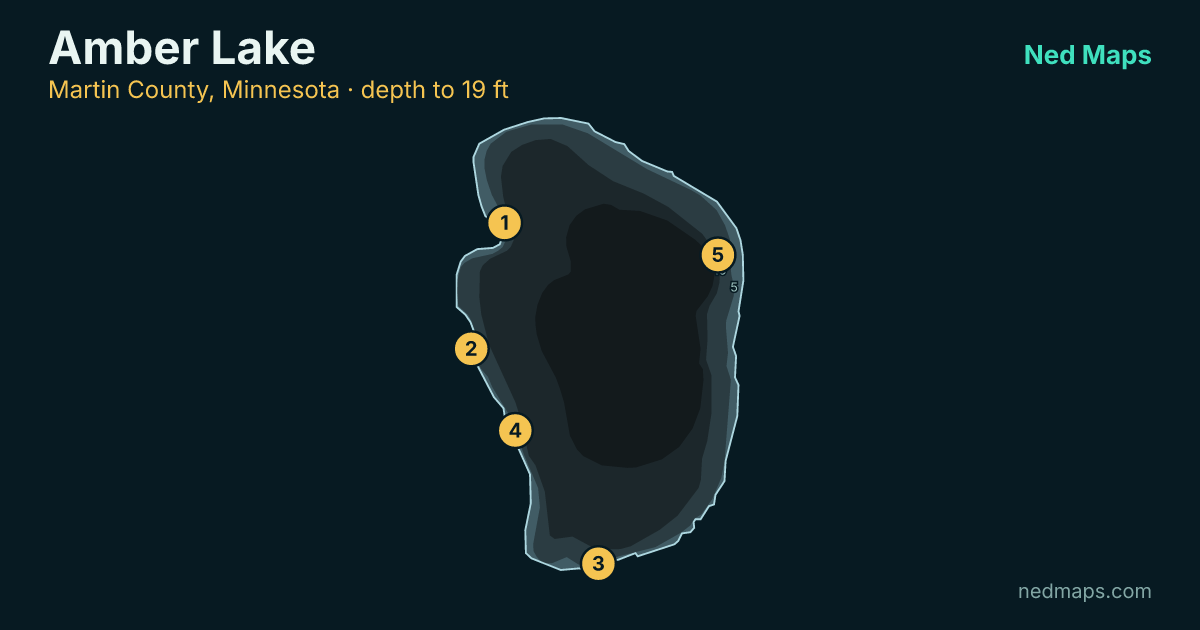
Amber Lake depth map
Within 30 miles
Nearby lakes
- Hall Lake · 548 ac · 1.1 mi
- Budd Lake · 228 ac · 2.3 mi
- Sisseton Lake · 138 ac · 3.1 mi
- Willmert (main bay) Lake · 335 ac · 3.2 mi
- George Lake · 83 ac · 3.8 mi
- Imogene Lake · 186 ac · 5.9 mi
- South Silver Lake · 252 ac · 6 mi
- Bright Lake · 639 ac · 6.2 mi
Quick answers
Frequently asked questions
How deep is Amber Lake?
Amber Lake reaches 19 ft at its deepest point with a mean depth of 11 ft; about 59% of the lake is littoral (15 ft or shallower).
How big is Amber Lake?
Amber Lake covers 182 acres with about 2.2 miles of shoreline.
How clear is the water in Amber Lake?
DNR Secchi readings on Amber Lake average 1.6 ft of visibility, on the stained end for a Minnesota lake.
What fish are in Amber Lake?
Minnesota DNR surveys (most recently 2022) record walleye, largemouth bass, northern pike, bluegill, crappie, yellow perch, channel catfish.
Is Amber Lake stocked?
Yes. The DNR stocked walleye in 2025; the stocking table on this page lists every year back to 2016.
Does Amber Lake have a public access?
Yes. Amber Lake has 2 public access sites, including Amber Lake (trailer launch).
How big do walleye get in Amber Lake?
The biggest walleye measured in recent DNR surveys taped 26"; the size-history table on this page tracks the biggest fish in each survey back to 1993.
When was Amber Lake last surveyed?
The Minnesota DNR last surveyed Amber Lake in 2022, the most recent of 12 surveys on record.
Page updated .

Featured guide spot
Your guide service here
One featured guide per lake, with your photo, your writeup and a link straight to your booking page. Free through December 31, 2026.
Then $20 a month from January. Cancel any time.
The live map adds today's conditions and ranked spots for Amber Lake, plus a trip plan you can share:
Open Amber Lake on the live map → Fished it lately? Write a report