DNR survey data · statewide
6 Overlooked Smallmouth Bass Lakes in Minnesota
Smallmouth bass water that fishes above its reputation, picked from 730 surveyed Minnesota lakes by DNR catch rate, fish size and trophy record.
By David Berget · Published 2026-08-17
DNR surveys have recorded smallmouth bass in 730 Minnesota lakes. Here are 6 of them.
Each card says what its lake is good for, because the lakes with the most smallmouth bass and the lakes with the biggest smallmouth bass are usually different lakes.
Numbers and size. Electrofishing turned up 45 smallmouth bass per hour, and about 1 in 333 of them went 20 inches or better, high for water like this.
- 289 acres
- 28 ft deep
- biggest 18 in
- surveyed 2024
Lots of fish. Electrofishing turned up 40.9 smallmouth bass per hour, above the DNR's high mark of 40.
- 67 acres
- 32 ft deep
- biggest 18 in
- surveyed 2016
- carry-in access only
Big fish. 43% of the smallmouth bass measured here were 15 inches or better.
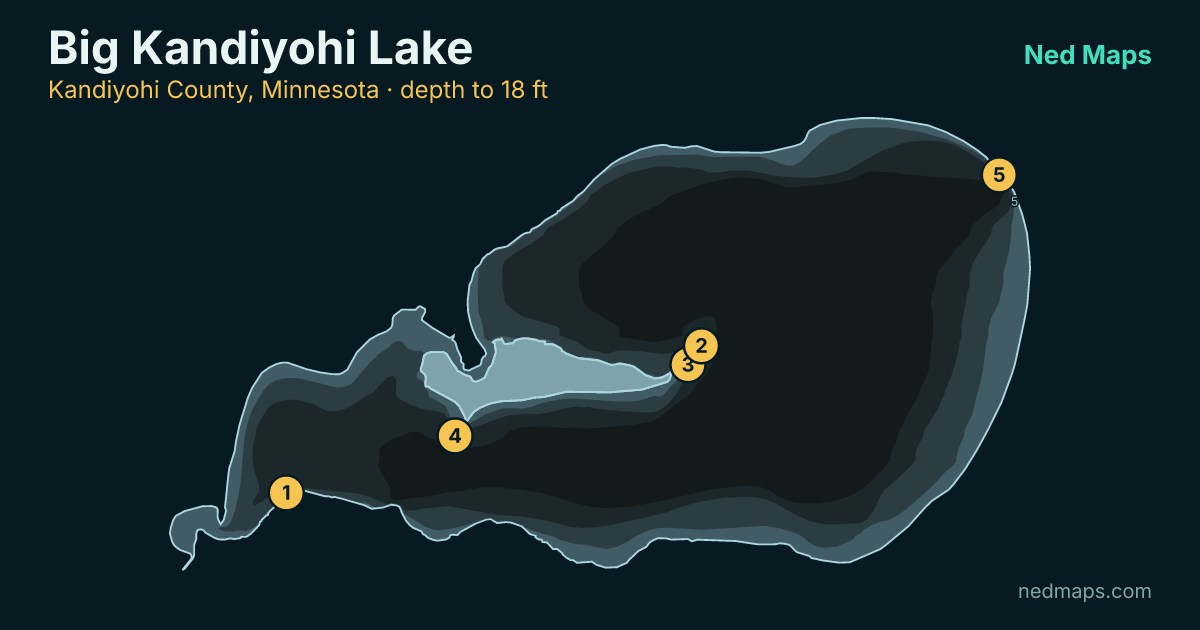
- 2,730 acres
- 18 ft deep
- biggest 17 in
- surveyed 2024
Big fish. 44% of the smallmouth bass measured here were 15 inches or better.
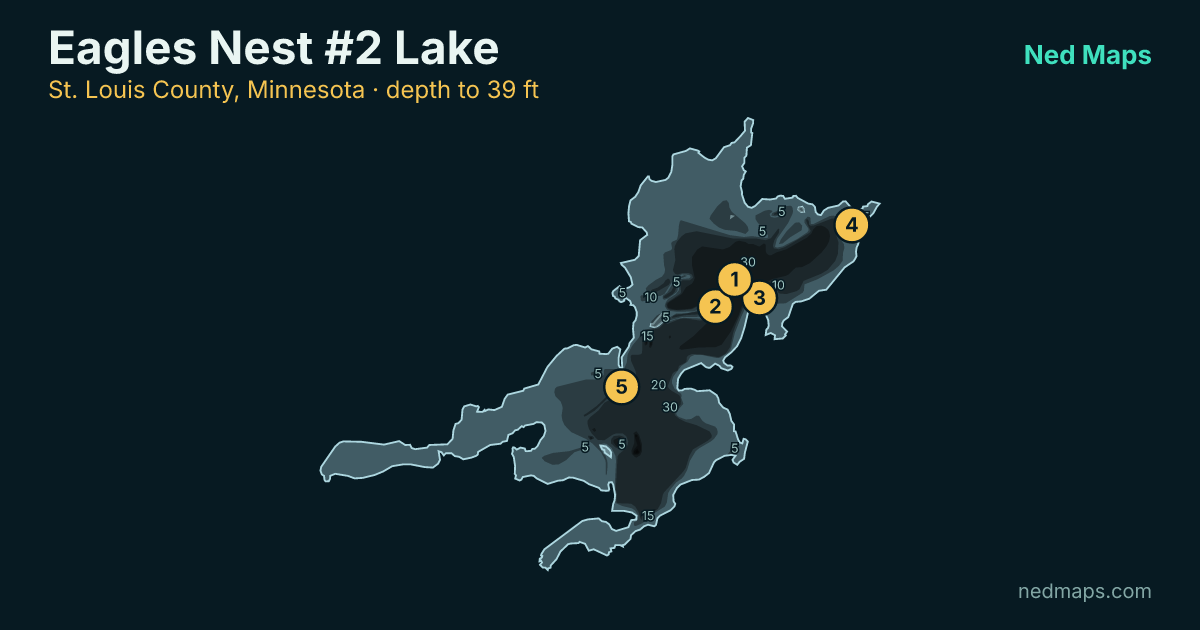
- 388 acres
- 39 ft deep
- biggest 19 in
- surveyed 2025
Quiet water. Electrofishing turned up 29.5 smallmouth bass per hour, above the DNR's moderate mark of 20.
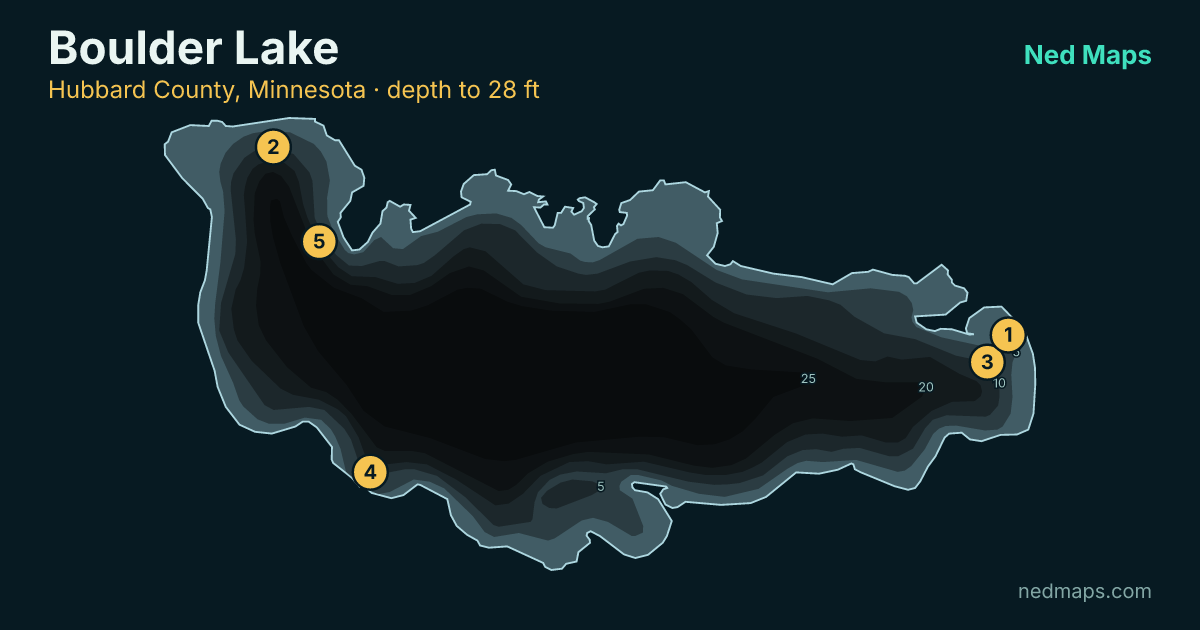
- 341 acres
- 28 ft deep
- biggest 17 in
- surveyed 2023
Quiet water. Electrofishing turned up 32.9 smallmouth bass per hour, above the DNR's moderate mark of 20.
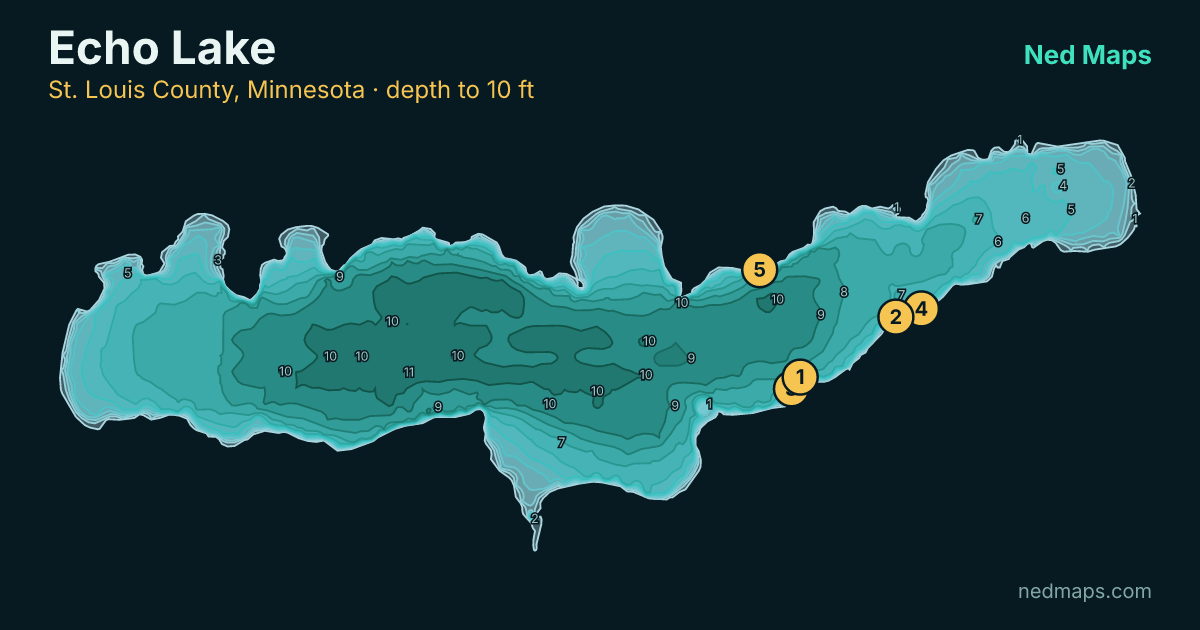
- 1,142 acres
- 10 ft deep
- biggest 17 in
- surveyed 2025
How these smallmouth bass lakes were picked
Smallmouth bass are counted on the same shoreline electrofishing run as largemouth, against a much lower bar: 20 smallmouth bass per hour at the DNR's moderate mark, where largemouth need 50. The lower bar reflects the gear, not easier grading: smallmouth sit on rock and current where fewer of them are ever within reach of a shocker, so the same number means more. Quality size is 15 inches. All of it comes from survey counts, not fishing reports.
Of the 730 lakes with smallmouth bass on record, 295 clear the habitat gate: under 60 feet deep, with at least 50% of the water in the shallow zone where the food is. Anything already ranked among the state's best-known smallmouth bass water is set aside, since those lakes are already well covered. These 6 are what is left after keeping only the lakes surveyed since 2016 that cleared the mark above, one entry per water body, each with a public boat launch. Full methodology: how the grades work.