Minnesota · Itasca County
Trout Lake Fishing guide
Trout Lake sits in Itasca County, Minnesota, and covers 1,862 acres, reaching 135 ft at its deepest point. Secchi readings average around 16.2 ft of visibility. The Minnesota DNR has surveyed the lake 17 times, most recently in 2025, with walleye, largemouth bass, smallmouth bass and northern pike in the nets.
DNR survey data
Fish species
WalleyeLast stocked 2025Excellent numbers8.3per gill net15"Typical24"Biggest
Lengths measured · 124 fish
Recent · 2025Lengths measured · 124 fish
2025Lengths measured · 81 fish
2018Lengths measured · 167 fish
2013Lengths measured · 85 fish
2010Smallmouth bassPresent7.7per gill net16"Typical20"Biggest
Lengths measured · 115 fish
Recent · 2025Lengths measured · 115 fish
2025Lengths measured · 159 fish
2018Lengths measured · 80 fish
2013Lengths measured · 117 fish
2010Northern pikeJust a few4.4per gill net22"Typical31"Biggest
Lengths measured · 66 fish
Recent · 2025Lengths measured · 66 fish
2025Lengths measured · 99 fish
2018Lengths measured · 44 fish
2013Lengths measured · 43 fish
2010BluegillPresent2.9per gill net7"Typical9"Biggest
Lengths measured · 43 fish
Recent · 2025Lengths measured · 43 fish
2025Lengths measured · 108 fish
2020Lengths measured · 213 fish
2018Lengths measured · 97 fish
2013CrappiePresent1.9per gill net10"Typical12"Biggest
Lengths measured · 28 fish
Recent · 2025Lengths measured · 28 fish
2025Lengths measured · 31 fish
2018Lengths measured · 10 fish
2013Lengths measured · 14 fish
2010Yellow perchGood numbers9.5per gill net6"Typical9"Biggest
Lengths measured · 142 fish
Recent · 2025Lengths measured · 142 fish
2025Lengths measured · 113 fish
2018Lengths measured · 877 fish
2013Lengths measured · 231 fish
2010Rock bassOne of the best around7.6per gill net7"Typical10"Biggest
Lengths measured · 114 fish
Recent · 2025Lengths measured · 114 fish
2025Lengths measured · 170 fish
2018Lengths measured · 156 fish
2013Lengths measured · 121 fish
2010Rates come from standard DNR survey gear (gill nets, trap nets, electrofishing), judged against statewide benchmarks for the same gear, so the same number of fish per net can read differently for two species. Where the standard gear can't count a species reliably, only presence and size are listed. Typical is the middle fish of those measured. Open a row for the full length spread, survey by survey.
How to fish Trout Lake through the year
Walleye
- Spring
- Walleye are shallow, on and just off the spawning flats and the first green weeds. At 16.2 ft of clarity, fish them deeper and lighter than usual.
- Early summer
- Walleye are setting up on the outside weed edge, points and shallow structure.
- Summer
- Walleye are working the weed edge, points and any wind-blown structure. On a lake that drops to 135 ft, check the deep edge of that structure too.
- Fall
- Walleye are packing onto the sharpest breaks and points as the water cools, in big schools with short windows.
Largemouth bass
- Spring
- Largemouth are moving up into the warming bays and flats, staging around wood, docks and new weeds to spawn. At 16.2 ft of clarity, fish them deeper and lighter than usual.
- Early summer
- Largemouth are on the shallow spawning flats and protected bays, where beds go on firm bottom next to isolated cover.
- Summer
- Largemouth are in and along the weeds: cabbage and milfoil edges, matted cover and shade. On a lake that drops to 135 ft, check the deep edge of that structure too.
- Fall
- Largemouth are chasing bait back onto the flats and into the remaining green weeds, feeding hard and shallow before the freeze.
Season patterns for each species. Open the live map for today's wind, light and water temp.
Size history
Biggest fish by survey year
| Survey year | Walleye | Largemouth bass | Smallmouth bass |
|---|---|---|---|
| 2025 | 24" | 16" | 20" |
| 2018 | 26" | 17" | 19" |
| 2013 | 25" | 17" | 19" |
| 2010 | 27" | 18" | 19" |
| 2009 | 20" | — | 4" |
| 2007 | 27" | 14" | 18" |
| 2006 | 7" | — | — |
| 2004 | 27" | 18" | 16" |
Longest fish measured by DNR survey crews in each year's nets. Survey gear samples the population, so the lake usually holds larger fish than any survey measured.
Suggested tackle
What to bring
Top presentations for this lake's structure and clarity:
Walleye · Live bait
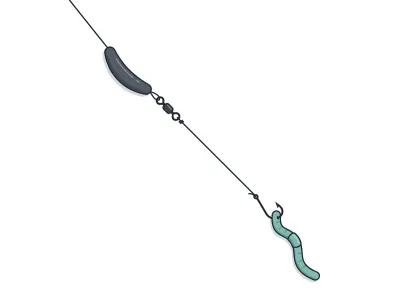
Live-Bait (Lindy) Rig + Leech/Crawler
jumbo leech or half a nightcrawler
Walleye · Trolling
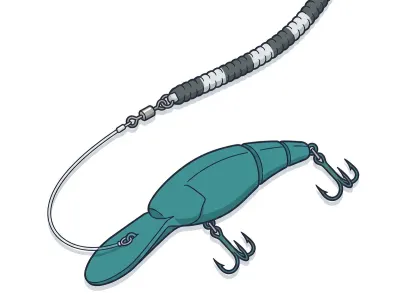
Leadcore Line + Crankbaits
4–5" mid-diving crankbait behind a long leadcore run
Largemouth bass · Soft plastics
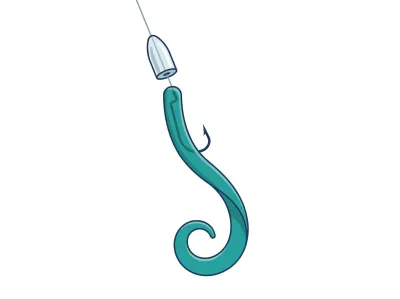
Texas-Rigged Worm
7" ribbon-tail or straight-tail plastic worm
Largemouth bass · Soft plastics
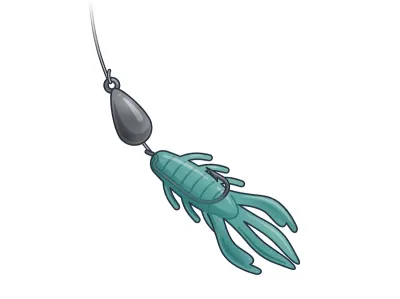
Free Rig
Creature bait or magnum finesse worm
Smallmouth bass · Soft plastics
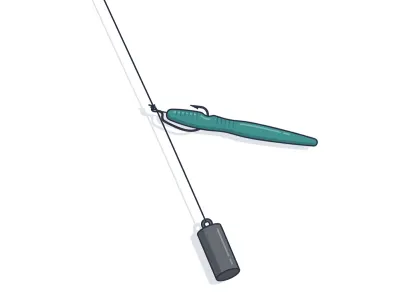
Drop Shot (Finesse Plastic)
4" finesse worm or 3" minnow-profile plastic
Smallmouth bass · Jigs & bladed
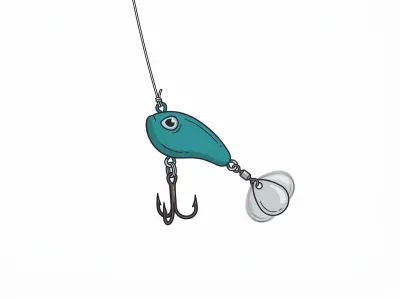
Tail Spinner
Compact lead body with a free-spinning blade on the tail
Full setups, including hooks, weights and line, are on the live map. As an Amazon Associate I earn from qualifying purchases.
DNR stocking records
Stocking history
| Year | Species | Stocked |
|---|---|---|
| 2025 | Walleye | 438,000 fry |
| 2024 | Walleye | 438,000 fry |
| 2023 | Walleye | 438,000 fry |
| 2022 | Walleye | 438,000 fry |
| 2021 | Walleye | 438,000 fry |
| 2019 | Walleye | 438,000 fry |
| 2016 | Walleye | 1,417,500 fry |
MN DNR · in their words
From the 2025 survey
Trout Lake is a 1,890-acre lake located just south of Coleraine, MN. There are three public accesses on Trout Lake. The 2019 lake management plan lists Walleye and Northern Pike as the primary species of management with Largemouth Bass and Smallmouth Bass as secondary species. In 2005, a 17 to 26 inch protected slot length limit with only one fish over 26 inches in possession was implemented for Walleye. In 2020, the Walleye regulation was modified to 20 to 24 inch protected slot length limit with only one fish over 24 inches in possession to better align with other area lakes. The 2025 targeted survey was conducted to help evaluate management activities, including the special Walleye regulation and current stocking strategy.
The management plan goal for Walleye is to maintain a catch near 6.6 fish/net, with fish longer than 15 and 20 inches ranging from 30-60% and 10-30% of the sample. Walleye catches have alternated between some of the lowest and highest catches in the last five surveys. The fact that the record high Walleye catch in 2013 was preceded and followed by the lowest catches in recent history provides an excellent example of the dynamic nature of fish populations. The 2025 catch of 8.3 fish/net achieved the management goal. The sampled fish ranged from 7.2 to 24.5 inches and averaged 15.5 inches. The management goals for size distributions were also met as 69 and 26% of the sample were longer than 15 and 20 inches.
Read the full DNR narrative
The 2025 survey evaluated a period of annual Walleye fry stocking since 2019 (except for 2020 COVID). Though natural reproduction has been well documented, larger year-classes tend to correspond to years with stocking. Eleven age-classes from age 1 to 21 were observed in the survey. Growth rates for the 2023 and 2024 age-classes were notably slower than prior years. Slower growth for these younger ages may be due to strong year-classes resulting in more competition for food or perhaps in response to the introduction of zebra mussels in recent years. However, growth of older fish remained good. Walleye averaged 14.4 inches after three years of growth, which was similar to the three prior surveys. The population should provide decent fishing based on the number and size of Walleye sampled.
The management plan goal for Northern Pike is to maintain a catch of 3.0 fish/net, with 30-60% and 10-20% of the sample longer than 21 and 28 inches. Lower pike numbers are desirable because they tend to have faster growth and better size distributions. Pike catches have varied from 1.0 to 9.3 fish/gill net since 1946. The 2025 catch of 4.4/gill net did not meet the management goal but was near the lake average.
The 2025 sampled pike ranged from 12.8 to 31.7 inches and averaged 22.4 inches. Size distributions did not achieve the management goals; 80% were longer than 21 inches and only 3% were longer than 28 inches. For four consecutive surveys the sample has been dominated by a few younger age-classes. In the last three surveys, all but one female was sexually mature even though they were small and young. Fast growth, early maturation, and essentially no older fish in four consecutive surveys may be an indication of angler over-harvest. Anglers can contribute to better size quality by focusing harvest on pike under 22 inches and releasing larger fish.
Black Crappie are not sampled effectively in many lakes due to their behavior of suspending off the bottom, away from shallow cover, during the summer. The modest population appears to be in response to the lake only having a few shallow, protected bays that are important for recruitment. A total of 28 crappie were sampled for a catch of 1.9 fish/net, which was the highest catch since 2007. Fish ranged from 4.3 to 12.2 inches and averaged 8.7 inches.
Smallmouth Bass populations appear to be expanding in many area lakes. Smallmouth Bass were sampled with spring night electrofishing three times since 2004 and the catches increased during that time. Summer gill nets can also be effective for sampling Smallmouth Bass in some lakes. Smallmouth Bass catches have distinctly increased in the last five surveys (average = 7.5/net) compared to 2004 and before (average = 0.8/net). Fish from age 1 to age 14 were present with age-6 fish the most common. Fish averaged 13.6 inches after five years of growth, which was similar to the prior survey. Smallmouth should provide quality angling opportunities based on the sample.
Tullibee are an important prey species for large predators but can be difficult to sample with standard surveys because of where they are located during the summer. In 1946, the catch was 23.3 fish/net and since that time has never exceeded 3.8 (1989). In the last four surveys, the catch ranged from 0 to 0.4 fish/net. The low catches are poor indicators for the population but that is not the whole story. There are some encouraging signs for the population; the available cool water habitat appears to have increased following the improvements in the city's sewage treatment facility in the late 1980s, and the examination of predator stomachs in the last two surveys suggest Tullibee are more common than the gill net samples reflect.
The Yellow Perch population has experienced major fluctuations over the years. The record high catch of 169.3/net in 1999 coincided with a period of poor Walleye fishing in contrast to the record low catch of 6.1/net in 2018 that coincided with good Walleye fishing. Though the 2025 catch of 9.5/net was an improvement, it remained distinctly below the lake average of 49.5 fish/net. Perch ranged from 4.8 to 9.1 inches and averaged 6.3 inches. Due to the perch size distribution, they are probably more important within the fish community as a prey source than as a species desired by anglers.
Other species observed during the survey included Bluegill, Bowfin, Brown Bullhead, Hybrid Sunfish, Largemouth Bass, Pumpkinseed Sunfish, Rock Bass, White Sucker, and Yellow Bullhead.
Narrative text from the Minnesota DNR lake survey.
Recent reports
Trout Lake fishing reports
Recent reports on Trout Lake from guides, tournaments and regular anglers. Anything posted in the last two weeks also bumps the matching spots on the live map, so you'll see a "matches a recent report" tag on them.
Public water access
Getting on the water
- Trout Lake (N) (trailer launch)
- Trout Lake, Kom-on-in Beach (trailer launch)
- Trout Lake, Longyear Park (trailer launch)
- Trout Lake Fishing Pier (fishing pier)
DNR bathymetry
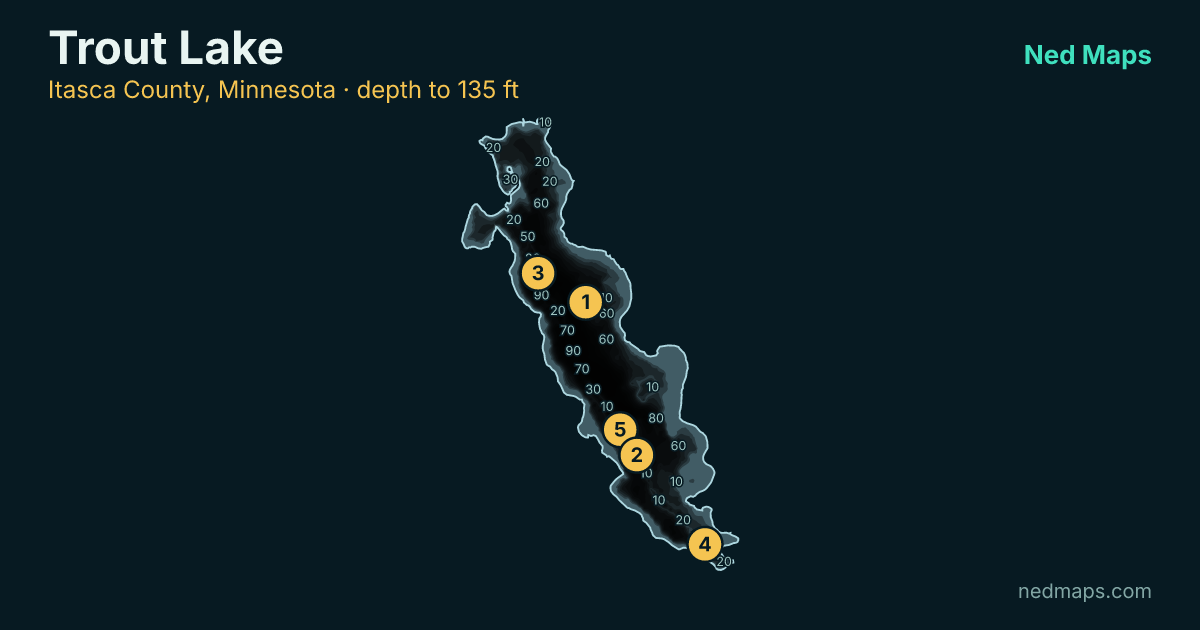
Trout Lake depth map
Within 30 miles
Nearby lakes
- Canisteo Pit · 1,458 ac · 3.4 mi
- Holman Lake · 149 ac · 4 mi
- Lind Pit · 83 ac · 4.3 mi
- South Twin Lake · 141 ac · 4.8 mi
- North Twin Lake · 239 ac · 5.2 mi
- Ice Lake · 39 ac · 5.8 mi
- Little Sand Lake · 210 ac · 5.9 mi
- McKinney Lake · 106 ac · 6 mi
Quick answers
Frequently asked questions
How deep is Trout Lake?
Trout Lake reaches 135 ft at its deepest point; about 24% of the lake is littoral (15 ft or shallower).
How big is Trout Lake?
Trout Lake covers 1,862 acres with about 13.9 miles of shoreline.
How clear is the water in Trout Lake?
DNR Secchi readings on Trout Lake average 16.2 ft of visibility, clear water for a Minnesota lake.
What fish are in Trout Lake?
Minnesota DNR surveys (most recently 2025) record walleye, largemouth bass, smallmouth bass, northern pike, bluegill, crappie, yellow perch, rock bass.
Is Trout Lake stocked?
Yes. The DNR stocked walleye in 2025; the stocking table on this page lists every year back to 2016.
Does Trout Lake have a public access?
Yes. Trout Lake has 4 public access sites, including Trout Lake (N) (trailer launch).
How big do walleye get in Trout Lake?
The biggest walleye measured in recent DNR surveys taped 24"; the size-history table on this page tracks the biggest fish in each survey back to 2004.
When was Trout Lake last surveyed?
The Minnesota DNR last surveyed Trout Lake in 2025, the most recent of 17 surveys on record.
Page updated .

Featured guide spot
Your guide service here
One featured guide per lake, with your photo, your writeup and a link straight to your booking page. Free through December 31, 2026.
Then $20 a month from January. Cancel any time.
The live map adds today's conditions and ranked spots for Trout Lake, plus a trip plan you can share:
Open Trout Lake on the live map → Fished it lately? Write a report