Minnesota · Meeker County
Star Lake Fishing guide
Star Lake covers 553 acres in Meeker County, Minnesota, reaching 15 ft at its deepest point. Secchi readings average around 3.2 ft of visibility. The Minnesota DNR has surveyed the lake 12 times, most recently in 2023, with walleye, largemouth bass, northern pike and bluegill in the nets.
DNR survey data
Fish species
WalleyeLast stocked 2024Fair numbers2.4per gill net20"Typical24"Biggest
Lengths measured · 22 fish
Recent · 2023Lengths measured · 22 fish
2023Lengths measured · 35 fish
2017Lengths measured · 23 fish
2013Lengths measured · 50 fish
2007Northern pikeGood numbers11.7per gill net23"Typical38"Biggest
Lengths measured · 105 fish
Recent · 2023Lengths measured · 105 fish
2023Lengths measured · 120 fish
2017Lengths measured · 59 fish
2013Lengths measured · 111 fish
2007CrappiePresent82.1per gill net5"Typical11"Biggest
Lengths measured · 740 fish
Recent · 2023Lengths measured · 740 fish
2023Lengths measured · 117 fish
2017Lengths measured · 107 fish
2013Lengths measured · 579 fish
2007Yellow perchFair numbers2.3per gill net5"Typical6"Biggest
Lengths measured · 21 fish
Recent · 2023Lengths measured · 21 fish
2023Lengths measured · 15 fish
2017Lengths measured · 101 fish
2013Lengths measured · 85 fish
2007Rates come from standard DNR survey gear (gill nets, trap nets, electrofishing), judged against statewide benchmarks for the same gear, so the same number of fish per net can read differently for two species. Where the standard gear can't count a species reliably, only presence and size are listed. Typical is the middle fish of those measured. Open a row for the full length spread, survey by survey.
How to fish Star Lake through the year
Northern pike
- Spring
- Pike are in the shallow bays and along new weed growth. In 3.2 ft of visibility, they sit shallower than you think.
- Early summer
- Pike are on the outside weed edge and points.
- Summer
- Pike are on the deep weed edge and points near the coolest water they can find. With 100% of this lake 15 ft or shallower, the weed edge is the main event.
- Fall
- Pike are on the last green weeds and the breaks beside them, feeding heavily as the water drops. A 15-ft bowl cools fast, so the fall window comes early here.
Walleye
- Spring
- Walleye are shallow, on and just off the spawning flats and the first green weeds. In 3.2 ft of visibility, they sit shallower than you think.
- Early summer
- Walleye are setting up on the outside weed edge, points and shallow structure.
- Summer
- Walleye are working the weed edge, points and any wind-blown structure. With 100% of this lake 15 ft or shallower, the weed edge is the main event.
- Fall
- Walleye are packing onto the sharpest breaks and points as the water cools, in big schools with short windows. A 15-ft bowl cools fast, so the fall window comes early here.
Season patterns for each species. Open the live map for today's wind, light and water temp.
Size history
Biggest fish by survey year
| Survey year | Northern pike | Walleye | Largemouth bass |
|---|---|---|---|
| 2023 | 38" | 24" | 18" |
| 2017 | 34" | 20" | 9" |
| 2013 | 36" | 27" | — |
| 2007 | 37" | 24" | 10" |
| 2003 | 31" | 15" | — |
| 1997 | 32" | — | — |
| 1994 | 33" | 23" | 19" |
Longest fish measured by DNR survey crews in each year's nets. Survey gear samples the population, so the lake usually holds larger fish than any survey measured.
Suggested tackle
What to bring
Top presentations for this lake's structure and clarity:
Northern pike · Soft plastics

Paddletail Swimbait on Jighead
4–5" paddletail swimbait on a ball-head swimbait jighead
Northern pike · Muskie & pike
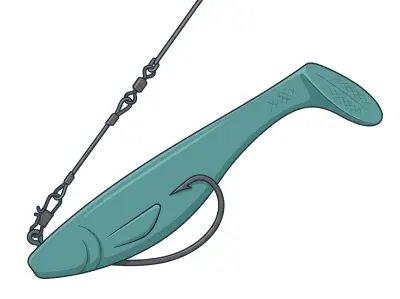
Soft Rubber (Bull Dawg / Medusa)
10" soft rubber body bait
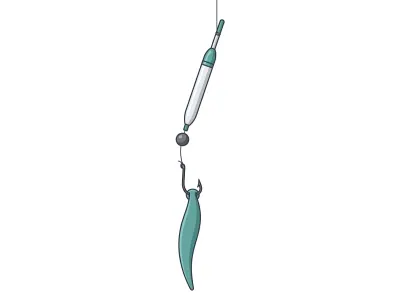
Walleye · Soft plastics
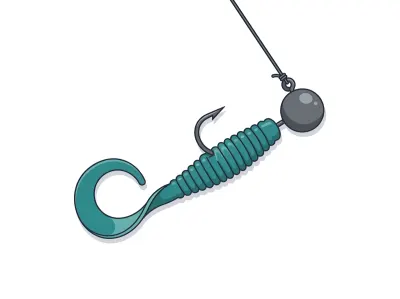
Curly-Tail Grub on Jig
3" curly-tail grub threaded on a round jighead
Largemouth bass · Hardbaits
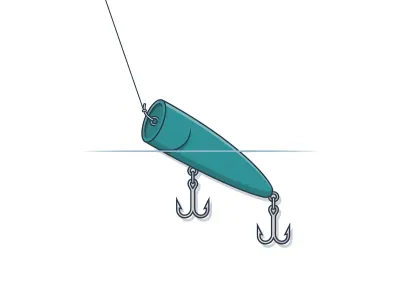
Topwater Popper
2.5–3" concave-face popper
Largemouth bass · Hardbaits
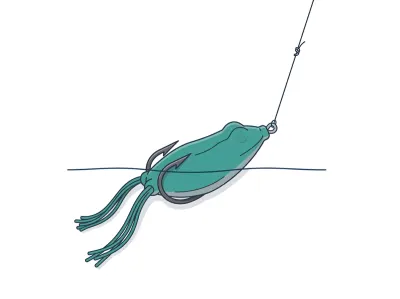
Hollow-Body Frog
3–3.5" hollow-body frog
Full setups, including hooks, weights and line, are on the live map. As an Amazon Associate I earn from qualifying purchases.
DNR stocking records
Stocking history
| Year | Species | Stocked |
|---|---|---|
| 2024 | Walleye | 278,359 fry |
| 2022 | Walleye | 278,163 fry |
| 2018 | Walleye | 557,000 fry |
| 2016 | Walleye | 561,221 fry |
MN DNR · in their words
From the 2023 survey
Star is a moderate sized lake (552 acres) located southwest of the City of Litchfield in Meeker County. A state-owned access with paved parking and a single cement boat ramp is present on the southeast shore. Star has approximately ten miles of shoreline and a maximum depth of fifteen feet. The Minnesota Department of Natural Resources (MNDNR) has divided Minnesota's lakes into 44 different classes based on physical and chemical characteristics. Star is a class 42 lake and other similar waterbodies in the Hutchinson Fisheries Management Area are Marion and Otter Lakes in McLeod County. Star's 2018 lake management plan listed Walleye as primary management species, while Northern Pike, Black Crappie, Bluegill and Largemouth Bass were secondary species. An aeration system is typically operated during ice-covered months to provide a small refuge area for fish during harsh winters. The most recent partial winterkill at Star Lake occurred in 2014. Fish populations can fluctuate widely depending on the severity of the latest winterkill event. Netting was completed in 2023 to monitor the fish population.
Low numbers of Walleye were netted in 2023, but size was large. Walleye averaged 21 inches in length. The maximum length of Walleye sampled was 24 inches. The oldest Walleye was age-9. A new Walleye stocking regime was initiated in 2022 (278,000 Spicer strain Walleye fry in even numbered years) in an attempt to increase their abundance. This change was made after a series of stockings, from 2014 thru 2018, failed to meet lake management plan goals. High numbers of predatory Northern Pike have likely been a limiting factor on small Walleye at Star Lake following the 2014 partial winterkill. Northern Pike were abundant this year with fish averaging 23.6 inches in length. Approximately 27% of pike netted were 26 inches or longer. Large pike were found to be present at Star Lake in 2023, with the longest fish measuring 38 inches. Northern Pike regulations were revised at a statewide level beginning in 2018 to better accommodate regional differences in pike habitats, population abundances and size structures. Three management zones were established for Northern Pike, with their own bag limit and length limit restrictions. In the north-central zone, where Star Lake is found, anglers can keep up to ten Northern Pike, but no more than two fish can be longer than 26 inches; and all pike from 22 to 26 inches must be immediately released. Darkhouse spear fishermen are allowed to have one pike within the protected slot limit in their possession. This zone regulation is meant to reduce small pike abundance by shifting population size structure back to more medium and large sized pike.
Read the full DNR narrative
High numbers of Black Crappie were netted in 2023, but average size was small (6.3 inches in length). Approximately 6% of the gill net catch was 9 inches or longer. The longest Black Crappie sampled was 11.8 inches in length. Crappie fishing could be good over the next couple of years as additional fish grow to a more acceptable size. Low numbers of Bluegill were gill netted, but sunfish typically do not sample well in that type of gear. The longest Bluegill sampled was 7.5 inches. Bluegill were last stocked in 2015, following the 2014 partial winterkill. Low numbers of Largemouth Bass were netted, but that species typically does not sample well in gill nets. However, the Largemouth Bass that was captured was almost 19 inches long, indicating that quality sized fish were present at Star Lake. Low numbers of Yellow Perch were netted and all were small. Average length for gill netted perch was 6.0 inches. The longest perch sampled was 6.8 inches. However, Yellow Perch likely play an important role as forage at Star Lake.
Additional fishes sampled in the 2023 gill nets included Black Bullhead, Common Carp and Golden Shiner.
People can have significant impacts on lakes and the fish populations they support. Overharvest, lakeshore development, removal of shoreline vegetation, and introductions of invasive species can all adversely affect fish populations. Aquatic invasive species (AIS) are typically moved from infested to non-infested waters by anglers, boaters and lakeshore owners, and can adversely impact lakes and fish populations. To avoid spreading AIS, lake users are required to remove all aquatic plants and animals from their watercraft and drain all lake water from their boat and bait buckets before leaving the lake. If you suspect an infestation of an invasive species in this lake, save a specimen and report it to a local MNDNR office. Additional information on all of these topics can be found on the MNDNR website (www.dnr.state.mn.us) or by contacting the Hutchinson Area Fisheries office.
Narrative text from the Minnesota DNR lake survey.
Recent reports
Star Lake fishing reports
Recent reports on Star Lake from guides, tournaments and regular anglers. Anything posted in the last two weeks also bumps the matching spots on the live map, so you'll see a "matches a recent report" tag on them.
Public water access
Getting on the water
- Star Lake (trailer launch)
DNR bathymetry
Star Lake depth map
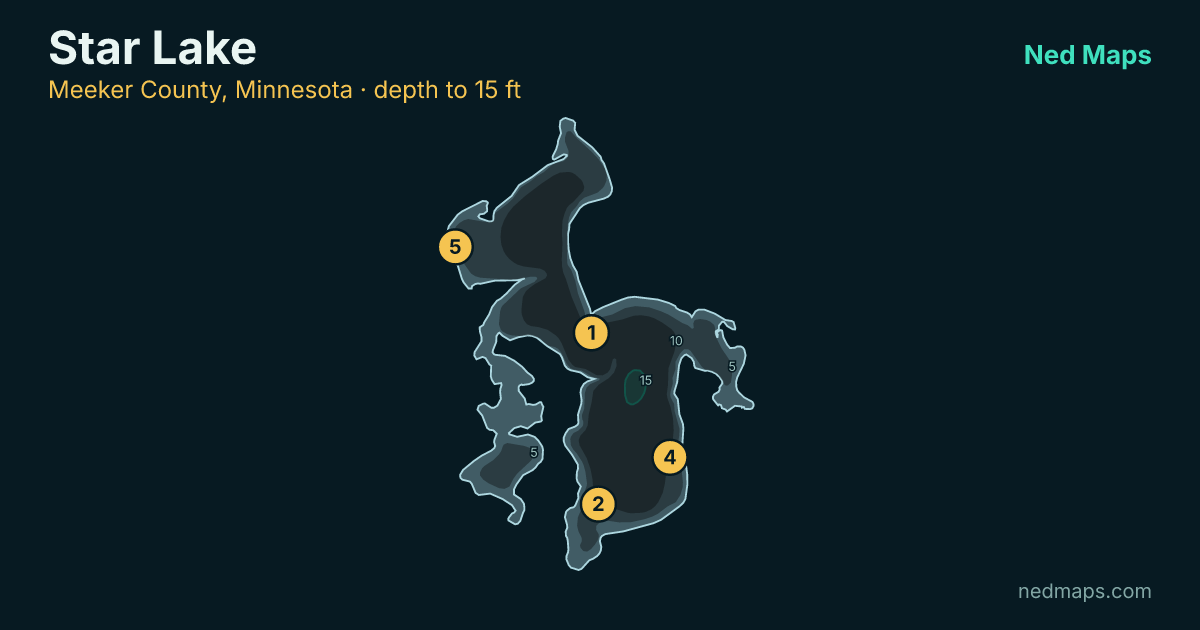
Within 30 miles
Nearby lakes
- Hope Lake · 274 ac · 2.7 mi
- Minnie-Belle Lake · 597 ac · 4.1 mi
- Ripley (west portion) Lake · 614 ac · 4.4 mi
- Long Lake · 783 ac · 4.7 mi
- Round Lake · 266 ac · 5 mi
- Willie Lake · 192 ac · 6.6 mi
- Greenleaf Lake · 238 ac · 7.2 mi
- Manuella Lake · 293 ac · 7.7 mi
Quick answers
Frequently asked questions
How deep is Star Lake?
Star Lake reaches 15 ft at its deepest point; about 100% of the lake is littoral (15 ft or shallower).
How big is Star Lake?
Star Lake covers 553 acres with about 9.6 miles of shoreline.
How clear is the water in Star Lake?
DNR Secchi readings on Star Lake average 3.2 ft of visibility, on the stained end for a Minnesota lake.
What fish are in Star Lake?
Minnesota DNR surveys (most recently 2023) record walleye, largemouth bass, northern pike, bluegill, crappie, yellow perch.
Is Star Lake stocked?
Yes. The DNR stocked walleye in 2024; the stocking table on this page lists every year back to 2016.
Does Star Lake have a public access?
Yes. Star Lake has one public access site: Star Lake (trailer launch).
How big do northern pike get in Star Lake?
The biggest northern pike measured in recent DNR surveys taped 38"; the size-history table on this page tracks the biggest fish in each survey back to 1994.
When was Star Lake last surveyed?
The Minnesota DNR last surveyed Star Lake in 2023, the most recent of 12 surveys on record.
Page updated .

Featured guide spot
Your guide service here
One featured guide per lake, with your photo, your writeup and a link straight to your booking page. Free through December 31, 2026.
Then $20 a month from January. Cancel any time.
The live map adds today's conditions and ranked spots for Star Lake, plus a trip plan you can share:
Open Star Lake on the live map → Fished it lately? Write a report