Minnesota · Isanti County
South Stanchfield Lake Fishing guide
South Stanchfield Lake is a 411-acre lake in Isanti County, Minnesota, reaching 17 ft at its deepest point. Secchi readings average around 2 ft of visibility. The Minnesota DNR has surveyed the lake 5 times, most recently in 2024, with walleye, largemouth bass, northern pike and bluegill in the nets.
DNR survey data
Fish species
Largemouth bassFair numbers33per hr (electrofishing)8"Typical17"Biggest
Lengths measured · 45 fish
Northern pikeJust a few4.8per gill net26"Typical35"Biggest
Lengths measured · 38 fish
BluegillPresent0.8per gill net6"Typical7"Biggest
Lengths measured · 92 fish
Recent · 2024Lengths measured · 92 fish
2024Lengths measured · 48 fish
2018CrappiePresent18.3per gill net7"Typical8"Biggest
Lengths measured · 168 fish
Recent · 2024Lengths measured · 168 fish
2024Lengths measured · 5 fish
2018Only 5 fish measured that year — too few to read as a shape.
Yellow perchExcellent numbers13.3per gill net6"Typical10"Biggest
Lengths measured · 94 fish
Rates come from standard DNR survey gear (gill nets, trap nets, electrofishing), judged against statewide benchmarks for the same gear, so the same number of fish per net can read differently for two species. Where the standard gear can't count a species reliably, only presence and size are listed. Typical is the middle fish of those measured. Open a row for the full length spread, survey by survey.
How to fish South Stanchfield Lake through the year
Largemouth bass
- Spring
- Largemouth are moving up into the warming bays and flats, staging around wood, docks and new weeds to spawn. In 2 ft of visibility, they sit shallower than you think.
- Early summer
- Largemouth are on the shallow spawning flats and protected bays, where beds go on firm bottom next to isolated cover.
- Summer
- Largemouth are in and along the weeds: cabbage and milfoil edges, matted cover and shade. With 89% of this lake 15 ft or shallower, the weed edge is the main event.
- Fall
- Largemouth are chasing bait back onto the flats and into the remaining green weeds, feeding hard and shallow before the freeze. A 17-ft bowl cools fast, so the fall window comes early here.
Walleye
- Spring
- Walleye are shallow, on and just off the spawning flats and the first green weeds. In 2 ft of visibility, they sit shallower than you think.
- Early summer
- Walleye are setting up on the outside weed edge, points and shallow structure.
- Summer
- Walleye are working the weed edge, points and any wind-blown structure. With 89% of this lake 15 ft or shallower, the weed edge is the main event.
- Fall
- Walleye are packing onto the sharpest breaks and points as the water cools, in big schools with short windows. A 17-ft bowl cools fast, so the fall window comes early here.
Season patterns for each species. Open the live map for today's wind, light and water temp.
Suggested tackle
What to bring
Top presentations for this lake's structure and clarity:
Largemouth bass · Soft plastics
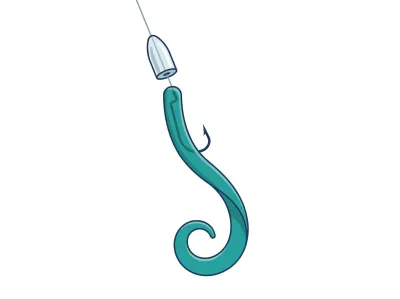
Texas-Rigged Worm
7" ribbon-tail or straight-tail plastic worm
Largemouth bass · Jigs & bladed
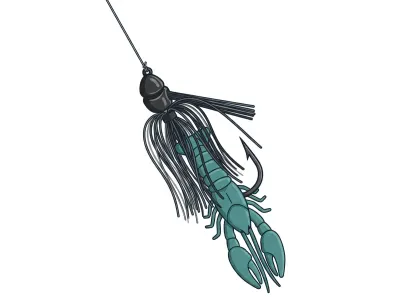
Skirted Casting Jig + Craw Trailer
3.5–4" craw-style trailer on a skirted casting/flipping jig
Walleye · Live bait
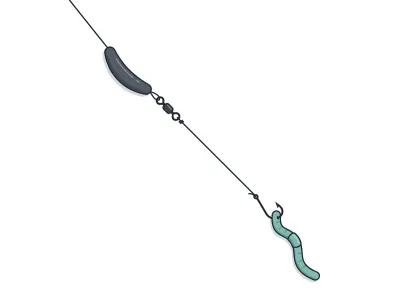
Live-Bait (Lindy) Rig + Leech/Crawler
jumbo leech or half a nightcrawler
Walleye · Trolling
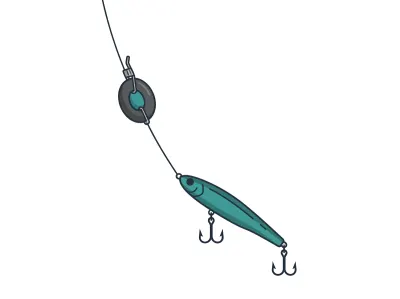
Snap Weights + Stickbaits
4–5" suspending or slow-floating stickbait
Northern pike · Soft plastics
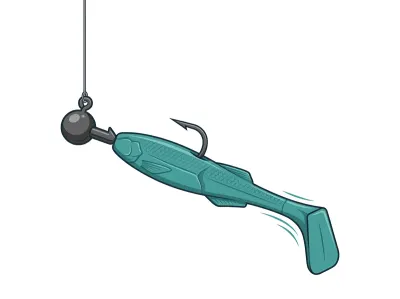
Paddletail Swimbait on Jighead
4–5" paddletail swimbait on a ball-head swimbait jighead
Northern pike · Muskie & pike
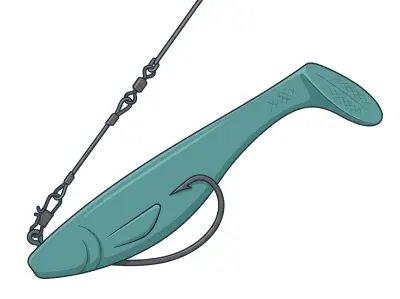
Soft Rubber (Bull Dawg / Medusa)
10" soft rubber body bait
Full setups, including hooks, weights and line, are on the live map. As an Amazon Associate I earn from qualifying purchases.
MN DNR · in their words
From the 2024 survey
South Stanchfield Lake is a 398-acre lake in northwestern Isanti County located thirteen miles northwest of Cambridge, MN, and is within the Rum River watershed. The lake has a maximum depth of 17 feet and an average depth of 9 feet. The lake is 92% littoral (15 feet or less, 366 acres). The color of the water is green due to filamentous and blue-green algae, which results in water clarity of 2 to 4 feet. There are two inlets, one from Lesure Heath Lake to the south and one on the west side from wetlands. There is one outlet on the north that flows into North Stanchfield Lake and contains a dam with a two foot head. The low water clarity limits aquatic plant growth. Recent vegetation surveys found no plants at 61% of the 54 sample sites. Curly-leaf pondweed, a non-native species, is present and grows in a thick band around the entire lake from 3 to 5 feet. The depth of water at which dissolved oxygen levels limit fish presence (<5 ppm) can include all depths during both summer and winter, due to nutrient loading. Seven winterkills have occurred since the late 1980s. Fish migration from the Rum River during high flow events repopulates the lake. Substrates are primarily sand and silt. The lake is lightly developed with 15 homes but includes four farms. A small, shallow, gravel, DNR owned public access is located on the north end of the lake with parking for three rigs.
South Stanchfield Lake has an average fishery for numerous species. Black Crappies have relatively high catch rates and fish over 10 inches are typically present. Largemouth Bass sampled electrofishing were low in number, but fish over 17 inches were present. Although Northern Pike are average in number, the average length was 25 inches and a 31-inch fish was sampled. Yellow Perch catch rates are relatively low; however, fish over 10 inches are present. The Bluegill catch rates have increased each of the past five surveys, although no fish over 8 inches have ever been sampled.
Read the full DNR narrative
The 2024 Black Crappie gillnet and trap net catches were relatively high in 2024 when compared with past surveys. The gill net catch was 18/net in 2024 and compares to the average of 5/net, while the trap net catch was 6/net in 2024 and compares to the average of 4/net. Crappie ranged in length from 4.9 to 8.9 inches and had an average length of 7.3 inches. Crappies over ten inches have been sampled in three of the past four surveys, while crappies over 12 inches were sampled in 1991. The population currently has an average proportion of fish over eight inches and a below average proportion of fish over ten inches.
Nighttime electrofishing for Largemouth Bass was conducted in May of 2024 for the first time. In 2024, bass were sampled at a rate of 33/hour. This catch rate is relatively low when compared to similar area lakes. Only one Largemouth Bass has been sampled in previous surveys and winterkill investigations, which occurred in 1979. In 2024, bass ranged in length from 3.7 to 17.5 inches with a 9.1 inch average. Anglers can expect to catch low numbers of moderate sized bass. The population currently has an average proportion of fish over 12 and 15 inches.
An average number of Northern Pike were sampled with gill nets during the 2024 survey (4.7/net), when compared with similar area lakes. Pike have been sampled in 4 of 6 surveys. The 20 pike sampled ranged from 14.1 to 31.4 inches and had a 25-inch average. The 31-inch pike sampled in 2024 was the largest ever sampled. Estimated ages from cleithra indicated nine year classes from age-1 through age-9 were present in 2024, with 42% being age-3. Consistent reproduction is present. The current population has an above average proportion of fish over 21 inches.
Yellow Perch gill net catch rates have remained relatively low the past three surveys (8 to 19/net), when compared with the first three surveys (88 to 295/net). Catch rates in 2024 were 13/net, which compares to the average of 85/net. Perch ranged from 5.0 to 10.3 inches and had an average length of 7.0 inches in 2024. Perch over 10 inches have been sampled in 4 of 6 surveys. The current population has a below average proportion of fish over 8 inches. Although most perch are smaller than anglers prefer, they are the primary prey source for most gamefish targeted by anglers.
The 2024 Bluegill trap net catch rate of 10/net was the highest observed. Bluegills had not been sampled prior to the 1980s, but trap net catches have slowly and consistently increased over the past 35 years. Past surveys and winterkill evaluations continue to demonstrate this; 1986 (0.3/net), 1991 (1/net), 2006 (4/net), 2018 (5/net), and 2024 (10/net). No Bluegills over 8 inches have ever been sampled. In 2024, Bluegill ranged from 0.6 to 7.3 inches with a 5.1 inch average. The current population has an average proportion of fish over 6 inches and a below average proportion of fish over 8 inches.
Low numbers of Walleyes have been sampled in three of six surveys, with none being sampled the other three surveys. Three Walleyes were sampled in 2024, for a gill net catch rate of 0.5/net. Walleyes ranged in length from 12.6 to 13.9 inches and had an average length of 13.1 inches. No Walleyes were observed while electrofishing for Largemouth Bass. Potential reasons for consistently low Walleye numbers include warm summer water temperatures, and the high frequency of low oxygen levels in both summer and winter.
Other species sampled included Black Bullhead, Bowfin (Dogfish), Brown Bullhead, Common Carp, Golden Shiner, Hybrid Sunfish, Pumpkinseed, White Sucker, and Yellow Bullhead.
Narrative text from the Minnesota DNR lake survey.
Recent reports
South Stanchfield Lake fishing reports
Recent reports on South Stanchfield Lake from guides, tournaments and regular anglers. Anything posted in the last two weeks also bumps the matching spots on the live map, so you'll see a "matches a recent report" tag on them.
Public water access
Getting on the water
- South Stanchfield Lake (trailer launch)
DNR bathymetry
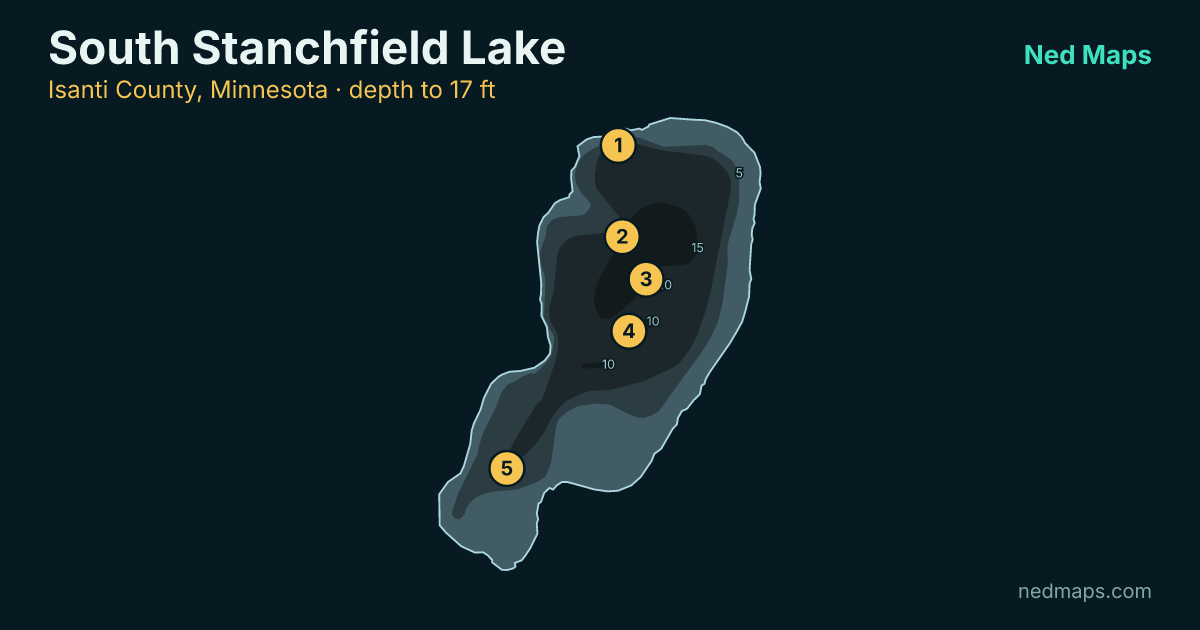
South Stanchfield Lake depth map
Within 30 miles
Nearby lakes
- North Stanchfield Lake · 157 ac · 1.5 mi
- Green Lake · 833 ac · 4.8 mi
- Spectacle Lake · 246 ac · 5.5 mi
- Lory Lake · 222 ac · 7.9 mi
- Lewis Lake · 179 ac · 9.2 mi
- Baxter Lake · 89 ac · 9.4 mi
- Sandy Lake · 64 ac · 10.7 mi
- Blue Lake · 296 ac · 11.2 mi
Quick answers
Frequently asked questions
How deep is South Stanchfield Lake?
South Stanchfield Lake reaches 17 ft at its deepest point; about 89% of the lake is littoral (15 ft or shallower).
How big is South Stanchfield Lake?
South Stanchfield Lake covers 411 acres with about 3.7 miles of shoreline.
How clear is the water in South Stanchfield Lake?
DNR Secchi readings on South Stanchfield Lake average 2 ft of visibility, on the stained end for a Minnesota lake.
What fish are in South Stanchfield Lake?
Minnesota DNR surveys (most recently 2024) record walleye, largemouth bass, northern pike, bluegill, crappie, yellow perch.
Is South Stanchfield Lake stocked?
No stocking is on record for South Stanchfield Lake in the DNR's stocking database.
Does South Stanchfield Lake have a public access?
Yes. South Stanchfield Lake has one public access site: South Stanchfield Lake (trailer launch).
How big do largemouth bass get in South Stanchfield Lake?
The biggest largemouth bass measured in recent DNR surveys taped 17".
When was South Stanchfield Lake last surveyed?
The Minnesota DNR last surveyed South Stanchfield Lake in 2024, the most recent of 5 surveys on record.
Page updated .

Featured guide spot
Your guide service here
One featured guide per lake, with your photo, your writeup and a link straight to your booking page. Free through December 31, 2026.
Then $20 a month from January. Cancel any time.
The live map adds today's conditions and ranked spots for South Stanchfield Lake, plus a trip plan you can share:
Open South Stanchfield Lake on the live map → Fished it lately? Write a report