Minnesota · Itasca County
Ruby Lake Fishing guide
Ruby Lake is a 235-acre lake in Itasca County, Minnesota, reaching 88 ft at its deepest point. Average water clarity runs about 16.7 ft. The Minnesota DNR has surveyed the lake 11 times, most recently in 2017, with walleye, largemouth bass, smallmouth bass and northern pike in the nets. That survey is 9 years old now.
DNR survey data
Fish species
WalleyeLast stocked 2025Fair numbers3.2per gill net13"Typical22"Biggest
Lengths measured · 19 fish
Recent · 2017Lengths measured · 19 fish
2017Lengths measured · 12 fish
2008Lengths measured · 8 fish
2006Only 8 fish measured that year — too few to read as a shape.
Lengths measured · 21 fish
2001Northern pikeFair numbers6.3per gill net21"Typical29"Biggest
Lengths measured · 38 fish
Recent · 2017Lengths measured · 38 fish
2017Lengths measured · 56 fish
2008Lengths measured · 52 fish
2006Lengths measured · 70 fish
2001BluegillPresent1.8per gill net4"Typical5"Biggest
Lengths measured · 11 fish
Recent · 2017Lengths measured · 11 fish
2017Lengths measured · 8 fish
2008Only 8 fish measured that year — too few to read as a shape.
Lengths measured · 598 fish
2006Lengths measured · 561 fish
2001Yellow perchFair numbers2.5per gill net6"Typical8"Biggest
Lengths measured · 15 fish
Recent · 2017Lengths measured · 15 fish
2017Lengths measured · 17 fish
2008Lengths measured · 26 fish
2006Lengths measured · 64 fish
2001Rock bassGood numbers3per gill net6"Typical9"Biggest
Lengths measured · 18 fish
Recent · 2017Lengths measured · 18 fish
2017Lengths measured · 20 fish
2008Lengths measured · 13 fish
2006Lengths measured · 23 fish
2001Rates come from standard DNR survey gear (gill nets, trap nets, electrofishing), judged against statewide benchmarks for the same gear, so the same number of fish per net can read differently for two species. Where the standard gear can't count a species reliably, only presence and size are listed. Typical is the middle fish of those measured. Open a row for the full length spread, survey by survey.
How to fish Ruby Lake through the year
Walleye
- Spring
- Walleye are shallow, on and just off the spawning flats and the first green weeds. At 16.7 ft of clarity, fish them deeper and lighter than usual.
- Early summer
- Walleye are setting up on the outside weed edge, points and shallow structure.
- Summer
- Walleye are working the weed edge, points and any wind-blown structure. On a lake that drops to 88 ft, check the deep edge of that structure too.
- Fall
- Walleye are packing onto the sharpest breaks and points as the water cools, in big schools with short windows.
Northern pike
- Spring
- Pike are in the shallow bays and along new weed growth. At 16.7 ft of clarity, fish them deeper and lighter than usual.
- Early summer
- Pike are on the outside weed edge and points.
- Summer
- Pike are on the deep weed edge and points near the coolest water they can find. On a lake that drops to 88 ft, check the deep edge of that structure too.
- Fall
- Pike are on the last green weeds and the breaks beside them, feeding heavily as the water drops.
Season patterns for each species. Open the live map for today's wind, light and water temp.
Size history
Biggest fish by survey year
| Survey year | Walleye | Northern pike | Largemouth bass |
|---|---|---|---|
| 2017 | 22" | 29" | 13" |
| 2008 | 26" | 32" | 14" |
| 2006 | 27" | 33" | 13" |
| 2001 | 22" | 33" | 18" |
| 1996 | 24" | 39" | 20" |
Longest fish measured by DNR survey crews in each year's nets. Survey gear samples the population, so the lake usually holds larger fish than any survey measured.
Suggested tackle
What to bring
Top presentations for this lake's structure and clarity:
Walleye · Live bait

Live-Bait (Lindy) Rig + Leech/Crawler
jumbo leech or half a nightcrawler
Walleye · Trolling
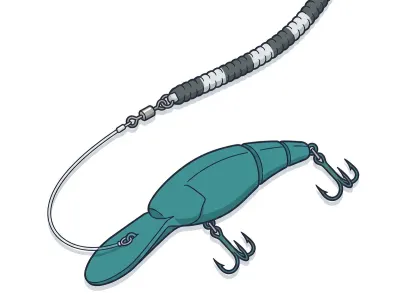
Leadcore Line + Crankbaits
4–5" mid-diving crankbait behind a long leadcore run
Northern pike · Soft plastics
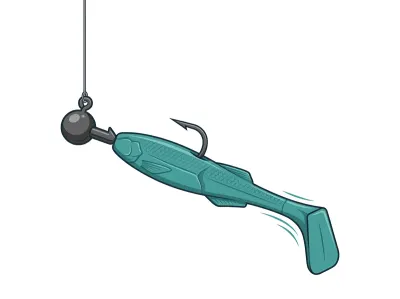
Paddletail Swimbait on Jighead
4–5" paddletail swimbait on a ball-head swimbait jighead
Northern pike · Jigs & bladed
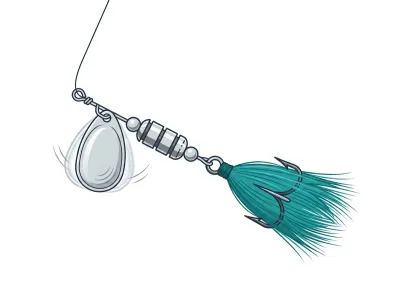
Inline Spinner (Mepps/Blue Fox)
#2–#4 in-line spinner
Largemouth bass · Soft plastics
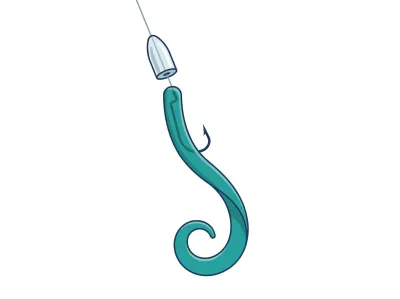
Texas-Rigged Worm
7" ribbon-tail or straight-tail plastic worm
Largemouth bass · Soft plastics
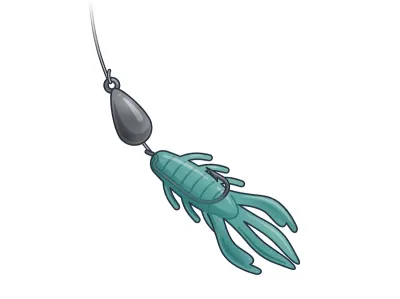
Free Rig
Creature bait or magnum finesse worm
Full setups, including hooks, weights and line, are on the live map. As an Amazon Associate I earn from qualifying purchases.
DNR stocking records
Stocking history
| Year | Species | Stocked |
|---|---|---|
| 2025 | Walleye | 1,620 fingerlings |
| 2023 | Walleye | 2,094 fingerlings |
| 2021 | Walleye | 2,610 fingerlings |
| 2019 | Walleye | 2,850 fingerlings |
| 2017 | Walleye | 1,350 fingerlings |
MN DNR · in their words
From the 2017 survey
Ruby Lake is located seven miles southeast of Marcell, MN in the Big Fork River watershed and the Chippewa National Forest. Ruby is a deep, clear lake with steep drop-offs and a limited amount of aquatic vegetation. The 2009 lake management plan lists Walleye as the primary management species with Northern Pike and Smallmouth Bass as secondary management species.
Ruby Lake has generally been known as a lake that produces lower numbers of Walleye, with the opportunity to catch bigger fish (>25 inches). Recent management included stocking Walleye fingerlings in odd numbered years at one pound/littoral acre. A targeted survey (gill nets only) was conducted in early July 2017 to evaluate the success of the stocking and collect updated information on the fishery.
Read the full DNR narrative
Walleye were sampled in numbers similar to past surveys and within the typical range for similar lakes. Size structure declined from past surveys. Walleye ranged from 9.4 to 22.2 inches with an average length of 15.2 inches. Ages 2, 4-6 and 9 were represented with age 2 fish making up 58% of the age distribution. Six of the previous ten years were stocked year classes, and 95% of the sample corresponded to stocked years. Growth was average with Walleye attaining 17.3 inches at age 5.
Northern Pike numbers declined slightly from previous surveys but were within the typical range for similar lakes. Size structure was modest; pike ranged from 15.4 to 29.3 inches with an average length of 21.8 inches. Ages 2-5 and 7 were represented with ages 2 and 4 the most frequently sampled. Growth was average with pike attaining 21.5 inches at age 4.
The Yellow Perch catch rate was similar to other recent surveys within the typical range for lakes like Ruby. Perch ranged from 5.7 to 8.5 inches.
Other species sampled included Bluegill, Largemouth Bass, Smallmouth Bass, Pumpkinseed, Rock Bass and White Sucker.
Anglers can help maintain or improve the quality of fishing by practicing selective harvest. Selective harvest allows for the harvest of smaller fish for table fare, but encourages release of medium to large sized fish. Releasing these fish can help maintain balance in the fish community in Ruby Lake and provide anglers the opportunity to catch more and larger fish in the future.
Lakeshore owners may affect fish populations not only through harvesting fish, but also through land use practices. Good water quality and fish populations are the direct result of good land use practices. Shoreline habitat consists of aquatic plants, woody plants and natural lake bottom soils. Plants in the water and at the water's edge provide habitat, prevent erosion and absorb excess nutrients. Shrubs, trees, and woody debris such as fallen trees or limbs provide good habitat both above and below the water surface and should be left in place.
Narrative text from the Minnesota DNR lake survey.
Recent reports
Ruby Lake fishing reports
Recent reports on Ruby Lake from guides, tournaments and regular anglers. Anything posted in the last two weeks also bumps the matching spots on the live map, so you'll see a "matches a recent report" tag on them.
Public water access
Getting on the water
- US Forest Service access: Narrow trail and limited parking.
DNR bathymetry
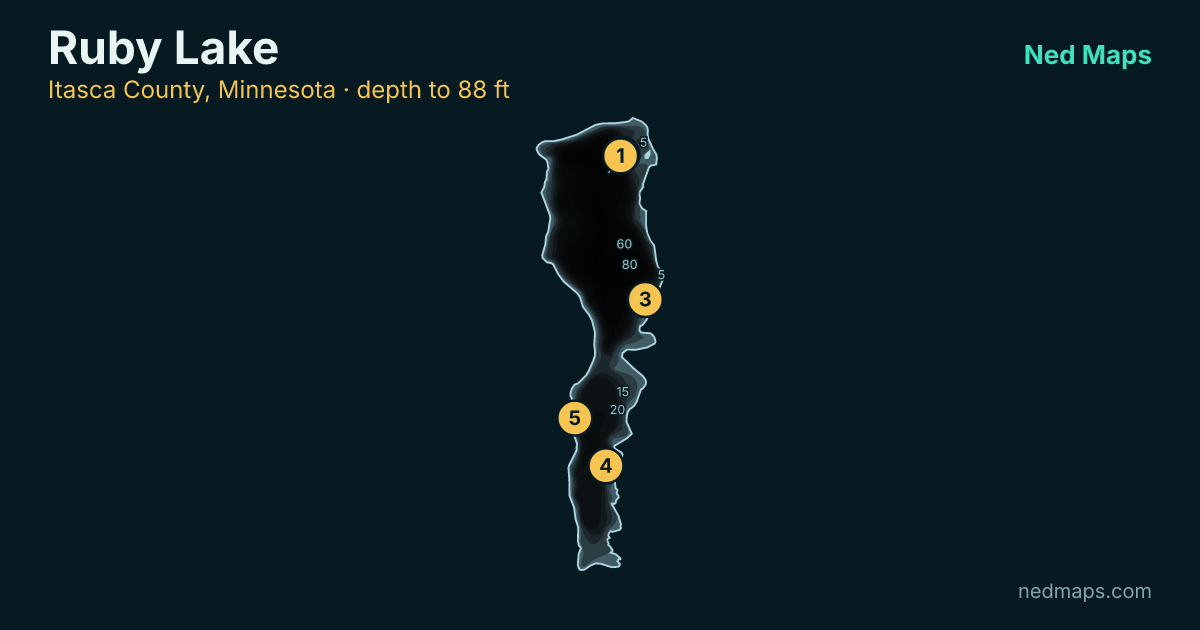
Ruby Lake depth map
Within 30 miles
Nearby lakes
- Black Island Lake · 117 ac · 1.1 mi
- Burnt Shanty Lake · 198 ac · 1.6 mi
- Spider Lake · 1,393 ac · 2.2 mi
- Lost Moose Lake · 112 ac · 2.3 mi
- Dock Lake · 30 ac · 2.6 mi
- Sand Lake · 195 ac · 2.7 mi
- Burrows Lake · 306 ac · 3.1 mi
- Bee Cee Lake · 29 ac · 3.2 mi
Quick answers
Frequently asked questions
How deep is Ruby Lake?
Ruby Lake reaches 88 ft at its deepest point; about 38% of the lake is littoral (15 ft or shallower).
How big is Ruby Lake?
Ruby Lake covers 235 acres with about 4.4 miles of shoreline.
How clear is the water in Ruby Lake?
DNR Secchi readings on Ruby Lake average 16.7 ft of visibility, clear water for a Minnesota lake.
What fish are in Ruby Lake?
Minnesota DNR surveys (most recently 2017) record walleye, largemouth bass, smallmouth bass, northern pike, bluegill, crappie, yellow perch, rock bass.
Is Ruby Lake stocked?
Yes. The DNR stocked walleye in 2025; the stocking table on this page lists every year back to 2017.
Does Ruby Lake have a public access?
Yes. Ruby Lake has one public access site: US Forest Service access (Narrow trail and limited parking.).
How big do walleye get in Ruby Lake?
The biggest walleye measured in recent DNR surveys taped 22"; the size-history table on this page tracks the biggest fish in each survey back to 1996.
When was Ruby Lake last surveyed?
The Minnesota DNR last surveyed Ruby Lake in 2017, the most recent of 11 surveys on record. A survey that old is a starting point, not a current reading.
Page updated .

Featured guide spot
Your guide service here
One featured guide per lake, with your photo, your writeup and a link straight to your booking page. Free through December 31, 2026.
Then $20 a month from January. Cancel any time.
The live map adds today's conditions and ranked spots for Ruby Lake, plus a trip plan you can share:
Open Ruby Lake on the live map → Fished it lately? Write a report