Minnesota · St. Louis County
Rainy Lake Fishing guide
Rainy Lake is a 210,200-acre lake in St. Louis County, Minnesota, reaching 161 ft at its deepest point. Average water clarity runs about 9.2 ft. The Minnesota DNR has surveyed the lake 39 times, most recently in 2025, with walleye, largemouth bass, smallmouth bass and northern pike in the nets.
DNR survey data
Fish species
WalleyeExcellent numbers6.1per gill net2"Typical31"Biggest
Lengths measured · 3573 fish
Recent · 2021 + 2022 + 2023 + 2024 + 2025Lengths measured · 1074 fish
2025Lengths measured · 555 fish
2024Lengths measured · 65 fish
2024Lengths measured · 484 fish
2023Smallmouth bassGood numbers33.3per hr (electrofishing)1"Typical19"Biggest
Lengths measured · 876 fish
Recent · 2021 + 2022 + 2023 + 2024 + 2025Lengths measured · 136 fish
2025Lengths measured · 187 fish
2024Lengths measured · 258 fish
2023Lengths measured · 23 fish
2022Northern pikeJust a few1.9per gill net22"Typical41"Biggest
Lengths measured · 501 fish
Recent · 2021 + 2022 + 2023 + 2024 + 2025Lengths measured · 112 fish
2025Lengths measured · 100 fish
2024Lengths measured · 5 fish
2024Only 5 fish measured that year — too few to read as a shape.
Lengths measured · 93 fish
2023No recent survey rating.
CrappieJust a few8.5per trap net1"Typical14"Biggest
Lengths measured · 6022 fish
Recent · 2021 + 2022 + 2023 + 2024 + 2025Lengths measured · 1664 fish
2025Lengths measured · 809 fish
2024Lengths measured · 1356 fish
2023Lengths measured · 1888 fish
2022Yellow perchGood numbers9.4per gill net1"Typical12"Biggest
Lengths measured · 28341 fish
Recent · 2021 + 2022 + 2023 + 2024 + 2025Lengths measured · 5763 fish
2025Lengths measured · 8243 fish
2024Lengths measured · 5467 fish
2023Lengths measured · 5527 fish
2022Last recorded in the 1996 survey and not seen since.
Rock bassGood numbers1.9per gill net7"Typical10"Biggest
Lengths measured · 257 fish
Recent · 2021 + 2022 + 2023 + 2024 + 2025Lengths measured · 42 fish
2025Lengths measured · 29 fish
2024Lengths measured · 68 fish
2023Lengths measured · 66 fish
2022SaugerPresent1.6per gill net10"Typical16"Biggest
Lengths measured · 233 fish
Recent · 2021 + 2022 + 2023 + 2024 + 2025Lengths measured · 43 fish
2025Lengths measured · 38 fish
2024Lengths measured · 3 fish
2024Only 3 fish measured that year — too few to read as a shape.
Lengths measured · 49 fish
2023Rates come from standard DNR survey gear (gill nets, trap nets, electrofishing), judged against statewide benchmarks for the same gear, so the same number of fish per net can read differently for two species. Where the standard gear can't count a species reliably, only presence and size are listed. Typical is the middle fish of those measured. Open a row for the full length spread, survey by survey.
How to fish Rainy Lake through the year
Walleye
- Spring
- Walleye are shallow, on and just off the spawning flats and the first green weeds.
- Early summer
- Walleye are setting up on the outside weed edge, points and shallow structure.
- Summer
- Walleye are working the weed edge, points and any wind-blown structure. On a lake that drops to 161 ft, check the deep edge of that structure too.
- Fall
- Walleye are packing onto the sharpest breaks and points as the water cools, in big schools with short windows.
Smallmouth bass
- Spring
- Smallmouth are on shallow rock, gravel and sand where they spawn.
- Early summer
- Smallmouth are post-spawn on rock points, gravel bars and the adjacent breaks.
- Summer
- Smallmouth are on rock humps, points and hard-bottom breaks. On a lake that drops to 161 ft, check the deep edge of that structure too.
- Fall
- Smallmouth are bunched tight on deep rock, so find one and you have found the school.
Season patterns for each species. Open the live map for today's wind, light and water temp.
Size history
Biggest fish by survey year
| Survey year | Walleye | Smallmouth bass | Largemouth bass |
|---|---|---|---|
| 2025 | 27" | 17" | — |
| 2024 | 31" | 14" | 1" |
| 2023 | 29" | 19" | — |
| 2022 | 27" | 18" | — |
| 2021 | 27" | 17" | — |
| 2020 | 26" | 15" | — |
| 2019 | 26" | 17" | — |
| 2018 | 28" | 18" | 2" |
Longest fish measured by DNR survey crews in each year's nets. Survey gear samples the population, so the lake usually holds larger fish than any survey measured.
Suggested tackle
What to bring
Top presentations for this lake's structure and clarity:
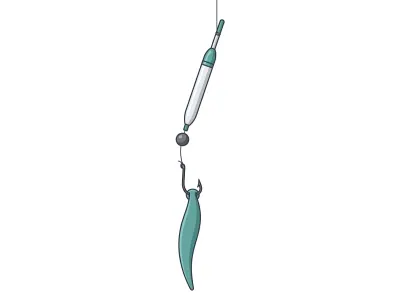
Walleye · Trolling
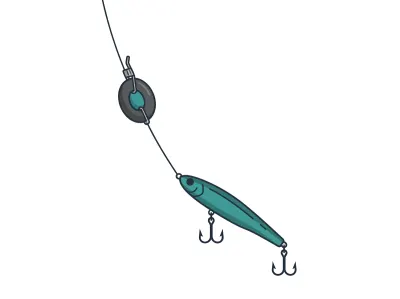
Snap Weights + Stickbaits
4–5" suspending or slow-floating stickbait
Smallmouth bass · Soft plastics
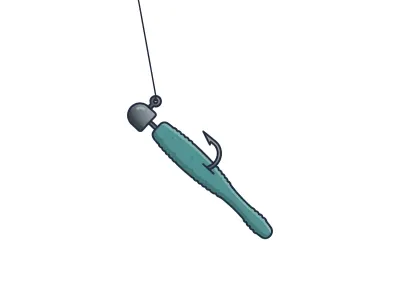
Ned Rig
2.75" finesse stickbait or craw-style Ned bait
Smallmouth bass · Soft plastics
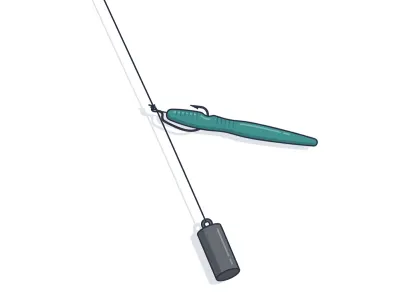
Drop Shot (Finesse Plastic)
4" finesse worm or 3" minnow-profile plastic
Largemouth bass · Soft plastics
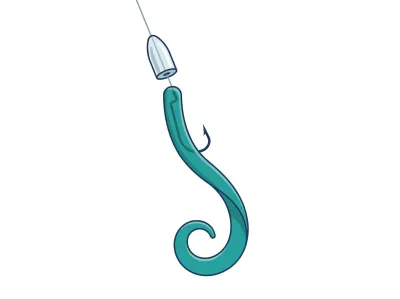
Texas-Rigged Worm
7" ribbon-tail or straight-tail plastic worm
Largemouth bass · Soft plastics
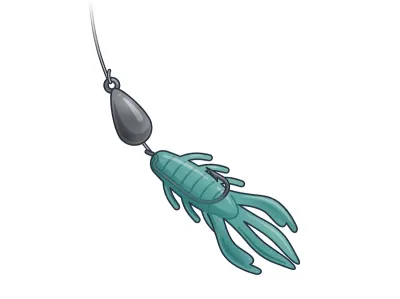
Free Rig
Creature bait or magnum finesse worm
Full setups, including hooks, weights and line, are on the live map. As an Amazon Associate I earn from qualifying purchases.
MN DNR · in their words
From the 2025 survey
Rainy Lake is part of the statewide Large Lake Program, an intensive fisheries management program on the 10 largest Walleye lakes in Minnesota. The Large Lake Program includes annual standard fish assessments, annual water quality monitoring, and regularly scheduled creel surveys. A variety of sampling gear is used during standard assessments to collect the various fish species and life stages. These gear types include gill nets, trap nets, beach seines, and an electrofishing boat on Rainy Lake. Sampling for each gear type is conducted at the same time and place each year to determine population trends for the major species. Data is also collected on length, weight, age, and growth for each of the major species.
Excellent Walleye angling opportunities continue to exist on Rainy Lake. The 2025 Walleye gill net catch rate was 7.2 fish per net, which is greater than the historic average of 6.1 fish per net for Rainy Lake. Walleye catch rates have increased following historic overfishing prior to the 1990s. Rainy Lake produced a good hatch of Walleyes in 2021 and most of these age-4 Walleyes in the 2025 survey were in the 12 to 14-inch length groups but overall ranged from 9.2 to 20.4 inches long. The 2025 survey also caught a good number of age-3 Walleyes from the 2022 year-class. Most fish from this year-class were in the nine- to 11-inch length groups but ranged in length from 8.8 to 17.7 inches long. Overall, the 2025 survey caught above average numbers of seven to 10-inch and 12 to 14-inch Walleyes. Rainy Lake also produces large Walleyes over 25 inches for those interested in catching memorable and trophy-sized Walleyes. The good size distribution we are currently seeing in Rainy Lake Walleyes is the result of consistent recruitment in recent years. Overall, gill netted Walleyes ranged in length from 6.1 to 26.8 inches and had an average length of 13.4 inches. There is a special regulation for Walleye on Rainy Lake; an 18-26-inch protected slot, with one fish allowed over 26 inches, and a four-fish bag limit. The goal of the regulation is to keep harvest at a safe level and maintain adequate spawning stock.
Read the full DNR narrative
Sauger numbers are low, growth is slow, and they generally do not reach a large size in Rainy Lake. The 2025 overall gill net catch rate was 1.7 Sauger per net. Lengths ranged from 7.2 to 14.4 inches and averaged 10.1 inches. Eighty percent of Saugers caught in gill nets were less than 11 inches long. Occasionally larger, harvestable-size Sauger are encountered in and around Black Bay and Sand Bay. While anglers can occasionally catch larger Sauger in these areas, the species is not a primary target for harvest on Rainy Lake.
The 2025 gill net catch of Northern Pike was 2.7 fish per net, slightly more than the historic average for Rainy. Northern Pike gill net catch rates have historically been low on Rainy Lake. However, Northern Pike grow relatively fast and reach large and even trophy sizes. Pike ranged from 17.5 to 39.4 inches in 2025. The average length was 26.9 inches. Anglers regularly report catching Pike over 40 inches, making Rainy Lake a popular destination for trophy Pike fishing. These large fish provide exciting angling action and help maintain the ecological balance of the lake by preying on smaller fish species.
Yellow Perch numbers and sizes were at historic highs from 2003-2012. The record high catch rate occurred in 2012 at 13.5 per net. The 2025 gill net catch rate was 7.3 per net which is similar to the long-term average for Rainy Lake. Rainy Lake saw good Perch production from the 2018, 2019, and 2020 year-classes. In fact, the 2020 year-class appears to be one of the strongest ever produced. Weaker year-classes were produced in 2021 and 2022, but preliminary numbers suggest the 2024 year-class may be above average. Overall, 2025 Yellow Perch lengths ranged from 4.8 to 11.4 inches and the average was 8.1 inches. Yellow Perch size structure has improved over time providing more opportunity for anglers to harvest quality-sized fish. Fifty-five percent of the 2025 Yellow Perch caught in gill nets were eight inches or greater in length. These conditions give anglers ample opportunity to harvest quality-sized perch while still maintaining a sustainable population for the future.
Rainy Lake is home to a good Smallmouth Bass fishery both in numbers and size structure. Smallmouth Bass over 19 inches are often caught in our sampling gear and by anglers. Harvest numbers are low on Rainy Lake, and angler opportunities in 2025 should remain good.
Trap nets are set in Black Bay and the lower Rat Root River each spring targeting adult Black Crappies. A total of 162 crappies were caught in 2025 for a catch rate of 8.1 per net, which is above average for Rainy Lake. Black Crappie catch rates have been above average in eight of the past nine surveys. Good Black Crappie reproduction and recruitment on Rainy was observed from the 2016, 2017, 2019, and 2020 year-classes and is the driver of the high catch rates in recent years. Lengths ranged from 5.5 to 14.7 inches and averaged 11.2 inches in 2025. Fifty-nine percent of the catch was from the 2020 year-class and an additional 11.4 percent from the 2017 year-class. The 2020 year-class dominated the 2025 catch and ranged from 9.6 to 12.4 inches and averaged 10.7 inches long. Ninety percent of fish were over 10 inches, and 27 percent exceeded 12 inches, providing excellent angling opportunities for panfish enthusiasts seeking both numbers and trophy-sized crappies.
Rainy Lake is infested with spiny waterfleas and zebra mussels. Anglers and boaters should always take preventative measures to avoid moving invasive species to other lakes. For more information on invasive species and other DNR programs, go to the DNR website at mndnr.gov.
Narrative text from the Minnesota DNR lake survey.
Recent reports
Rainy Lake fishing reports
Recent reports on Rainy Lake from guides, tournaments and regular anglers. Anything posted in the last two weeks also bumps the matching spots on the live map, so you'll see a "matches a recent report" tag on them.
Public water access
Getting on the water
- Rainy Lake, Black Bay Narrows Rainy Lake Visitor Center (trailer launch)
- Rainy Lake, Dove Island (trailer launch)
- Rainy Lake, Frank Bohman Memorial (trailer launch)
- Rainy Lake, Tilson (trailer launch)
- Rainy Lake - Tilson Bay Fishing Pier (fishing pier)
DNR bathymetry
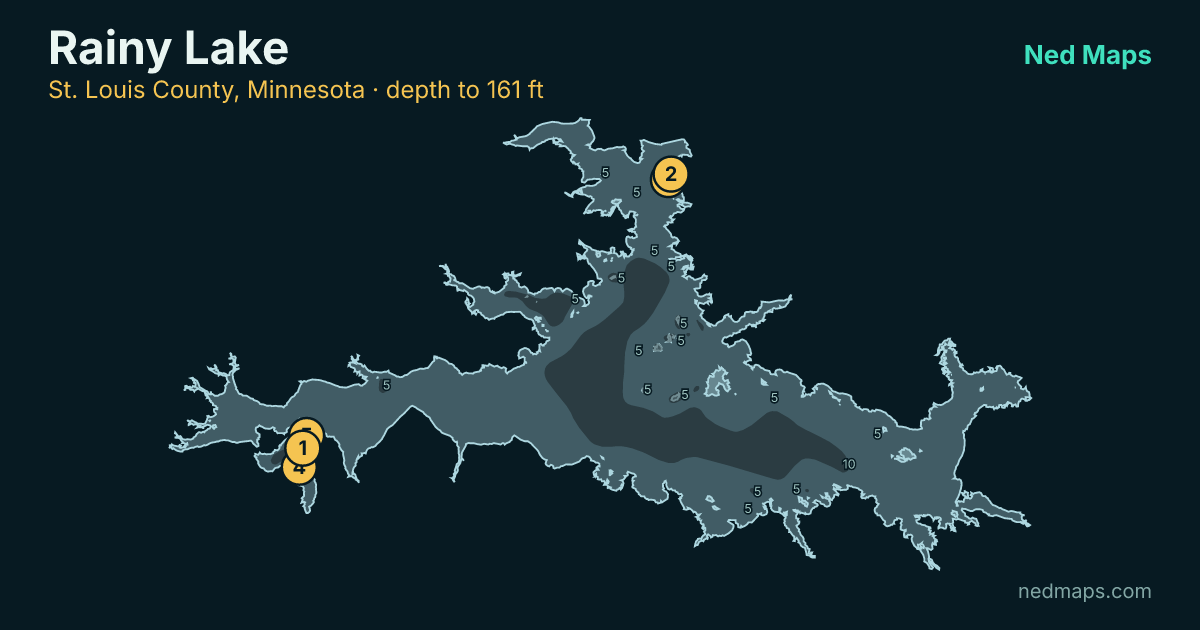
Rainy Lake depth map
Within 30 miles
Nearby lakes
- Rod Smith Pond · 2 ac · 11.8 mi
- Rat Root Lake · 734 ac · 19.2 mi
- Locator Lake · 133 ac · 20.5 mi
- War Club Lake · 80 ac · 21.4 mi
- Quill Lake · 85 ac · 22.6 mi
- Loiten Lake · 94 ac · 23.7 mi
- Kabetogama Lake · 24,034 ac · 25.4 mi
- Shoepack Lake · 299 ac · 26.2 mi
Quick answers
Frequently asked questions
How deep is Rainy Lake?
Rainy Lake reaches 161 ft at its deepest point with a mean depth of 32 ft; about 9% of the lake is littoral (15 ft or shallower).
How big is Rainy Lake?
Rainy Lake covers 210,200 acres with about 2176.3 miles of shoreline.
How clear is the water in Rainy Lake?
DNR Secchi readings on Rainy Lake average 9.2 ft of visibility, middling clarity for a Minnesota lake.
What fish are in Rainy Lake?
Minnesota DNR surveys (most recently 2025) record walleye, largemouth bass, smallmouth bass, northern pike, bluegill, crappie, yellow perch, lake sturgeon, rock bass, sauger.
Is Rainy Lake stocked?
No stocking is on record for Rainy Lake in the DNR's stocking database.
Does Rainy Lake have a public access?
Yes. Rainy Lake has 5 public access sites, including Rainy Lake, Black Bay Narrows Rainy Lake Visitor Center (trailer launch).
How big do walleye get in Rainy Lake?
The biggest walleye measured in recent DNR surveys taped 31"; the size-history table on this page tracks the biggest fish in each survey back to 2018.
When was Rainy Lake last surveyed?
The Minnesota DNR last surveyed Rainy Lake in 2025, the most recent of 39 surveys on record.
Page updated .

Featured guide spot
Your guide service here
One featured guide per lake, with your photo, your writeup and a link straight to your booking page. Free through December 31, 2026.
Then $20 a month from January. Cancel any time.
The live map adds today's conditions and ranked spots for Rainy Lake, plus a trip plan you can share:
Open Rainy Lake on the live map → Fished it lately? Write a report