Minnesota · Cass County
Portage Lake Fishing guide
Portage Lake covers 277 acres in Cass County, Minnesota, reaching 84 ft at its deepest point. Secchi readings average around 20 ft of visibility. The Minnesota DNR has surveyed the lake 13 times, most recently in 2025, with walleye, largemouth bass, smallmouth bass and northern pike in the nets.
DNR survey data
Fish species
WalleyeLast stocked 2025Fair numbers1.8per gill net19"Typical22"Biggest
Lengths measured · 12 fish
Recent · 2025Lengths measured · 12 fish
2025Lengths measured · 21 fish
2020Lengths measured · 3 fish
2015Only 3 fish measured that year — too few to read as a shape.
Lengths measured · 38 fish
2010Largemouth bassFair numbers42.6per hr (electrofishing)12"Typical19"Biggest
Lengths measured · 124 fish
Recent · 2025Lengths measured · 110 fish
2025Lengths measured · 14 fish
2025Lengths measured · 13 fish
2020Lengths measured · 110 fish
2015Smallmouth bassGood numbers26.3per hr (electrofishing)12"Typical18"Biggest
Lengths measured · 75 fish
Recent · 2025Lengths measured · 68 fish
2025Lengths measured · 7 fish
2025Only 7 fish measured that year — too few to read as a shape.
Lengths measured · 14 fish
2020Lengths measured · 75 fish
2015Northern pikeJust a few4.8per gill net22"Typical39"Biggest
Lengths measured · 32 fish
Recent · 2025Lengths measured · 32 fish
2025Lengths measured · 16 fish
2020Lengths measured · 19 fish
2015Lengths measured · 30 fish
2010Last recorded in the 1985 survey and not seen since.
BluegillJust a few13.4per trap net6"Typical8"Biggest
Lengths measured · 137 fish
Recent · 2025Lengths measured · 137 fish
2025Lengths measured · 95 fish
2020Lengths measured · 121 fish
2015Lengths measured · 528 fish
2010Yellow perchGood numbers7.5per gill net6"Typical9"Biggest
Lengths measured · 45 fish
Recent · 2025Lengths measured · 45 fish
2025Lengths measured · 9 fish
2020Only 9 fish measured that year — too few to read as a shape.
Lengths measured · 30 fish
2015Lengths measured · 54 fish
2010No recent survey rating.
Rates come from standard DNR survey gear (gill nets, trap nets, electrofishing), judged against statewide benchmarks for the same gear, so the same number of fish per net can read differently for two species. Where the standard gear can't count a species reliably, only presence and size are listed. Typical is the middle fish of those measured. Open a row for the full length spread, survey by survey.
How to fish Portage Lake through the year
Smallmouth bass
- Spring
- Smallmouth are on shallow rock, gravel and sand where they spawn. At 20 ft of clarity, fish them deeper and lighter than usual.
- Early summer
- Smallmouth are post-spawn on rock points, gravel bars and the adjacent breaks.
- Summer
- Smallmouth are on rock humps, points and hard-bottom breaks. On a lake that drops to 84 ft, check the deep edge of that structure too.
- Fall
- Smallmouth are bunched tight on deep rock, so find one and you have found the school.
Walleye
- Spring
- Walleye are shallow, on and just off the spawning flats and the first green weeds. At 20 ft of clarity, fish them deeper and lighter than usual.
- Early summer
- Walleye are setting up on the outside weed edge, points and shallow structure.
- Summer
- Walleye are working the weed edge, points and any wind-blown structure. On a lake that drops to 84 ft, check the deep edge of that structure too.
- Fall
- Walleye are packing onto the sharpest breaks and points as the water cools, in big schools with short windows.
Season patterns for each species. Open the live map for today's wind, light and water temp.
Size history
Biggest fish by survey year
| Survey year | Smallmouth bass | Walleye | Largemouth bass |
|---|---|---|---|
| 2025 | 18" | 22" | 19" |
| 2020 | 16" | 25" | 16" |
| 2015 | 17" | 25" | 17" |
| 2010 | 18" | 28" | 17" |
| 2005 | 17" | 24" | 17" |
| 2000 | 18" | 26" | 18" |
| 1995 | 15" | 24" | 19" |
Longest fish measured by DNR survey crews in each year's nets. Survey gear samples the population, so the lake usually holds larger fish than any survey measured.
Suggested tackle
What to bring
Top presentations for this lake's structure and clarity:
Smallmouth bass · Soft plastics
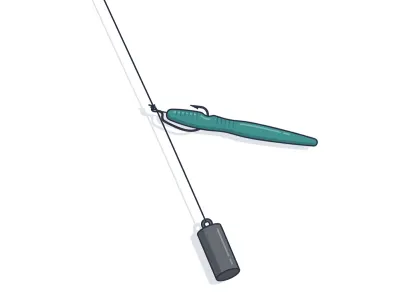
Drop Shot (Finesse Plastic)
4" finesse worm or 3" minnow-profile plastic
Smallmouth bass · Jigs & bladed
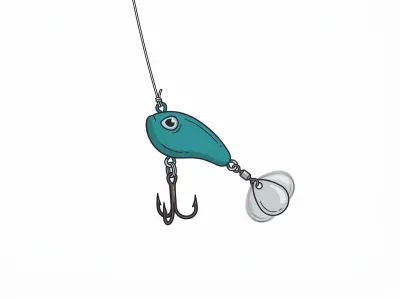
Tail Spinner
Compact lead body with a free-spinning blade on the tail
Walleye · Live bait

Live-Bait (Lindy) Rig + Leech/Crawler
jumbo leech or half a nightcrawler
Walleye · Trolling
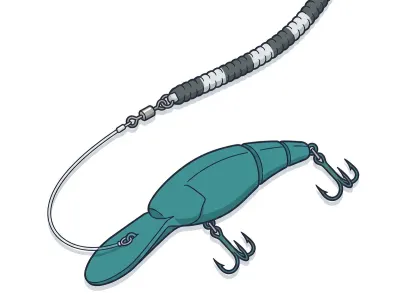
Leadcore Line + Crankbaits
4–5" mid-diving crankbait behind a long leadcore run
Largemouth bass · Soft plastics
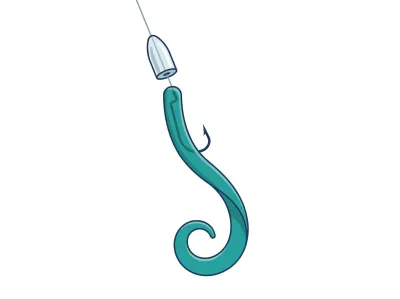
Texas-Rigged Worm
7" ribbon-tail or straight-tail plastic worm
Largemouth bass · Soft plastics
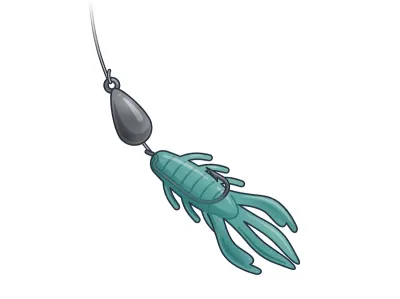
Free Rig
Creature bait or magnum finesse worm
Full setups, including hooks, weights and line, are on the live map. As an Amazon Associate I earn from qualifying purchases.
DNR stocking records
Stocking history
| Year | Species | Stocked |
|---|---|---|
| 2025 | Walleye | 47,730 fry |
| 2024 | Walleye | 48,285 fry |
| 2023 | Walleye | 48,600 fry |
| 2022 | Walleye | 48,285 fry |
| 2021 | Walleye | 49,025 fry |
| 2019 | Walleye | 48,960 fry |
| 2018 | Walleye | 49,765 fry |
| 2017 | Walleye | 48,600 fry |
MN DNR · in their words
From the 2025 survey
Portage Lake (DOW# 11-0476; Lake Class 23) is a 277-acre lake with 95 littoral acres, 3.1 miles of shoreline and a maximum depth of 84 feet located near Hackensack, MN. A US Forest Service owned public access is located on the south shore. The Minnesota Department of Natural Resources has classified Minnesota's lakes into 43 different classes based on physical, chemical and other characteristics. Portage Lake is in Lake Class 23; lakes in this class tend to be deep, have a low percentage of area less than 15 feet deep, have hard water and are very clear. Other area lakes in this class include Hay, Horseshoe, Island, Mule, Ponto and Stony lakes. The lake is primarily managed for Black Crappie, Largemouth Bass, Northern Pike and Smallmouth Bass, and secondarily for Bluegill, Walleye and Yellow Perch. A catch and release Bass regulation was implemented in 1996. In 2018, this regulation was modified to a 14 to 20 inch Protected Slot Limit (PSL) with one over 20 inches allowed in possession. The purpose of this survey was to assess the effectiveness of the special regulation.
Quality angling opportunities exist for Largemouth Bass and Smallmouth Bass in Portage Lake.
Read the full DNR narrative
Largemouth Bass were abundant, lengths ranged from 8 to 19 inches, with an average length of 13 inches. Sampled Largemouth Bass were slightly below length based management goals in this survey. Smallmouth Bass were abundant, lengths ranged from 7 to 18 inches, with an average length of 13 inches. Length based management goals were partially met in this survey.
People can have significant impacts on lakes and the fish populations they support. Harvest, lakeshore development, removal of shoreline vegetation, and introductions of invasive species can all adversely affect fish populations. Currently no aquatic invasive species (AIS) have been identified in Portage Lake. AIS are moved from infested to non-infested waters by anglers, boaters, and lake shore owners and can adversely impact lakes and fish populations. To avoid spreading AIS, lake users are required to remove all aquatic plants or animals from their watercraft and drain all water from their boat before leaving the access. If you suspect an infestation of an invasive species in this lake, save a specimen and report it to a local natural resource office. Additional information on all of these topics can be found on the DNR website (www.dnr.state.mn.us) or by contacting the Walker Area Fisheries office.
Narrative text from the Minnesota DNR lake survey.
Recent reports
Portage Lake fishing reports
Recent reports on Portage Lake from guides, tournaments and regular anglers. Anything posted in the last two weeks also bumps the matching spots on the live map, so you'll see a "matches a recent report" tag on them.
Public water access
Getting on the water
- DNR access: South shore off County Rd. #50. Earth access.
DNR bathymetry
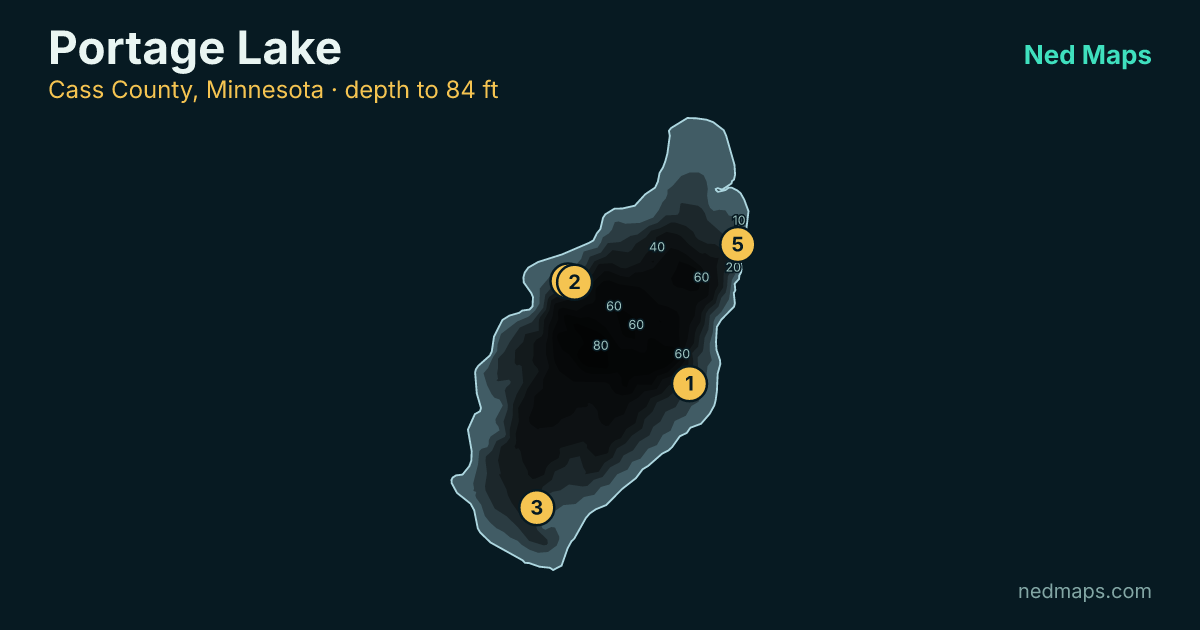
Portage Lake depth map
Within 30 miles
Nearby lakes
- Ten Mile Lake · 5,080 ac · 2.6 mi
- Bass Lake · 278 ac · 2.7 mi
- Little Bass Lake · 114 ac · 4.1 mi
- Stony Lake · 563 ac · 4.2 mi
- Howard Lake · 386 ac · 4.8 mi
- Diamond Lake · 77 ac · 4.9 mi
- Birch Lake · 1,267 ac · 4.9 mi
- Hovde Lake · 133 ac · 5 mi
Quick answers
Frequently asked questions
How deep is Portage Lake?
Portage Lake reaches 84 ft at its deepest point; about 34% of the lake is littoral (15 ft or shallower).
How big is Portage Lake?
Portage Lake covers 277 acres with about 3.1 miles of shoreline.
How clear is the water in Portage Lake?
DNR Secchi readings on Portage Lake average 20 ft of visibility, clear water for a Minnesota lake.
What fish are in Portage Lake?
Minnesota DNR surveys (most recently 2025) record walleye, largemouth bass, smallmouth bass, northern pike, muskellunge, bluegill, crappie, yellow perch, rock bass.
Is Portage Lake stocked?
Yes. The DNR stocked walleye in 2025; the stocking table on this page lists every year back to 2017.
Does Portage Lake have a public access?
Yes. Portage Lake has one public access site: DNR access (South shore off County Rd. #50. Earth access.).
How big do smallmouth bass get in Portage Lake?
The biggest smallmouth bass measured in recent DNR surveys taped 18"; the size-history table on this page tracks the biggest fish in each survey back to 1995.
When was Portage Lake last surveyed?
The Minnesota DNR last surveyed Portage Lake in 2025, the most recent of 13 surveys on record.
Page updated .

Featured guide spot
Your guide service here
One featured guide per lake, with your photo, your writeup and a link straight to your booking page. Free through December 31, 2026.
Then $20 a month from January. Cancel any time.
The live map adds today's conditions and ranked spots for Portage Lake, plus a trip plan you can share:
Open Portage Lake on the live map → Fished it lately? Write a report