Minnesota · Grant County
Pelican Lake Fishing guide
Pelican Lake sits in Grant County, Minnesota, and covers 3,761 acres, reaching 21 ft at its deepest point. Average water clarity runs about 2.5 ft. The Minnesota DNR has surveyed the lake 17 times, most recently in 2025, with walleye, largemouth bass, smallmouth bass and northern pike in the nets.
DNR survey data
Fish species
WalleyeLast stocked 2025Excellent numbers8.1per gill net15"Typical27"Biggest
Lengths measured · 394 fish
Recent · 2021 + 2023 + 2024 + 2025Lengths measured · 167 fish
2025Lengths measured · 74 fish
2024Lengths measured · 88 fish
2023Lengths measured · 65 fish
2021Largemouth bassFair numbers33.4per hr (electrofishing)11"Typical19"Biggest
Lengths measured · 140 fish
Recent · 2021 + 2023 + 2024 + 2025Lengths measured · 36 fish
2025Lengths measured · 4 fish
2024Only 4 fish measured that year — too few to read as a shape.
Lengths measured · 9 fish
2023Only 9 fish measured that year — too few to read as a shape.
Lengths measured · 91 fish
2021Northern pikeJust a few3.8per gill net22"Typical36"Biggest
Lengths measured · 206 fish
Recent · 2021 + 2023 + 2024 + 2025Lengths measured · 86 fish
2025Lengths measured · 55 fish
2024Lengths measured · 31 fish
2023Lengths measured · 34 fish
2021BluegillJust a few22.8per trap net4"Typical9"Biggest
Lengths measured · 776 fish
Recent · 2021 + 2023 + 2024 + 2025Lengths measured · 187 fish
2025Lengths measured · 33 fish
2024Lengths measured · 44 fish
2023Lengths measured · 512 fish
2021CrappieJust a few2.3per trap net6"Typical14"Biggest
Lengths measured · 311 fish
Recent · 2021 + 2023 + 2024 + 2025Lengths measured · 120 fish
2025Lengths measured · 56 fish
2024Lengths measured · 57 fish
2023Lengths measured · 78 fish
2021Yellow perchLast stocked 2020Fair numbers4.2per gill net5"Typical14"Biggest
Lengths measured · 204 fish
Recent · 2021 + 2023 + 2024 + 2025Lengths measured · 13 fish
2025Lengths measured · 23 fish
2024Lengths measured · 39 fish
2023Lengths measured · 129 fish
2021Rates come from standard DNR survey gear (gill nets, trap nets, electrofishing), judged against statewide benchmarks for the same gear, so the same number of fish per net can read differently for two species. Where the standard gear can't count a species reliably, only presence and size are listed. Typical is the middle fish of those measured. Open a row for the full length spread, survey by survey.
How to fish Pelican Lake through the year
Walleye
- Spring
- Walleye are shallow, on and just off the spawning flats and the first green weeds. In 2.5 ft of visibility, they sit shallower than you think.
- Early summer
- Walleye are setting up on the outside weed edge, points and shallow structure.
- Summer
- Walleye are working the weed edge, points and any wind-blown structure. With 81% of this lake 15 ft or shallower, the weed edge is the main event.
- Fall
- Walleye are packing onto the sharpest breaks and points as the water cools, in big schools with short windows.
Largemouth bass
- Spring
- Largemouth are moving up into the warming bays and flats, staging around wood, docks and new weeds to spawn. In 2.5 ft of visibility, they sit shallower than you think.
- Early summer
- Largemouth are on the shallow spawning flats and protected bays, where beds go on firm bottom next to isolated cover.
- Summer
- Largemouth are in and along the weeds: cabbage and milfoil edges, matted cover and shade. With 81% of this lake 15 ft or shallower, the weed edge is the main event.
- Fall
- Largemouth are chasing bait back onto the flats and into the remaining green weeds, feeding hard and shallow before the freeze.
Season patterns for each species. Open the live map for today's wind, light and water temp.
Size history
Biggest fish by survey year
| Survey year | Walleye | Largemouth bass | Smallmouth bass |
|---|---|---|---|
| 2025 | 25" | 18" | 20" |
| 2024 | 25" | 19" | — |
| 2023 | 27" | 18" | — |
| 2021 | 26" | 19" | — |
| 2017 | 26" | 18" | — |
| 2013 | 27" | 19" | — |
| 2009 | 26" | 19" | — |
| 2005 | 24" | 19" | — |
Longest fish measured by DNR survey crews in each year's nets. Survey gear samples the population, so the lake usually holds larger fish than any survey measured.
Suggested tackle
What to bring
Top presentations for this lake's structure and clarity:
Walleye · Live bait

Live-Bait (Lindy) Rig + Leech/Crawler
jumbo leech or half a nightcrawler
Walleye · Soft plastics
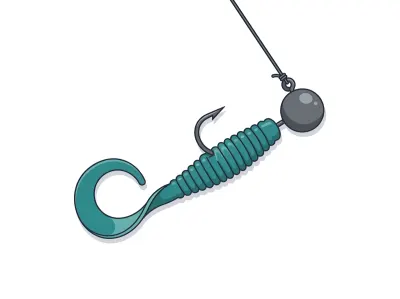
Curly-Tail Grub on Jig
3" curly-tail grub threaded on a round jighead
Largemouth bass · Hardbaits
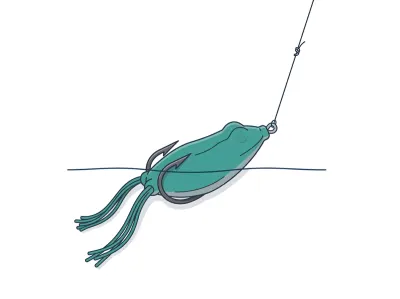
Hollow-Body Frog
3–3.5" hollow-body frog
Largemouth bass · Soft plastics
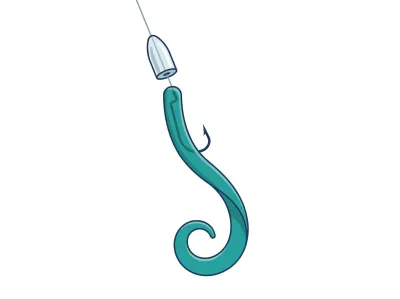
Texas-Rigged Worm
7" ribbon-tail or straight-tail plastic worm
Smallmouth bass · Soft plastics
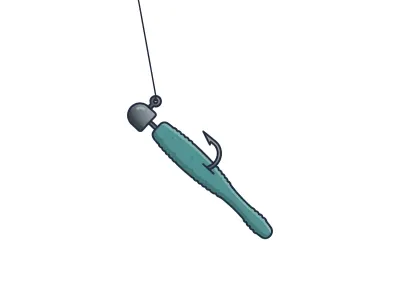
Ned Rig
2.75" finesse stickbait or craw-style Ned bait
Smallmouth bass · Soft plastics
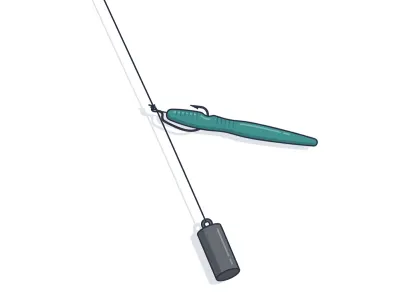
Drop Shot (Finesse Plastic)
4" finesse worm or 3" minnow-profile plastic
Full setups, including hooks, weights and line, are on the live map. As an Amazon Associate I earn from qualifying purchases.
DNR stocking records
Stocking history
| Year | Species | Stocked |
|---|---|---|
| 2025 | Walleye | 1,521,500 fry · 6,900 fingerlings |
| 2023 | Walleye | 1,521,500 fry · 2,916 fingerlings |
| 2021 | Walleye | 1,521,500 fry |
| 2020 | Yellow Perch | 21,750 adults |
| 2019 | Walleye | 1,521,500 fry |
| 2017 | Walleye | 1,522,000 fry |
MN DNR · in their words
From the 2025 survey
Pelican Lake is a large, relatively shallow, and highly productive basin located south of Ashby in Grant County. Surface area is estimated at 3,760 acres. Mean and maximum depths are 10 and 21 feet, respectively. Pelican Lake is located within the Pomme de Terre River watershed. Residential development is minimal and most of the immediate watershed is in agricultural production. Water quality is seasonally impaired due to high nutrient levels. Water clarity measurements are typically between 2 and 4 feet, but water clarity can be greatly reduced during summer algal blooms. A public access with limited parking is available on the west shoreline off State Highway 78. Boaters should be aware of multiple shallow rock areas found throughout the lake. These areas are posted with caution buoys. Anglers should also be aware of fish consumption guidelines for bullhead and crappie due to mercury contaminants. For more information regarding mercury contaminants in fish see the following: https://www.health.state.mn.us/communities/environment/fish/faq.html
A standard MN DNR lake survey was completed in 2025 to assess the fish community of Pelican Lake. Walleye abundance has increased substantially in recent years. In fact, the 2025 catch rate (13.4/gill net) was the highest catch rate documented in standardized surveys dating back to 1993. High abundance is due to consistent recruitment of young fish in recent years. Consecutive strong year classes were produced in 2022, 2023, and 2024, and these year classes comprised approximately 84% of the gill net sample. Abundance of younger, smaller fish resulted in a small average size of 13.2 inches and 1.1 pounds. Walleye grow rapidly in this productive basin and typically reach 15 inches after three growing seasons. This population is sustained through natural reproduction, but supplemental fry stockings occur on an alternate year basis. The Northern Pike population tends to exhibit lower abundance and moderate size structure. In 2025, mean size was 22.6 inches and 2.6 pounds and the largest pike sampled measured 33.5 inches. Anglers are reminded that new pike zone regulations were implemented in 2018. Pelican Lake is located in the North-central Zone. Anglers can now keep up to 10 pike but not more than two can be over 26 inches in length. All pike between 22-26 inches must be immediately released. Yellow Perch abundance has decreased since the last standard survey. Smaller fish continue to dominate this population and very few harvestable-sized perch are available. Both Black and White Crappie are present in Pelican Lake and both populations are currently dominated by smaller fish. Mean length of Black and White Crappie collected in trap nets was just 6.0 and 5.6 inches, respectively. Black Crappie are more abundant and attain larger sizes. The largest Black Crappie sampled measured almost 14.5 inches. Crappie fishing should improve in the near future as these small fish grow into sizes desired by anglers. Bluegill also offer abundant panfishing opportunities, but size structure of this population tends to be skewed towards small- to medium-sized fish. Average length was just 4.9 inches and only five Bluegill exceeding 8 inches were sampled. Extremely low water levels during our spring Largemouth Bass electrofishing survey negatively affected our ability to accurately sample this population. Recent previous surveys suggest that this population tends to exhibit higher abundance with a size structure dominated by smaller fish. However, larger bass are not uncommon as multiple fish exceeding 18 inches were collected in trap nets in 2025. Smallmouth Bass are also present in Pelican Lake. Two large individuals, both exceeding 20 inches, were sampled in 2025, representing the first time this species has been documented in this lake.
Read the full DNR narrative
Other species sampled during the 2025 survey included Bigmouth Buffalo, Black, Brown, and Yellow Bullhead, Common Carp, Golden Shiner, Green Sunfish, hybrid sunfish, Pumpkinseed, and White Sucker. The next standard lake survey is tentatively scheduled for 2029.
Narrative text from the Minnesota DNR lake survey.
Recent reports
Pelican Lake fishing reports
Recent reports on Pelican Lake from guides, tournaments and regular anglers. Anything posted in the last two weeks also bumps the matching spots on the live map, so you'll see a "matches a recent report" tag on them.
Public water access
Getting on the water
- Pelican Lake (trailer launch)
DNR bathymetry
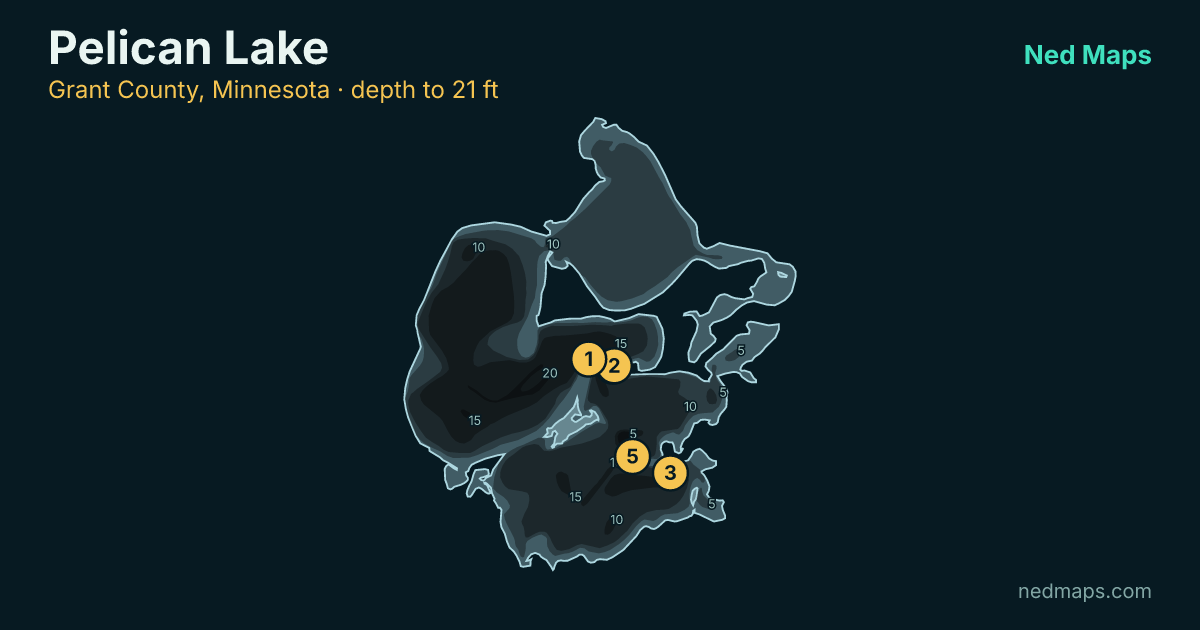
Pelican Lake depth map
Within 30 miles
Nearby lakes
- Lake Ina · 218 ac · 3.6 mi
- Pomme de Terre Lake · 1,816 ac · 5.2 mi
- Sewell Lake · 369 ac · 6 mi
- Jolly Ann Lake · 326 ac · 6.9 mi
- Clear Lake · 399 ac · 7.8 mi
- Middle Lake · 225 ac · 8.4 mi
- Johnson Lake · 419 ac · 8.5 mi
- Long Lake · 202 ac · 8.8 mi
Quick answers
Frequently asked questions
How deep is Pelican Lake?
Pelican Lake reaches 21 ft at its deepest point with a mean depth of 10 ft; about 81% of the lake is littoral (15 ft or shallower).
How big is Pelican Lake?
Pelican Lake covers 3,761 acres with about 27.8 miles of shoreline.
How clear is the water in Pelican Lake?
DNR Secchi readings on Pelican Lake average 2.5 ft of visibility, on the stained end for a Minnesota lake.
What fish are in Pelican Lake?
Minnesota DNR surveys (most recently 2025) record walleye, largemouth bass, smallmouth bass, northern pike, bluegill, crappie, yellow perch.
Is Pelican Lake stocked?
Yes. The DNR stocked walleye in 2025; the stocking table on this page lists every year back to 2017.
Does Pelican Lake have a public access?
Yes. Pelican Lake has one public access site: Pelican Lake (trailer launch).
How big do walleye get in Pelican Lake?
The biggest walleye measured in recent DNR surveys taped 27"; the size-history table on this page tracks the biggest fish in each survey back to 2005.
When was Pelican Lake last surveyed?
The Minnesota DNR last surveyed Pelican Lake in 2025, the most recent of 17 surveys on record.
Page updated .

Featured guide spot
Your guide service here
One featured guide per lake, with your photo, your writeup and a link straight to your booking page. Free through December 31, 2026.
Then $20 a month from January. Cancel any time.
The live map adds today's conditions and ranked spots for Pelican Lake, plus a trip plan you can share:
Open Pelican Lake on the live map → Fished it lately? Write a report