Minnesota · Hennepin County
Minnetonka Lake Fishing guide
Minnetonka Lake is a 14,206-acre lake in Hennepin County, Minnesota, reaching 113 ft at its deepest point. Average water clarity runs about 8.5 ft. The Minnesota DNR has surveyed the lake 15 times, most recently in 2022, with walleye, largemouth bass, smallmouth bass and northern pike in the nets.
DNR survey data
Fish species
WalleyeLast stocked 2025Fair numbers2.5per gill net19"Typical26"Biggest
Lengths measured · 66 fish
Recent · 2022Lengths measured · 66 fish
2022Lengths measured · 42 fish
2019Lengths measured · 78 fish
2016Lengths measured · 62 fish
2014Largemouth bassPresent0.3per gill net10"Typical14"Biggest
Lengths measured · 10 fish
Recent · 2022Lengths measured · 10 fish
2022Lengths measured · 3 fish
2019Only 3 fish measured that year — too few to read as a shape.
Lengths measured · 156 fish
2016Lengths measured · 5 fish
2014Only 5 fish measured that year — too few to read as a shape.
Northern pikeGood numbers12.2per gill net21"Typical35"Biggest
Lengths measured · 295 fish
Recent · 2022Lengths measured · 295 fish
2022Lengths measured · 273 fish
2019Lengths measured · 333 fish
2016Lengths measured · 292 fish
2014Present and managed by the DNR.
BluegillOne of the best around92per trap net6"Typical8"Biggest
Lengths measured · 2970 fish
Recent · 2022Lengths measured · 2970 fish
2022Lengths measured · 800 fish
2019Lengths measured · 2464 fish
2016Lengths measured · 890 fish
2014CrappieJust a few1.9per trap net8"Typical12"Biggest
Lengths measured · 117 fish
Recent · 2022Lengths measured · 117 fish
2022Lengths measured · 70 fish
2019Lengths measured · 224 fish
2016Lengths measured · 44 fish
2014Yellow perchFair numbers3.1per gill net6"Typical8"Biggest
Lengths measured · 77 fish
Recent · 2022Lengths measured · 77 fish
2022Lengths measured · 239 fish
2019Lengths measured · 273 fish
2016Lengths measured · 279 fish
2014Rock bassExcellent numbers5per gill net7"Typical9"Biggest
Lengths measured · 146 fish
Recent · 2022Lengths measured · 146 fish
2022Lengths measured · 112 fish
2019Lengths measured · 105 fish
2016Lengths measured · 41 fish
2014Rates come from standard DNR survey gear (gill nets, trap nets, electrofishing), judged against statewide benchmarks for the same gear, so the same number of fish per net can read differently for two species. Where the standard gear can't count a species reliably, only presence and size are listed. Typical is the middle fish of those measured. Open a row for the full length spread, survey by survey.
How to fish Minnetonka Lake through the year
Northern pike
- Spring
- Pike are in the shallow bays and along new weed growth.
- Early summer
- Pike are on the outside weed edge and points.
- Summer
- Pike are on the deep weed edge and points near the coolest water they can find. On a lake that drops to 113 ft, check the deep edge of that structure too.
- Fall
- Pike are on the last green weeds and the breaks beside them, feeding heavily as the water drops.
Walleye
- Spring
- Walleye are shallow, on and just off the spawning flats and the first green weeds.
- Early summer
- Walleye are setting up on the outside weed edge, points and shallow structure.
- Summer
- Walleye are working the weed edge, points and any wind-blown structure. On a lake that drops to 113 ft, check the deep edge of that structure too.
- Fall
- Walleye are packing onto the sharpest breaks and points as the water cools, in big schools with short windows.
Season patterns for each species. Open the live map for today's wind, light and water temp.
Size history
Biggest fish by survey year
| Survey year | Northern pike | Walleye | Largemouth bass |
|---|---|---|---|
| 2022 | 35" | 26" | 14" |
| 2019 | 37" | 26" | 17" |
| 2016 | 34" | 27" | 18" |
| 2014 | 35" | 27" | 14" |
| 2012 | 33" | 24" | 13" |
| 2011 | 34" | 28" | 20" |
| 2010 | 34" | 28" | 7" |
| 2009 | 35" | 28" | — |
Longest fish measured by DNR survey crews in each year's nets. Survey gear samples the population, so the lake usually holds larger fish than any survey measured.
Suggested tackle
What to bring
Top presentations for this lake's structure and clarity:
Northern pike · Soft plastics

Paddletail Swimbait on Jighead
4–5" paddletail swimbait on a ball-head swimbait jighead
Northern pike · Muskie & pike
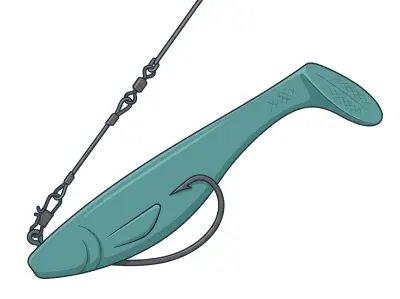
Soft Rubber (Bull Dawg / Medusa)
10" soft rubber body bait
Walleye · Live bait
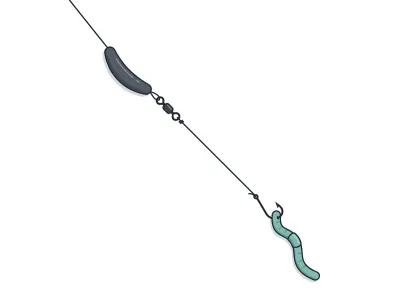
Live-Bait (Lindy) Rig + Leech/Crawler
jumbo leech or half a nightcrawler
Walleye · Trolling
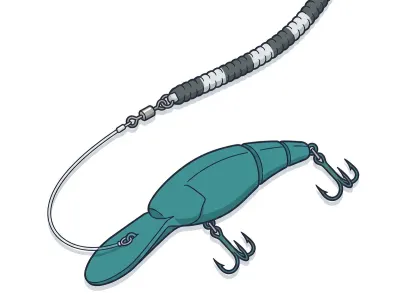
Leadcore Line + Crankbaits
4–5" mid-diving crankbait behind a long leadcore run
Largemouth bass · Soft plastics
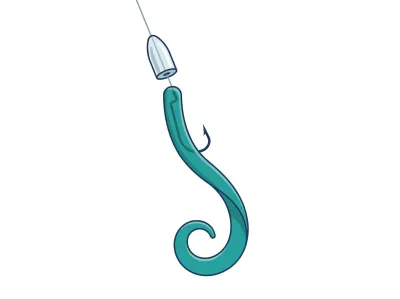
Texas-Rigged Worm
7" ribbon-tail or straight-tail plastic worm
Largemouth bass · Soft plastics
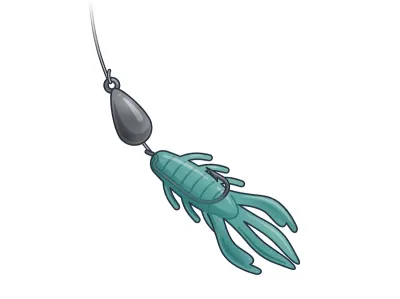
Free Rig
Creature bait or magnum finesse worm
Full setups, including hooks, weights and line, are on the live map. As an Amazon Associate I earn from qualifying purchases.
DNR stocking records
Stocking history
| Year | Species | Stocked |
|---|---|---|
| 2025 | Muskellunge | 1,170 yearlings |
| 2025 | Walleye | 10,500 yearlings |
| 2024 | Muskellunge | 2,515 fingerlings · 82 yearlings |
| 2024 | Walleye | 97,299 fingerlings |
| 2023 | Muskellunge | 1,611 fingerlings · 438 yearlings |
| 2022 | Muskellunge | 357 fingerlings · 856 yearlings · 3 adults |
| 2022 | Walleye | 134,341 fingerlings |
| 2021 | Muskellunge | 2,806 fingerlings · 266 adults |
| 2021 | Walleye | 6,400 yearlings |
| 2020 | Walleye | 81,050 fingerlings · 6,400 yearlings |
| 2019 | Muskellunge | 3,425 fingerlings |
| 2019 | Walleye | 77,920 fingerlings · 10,500 yearlings · 2,500 adults |
Stocking records before 2019 omitted.
MN DNR · in their words
From the 2022 survey
Introduction
Lake Minnetonka is a 14,206-acre lake in Hennepin County, with a maximum depth of 113 feet and an average depth of 30 feet. The lake is comprised of many connected bays and has a complex shoreline. Multiple public and private boat launches are located around Minnetonka, and the lake is popular with both anglers and recreational boaters. Naturally reproducing populations of Northern Pike and Largemouth Bass are present, and Walleye and Muskellunge populations are maintained by stocking.
Read the full DNR narrative
A Standard Survey was completed on Lake Minnetonka from June 6 through June 23, 2022. Sampling involved gill netting, trap netting, and water quality sampling. Sampling in Lake Minnetonka is distributed through three basins that differ in their habitat and water quality characteristics. Gill netting and trap netting effectively sample Northern Pike, Walleye, Yellow Perch, Bluegill and Black Crappie. The population trends of those species are described by this survey.
Population trends of Largemouth Bass and Muskellunge are not described by this survey. Largemouth Bass are sampled by nighttime spring electrofishing, and Muskellunge are sampled by large-frame trap netting during the spring. These sampling methods were not done during the 2022 survey.
Water Characteristics
Water clarity has been improving in Lake Minnetonka over the past several decades. The Northwest Bays are most fertile, primarily because they are the first recipients of the majority of surface runoff from the watershed. The Upper Lakes are intermediate in fertility, while the Lower Lakes are, relatively, the least fertile. The Minnehaha Creek Watershed District more closely monitors water quality in Lake Minnetonka. For more specific, detailed information about Lake Minnetonka water quality, see the District's website (http://www.minnehahacreek.org/data-center).
Walleye
Despite a long history of stocking, Walleye abundance has remained low in Lake Minnetonka. In 2022, the Walleye catch rate of 2.5 fish per gill net was higher than the 1.7 fish/net caught in 2019. Walleye catch rate has modestly increased throughout all basins. In the Lower Lakes, Walleye catch rate increased from 1.2 fish/net in 2019, to 2.8 fish/net in 2022. The Upper Lakes saw an increase in catch rate from 1.8 fish/net in 2019, to 2.0 fish/net in 2022. In the Northwest Bays, catch rate increased from 2.3 to 2.7 Walleye/net.
Walleye in Minnetonka tend to be large. Length of sampled fish ranged from 10.9 to 26.4 inches. Fish averaged 19.1 inches and 2.6 pounds. Average length varied throughout the basins, with fish averaging smaller size in the Northwest Bays (16.6 inches) than in the Lower Lakes (20.5 inches) and the Upper Lakes (19.1 inches). Walleye grew to 16.2 inches by age-3.
Northern Pike
The Northern Pike population in Lake Minnetonka is healthy and naturally reproducing. Abundance has historically been high, and it remained so in 2022. The Lower Lakes held the highest abundance of pike, and the Northwest Bays held the lowest numbers. The Northwest Bays also held the larger fish, where the average length was 24.7 inches. Average length in the Upper Lakes was 22.6 inches and in the Lower Lakes it was 21.2 inches. The largest Northern Pike in the 2022 survey was 35.4 inches and caught in the Lower Lakes.
As part of the North-Central Zone, Northern Pike harvest in Minnetonka is regulated by a possession limit of 10 fish, not more than 2 fish exceeding 26 inches, while respecting a 22-26 inch protected slot.
Yellow perch
Yellow Perch are important forage in Lake Minnetonka. Compared to similar lakes, perch abundance in Minnetonka was low in 2022. The fish have historically tended to be small in Minnetonka, however, recently there has been an increase in size structure. Lake-wide, 14% of the sampled Yellow Perch exceeded 8 inches. The increase in overall size structure was driven by the perch in the Upper Lakes, where 25% of the fish exceeded 8 inches, and in the Northwest Bays, where 21% of the sampled fish exceeded 8 inches. None of the perch sampled in the Lower Lakes exceeded 8 inches. The largest Yellow Perch sampled in 2022 was 8.6 inches.
Muskellunge
Muskellunge were not targeted during this survey, but two fish were incidentally sampled in the gill nets. The fish were 35.9 and 50.2 inches in length.
A research study is currently taking place in Lake Minnetonka comparing the survival of stocked fingerling and yearling Muskellunge. Stocked fish were tagged in 2008, 2009, 2011, and 2012. Muskellunge were tagged with a yellow external tag near the dorsal fin on the fish's left side. These tags are labeled with a six-digit number. Angler reports of captured tagged Muskellunge are essential to the success of this project. If you catch a tagged muskellunge please record the tag number and length of fish and report the catch via the Tagged Fish Reporting page within the MNDNR website ( https://www.dnr.state.mn.us/fisheries/tagged_fish_reporting/index.html ). Please DO NOT remove the tag. Please contact the West Metro Area Fisheries Office with questions.
Largemouth Bass
Although electrofishing for bass was not done in 2022, the Largemouth Bass population in Lake Minnetonka has a reputation for quality fishing. Numerous bass tournaments are held on the lake every year. In 2022, eight permitted bass tournaments reported their catch. A total of 792 tournament anglers caught 1,681 Largemouth Bass and 29 Smallmouth Bass during these events. Average Largemouth Bass size was 2.58 lb and the largest recorded was 8.00 pounds and 23 inches. Since tournament bass anglers target the largest individuals in a population, it is common for angling results to yield larger size fish, on average, than standard sampling. Additionally, individual tournaments may enact their own minimum size limits, thus adding to a larger-fish size bias.
Lake Minnetonka was most recently electrofished for bass in 2016. During that survey, 138 Largemouth Bass were sampled, with an average size of 9.9 inches and 0.66 pounds. The largest fish was 18.7 inches in length.
Bluegill and Other Fish Species
Bluegill and Black Crappie are abundant in Lake Minnetonka. Trap netted Bluegill averaged 6.2 inches, and the largest individual, caught in a gill net, was 8.9 inches. Black Crappie averaged 8.3 inches, and the largest individual measured 12.0 inches. Consistent natural reproduction of these species have ensured quality angling opportunities.
Smallmouth Bass were sampled only in the Lower Lakes. Four fish were present in the gill nets, ranging in size from 10.1 to 18.3 inches. Average length of Smallmouth Bass was 13.7 inches.
Other species sampled in the 2022 survey include Black Bullhead, Brown Bullhead, Common Carp, Golden Shiner, Green Sunfish, hybrid sunfish, Pumpkinseed Sunfish, Rock Bass, Yellow Bullhead, White Sucker, and Bowfin.
Invasive Aquatic Species
Eurasian water milfoil and curly leaf pondweed are found in high abundance throughout the lake and in 2010 zebra mussels and flowering rush were first found to be present. Lake Minnetonka receives heavy recreational use, so potential for the spread of invasive species into and out of the lake is high. Anglers and boaters should take the precautions-and follow statewide laws-- necessary to prevent the further spread of all invasive species.
The shoreline and watershed of Lake Minnetonka is highly developed, which degrades the lake's aquatic habitat. Large docks, boating platforms, and man-made beaches have the potential to destroy vital habitat for fish and wildlife. Environmentally conscious land use practices, such as shoreline buffer strips of natural vegetation and fallen woody debris, are necessary to maintain or improve water quality of Lake Minnetonka. Shoreline development should be a concern to everyone who enjoys lake recreation.
Narrative text from the Minnesota DNR lake survey.
Recent reports
Minnetonka Lake fishing reports
Recent reports on Minnetonka Lake from guides, tournaments and regular anglers. Anything posted in the last two weeks also bumps the matching spots on the live map, so you'll see a "matches a recent report" tag on them.
Open the live map → Fished it lately? Write a report
All Minnetonka Lake fishing reports → · Hennepin County reports
Public water access
Getting on the water
- Lake Minnetonka, Carson Bay (trailer launch)
- Lake Minnetonka, Grays Bay (trailer launch)
- Lake Minnetonka, Halsted Bay (trailer launch)
- Lake Minnetonka, Maxwell Bay (trailer launch)
- Lake Minnetonka, Mounds Bay Park (trailer launch)
- Lake Minnetonka, North Arm (trailer launch)
- Lake Minnetonka, Phelp's (trailer launch)
- Lake Minnetonka, Regional Park (trailer launch)
- Lake Minnetonka, Spring Park Bay (trailer launch)
- Lake Minnetonka, Grays Bay Dam (carry-in)
- Lake Minnetonka, King's Point (carry-in)
- Lake Minnetonka, Harrison Bay Fishing Pier (fishing pier)
- Lake Minnetonka, Kings Point Fishing Pier (fishing pier)
- Lake Minnetonka, Maxwell Bay Fishing Pier (fishing pier)
- Lake Minnetonka, Regional Park Fishing Pier (fishing pier)
- Minnehaha Creek Grays Bay Dame Park Fishing Pier (fishing pier)
- Lake Minnetonka, Coffee Channel Shore Fishing Site (shore fishing)
- Lake Minnetonka, Narrows Channel Shore Fishing Site (shore fishing)
- Lake Minnetonka, North Arm Shore Fishing Site (shore fishing)
- Lake Minnetonka, St. Albans Bay Shore Fishing Site (shore fishing)
DNR bathymetry
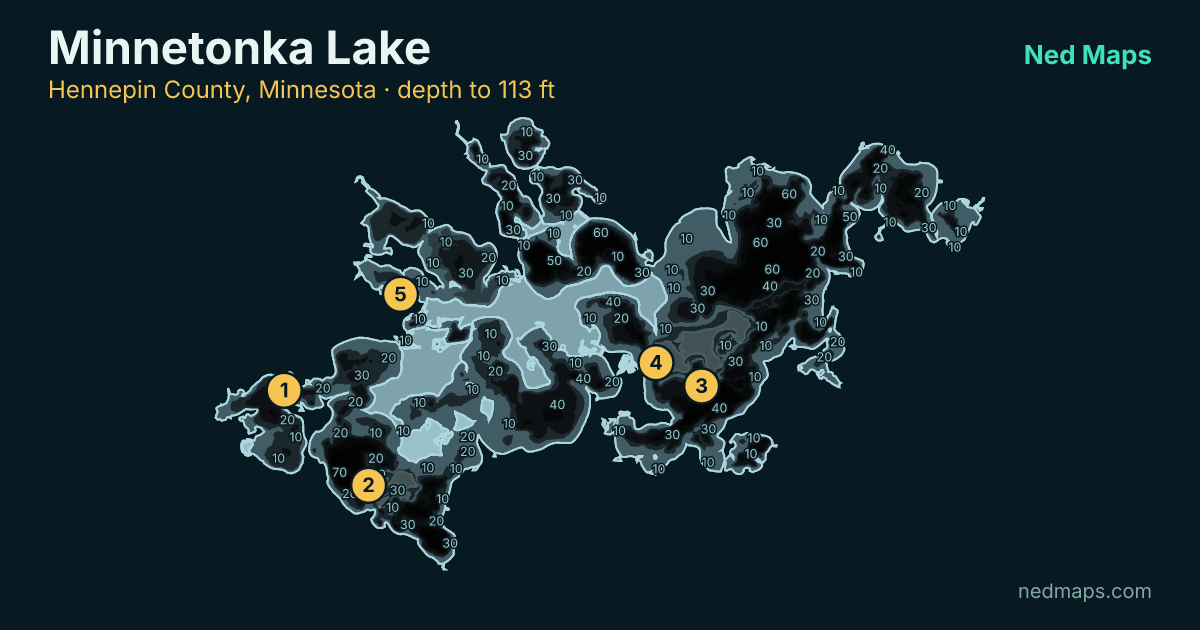
Minnetonka Lake depth map
Within 30 miles
Nearby lakes
- Virginia Lake · 105 ac · 3.5 mi
- Minnewashta Lake · 680 ac · 3.7 mi
- Christmas Lake · 267 ac · 3.8 mi
- Dutch Lake · 175 ac · 3.9 mi
- Lucy Lake · 88 ac · 4.3 mi
- Long Lake · 285 ac · 4.4 mi
- Zumbra-Sunny Lake · 271 ac · 4.7 mi
- Ann Lake · 116 ac · 4.8 mi
Quick answers
Frequently asked questions
How deep is Minnetonka Lake?
Minnetonka Lake reaches 113 ft at its deepest point with a mean depth of 30 ft; about 41% of the lake is littoral (15 ft or shallower).
How big is Minnetonka Lake?
Minnetonka Lake covers 14,206 acres with about 133.3 miles of shoreline.
How clear is the water in Minnetonka Lake?
DNR Secchi readings on Minnetonka Lake average 8.5 ft of visibility, middling clarity for a Minnesota lake.
What fish are in Minnetonka Lake?
Minnesota DNR surveys (most recently 2022) record walleye, largemouth bass, smallmouth bass, northern pike, muskellunge, bluegill, crappie, yellow perch, rock bass.
Is Minnetonka Lake stocked?
Yes. The DNR stocked muskellunge and walleye in 2025; the stocking table on this page lists every year back to 2019.
Does Minnetonka Lake have a public access?
Yes. Minnetonka Lake has 20 public access sites, including Lake Minnetonka, Carson Bay (trailer launch).
How big do northern pike get in Minnetonka Lake?
The biggest northern pike measured in recent DNR surveys taped 35"; the size-history table on this page tracks the biggest fish in each survey back to 2009.
When was Minnetonka Lake last surveyed?
The Minnesota DNR last surveyed Minnetonka Lake in 2022, the most recent of 15 surveys on record.
Page updated .

Featured guide spot
Your guide service here
One featured guide per lake, with your photo, your writeup and a link straight to your booking page. Free through December 31, 2026.
Then $20 a month from January. Cancel any time.
The live map adds today's conditions and ranked spots for Minnetonka Lake, plus a trip plan you can share:
Open Minnetonka Lake on the live map → Fished it lately? Write a report