Minnesota · Cass County
Little Sand Lake Fishing guide
Little Sand Lake covers 413 acres in Cass County, Minnesota, reaching 12 ft at its deepest point. Secchi readings average around 8.9 ft of visibility. The Minnesota DNR has surveyed the lake 6 times, most recently in 2022, with walleye, largemouth bass, northern pike and bluegill in the nets.
DNR survey data
Fish species
No recent survey rating.
Largemouth bassPresent1.3per gill net13"Typical20"Biggest
Lengths measured · 14 fish
Recent · 2022Lengths measured · 14 fish
2022Lengths measured · 11 fish
2013Lengths measured · 2 fish
2005Only 2 fish measured that year — too few to read as a shape.
Lengths measured · 34 fish
1996Northern pikeFair numbers9.3per gill net24"Typical29"Biggest
Lengths measured · 93 fish
Recent · 2022Lengths measured · 93 fish
2022Lengths measured · 158 fish
2013Lengths measured · 155 fish
2005Lengths measured · 158 fish
1996BluegillOne of the best around147.4per trap net4"Typical7"Biggest
Lengths measured · 1508 fish
Recent · 2022Lengths measured · 1508 fish
2022Lengths measured · 3381 fish
2013Lengths measured · 392 fish
2005Lengths measured · 249 fish
1996CrappieJust a few0.3per trap net6"Typical8"Biggest
Lengths measured · 26 fish
Recent · 2022Lengths measured · 26 fish
2022Lengths measured · 38 fish
2013Lengths measured · 129 fish
2005Lengths measured · 218 fish
1996Yellow perchFair numbers1.9per gill net5"Typical7"Biggest
Lengths measured · 23 fish
Recent · 2022Lengths measured · 23 fish
2022Lengths measured · 7 fish
2013Only 7 fish measured that year — too few to read as a shape.
Lengths measured · 21 fish
2005Lengths measured · 515 fish
1996No recent survey rating.
Rates come from standard DNR survey gear (gill nets, trap nets, electrofishing), judged against statewide benchmarks for the same gear, so the same number of fish per net can read differently for two species. Where the standard gear can't count a species reliably, only presence and size are listed. Typical is the middle fish of those measured. Open a row for the full length spread, survey by survey.
How to fish Little Sand Lake through the year
Northern pike
- Spring
- Pike are in the shallow bays and along new weed growth.
- Early summer
- Pike are on the outside weed edge and points.
- Summer
- Pike are on the deep weed edge and points near the coolest water they can find. With 99% of this lake 15 ft or shallower, the weed edge is the main event.
- Fall
- Pike are on the last green weeds and the breaks beside them, feeding heavily as the water drops. A 12-ft bowl cools fast, so the fall window comes early here.
Largemouth bass
- Spring
- Largemouth are moving up into the warming bays and flats, staging around wood, docks and new weeds to spawn.
- Early summer
- Largemouth are on the shallow spawning flats and protected bays, where beds go on firm bottom next to isolated cover.
- Summer
- Largemouth are in and along the weeds: cabbage and milfoil edges, matted cover and shade. With 99% of this lake 15 ft or shallower, the weed edge is the main event.
- Fall
- Largemouth are chasing bait back onto the flats and into the remaining green weeds, feeding hard and shallow before the freeze. A 12-ft bowl cools fast, so the fall window comes early here.
Season patterns for each species. Open the live map for today's wind, light and water temp.
Size history
Biggest fish by survey year
| Survey year | Northern pike | Largemouth bass | Bluegill |
|---|---|---|---|
| 2022 | 29" | 20" | 7" |
| 2013 | 29" | 18" | 6" |
| 2005 | 38" | 10" | 7" |
| 1996 | 33" | 16" | 8" |
Longest fish measured by DNR survey crews in each year's nets. Survey gear samples the population, so the lake usually holds larger fish than any survey measured.
Suggested tackle
What to bring
Top presentations for this lake's structure and clarity:
Northern pike · Hardbaits
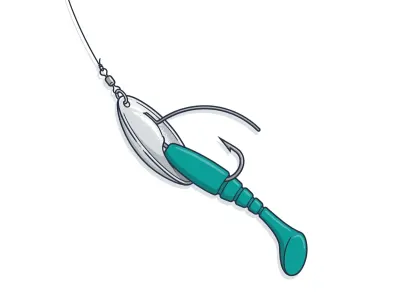
Weedless Spoon + Trailer (Silver Minnow)
3/8–1/2 oz weedless spoon
Northern pike · Soft plastics
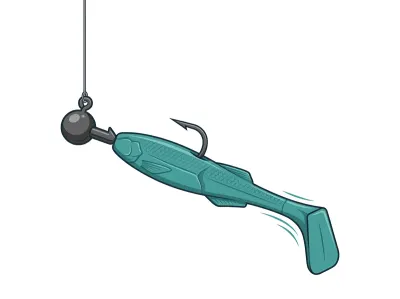
Paddletail Swimbait on Jighead
4–5" paddletail swimbait on a ball-head swimbait jighead
Largemouth bass · Soft plastics
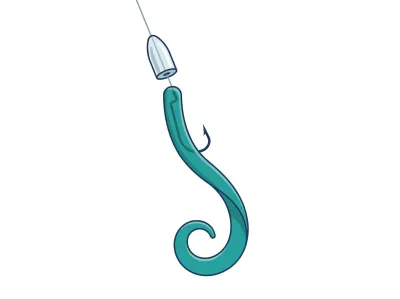
Texas-Rigged Worm
7" ribbon-tail or straight-tail plastic worm
Largemouth bass · Jigs & bladed
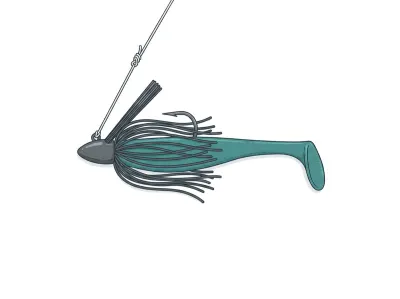
Swim Jig + Paddletail Trailer
3.5–4.5" paddletail trailer on a bullet-nosed swim jig
Bluegill · Live bait
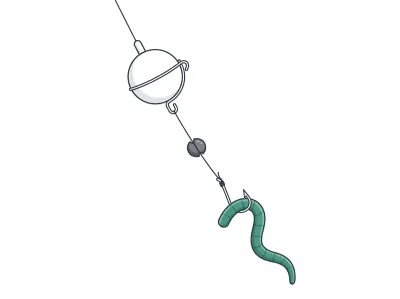
Clip-On Bobber + Worm
half to whole garden nightcrawler
Bluegill · Soft plastics
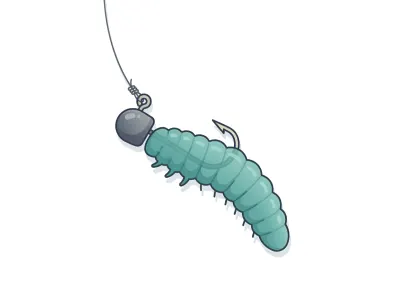
Tungsten Jig + Micro Plastic
1–1.5" micro plastic
Full setups, including hooks, weights and line, are on the live map. As an Amazon Associate I earn from qualifying purchases.
MN DNR · in their words
From the 2022 survey
Little Sand Lake is a 409-acre lake with 4 miles of shoreline and a maximum depth of 12 feet located north of Remer, MN. A DNR owned public access is located on the west shore. The DNR has classified Minnesota's lakes into 43 different classes based on physical, chemical and other characteristics. Little Sand is in Lake Class 39; lakes in this class are generally shallow regularly shaped lakes. Other area lakes in this class include Big Portage, Mabel, Island and Townline.
The entire east shore is publicly owned and undeveloped. The lake is primarily managed for Black Crappie, Bluegill, Largemouth Bass and Northern Pike and secondarily for Yellow Perch. Past winterkills have been confirmed in Little Sand Lake but surviving fish have responded with strong reproduction, suggesting any winterkill to date has been partial.
Read the full DNR narrative
Black Crappie abundance was below the management goal and lengths ranged from 5 to 8 inches. Bluegill were very abundant with catches above the management goal, with most fish ranging from 3 to 7 inches long. Largemouth Bass up to 20 inches were sampled. Additional sampling is required to develop management goals for Largemouth Bass. Northern Pike abundance was above the management goal and ranged in length from 17 to 30 inches. Northern Pike size goals were met in 2022. Yellow Perch abundance was below the management goal and were 5 to 6 inches long.
Other fish species that anglers can expect to encounter include, Bowfin (Dogfish), Brown Bullhead, Golden Shiner, Hybrid Sunfish, Pumpkinseed, and Yellow Bullhead.
People can have significant impacts on lakes and the fish populations they support. Harvest, lakeshore development, removal of shoreline vegetation, and introductions of invasive species can all adversely affect fish populations. Currently, no aquatic invasive species (AIS) have been identified in Little Sand Lake. AIS are moved from infested to non-infested waters by anglers, boaters, and lake shore owners and can adversely impact lakes and fish populations. To avoid spreading AIS, lake users are required to remove all aquatic plants or animals from their watercraft and drain all water from their boat before leaving the access. If you suspect an infestation of an invasive species in this lake, save a specimen and report it to a local natural resource office. Additional information on all of these topics can be found on the DNR website (www.dnr.state.mn.us) or by contacting the Walker Area Fisheries office.
Narrative text from the Minnesota DNR lake survey.
Recent reports
Little Sand Lake fishing reports
Recent reports on Little Sand Lake from guides, tournaments and regular anglers. Anything posted in the last two weeks also bumps the matching spots on the live map, so you'll see a "matches a recent report" tag on them.
Public water access
Getting on the water
- Little Sand Lake (trailer launch)
DNR bathymetry
Little Sand Lake depth map
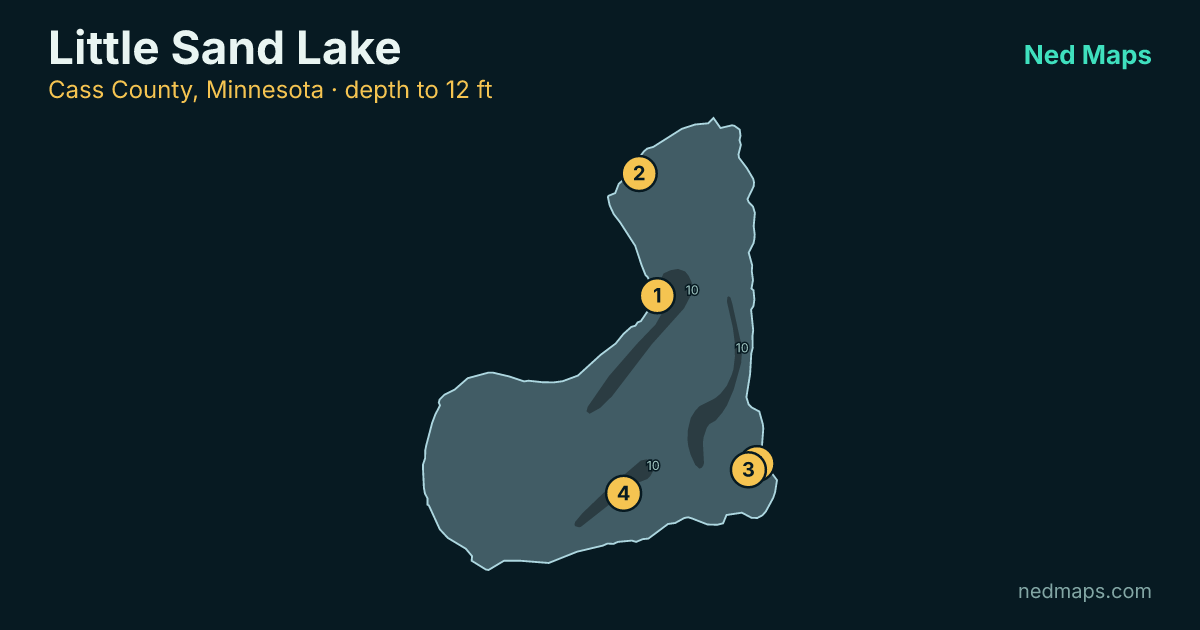
Within 30 miles
Nearby lakes
- Big Sand Lake · 731 ac · 1.8 mi
- Grave Lake · 373 ac · 2.5 mi
- Lower Milton Lake · 79 ac · 4 mi
- Swift Lake · 357 ac · 5.3 mi
- Mabel Lake · 184 ac · 5.8 mi
- Sugar Lake · 699 ac · 7.8 mi
- Vermillion Lake · 410 ac · 7.9 mi
- Lower Trelipe Lake · 618 ac · 8.2 mi
Quick answers
Frequently asked questions
How deep is Little Sand Lake?
Little Sand Lake reaches 12 ft at its deepest point; about 99% of the lake is littoral (15 ft or shallower).
How big is Little Sand Lake?
Little Sand Lake covers 413 acres with about 4.3 miles of shoreline.
How clear is the water in Little Sand Lake?
DNR Secchi readings on Little Sand Lake average 8.9 ft of visibility, middling clarity for a Minnesota lake.
What fish are in Little Sand Lake?
Minnesota DNR surveys (most recently 2022) record walleye, largemouth bass, northern pike, bluegill, crappie, yellow perch, rock bass.
Is Little Sand Lake stocked?
No stocking is on record for Little Sand Lake in the DNR's stocking database.
Does Little Sand Lake have a public access?
Yes. Little Sand Lake has one public access site: Little Sand Lake (trailer launch).
How big do northern pike get in Little Sand Lake?
The biggest northern pike measured in recent DNR surveys taped 29"; the size-history table on this page tracks the biggest fish in each survey back to 1996.
When was Little Sand Lake last surveyed?
The Minnesota DNR last surveyed Little Sand Lake in 2022, the most recent of 6 surveys on record.
Page updated .

Featured guide spot
Your guide service here
One featured guide per lake, with your photo, your writeup and a link straight to your booking page. Free through December 31, 2026.
Then $20 a month from January. Cancel any time.
The live map adds today's conditions and ranked spots for Little Sand Lake, plus a trip plan you can share:
Open Little Sand Lake on the live map → Fished it lately? Write a report