Minnesota · Benton County
Little Rock Lake Fishing guide
Little Rock Lake covers 1,311 acres in Benton County, Minnesota, reaching 17 ft at its deepest point. Secchi readings average around 2.3 ft of visibility. The Minnesota DNR has surveyed the lake 27 times, most recently in 2025, with walleye, largemouth bass, smallmouth bass and northern pike in the nets.
DNR survey data
Fish species
WalleyeFair numbers1.5per gill net9"Typical24"Biggest
Lengths measured · 180 fish
Recent · 2022 + 2024 + 2025Lengths measured · 89 fish
2025Lengths measured · 36 fish
2024Lengths measured · 48 fish
2023Lengths measured · 55 fish
2022Largemouth bassJust a few8.1per hr (electrofishing)7"Typical18"Biggest
Lengths measured · 61 fish
Recent · 2022 + 2024Lengths measured · 13 fish
2024Lengths measured · 48 fish
2022Lengths measured · 2 fish
2021Only 2 fish measured that year — too few to read as a shape.
Lengths measured · 2 fish
2020Only 2 fish measured that year — too few to read as a shape.
Northern pikeJust a few4.5per gill net21"Typical35"Biggest
Lengths measured · 255 fish
Recent · 2022 + 2024 + 2025Lengths measured · 48 fish
2025Lengths measured · 34 fish
2024Lengths measured · 1 fish
2023Only 1 fish measured that year — too few to read as a shape.
Lengths measured · 173 fish
2022BluegillPresent11.1per hr (electrofishing)6"Typical10"Biggest
Lengths measured · 865 fish
Recent · 2022 + 2024 + 2025Lengths measured · 3 fish
2025Only 3 fish measured that year — too few to read as a shape.
Lengths measured · 420 fish
2024Lengths measured · 442 fish
2022Lengths measured · 2 fish
2021Only 2 fish measured that year — too few to read as a shape.
CrappiePresent2.5per hr (electrofishing)6"Typical14"Biggest
Lengths measured · 1559 fish
Recent · 2022 + 2024 + 2025Lengths measured · 17 fish
2025Lengths measured · 1258 fish
2024Lengths measured · 284 fish
2022Lengths measured · 168 fish
2020Yellow perchJust a few0.3per gill net6"Typical11"Biggest
Lengths measured · 1196 fish
Recent · 2022 + 2024 + 2025Lengths measured · 3 fish
2025Only 3 fish measured that year — too few to read as a shape.
Lengths measured · 1137 fish
2024Lengths measured · 56 fish
2022Lengths measured · 2 fish
2020Only 2 fish measured that year — too few to read as a shape.
No recent survey rating.
Channel catfishExcellent numbers6.7per gill net23"Typical27"Biggest
Lengths measured · 74 fish
Recent · 2022 + 2025Lengths measured · 73 fish
2025Lengths measured · 1 fish
2022Only 1 fish measured that year — too few to read as a shape.
Lengths measured · 151 fish
2020Lengths measured · 18 fish
2019Rates come from standard DNR survey gear (gill nets, trap nets, electrofishing), judged against statewide benchmarks for the same gear, so the same number of fish per net can read differently for two species. Where the standard gear can't count a species reliably, only presence and size are listed. Typical is the middle fish of those measured. Open a row for the full length spread, survey by survey.
How to fish Little Rock Lake through the year
Walleye
- Spring
- Walleye are shallow, on and just off the spawning flats and the first green weeds. In 2.3 ft of visibility, they sit shallower than you think.
- Early summer
- Walleye are setting up on the outside weed edge, points and shallow structure.
- Summer
- Walleye are working the weed edge, points and any wind-blown structure. With 95% of this lake 15 ft or shallower, the weed edge is the main event.
- Fall
- Walleye are packing onto the sharpest breaks and points as the water cools, in big schools with short windows. A 17-ft bowl cools fast, so the fall window comes early here.
Largemouth bass
- Spring
- Largemouth are moving up into the warming bays and flats, staging around wood, docks and new weeds to spawn. In 2.3 ft of visibility, they sit shallower than you think.
- Early summer
- Largemouth are on the shallow spawning flats and protected bays, where beds go on firm bottom next to isolated cover.
- Summer
- Largemouth are in and along the weeds: cabbage and milfoil edges, matted cover and shade. With 95% of this lake 15 ft or shallower, the weed edge is the main event.
- Fall
- Largemouth are chasing bait back onto the flats and into the remaining green weeds, feeding hard and shallow before the freeze. A 17-ft bowl cools fast, so the fall window comes early here.
Season patterns for each species. Open the live map for today's wind, light and water temp.
Size history
Biggest fish by survey year
| Survey year | Walleye | Largemouth bass | Smallmouth bass |
|---|---|---|---|
| 2025 | 24" | — | — |
| 2024 | 23" | 18" | — |
| 2023 | 20" | — | — |
| 2022 | 18" | 16" | — |
| 2021 | 19" | 6" | — |
| 2020 | 25" | 9" | 13" |
| 2019 | 19" | 19" | 18" |
| 2018 | 17" | — | — |
Longest fish measured by DNR survey crews in each year's nets. Survey gear samples the population, so the lake usually holds larger fish than any survey measured.
Suggested tackle
What to bring
Top presentations for this lake's structure and clarity:
Walleye · Live bait

Live-Bait (Lindy) Rig + Leech/Crawler
jumbo leech or half a nightcrawler
Walleye · Soft plastics
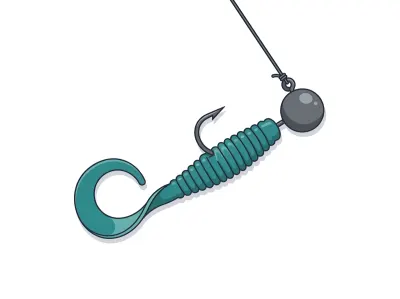
Curly-Tail Grub on Jig
3" curly-tail grub threaded on a round jighead
Largemouth bass · Soft plastics
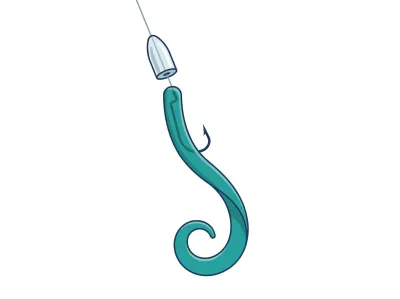
Texas-Rigged Worm
7" ribbon-tail or straight-tail plastic worm
Largemouth bass · Jigs & bladed
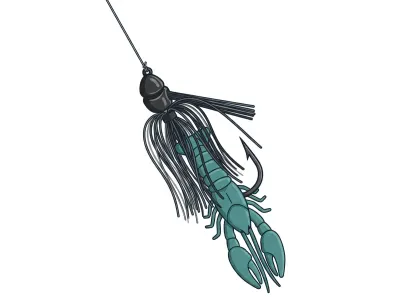
Skirted Casting Jig + Craw Trailer
3.5–4" craw-style trailer on a skirted casting/flipping jig
Smallmouth bass · Hardbaits
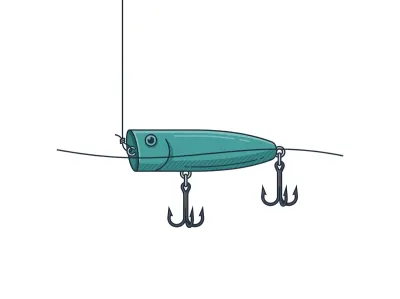
Walk-the-Dog Topwater
4–4.5" walk-the-dog topwater
Smallmouth bass · Soft plastics
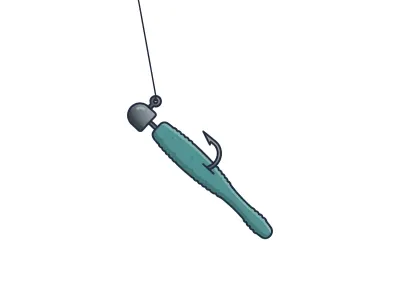
Ned Rig
2.75" finesse stickbait or craw-style Ned bait
Full setups, including hooks, weights and line, are on the live map. As an Amazon Associate I earn from qualifying purchases.
MN DNR · in their words
From the 2025 survey
Little Rock Lake (DOW# 05-0013-00; Lake Class 41) is a 1,450-acre reservoir located near Rice, Minnesota. A Minnesota Department of Natural Resources (MNDNR) owned concrete boat ramp is located rear State Highway 10 near the south end of the lake. Little Rock Lake has 10.55 miles of shoreline and a maximum depth of 17 feet. The lake is primarily managed for Walleye and Black Crappie and secondarily for Northern Pike.
A standard survey using 11 gill nets was completed in 2025. Fall electrofishing for young of the year Walleye (EW) was also conducted. The 2025 gillnet assessment is the 6th completed since 1996. EW has been conducted annually since 2017. Seasonal trap netting and targeted electrofishing are also employed to monitor Walleye, Northern Pike, Black Crappie, and Bluegill.
Read the full DNR narrative
A total of 16 Walleye were captured in gillnets for a catch rate (CPE) of 1.45/gillnet. The CPE of Walleye in Little Rock fluctuates widely in surveys, likely due to a combination of factors including open connection to the Mississippi River. Since 1996, it has ranged from 0.64/gillnet (2014) to 17.09/gillnet (2020). Gillnets provide information on the length distribution, age, growth, and abundance of Walleye. Catch rates can vary widely between surveys which is why it is important to monitor long-term trends. This was illustrated in 2025, as despite a relatively low gillnet catch rate, anecdotal reports following the survey suggested that the Walleye fishery is still of high quality. Fifty-six percent of fish exceeded 14 inches in length. This has historically ranged from 53% (1996) to 100% (2009). Walleye in Little Rock grow quickly, typically attaining 15 inches by age 3. EW was conducted on September 10, 2025, to assess the success of natural Walleye reproduction. The assessment consisted of 4 stations and a total of 1 hour of run-time. A total of 60 young of the year Walleye and 13 yearling or adult Walleye were captured. This catch rate of 60/hour was above the historical median of 38/hour (12 surveys). EW catch rate in Little Rock has historically been a good predictor of year class catch rate in gillnets, so the 2025-year class should provide a significant year class for anglers.
Gillnets captured a total of 50 Northern Pike for a CPE of 4.55/gillnet (goal 1.2 -7.8/gillnet). This is the highest CPE since 2002 (6.45/gillnet). Lengths ranged from 17.32 to 30.51 inches and averaged 23.8 inches. Of the 47 fish measured, 43% exceeded 24 inches (goal > 30%) and 2 fish exceeded 30 inches. Fish over 30 inches are sampled regularly in Little Rock.
Channel Catfish were first sampled in Little Rock in 1985 and catch rates remained low until 2002. In 2025, a total of 74 Channel Catfish were captured for a CPE of 6.73/gillnet. Lengths sampled ranged from 14 to 27 inches and averaged 23.29 inches. Ages observed ranged from 3 to 15, with the most prominent at this time being age 10 and 11. Longevity was normal and growth was above average when compared to other Minnesota Lakes, with fish attaining 24 inches by age 10.
A total of 3 Yellow Perch were captured in 2025 (0.27/gillnet). Catch rates of this species have been low in surveys post-2002, but anglers have reported finding a few perch large enough to eat.
A total of 17 Black Crappie were captured in 2025 with lengths ranging from 5.4 to 6.9 inches. No ages were taken in 2025, but it appears that the 2023-year class dominates the Black Crappie community at this time. Anecdotal reports from 2025 also support this. Black Crappie exhibit excellent growth in Little Rock (10.6 inches at age 4), and the 2023-year class should be of interest to anglers by 2027. A total of 3 Bluegill were captured in gill nets in 2025 with lengths ranging between 8.1 and 8.8 inches. All were age 4, suggesting exceptional growth which is typical in Little Rock. Catch rates of Bluegill in all gears have historically been low, suggesting lower abundance than Black Crappie. Recent ice-out assessments have captured Bluegills in excess of 10 inches. Due mostly to Little Rock's lack of dense and expansive vegetation beds at this time, Black Crappie provide a more consistent and significant fishery than Bluegills. Anglers that report catching Bluegill typically encounter them as bycatch, but some have reported successful efforts targeting the species.
No Largemouth Bass or Smallmouth Bass were captured in 2025. The lake is not currently managed for bass and does not appear to provide a significant fishery for either species. Previous surveys have documented the presence of large fish (> 18 inches) belonging to both species which have provided bonus catches for anglers targeting other species.
White Sucker have been consistently abundant in Little Rock. A total of 31 (2.91/gillnet) were captured in 2025. CPE has fluctuated widely around a median of 7.36/gillnet since 2002. The relatively low catch in 2025 is not concerning considering historical variability and the significant presence of young White Sucker in the 2024 seining and electrofishing sample.
Bigmouth Buffalo were present in numbers that have not been previously observed in gillnets. A total of 57 were captured in 2025, ranging in length from 10.0 to 14.2 inches. Most of the fish were 3-years old and the average length of this year class was 11.8 inches. These fish also dominated ice-out trap net catches in 2024 (2870 were captured). Spawning success appears to be intermittent in Little Rock. The only previous survey to document a large year class was in 2008, when 49 Bigmouth Buffalo measuring between 18 and 21 inches were captured in trap nets. Though Bigmouth Buffalo appear similar to Common Carp, they are more closely related to suckers. They are a native fish to Minnesota's waters and do not have harmful effects on the fish community like Common Carp. These fish can reach impressive sizes (Minnesota record is over 41 pounds) and have lifespans of decades. Though notoriously a difficult species to catch with a rod and reel, Bigmouth Buffalo in Little Rock provide a unique opportunity for the area.
Common Carp are known to be abundant in Little Rock, but do not often reflect their abundance in gillnets. The 2025 gillnets captured 22 juvenile fish measuring between 12.6 to 17.3 inches, evidence of a recent strong year class. Adult fish were absent in the sample despite being present in every gillnetting survey since 1996.
Narrative text from the Minnesota DNR lake survey.
Recent reports
Little Rock Lake fishing reports
Recent reports on Little Rock Lake from guides, tournaments and regular anglers. Anything posted in the last two weeks also bumps the matching spots on the live map, so you'll see a "matches a recent report" tag on them.
Public water access
Getting on the water
- Little Rock Lake, Benton Beach (trailer launch)
- Little Rock Lake, Hwy 10 (trailer launch)
- Little Rock Lake (NW) (carry-in)
- Little Rock Lake, Rose Anna Beach (carry-in)
DNR bathymetry
Little Rock Lake depth map
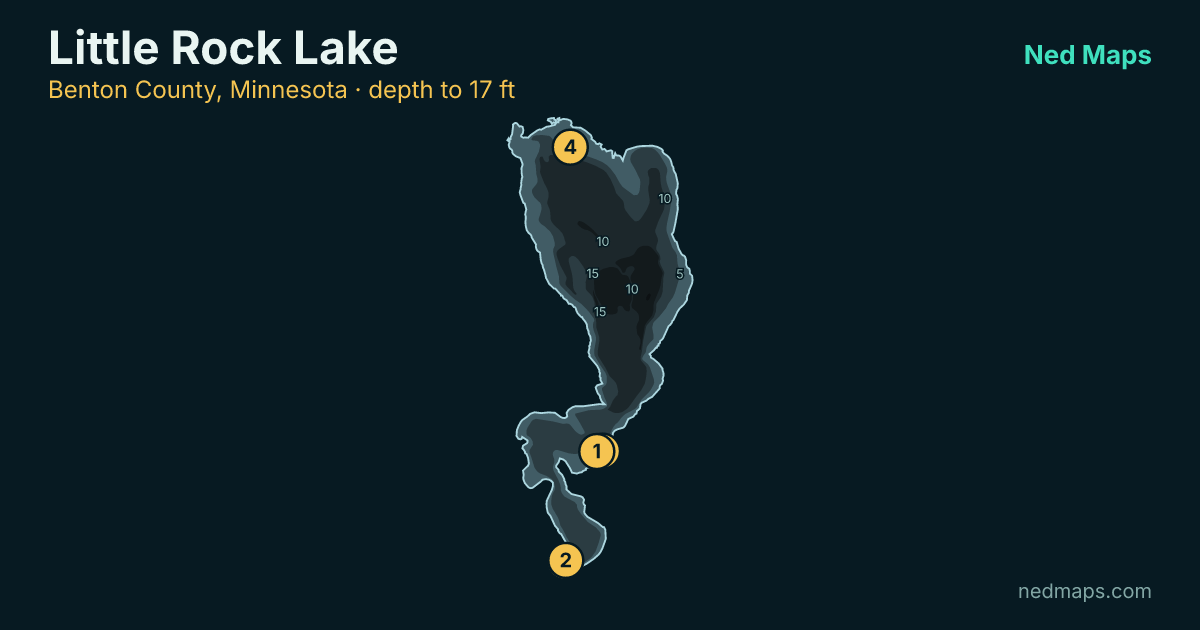
Within 30 miles
Nearby lakes
- Mayhew Lake · 128 ac · 4 mi
- Watab Lake · 97 ac · 10.8 mi
- Rossier Lake · 37 ac · 11.4 mi
- George Lake · 9 ac · 12 mi
- Heritage Center Ponds Lake · 12 ac · 12.8 mi
- Achman Lake · 47 ac · 14.2 mi
- Sagatagan Lake · 227 ac · 15.3 mi
- Ochotto Lake · 40 ac · 15.3 mi
Quick answers
Frequently asked questions
How deep is Little Rock Lake?
Little Rock Lake reaches 17 ft at its deepest point with a mean depth of 8 ft; about 95% of the lake is littoral (15 ft or shallower).
How big is Little Rock Lake?
Little Rock Lake covers 1,311 acres with about 10.6 miles of shoreline.
How clear is the water in Little Rock Lake?
DNR Secchi readings on Little Rock Lake average 2.3 ft of visibility, on the stained end for a Minnesota lake.
What fish are in Little Rock Lake?
Minnesota DNR surveys (most recently 2025) record walleye, largemouth bass, smallmouth bass, northern pike, bluegill, crappie, yellow perch, rock bass, channel catfish.
Is Little Rock Lake stocked?
No stocking is on record for Little Rock Lake in the DNR's stocking database.
Does Little Rock Lake have a public access?
Yes. Little Rock Lake has 4 public access sites, including Little Rock Lake, Benton Beach (trailer launch).
How big do walleye get in Little Rock Lake?
The biggest walleye measured in recent DNR surveys taped 24"; the size-history table on this page tracks the biggest fish in each survey back to 2018.
When was Little Rock Lake last surveyed?
The Minnesota DNR last surveyed Little Rock Lake in 2025, the most recent of 27 surveys on record.
Page updated .

Featured guide spot
Your guide service here
One featured guide per lake, with your photo, your writeup and a link straight to your booking page. Free through December 31, 2026.
Then $20 a month from January. Cancel any time.
The live map adds today's conditions and ranked spots for Little Rock Lake, plus a trip plan you can share:
Open Little Rock Lake on the live map → Fished it lately? Write a report