Minnesota · Chisago County
Little Lake Fishing guide
Little Lake covers 168 acres in Chisago County, Minnesota, reaching 23 ft at its deepest point. Average water clarity runs about 4.1 ft. The Minnesota DNR has surveyed the lake 11 times, most recently in 2025, with walleye, largemouth bass, northern pike and bluegill in the nets.
DNR survey data
Fish species
WalleyeLast stocked 2024Good numbers5.7per gill net9"Typical17"Biggest
Lengths measured · 82 fish
Recent · 2025Lengths measured · 82 fish
2025Lengths measured · 18 fish
2017Lengths measured · 6 fish
2009Only 6 fish measured that year — too few to read as a shape.
Lengths measured · 7 fish
2004Only 7 fish measured that year — too few to read as a shape.
No recent survey rating.
Northern pikeJust a few3.3per gill net24"Typical29"Biggest
Lengths measured · 21 fish
Recent · 2025Lengths measured · 21 fish
2025Lengths measured · 48 fish
2017Lengths measured · 17 fish
2009Lengths measured · 34 fish
2004No recent survey rating.
No recent survey rating.
Yellow perchGood numbers4.7per gill net6"Typical9"Biggest
Lengths measured · 63 fish
Recent · 2025Lengths measured · 63 fish
2025Lengths measured · 30 fish
2017Lengths measured · 52 fish
2009Lengths measured · 88 fish
2004Rates come from standard DNR survey gear (gill nets, trap nets, electrofishing), judged against statewide benchmarks for the same gear, so the same number of fish per net can read differently for two species. Where the standard gear can't count a species reliably, only presence and size are listed. Typical is the middle fish of those measured. Open a row for the full length spread, survey by survey.
How to fish Little Lake through the year
Walleye
- Spring
- Walleye are shallow, on and just off the spawning flats and the first green weeds.
- Early summer
- Walleye are setting up on the outside weed edge, points and shallow structure.
- Summer
- Walleye are working the weed edge, points and any wind-blown structure. With 74% of this lake 15 ft or shallower, the weed edge is the main event.
- Fall
- Walleye are packing onto the sharpest breaks and points as the water cools, in big schools with short windows.
Northern pike
- Spring
- Pike are in the shallow bays and along new weed growth.
- Early summer
- Pike are on the outside weed edge and points.
- Summer
- Pike are on the deep weed edge and points near the coolest water they can find. With 74% of this lake 15 ft or shallower, the weed edge is the main event.
- Fall
- Pike are on the last green weeds and the breaks beside them, feeding heavily as the water drops.
Season patterns for each species. Open the live map for today's wind, light and water temp.
Size history
Biggest fish by survey year
| Survey year | Walleye | Northern pike | Largemouth bass |
|---|---|---|---|
| 2025 | 17" | 29" | — |
| 2017 | 18" | 37" | 19" |
| 2009 | 23" | 29" | 18" |
| 2004 | 28" | 38" | 19" |
| 1999 | 24" | 31" | 18" |
| 1994 | 25" | 33" | 16" |
Longest fish measured by DNR survey crews in each year's nets. Survey gear samples the population, so the lake usually holds larger fish than any survey measured.
Suggested tackle
What to bring
Top presentations for this lake's structure and clarity:
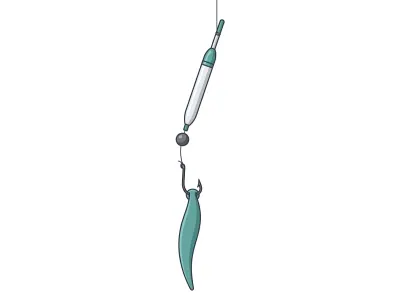
Walleye · Soft plastics
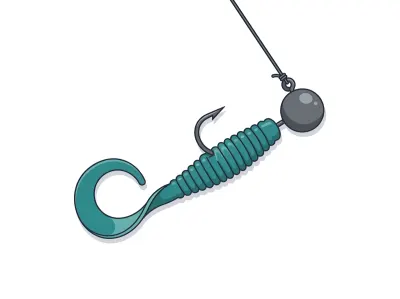
Curly-Tail Grub on Jig
3" curly-tail grub threaded on a round jighead
Northern pike · Soft plastics
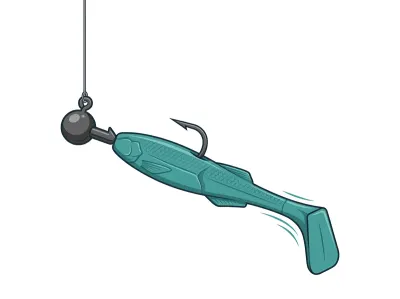
Paddletail Swimbait on Jighead
4–5" paddletail swimbait on a ball-head swimbait jighead
Northern pike · Jigs & bladed
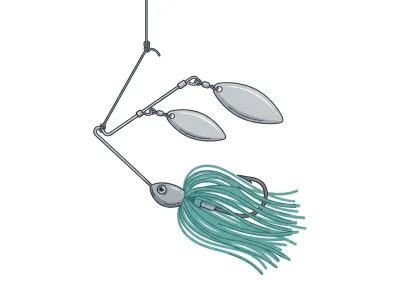
Spinnerbait
3/8–1/2 oz safety-pin spinnerbait with tandem willow-leaf blades
Largemouth bass · Soft plastics

Texas-Rigged Worm
7" ribbon-tail or straight-tail plastic worm
Largemouth bass · Soft plastics
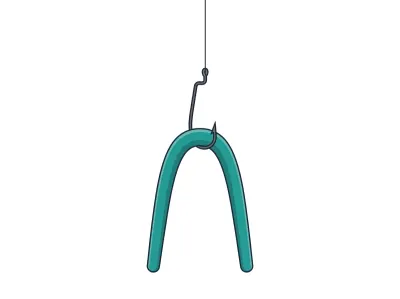
Wacky-Rigged Stickworm
5" stickworm
Full setups, including hooks, weights and line, are on the live map. As an Amazon Associate I earn from qualifying purchases.
DNR stocking records
Stocking history
| Year | Species | Stocked |
|---|---|---|
| 2024 | Walleye | 600,000 fry |
| 2022 | Largemouth Bass | 19 adults |
| 2022 | Walleye | 124,000 fry |
| 2021 | Black Crappie | 70 adults |
| 2021 | Bluegill Sunfish | 90 adults |
| 2021 | Largemouth Bass | 30 adults |
| 2021 | Walleye | 124,000 fry |
MN DNR · in their words
From the 2025 survey
Little Lake is a 168-acre lake in southern Chisago County located two miles northeast of Center City and is within the Lower St. Croix River Watershed. The lake has a maximum depth is 23 feet and an average depth of 9 feet. The lake is 74% littoral (15 feet or less, 124 acres). Water clarity is poor with Secchi depths to 2-3 feet. Its color is green due to algae. Little Lake has historically had poor water quality due to high internal and external nutrient loading. The lake has been listed as impaired for excessive nutrients since 2010. There are two small unnamed inlets on the northeast and northern shores that are seasonal and drain adjacent wetlands, while an unnamed small outlet is present on the northwestern shore which can connect seasonally to North Center Lake. Several vegetation surveys show that vegetation is dense, although it only grows to a depth of 8 feet due to low water clarity. Annual decomposition of aquatic plants and algae contributes to partial and severe winterkills. Differing levels of winterkill severity have affected and will continue to affect the fish community. Curly Leaf Pondweed and Eurasian Water Milfoil, non-native invasive plant species, are present. Substrates consist primarily of muck. The lake is lightly developed with 9 homes. A state-owned access is located on the northeastern shore. It has a gravel parking lot that accommodates 8 vehicles with trailers.
Including the initial survey in 1957, twelve fish surveys have been completed to monitor changes in species composition, number, and length distribution. Little Lake currently has an assemblage of warmwater and coolwater gamefish species including Walleye, Yellow Perch, and Northern Pike, and non-gamefish species including Golden Shiners and Central Mudminnows.
Read the full DNR narrative
Walleye were stocked into Little Lake for the first time in 1986. In the past seven surveys (post Walleye introduction), gill net catch rates have ranged from 0.2/net in 2004 to 5.7/net in 2025. The 2025 catch rate is a result of high survival rates of stocked fry from the 2024 year class. Lengths ranged from 7.2 to 17.2 inches and averaged 13.7 inches. Additionally, three 3/8 inch trap nets were set to target smaller fish species. These nets caught 34 Walleye for a catch rate of 11.3/net. Walleye caught in these nets ranged in length from 7.8 to 16.5 inches and averaged 10.2 inches. Results of this survey indicate that Little Lake can support high numbers of Walleye when densities of other fish are low.
The Yellow Perch gill net catch rate in 2025 was 4.7/net, which compares to the average of 11.9/net. Past catch rates ranged from 1.3/net in 1984 to 32.8/net in 1957. Lengths ranged from 5.2 to 9.4 inches and averaged 7.5 inches. While fish over 8 inches are present, the current perch population and its average size is likely too low and small to interest anglers. However, perch likely provide a primary prey source for Walleye. A total of 26 Golden Shiners were also sampled, which provide a prey source in addition to Yellow Perch.
The Northern Pike gill net catch rate in 2025 was 3.3/net, which compares to the average of 5.4/net. Past catch rates ranged from 0.3/net in 1957 to 13.7/net in 1981. Lengths ranged from 21.4 to 28.2 inches and averaged 24.5 inches. Pike over 28 inches have been sampled in six of the past seven surveys, while pike over 34 inches have been sampled in two of the past four. Overall, anglers that fish Little Lake for pike can expect to catch low numbers of average size pike with a chance of catching one over 28 inches.
Other species sampled in 2025 included Brown Bullhead, Golden Shiner, and Central Mud Minnow.
Narrative text from the Minnesota DNR lake survey.
Recent reports
Little Lake fishing reports
Recent reports on Little Lake from guides, tournaments and regular anglers. Anything posted in the last two weeks also bumps the matching spots on the live map, so you'll see a "matches a recent report" tag on them.
Public water access
Getting on the water
- Little Lake (trailer launch)
DNR bathymetry
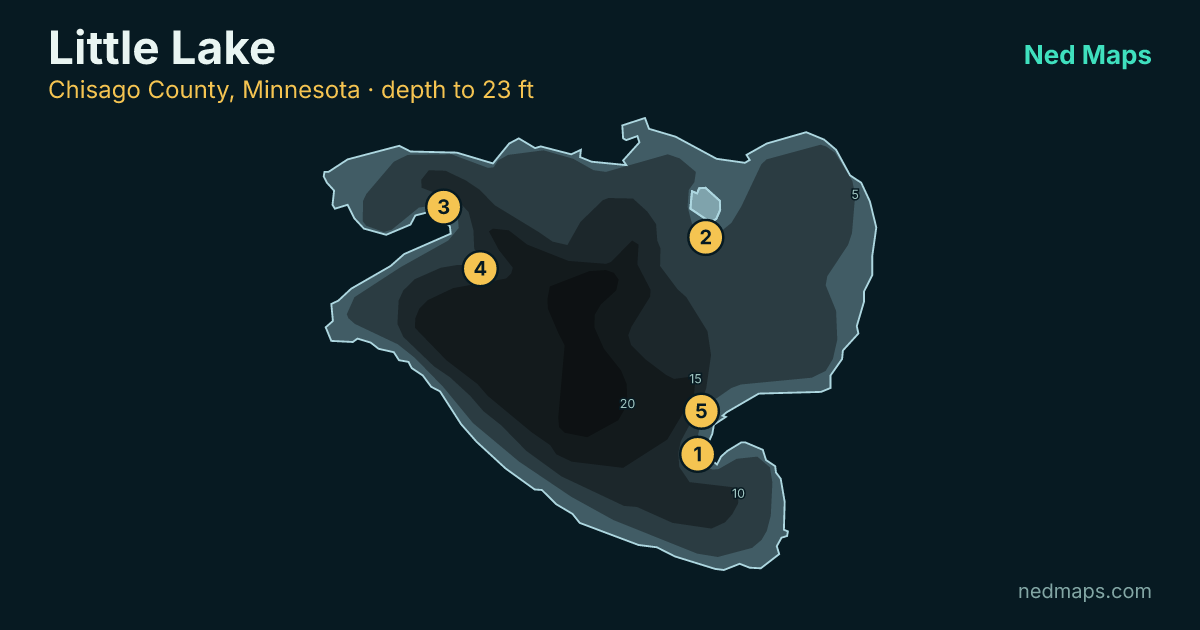
Little Lake depth map
Within 30 miles
Nearby lakes
- North Center Lake · 749 ac · 1.8 mi
- South Center Lake · 910 ac · 2.6 mi
- North Lindstrom Lake · 142 ac · 3 mi
- Sunrise Lake · 796 ac · 3.6 mi
- South Lindstrom Lake · 455 ac · 3.7 mi
- Kroon Lake · 193 ac · 4.7 mi
- Chisago Lake · 944 ac · 5.3 mi
- Spider Lake · 131 ac · 6.5 mi
Quick answers
Frequently asked questions
How deep is Little Lake?
Little Lake reaches 23 ft at its deepest point; about 74% of the lake is littoral (15 ft or shallower).
How big is Little Lake?
Little Lake covers 168 acres with about 3 miles of shoreline.
How clear is the water in Little Lake?
DNR Secchi readings on Little Lake average 4.1 ft of visibility, middling clarity for a Minnesota lake.
What fish are in Little Lake?
Minnesota DNR surveys (most recently 2025) record walleye, largemouth bass, northern pike, bluegill, crappie, yellow perch.
Is Little Lake stocked?
Yes. The DNR stocked walleye in 2024; the stocking table on this page lists every year back to 2021.
Does Little Lake have a public access?
Yes. Little Lake has one public access site: Little Lake (trailer launch).
How big do walleye get in Little Lake?
The biggest walleye measured in recent DNR surveys taped 17"; the size-history table on this page tracks the biggest fish in each survey back to 1994.
When was Little Lake last surveyed?
The Minnesota DNR last surveyed Little Lake in 2025, the most recent of 11 surveys on record.
Page updated .

Featured guide spot
Your guide service here
One featured guide per lake, with your photo, your writeup and a link straight to your booking page. Free through December 31, 2026.
Then $20 a month from January. Cancel any time.
The live map adds today's conditions and ranked spots for Little Lake, plus a trip plan you can share:
Open Little Lake on the live map → Fished it lately? Write a report