Minnesota · Itasca County
Lawrence Lake Fishing guide
Lawrence Lake sits in Itasca County, Minnesota, and covers 437 acres, reaching 32 ft at its deepest point. Average water clarity runs about 4.8 ft. The Minnesota DNR has surveyed the lake 7 times, most recently in 2024, with walleye, largemouth bass, smallmouth bass and northern pike in the nets.
DNR survey data
Fish species
No recent survey rating.
Northern pikeJust a few2.1per gill net23"Typical30"Biggest
Lengths measured · 22 fish
Recent · 2022Lengths measured · 22 fish
2022Lengths measured · 35 fish
2010Lengths measured · 59 fish
2000BluegillJust a few5.9per trap net3"Typical8"Biggest
Lengths measured · 80 fish
Recent · 2022Lengths measured · 80 fish
2022Lengths measured · 39 fish
2010Lengths measured · 45 fish
2000CrappieJust a few2per trap net6"Typical10"Biggest
Lengths measured · 79 fish
Recent · 2022Lengths measured · 79 fish
2022Lengths measured · 56 fish
2010Lengths measured · 82 fish
2000Yellow perchFair numbers3.3per gill net6"Typical7"Biggest
Lengths measured · 34 fish
Recent · 2022Lengths measured · 34 fish
2022Lengths measured · 110 fish
2010Lengths measured · 50 fish
2000Rates come from standard DNR survey gear (gill nets, trap nets, electrofishing), judged against statewide benchmarks for the same gear, so the same number of fish per net can read differently for two species. Where the standard gear can't count a species reliably, only presence and size are listed. Typical is the middle fish of those measured. Open a row for the full length spread, survey by survey.
How to fish Lawrence Lake through the year
Walleye
- Spring
- Walleye are shallow, on and just off the spawning flats and the first green weeds.
- Early summer
- Walleye are setting up on the outside weed edge, points and shallow structure.
- Summer
- Walleye are working the weed edge, points and any wind-blown structure. With 72% of this lake 15 ft or shallower, the weed edge is the main event.
- Fall
- Walleye are packing onto the sharpest breaks and points as the water cools, in big schools with short windows.
Largemouth bass
- Spring
- Largemouth are moving up into the warming bays and flats, staging around wood, docks and new weeds to spawn.
- Early summer
- Largemouth are on the shallow spawning flats and protected bays, where beds go on firm bottom next to isolated cover.
- Summer
- Largemouth are in and along the weeds: cabbage and milfoil edges, matted cover and shade. With 72% of this lake 15 ft or shallower, the weed edge is the main event.
- Fall
- Largemouth are chasing bait back onto the flats and into the remaining green weeds, feeding hard and shallow before the freeze.
Season patterns for each species. Open the live map for today's wind, light and water temp.
Size history
Biggest fish by survey year
| Survey year | Walleye | Largemouth bass | Northern pike |
|---|---|---|---|
| 2022 | 20" | — | 30" |
| 2010 | 22" | — | 26" |
| 2000 | 18" | — | 36" |
Longest fish measured by DNR survey crews in each year's nets. Survey gear samples the population, so the lake usually holds larger fish than any survey measured.
Suggested tackle
What to bring
Top presentations for this lake's structure and clarity:
Walleye · Live bait

Live-Bait (Lindy) Rig + Leech/Crawler
jumbo leech or half a nightcrawler
Walleye · Trolling
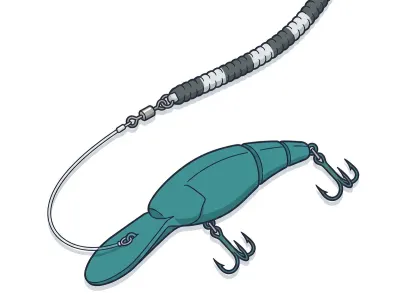
Leadcore Line + Crankbaits
4–5" mid-diving crankbait behind a long leadcore run
Largemouth bass · Soft plastics
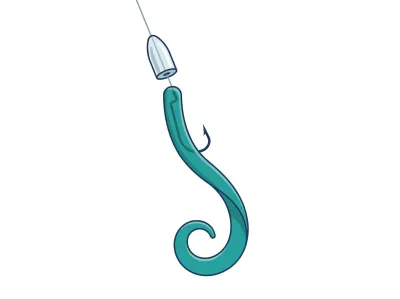
Texas-Rigged Worm
7" ribbon-tail or straight-tail plastic worm
Largemouth bass · Soft plastics
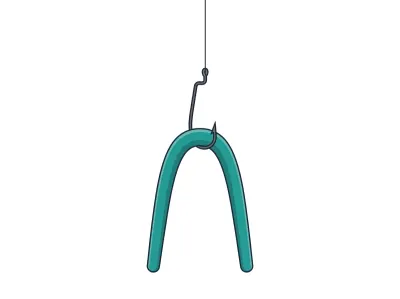
Wacky-Rigged Stickworm
5" stickworm
Northern pike · Soft plastics
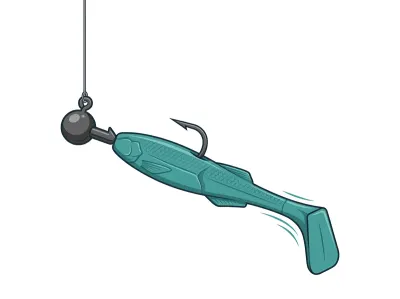
Paddletail Swimbait on Jighead
4–5" paddletail swimbait on a ball-head swimbait jighead
Northern pike · Muskie & pike
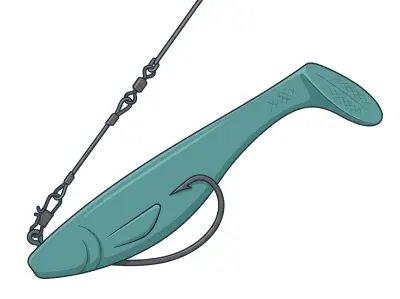
Soft Rubber (Bull Dawg / Medusa)
10" soft rubber body bait
Full setups, including hooks, weights and line, are on the live map. As an Amazon Associate I earn from qualifying purchases.
MN DNR · in their words
From the 2024 survey
A targeted survey of nearshore fish species in Lawrence Lake was conducted on July 24th-25th, 2024, by Index of Biological Integrity (IBI) Program staff. Ten sampling sites were evenly spaced around the lake, and each was sampled by backpack electrofishing and seining with a 50-foot seine (one boat assisted seine). Nearshore sampling captured fifteen species of fish including two species that are intolerant of disturbance (i.e., Blackchin Shiner and Rock Bass) and one that is tolerant of disturbance (i.e., Black Bullhead).
The nearshore data were combined with trap net and gill net data from an August 2022 survey to describe the fish community and provide a fish-based IBI (FIBI) score. The FIBI uses fish community data to measure a lake's health, and the types of fish species present can help identify any stressors that may be negatively affecting the lake environment. In Minnesota lakes, certain fish species cannot survive without clean water and a healthy habitat (e.g., Blackchin Shiner and Rock Bass), while other species are tolerant of degraded conditions (e.g., Black Bullhead). The FIBI score, composed of several fish community diversity and composition metrics, indicates the overall health of a lake by comparing it to what is expected for a healthy lake. For additional information on the FIBI, search for "lake index of biological integrity" on the mndnr.gov website.
Read the full DNR narrative
Results from this survey provide evidence that the fish community in Lawrence Lake is healthy as indicated by an FIBI score well above the general use impairment threshold for aquatic life use determined for similar lakes. These results are similar to previous findings which indicated that Lawrence Lake is fully supporting aquatic life. The survey results will be considered when the biological health of the lake is assessed during the Mississippi River- Grand Rapids assessment process, which will be completed in coordination with MN Pollution Control Agency. You can help protect the fish community in Lawrence Lake by reducing runoff, maintaining natural shorelines, and preventing the spread of invasive species.
Minnesota DNR Fisheries IBI program staff conducted an assessment of lakeshore habitat on Lawrence Lake on June 5th, 2024, following the Score the Shore survey protocols. The assessment consisted of 48 survey sites evenly spaced 200 meters around the lake. Assessments were made in three habitat zones: Shoreline Zone (the shore-water interface to the top of the natural bank), Shoreland Zone (land-ward from shoreline to development structure or 100 feet), and Aquatic Zone (lake-ward 50 feet of shoreline). The average lakewide habitat score was 81.1 (+/- 2.5) out of 100 possible. A score of 81.1 indicates the lakewide shoreline condition is Moderately High (80-84.9). Approximately 46 percent of the sites were developed with a mean score of 69.1 (+/- 3.8) indicating shoreline habitat quality of developed sites is Moderately Poor (66-69.9), while undeveloped sites had a mean score of 91.2 (+/- 1.6) with High (85-91.9) habitat quality.
Narrative text from the Minnesota DNR lake survey.
Recent reports
Lawrence Lake fishing reports
Recent reports on Lawrence Lake from guides, tournaments and regular anglers. Anything posted in the last two weeks also bumps the matching spots on the live map, so you'll see a "matches a recent report" tag on them.
Public water access
Getting on the water
- Lawerence Lake (trailer launch)
DNR bathymetry
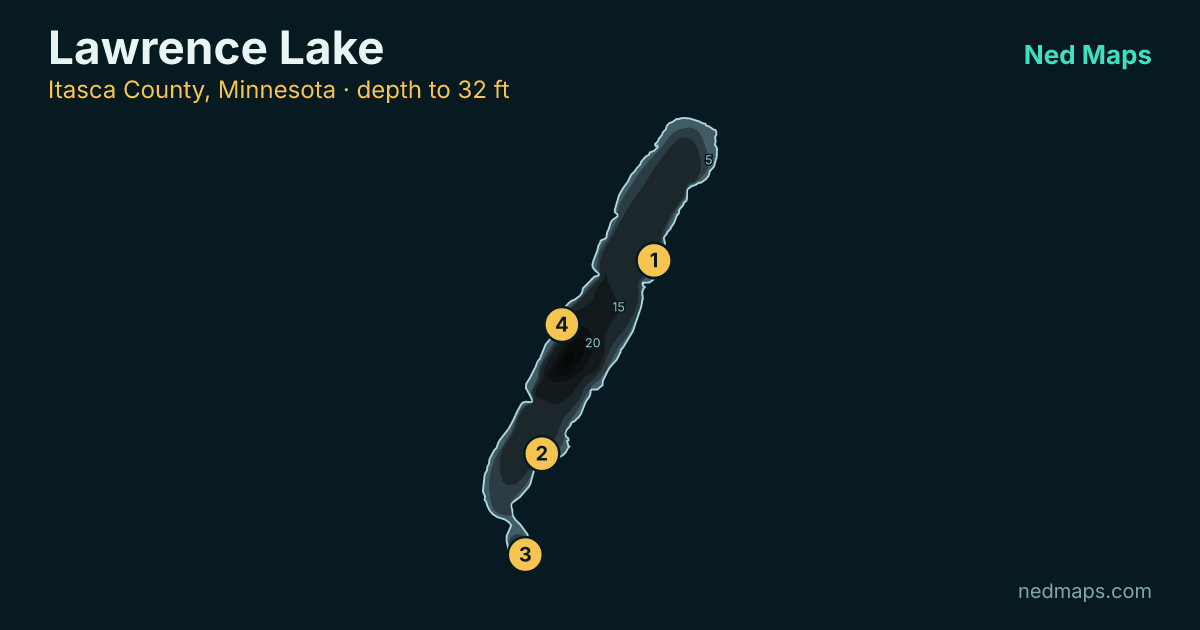
Lawrence Lake depth map
Within 30 miles
Nearby lakes
- Lower Lawrence Lake · 152 ac · 1.7 mi
- Snaptail Lake · 175 ac · 2.2 mi
- Crooked Lake · 465 ac · 2.5 mi
- Nashwauk Lake · 168 ac · 2.6 mi
- Lower Balsam Lake · 259 ac · 4.6 mi
- Bray Lake · 177 ac · 4.7 mi
- Shamrock Lake · 50 ac · 5.3 mi
- Clearwater Lake · 76 ac · 5.5 mi
Quick answers
Frequently asked questions
How deep is Lawrence Lake?
Lawrence Lake reaches 32 ft at its deepest point; about 72% of the lake is littoral (15 ft or shallower).
How big is Lawrence Lake?
Lawrence Lake covers 437 acres with about 6 miles of shoreline.
How clear is the water in Lawrence Lake?
DNR Secchi readings on Lawrence Lake average 4.8 ft of visibility, middling clarity for a Minnesota lake.
What fish are in Lawrence Lake?
Minnesota DNR surveys (most recently 2024) record walleye, largemouth bass, smallmouth bass, northern pike, bluegill, crappie, yellow perch, rock bass.
Is Lawrence Lake stocked?
No stocking is on record for Lawrence Lake in the DNR's stocking database.
Does Lawrence Lake have a public access?
Yes. Lawrence Lake has one public access site: Lawerence Lake (trailer launch).
How big do walleye get in Lawrence Lake?
The biggest walleye measured in recent DNR surveys taped 20"; the size-history table on this page tracks the biggest fish in each survey back to 2000.
When was Lawrence Lake last surveyed?
The Minnesota DNR last surveyed Lawrence Lake in 2024, the most recent of 7 surveys on record.
Page updated .

Featured guide spot
Your guide service here
One featured guide per lake, with your photo, your writeup and a link straight to your booking page. Free through December 31, 2026.
Then $20 a month from January. Cancel any time.
The live map adds today's conditions and ranked spots for Lawrence Lake, plus a trip plan you can share:
Open Lawrence Lake on the live map → Fished it lately? Write a report