Minnesota · Aitkin County
Horseshoe Lake Fishing guide
Horseshoe Lake is a 240-acre lake in Aitkin County, Minnesota, reaching 12 ft at its deepest point. Average water clarity runs about 2.3 ft. The Minnesota DNR has surveyed the lake 10 times, most recently in 2022, with walleye, largemouth bass, northern pike and bluegill in the nets.
DNR survey data
Fish species
WalleyeLast stocked 2025Fair numbers2per gill net19"Typical27"Biggest
Lengths measured · 13 fish
Recent · 2022Lengths measured · 13 fish
2022Lengths measured · 10 fish
2015Lengths measured · 7 fish
2009Only 7 fish measured that year — too few to read as a shape.
Lengths measured · 8 fish
2004Only 8 fish measured that year — too few to read as a shape.
Northern pikeFair numbers6.3per gill net20"Typical30"Biggest
Lengths measured · 35 fish
Recent · 2022Lengths measured · 35 fish
2022Lengths measured · 22 fish
2015Lengths measured · 18 fish
2009Lengths measured · 31 fish
2004BluegillJust a few11.7per trap net7"Typical9"Biggest
Lengths measured · 107 fish
Recent · 2022Lengths measured · 107 fish
2022Lengths measured · 135 fish
2015Lengths measured · 237 fish
2009Lengths measured · 145 fish
2004CrappieJust a few4.9per trap net5"Typical11"Biggest
Lengths measured · 124 fish
Recent · 2022Lengths measured · 124 fish
2022Lengths measured · 50 fish
2015Lengths measured · 239 fish
2009Lengths measured · 89 fish
2004Yellow perchGood numbers11.3per gill net5"Typical7"Biggest
Lengths measured · 46 fish
Recent · 2022Lengths measured · 46 fish
2022Lengths measured · 44 fish
2015Lengths measured · 95 fish
2009Lengths measured · 104 fish
2004Rates come from standard DNR survey gear (gill nets, trap nets, electrofishing), judged against statewide benchmarks for the same gear, so the same number of fish per net can read differently for two species. Where the standard gear can't count a species reliably, only presence and size are listed. Typical is the middle fish of those measured. Open a row for the full length spread, survey by survey.
How to fish Horseshoe Lake through the year
Walleye
- Spring
- Walleye are shallow, on and just off the spawning flats and the first green weeds. In 2.3 ft of visibility, they sit shallower than you think.
- Early summer
- Walleye are setting up on the outside weed edge, points and shallow structure.
- Summer
- Walleye are working the weed edge, points and any wind-blown structure. With 100% of this lake 15 ft or shallower, the weed edge is the main event.
- Fall
- Walleye are packing onto the sharpest breaks and points as the water cools, in big schools with short windows. A 12-ft bowl cools fast, so the fall window comes early here.
Northern pike
- Spring
- Pike are in the shallow bays and along new weed growth. In 2.3 ft of visibility, they sit shallower than you think.
- Early summer
- Pike are on the outside weed edge and points.
- Summer
- Pike are on the deep weed edge and points near the coolest water they can find. With 100% of this lake 15 ft or shallower, the weed edge is the main event.
- Fall
- Pike are on the last green weeds and the breaks beside them, feeding heavily as the water drops. A 12-ft bowl cools fast, so the fall window comes early here.
Season patterns for each species. Open the live map for today's wind, light and water temp.
Size history
Biggest fish by survey year
| Survey year | Walleye | Northern pike | Largemouth bass |
|---|---|---|---|
| 2022 | 27" | 30" | 15" |
| 2015 | 27" | 34" | 19" |
| 2009 | 24" | 29" | 20" |
| 2004 | 24" | 28" | 17" |
| 1999 | 22" | 28" | — |
| 1994 | 26" | 30" | 7" |
Longest fish measured by DNR survey crews in each year's nets. Survey gear samples the population, so the lake usually holds larger fish than any survey measured.
Suggested tackle
What to bring
Top presentations for this lake's structure and clarity:
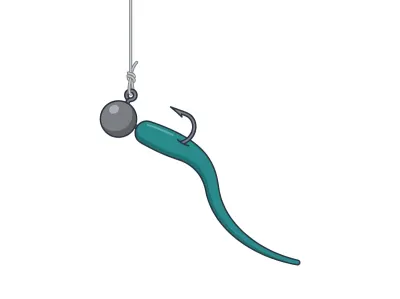
Walleye · Soft plastics
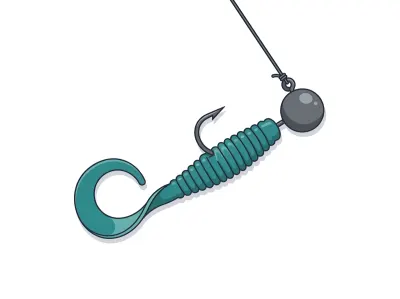
Curly-Tail Grub on Jig
3" curly-tail grub threaded on a round jighead
Northern pike · Soft plastics
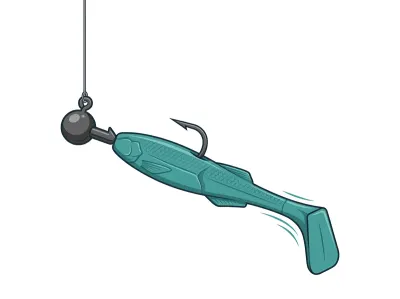
Paddletail Swimbait on Jighead
4–5" paddletail swimbait on a ball-head swimbait jighead
Northern pike · Jigs & bladed
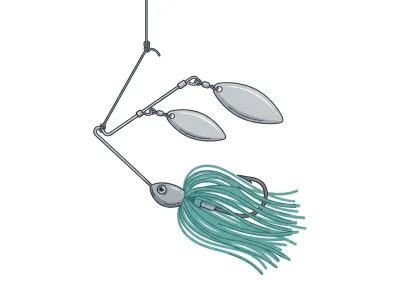
Spinnerbait
3/8–1/2 oz safety-pin spinnerbait with tandem willow-leaf blades
Largemouth bass · Soft plastics

Texas-Rigged Worm
7" ribbon-tail or straight-tail plastic worm
Largemouth bass · Jigs & bladed
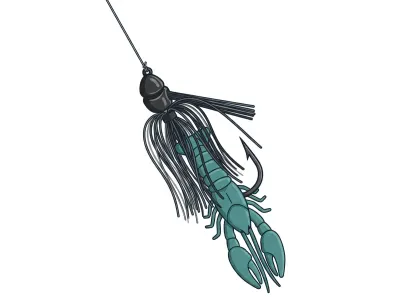
Skirted Casting Jig + Craw Trailer
3.5–4" craw-style trailer on a skirted casting/flipping jig
Full setups, including hooks, weights and line, are on the live map. As an Amazon Associate I earn from qualifying purchases.
DNR stocking records
Stocking history
| Year | Species | Stocked |
|---|---|---|
| 2025 | Walleye | 120,000 fry |
| 2023 | Walleye | 120,000 fry |
| 2021 | Walleye | 240,000 fry |
| 2018 | Walleye | 120,000 fry |
| 2016 | Walleye | 120,000 fry |
MN DNR · in their words
From the 2022 survey
Horseshoe Lake is a 237-acre lake located in northeastern Aitkin County approximately 9 miles northeast of McGregor. The lake is shallow with a maximum depth of only 12 ft. and summer algal blooms are relatively common. The water is a tannin stained dark brown in color, limiting the secchi disk reading to only 1.5 ft. Most of the shoreline is ringed with wild rice. Shallow water areas are comprised primarily of sand, silt, and muck with occasional areas of gravel and rubble. Horseshoe Lake does occasionally suffer from partial winterkills, the most recent known was a partial kill in the winter of 2007-2008, although partial kills have probably occurred in other years as well. Access can be gained either through the channel from Lake Minnewawa or through a private access on the northeast corner of the lake . The lake is part of the Quality Sunfish Initiative and has a 10 fish bag limit for sunfish. There is a special regulation for Walleye too where anglers can keep 3 Walleye with 1 over 20 inches.
Historically Walleye have been naturally occurring in Horseshoe Lake. In order to improve an apparent declining natural population, Walleye fry were stocked into Horseshoe Lake, annually from 2012 - 2016 and are now stocked in alternating years concurrent with Lake Minnewawa. The 2022 catch of 2/gill net was identical to 2015 yet below the management goal of 3/net. It appeared there was more natural reproduction in this survey than years past, but some of those may have been stocked fish from Minnewawa that migrated into Horseshoe.
Read the full DNR narrative
Northern Pike numbers were up a bit, and their size was about average for this type of lake, although overall the size structure has dropped off over the last few surveys. There are still some decent pike to be caught though, fish ranged from 18.5 inches to 30.3 inches. Lower pike densities are generally favorable for Walleye management in this type of lake.
Perhaps what is most notable is the lake's panfish population. Bluegill and Black Crappie populations are healthy, and both maintain decent size structures for the area. There has been improvements in Black Crappie and Bluegill sizes in recent years. Black crappie averaged over 8 inches, while Bluegills averaged about 7.5 inches. Yellow Perch numbers are in the normal range for this lake class but are probably too small to be of interest to anglers with no fish over 8 inches sampled in 2022. With an average length of 6.2 inches, the perch should provide good forage for the lake's Northern Pike and Walleye.
Although abundance is low, Largemouth Bass are present, and quality sized fish do exist. Only one was caught in this survey but it was nearly 16 inches and in previous surveys we have observed them to nearly 20 inches.
Horseshoe Lake maintains a healthy aquatic plant community with much of the shoreline rimmed with emergent and floating plants. Maintaining healthy plant communities is important for maintaining good water quality and fish habitat.
Narrative text from the Minnesota DNR lake survey.
Recent reports
Horseshoe Lake fishing reports
Recent reports on Horseshoe Lake from guides, tournaments and regular anglers. Anything posted in the last two weeks also bumps the matching spots on the live map, so you'll see a "matches a recent report" tag on them.
Public water access
Getting on the water
- DNR access: Horseshoe Lake can also be reached from the public access on Lake Minnewawa; via a channel between the two lakes.
- Public access (permit required): boats may be launched from the tavern on the east side of the lake for a fee.
DNR bathymetry
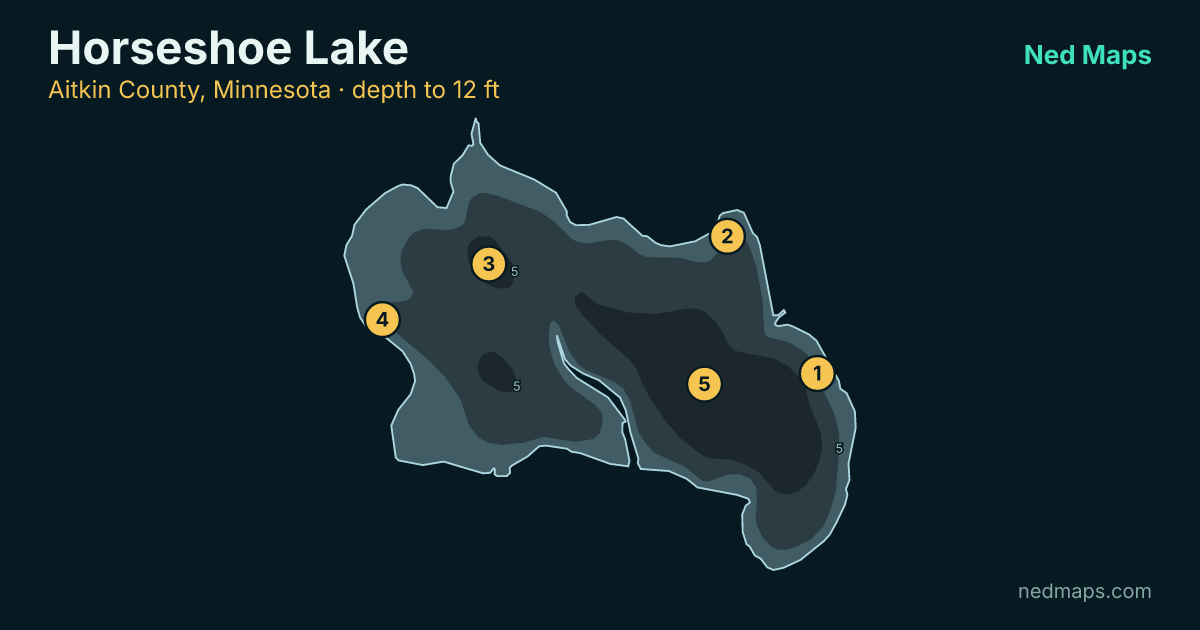
Horseshoe Lake depth map
Within 30 miles
Nearby lakes
- Round Lake · 554 ac · 1.6 mi
- Minnewawa Lake · 2,351 ac · 2.5 mi
- Big Sandy Lake · 6,125 ac · 4.4 mi
- Glacier Lake · 135 ac · 5.2 mi
- Rat Lake · 431 ac · 6.4 mi
- Aitkin Lake · 659 ac · 7.1 mi
- Remote Lake · 134 ac · 7.4 mi
- Loon Lake · 34 ac · 7.6 mi
Quick answers
Frequently asked questions
How deep is Horseshoe Lake?
Horseshoe Lake reaches 12 ft at its deepest point with a mean depth of 7 ft; about 100% of the lake is littoral (15 ft or shallower).
How big is Horseshoe Lake?
Horseshoe Lake covers 240 acres with about 3.7 miles of shoreline.
How clear is the water in Horseshoe Lake?
DNR Secchi readings on Horseshoe Lake average 2.3 ft of visibility, on the stained end for a Minnesota lake.
What fish are in Horseshoe Lake?
Minnesota DNR surveys (most recently 2022) record walleye, largemouth bass, northern pike, bluegill, crappie, yellow perch.
Is Horseshoe Lake stocked?
Yes. The DNR stocked walleye in 2025; the stocking table on this page lists every year back to 2016.
Does Horseshoe Lake have a public access?
Yes. Horseshoe Lake has 2 public access sites, including a DNR access (Horseshoe Lake can also be reached from the public access on Lake Minnewawa; via a channel between the two lakes.).
How big do walleye get in Horseshoe Lake?
The biggest walleye measured in recent DNR surveys taped 27"; the size-history table on this page tracks the biggest fish in each survey back to 1994.
When was Horseshoe Lake last surveyed?
The Minnesota DNR last surveyed Horseshoe Lake in 2022, the most recent of 10 surveys on record.
Page updated .

Featured guide spot
Your guide service here
One featured guide per lake, with your photo, your writeup and a link straight to your booking page. Free through December 31, 2026.
Then $20 a month from January. Cancel any time.
The live map adds today's conditions and ranked spots for Horseshoe Lake, plus a trip plan you can share:
Open Horseshoe Lake on the live map → Fished it lately? Write a report