Minnesota · Aitkin County
Farm Island Lake Fishing guide
Farm Island Lake is a 2,005-acre lake in Aitkin County, Minnesota, reaching 56 ft at its deepest point. Average water clarity runs about 9.9 ft. The Minnesota DNR has surveyed the lake 34 times, most recently in 2025, with walleye, largemouth bass, smallmouth bass and northern pike in the nets.
DNR survey data
Fish species
WalleyeLast stocked 2025Excellent numbers6.3per gill net14"Typical24"Biggest
Lengths measured · 219 fish
Recent · 2023 + 2025Lengths measured · 95 fish
2025Lengths measured · 19 fish
2025Lengths measured · 22 fish
2024Lengths measured · 51 fish
2023Largemouth bassJust a few17.2per hr (electrofishing)11"Typical18"Biggest
Lengths measured · 305 fish
Recent · 2023 + 2025Lengths measured · 111 fish
2025Lengths measured · 194 fish
2023Lengths measured · 6 fish
2020Only 6 fish measured that year — too few to read as a shape.
Lengths measured · 6 fish
2018Only 6 fish measured that year — too few to read as a shape.
Smallmouth bassJust a few4.3per hr (electrofishing)13"Typical18"Biggest
Lengths measured · 84 fish
Recent · 2023 + 2025Lengths measured · 52 fish
2025Lengths measured · 32 fish
2023Lengths measured · 13 fish
2020Lengths measured · 1 fish
2018Only 1 fish measured that year — too few to read as a shape.
Northern pikeGood numbers10.2per gill net18"Typical29"Biggest
Lengths measured · 331 fish
Recent · 2023 + 2025Lengths measured · 77 fish
2025Lengths measured · 254 fish
2023Lengths measured · 148 fish
2020Lengths measured · 120 fish
2018BluegillJust a few7per trap net5"Typical9"Biggest
Lengths measured · 287 fish
Recent · 2023 + 2025Lengths measured · 152 fish
2025Lengths measured · 135 fish
2023Lengths measured · 61 fish
2020Lengths measured · 61 fish
2018CrappieJust a few0.1per trap net7"Typical10"Biggest
Lengths measured · 13 fish
Recent · 2023 + 2025Lengths measured · 6 fish
2025Only 6 fish measured that year — too few to read as a shape.
Lengths measured · 7 fish
2023Only 7 fish measured that year — too few to read as a shape.
Lengths measured · 6 fish
2020Only 6 fish measured that year — too few to read as a shape.
Lengths measured · 4 fish
2018Only 4 fish measured that year — too few to read as a shape.
Yellow perchJust a few0.3per gill net6"Typical9"Biggest
Lengths measured · 10 fish
Recent · 2023 + 2025Lengths measured · 4 fish
2025Only 4 fish measured that year — too few to read as a shape.
Lengths measured · 6 fish
2023Only 6 fish measured that year — too few to read as a shape.
Lengths measured · 25 fish
2020Lengths measured · 9 fish
2018Only 9 fish measured that year — too few to read as a shape.
Rock bassExcellent numbers3.9per gill net9"Typical11"Biggest
Lengths measured · 137 fish
Recent · 2023 + 2025Lengths measured · 59 fish
2025Lengths measured · 78 fish
2023Lengths measured · 104 fish
2020Lengths measured · 47 fish
2018Rates come from standard DNR survey gear (gill nets, trap nets, electrofishing), judged against statewide benchmarks for the same gear, so the same number of fish per net can read differently for two species. Where the standard gear can't count a species reliably, only presence and size are listed. Typical is the middle fish of those measured. Open a row for the full length spread, survey by survey.
How to fish Farm Island Lake through the year
Walleye
- Spring
- Walleye are shallow, on and just off the spawning flats and the first green weeds.
- Early summer
- Walleye are setting up on the outside weed edge, points and shallow structure.
- Summer
- Walleye are working the weed edge, points and any wind-blown structure. On a lake that drops to 56 ft, check the deep edge of that structure too.
- Fall
- Walleye are packing onto the sharpest breaks and points as the water cools, in big schools with short windows.
Northern pike
- Spring
- Pike are in the shallow bays and along new weed growth.
- Early summer
- Pike are on the outside weed edge and points.
- Summer
- Pike are on the deep weed edge and points near the coolest water they can find. On a lake that drops to 56 ft, check the deep edge of that structure too.
- Fall
- Pike are on the last green weeds and the breaks beside them, feeding heavily as the water drops.
Season patterns for each species. Open the live map for today's wind, light and water temp.
Size history
Biggest fish by survey year
| Survey year | Walleye | Northern pike | Largemouth bass |
|---|---|---|---|
| 2025 | 23" | 28" | 18" |
| 2024 | 21" | — | — |
| 2023 | 24" | 29" | 18" |
| 2022 | 21" | — | — |
| 2021 | 21" | — | — |
| 2020 | 25" | 32" | 15" |
| 2019 | 21" | — | — |
| 2018 | 24" | 31" | 14" |
Longest fish measured by DNR survey crews in each year's nets. Survey gear samples the population, so the lake usually holds larger fish than any survey measured.
Suggested tackle
What to bring
Top presentations for this lake's structure and clarity:
Walleye · Live bait

Live-Bait (Lindy) Rig + Leech/Crawler
jumbo leech or half a nightcrawler
Walleye · Trolling
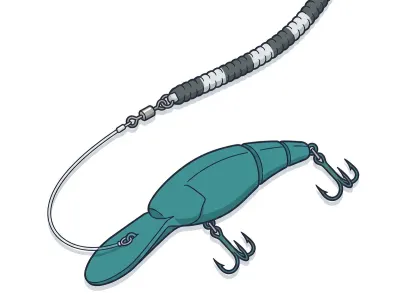
Leadcore Line + Crankbaits
4–5" mid-diving crankbait behind a long leadcore run
Northern pike · Soft plastics

Paddletail Swimbait on Jighead
4–5" paddletail swimbait on a ball-head swimbait jighead
Northern pike · Jigs & bladed
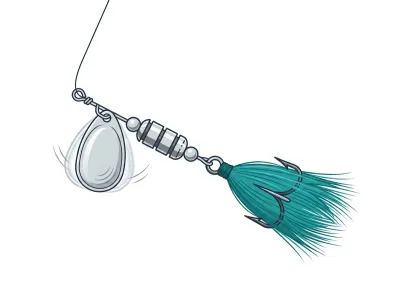
Inline Spinner (Mepps/Blue Fox)
#2–#4 in-line spinner
Largemouth bass · Soft plastics
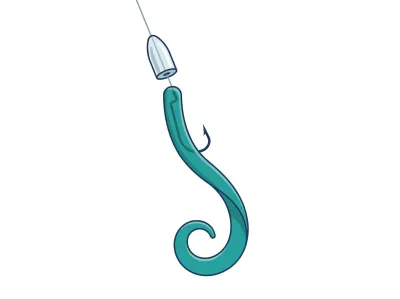
Texas-Rigged Worm
7" ribbon-tail or straight-tail plastic worm
Largemouth bass · Soft plastics
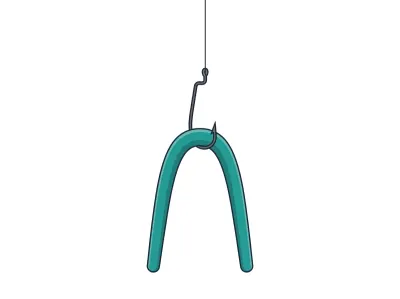
Wacky-Rigged Stickworm
5" stickworm
Full setups, including hooks, weights and line, are on the live map. As an Amazon Associate I earn from qualifying purchases.
DNR stocking records
Stocking history
| Year | Species | Stocked |
|---|---|---|
| 2025 | Walleye | 883,000 fry · 12,933 fingerlings |
| 2024 | Walleye | 883,000 fry |
| 2023 | Walleye | 883,000 fry |
| 2022 | Walleye | 883,000 fry |
| 2021 | Walleye | 1,083,000 fry |
| 2019 | Walleye | 883,000 fry · 12,000 fingerlings |
| 2018 | Walleye | 883,000 fry |
| 2017 | Walleye | 833,000 fry |
| 2016 | Walleye | 1,330,000 fry |
MN DNR · in their words
From the 2025 survey
Farm Island Lake is a popular lake located seven miles south of Aitkin. There are two public accesses with concrete log ramps, one in the northeast and one in the southwest portion of the lake. Sand is the primary substrate around much of the lake, but scattered muck, silt, gravel, and rubble areas create diverse aquatic habitats. Consequently, aquatic vegetation is also diverse with a variety of emergent, floating leaf, and submerged species present. The invasive species Curly-leaf pondweed is also present. Healthy aquatic plant communities help prevent erosion, stabilize bottom substrates, maintain water clarity, and provide adult spawning and juvenile rearing habitat for numerous aquatic organisms. Zebra mussels are also present in Farm Island Lake after being first discovered in 2020. Abundance has increased tremendously and are common on any hard substrate as well as vegetation in the lake. Farm Island Lake is typically surveyed every three years, with various other surveys added in, occasionally. A standard assessment of Farm Island was performed the week of 8/11/2025, and Bass electrofishing was conducted a component of that standard survey the night of 5/28/2025. Additionally, fall juvenile electrofishing is also conducted annually (Targeted Survey 10/07/2025) to gauge success of Walleye recruitment.
Farm Island Lake has a history of Walleye stocking dating back to 1922. Fall electrofishing and gill net assessments have shown low recruitment of naturally reproduced fish in comparison to fry-stocked year classes, suggesting natural reproduction is inadequate to maintain the fishery at desired levels. Therefore, the current management strategy calls for annual fry stocking. The 2025 Walleye catch rate decreased from 2023 (8.0 per gill net) to 4.7 per gill net. This was below the management goal (8.0 per gill net) but within the normal range for the lake class (4.0 - 9.6 per gill net) and was the same as what was observed in 2016. Walleye ranged from 8.3 to 23.4 inches, with an average length of 14.8 inches. Thirty-five percent of captured Walleye were within the 16.0 to 19.0-inch protected slot. Eight year classes ranging from age 1 to age 11 were observed, with strong 2019, 2021 and 2022 year classes, and a moderate 2023 year class. Growth rates were similar to county averages, with Walleye reaching 14.8 inches in four years.
Read the full DNR narrative
Northern Pike relative abundance decreased from the 2023 high of 15.9 per gill net down to 4.5 per gill net. Size structure remained poor, with Northern Pike ranging in length from 13.3 inches to 28.3 inches and averaging 18.7 inches. Only two out of the 68 (3%) Northern Pike that were sampled were over 26.0 inches. Farm Island anglers are encouraged to harvest Northern Pike below the 22 to 26-inch protected slot.
Farm Island is known as a good Bass lake by anglers. Electrofishing catch rates of Largemouth Bass were 35.5 per hour, similar to what was observed in 2023 (33.6 per hour). Captured Largemouth Bass averaged 9.5 inches and ranged in length from 2.4 to 14.2 inches in all gear.
Smallmouth Bass were first discovered in Farm Island in 2010 and have since established a fishable population. Smallmouth Bass were sampled by electrofishing at a rate of 7.1 fish per hour in 2025, the highest rate observed at Farm Island. Gill net catch rates were also the highest observed at 2.4 per net. Captured Smallmouth Bass ranged from 5.4 to 18.2 inches and averaged 13.5 inches in length and have good growth rates, reaching 14 inches in 4 years.
Bluegill catch rates in trap nets increased from 5.8 per net in 2023 to 8.3 per net in 2025. This was still below average for the lake class (15.3 per net) but was within the normal range for similar lakes. Size structure appeared subpar, with fish ranging from 3.1 to 8.3 inches, and averaging 5.0 inches. Only one out of 122 Bluegill captured was over 8.0 inches in length. While Black Crappie are often targeted by anglers in spring and winter, our survey gear sampled few fish in this August survey. Consideration will be given to moving the trap net portion of the sampling to spring.
Tullibee were sampled at low levels (0.1 per gill net) which is typical for Farm Island Lake. A temperature - dissolved oxygen (TDO) profile was collected on 8/5/2025 to measure the amount of thermal habitat available for Tullibee. The TDO3 (temperature at 3 mg/l dissolved oxygen) was determined to be 22 degrees C, which is slightly colder than previous years. The overall oxy-thermal habitat suitable for Tullibee was limited to the upper layer of the water column, which is typical for this lake, yet it was the best in recent years. Data collected from 2009-2023 indicate only marginal thermal habitat for Tullibee in most years, with the best conditions having been found in 2009, 2013, 2015, 2018 and 2023. Although, even then, conditions were still "poor" compared to other lakes in the area that are monitored. Because the Aitkin Area is located near the southern edge of Minnesota's Tullibee range, TDO profiles should continue to be collected to monitor the availability of Coldwater habitat.
In addition to the standard survey work, IBI (Index of Biotic Integrity) sampling using backpack electrofishing and seining was also conducted in 2025 (Targeted Survey 07/07/2025) to more broadly sample the general fish community and develop a fish-based index of overall lake health. Twenty-four nearshore fish species were sampled during the IBI survey including Blackchin Shiner, Banded Killifish, Black Bullhead, Bluegill, Bluntnose Minnow, Blacknose Shiner, Brook Stickleback, Central Mudminnow, Golden Shiner, Iowa Darter, Johnny Darter, Logperch, Largemouth Bass, Mimic Shiner, Mottled Sculpin, Northern Pike, Pumpkinseed, Rock Bass, Smallmouth Bass, Spottail Shiner, Tadpole Madtom, White Sucker, Yellow Bullhead, and Yellow Perch.
Narrative text from the Minnesota DNR lake survey.
Recent reports
Farm Island Lake fishing reports
Recent reports on Farm Island Lake from guides, tournaments and regular anglers. Anything posted in the last two weeks also bumps the matching spots on the live map, so you'll see a "matches a recent report" tag on them.
Public water access
Getting on the water
- Farm Island Lake (trailer launch)
- Farm Island North (trailer launch)
DNR bathymetry
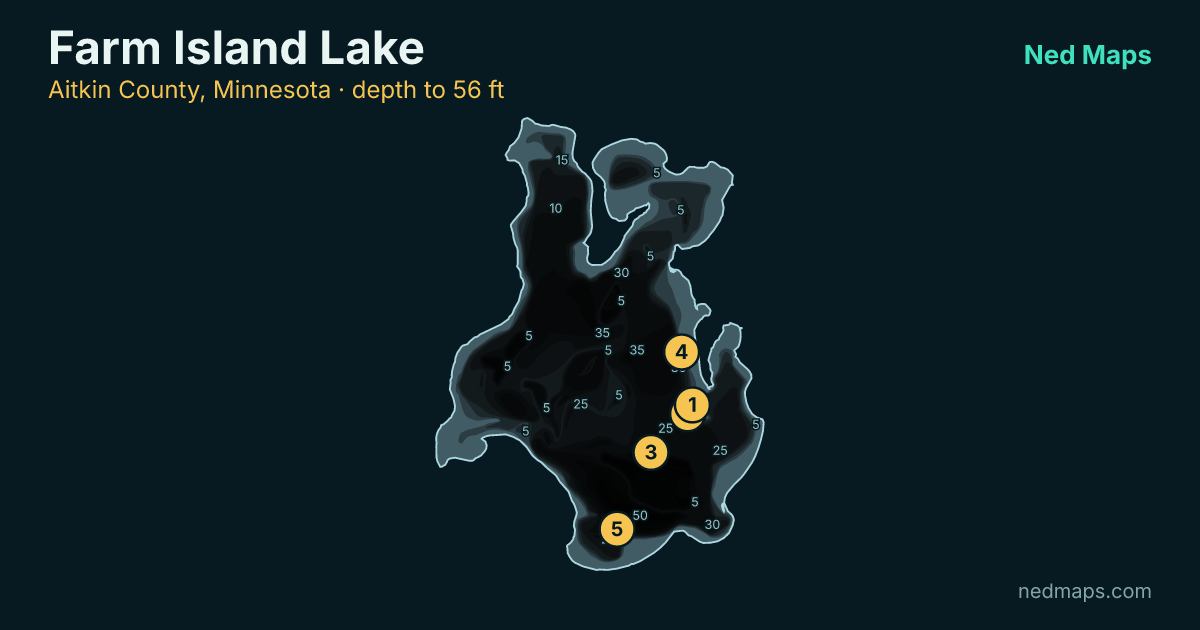
Farm Island Lake depth map
Within 30 miles
Nearby lakes
- Little Pine Lake · 226 ac · 1.6 mi
- Sunset Lake · 221 ac · 1.9 mi
- Hickory Lake · 212 ac · 2 mi
- Thornton Lake · 161 ac · 2.3 mi
- Townline Lake · 114 ac · 2.6 mi
- Shirt Lake · 231 ac · 2.8 mi
- Spirit Lake · 523 ac · 3.3 mi
- Hammal Lake · 376 ac · 4.2 mi
Quick answers
Frequently asked questions
How deep is Farm Island Lake?
Farm Island Lake reaches 56 ft at its deepest point; about 44% of the lake is littoral (15 ft or shallower).
How big is Farm Island Lake?
Farm Island Lake covers 2,005 acres with about 14.6 miles of shoreline.
How clear is the water in Farm Island Lake?
DNR Secchi readings on Farm Island Lake average 9.9 ft of visibility, middling clarity for a Minnesota lake.
What fish are in Farm Island Lake?
Minnesota DNR surveys (most recently 2025) record walleye, largemouth bass, smallmouth bass, northern pike, bluegill, crappie, yellow perch, rock bass.
Is Farm Island Lake stocked?
Yes. The DNR stocked walleye in 2025; the stocking table on this page lists every year back to 2016.
Does Farm Island Lake have a public access?
Yes. Farm Island Lake has 2 public access sites, including Farm Island Lake (trailer launch).
How big do walleye get in Farm Island Lake?
The biggest walleye measured in recent DNR surveys taped 24"; the size-history table on this page tracks the biggest fish in each survey back to 2018.
When was Farm Island Lake last surveyed?
The Minnesota DNR last surveyed Farm Island Lake in 2025, the most recent of 34 surveys on record.
Page updated .

Featured guide spot
Your guide service here
One featured guide per lake, with your photo, your writeup and a link straight to your booking page. Free through December 31, 2026.
Then $20 a month from January. Cancel any time.
The live map adds today's conditions and ranked spots for Farm Island Lake, plus a trip plan you can share:
Open Farm Island Lake on the live map → Fished it lately? Write a report