Minnesota · Scott County
Cynthia Lake Fishing guide
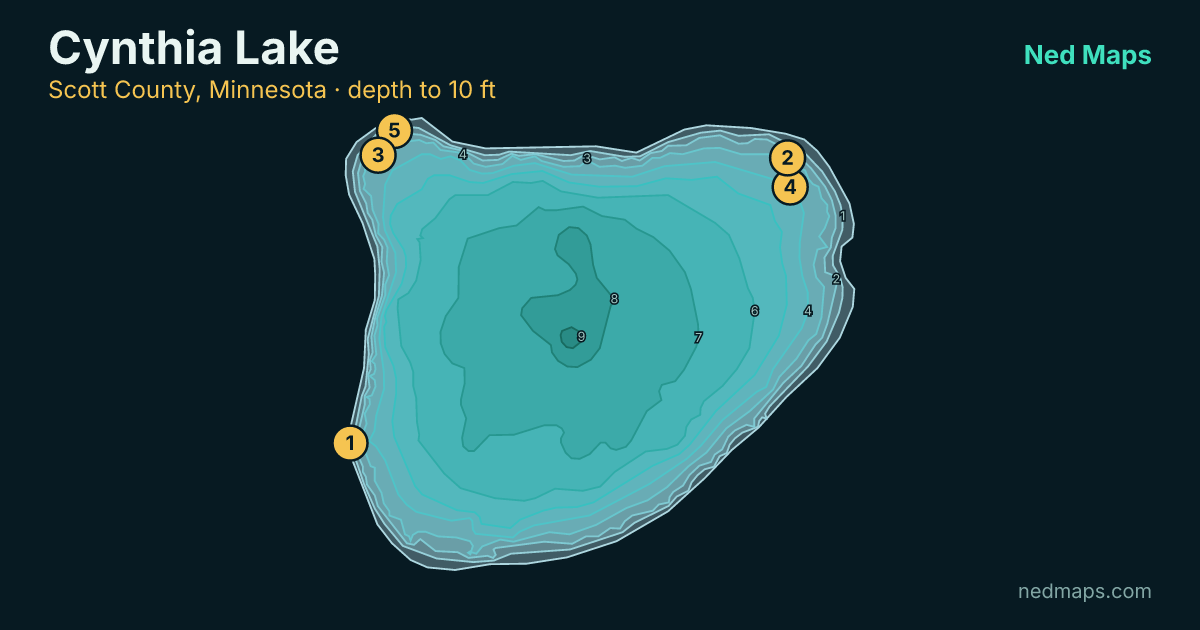
Cynthia Lake covers 196 acres in Scott County, Minnesota, reaching 10 ft at its deepest point. The Minnesota DNR has surveyed the lake 1 time, most recently in 1992, with bluegill and crappie in the nets. That survey is 34 years old now.
DNR survey data
Fish species
The DNR last surveyed Cynthia Lake in 1992. Ratings need a survey from the last 20 years, so this page lists the species from that older record without numbers.
- Bluegill
- Crappie
How to fish Cynthia Lake through the year
Bluegill
- Spring
- Bluegill are on the beds in firm-bottomed shallows, in colonies of dozens. On a clear lake those colonies sit deeper than you expect.
- Early summer
- Bluegill are off the beds and onto the weed edges and brush, the biggest ones pulling out first.
- Summer
- Bluegill are on the deep weedline of a stratified lake, sliding out as the surface starts back down. With 100% of this lake 15 ft or shallower, the weed edge is the main event.
- Fall
- Bluegill are back up onto the flats and into the last green weeds, feeding hard while the shallows still hold heat. A 10-ft bowl cools fast, so the fall window comes early here.
Crappie
- Spring
- Crappie are up in the back bays and against wood in a few feet of water, spawning shallower than most people fish for them.
- Early summer
- Crappie are pulling off the bays to the first deep weed edge and brush, still reachable shallow at dusk.
- Summer
- Crappie are over the basin of a stratified lake, well off any structure, which is why summer netting barely catches them inshore. With 100% of this lake 15 ft or shallower, the weed edge is the main event.
- Fall
- Crappie are schooled along the deep weedline and the basin edge, pushing shallow to feed at dusk while the water still turns over slowly. A 10-ft bowl cools fast, so the fall window comes early here.
Season patterns for each species. Open the live map for today's wind, light and water temp.
Suggested tackle
What to bring
Top presentations for this lake's structure and clarity:
Bluegill · Live bait
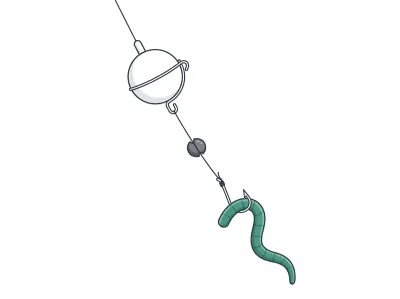
Clip-On Bobber + Worm
half to whole garden nightcrawler
Bluegill · Soft plastics
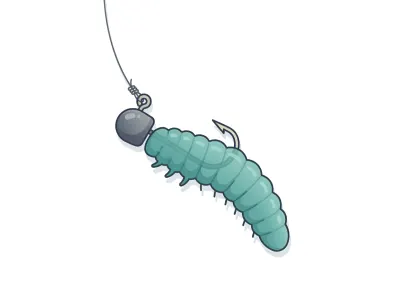
Tungsten Jig + Micro Plastic
1–1.5" micro plastic
Crappie · Jigs & bladed
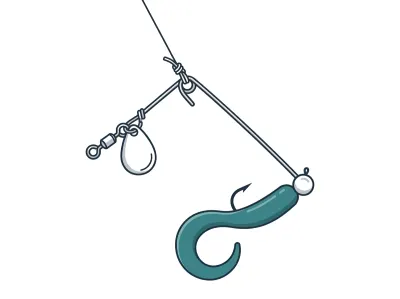
Beetle Spin
1.5–2" curly-tail grub trailer on a small in-line spinner jighead
Crappie · Soft plastics
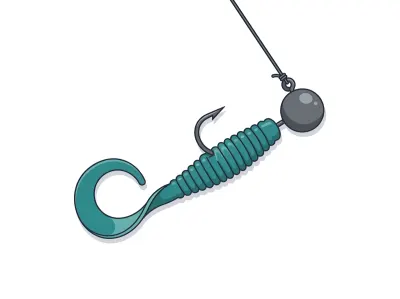
Curly-Tail Grub on Jig
3" curly-tail grub threaded on a round jighead
Full setups, including hooks, weights and line, are on the live map. As an Amazon Associate I earn from qualifying purchases.
MN DNR · in their words
From the 1992 survey
the fish population is dominated by blb, blg, gsf, hsf, and blc. Blb were captured in numbers 6.4 and times greater than the local and state median for trapnets, respectively. In gillnets, blb were sampled in numbers 35 and 154 times the local and state medians. Blb were rated at 3.2 fish/pound. Blg were sampled in numbers between 10 and 13 times greater than the state and local medians for gillnets and trapnets. Psd was calculated at 21.1%, with rsd=9.2%. Two fish measured greater than 9 inches. Scale samples were collected from 35 blg and analyzed for age and growth data. This data shows that the lake contains high numbers of fish of ages 1-3, with a few age 4 and 5, and a good number of age 6 fish. No fish with more than 6 annuli were found. Growth through age 3 was above average, but at or below average for ages 4-6. Gsf were also abundant, sampled in numbers four times the state and local medians for gillnets and over 60 times the state and local medians for trapnets. Rsd was calculted at 36.6%, with one 7 inch and one 8 inch fish measured. Hsf were captured in numbers slightly above the state and local medians for gillnets, and 14 times the local median, 28 times the state median for trapnets. Rsd was calculated at 8.9%. Blc were sampled in numbers 0.75 times the state median for gillnets; and three and 7.4 times the local and state median for trapnets. Blc were rated at 3.6 fish per pound, with a rsd= 6.1%. In addition, seven carp and four wts were captured in the gillnet and trapnets and bst and fhm were taken in the seine hauls.
Narrative text from the Minnesota DNR lake survey.
Recent reports
Cynthia Lake fishing reports
Recent reports on Cynthia Lake from guides, tournaments and regular anglers. Anything posted in the last two weeks also bumps the matching spots on the live map, so you'll see a "matches a recent report" tag on them.
Public water access
Getting on the water
- Public access: OFF COUNTY AID RD 28 ON THE SOUTH END OF THE LAKE JUST EAST OF THE DAM.
DNR bathymetry
Cynthia Lake depth map
Within 30 miles
Nearby lakes
- Fish Lake · 176 ac · 1.7 mi
- McMahon Lake · 187 ac · 3.1 mi
- Cedar Lake · 793 ac · 3.7 mi
- Spring Lake · 592 ac · 4.7 mi
- Pleasant Lake · 289 ac · 4.7 mi
- Crystal Lake · 31 ac · 5.1 mi
- Upper Prior Lake · 386 ac · 5.8 mi
- Cleary Lake · 145 ac · 5.9 mi
Quick answers
Frequently asked questions
How deep is Cynthia Lake?
Cynthia Lake reaches 10 ft at its deepest point; about 100% of the lake is littoral (15 ft or shallower).
How big is Cynthia Lake?
Cynthia Lake covers 196 acres with about 2.2 miles of shoreline.
What fish are in Cynthia Lake?
Minnesota DNR surveys (most recently 1992) record bluegill, crappie.
Is Cynthia Lake stocked?
No stocking is on record for Cynthia Lake in the DNR's stocking database.
Does Cynthia Lake have a public access?
Yes. Cynthia Lake has one public access site: Public access (OFF COUNTY AID RD 28 ON THE SOUTH END OF THE LAKE JUST EAST OF THE DAM.).
When was Cynthia Lake last surveyed?
The Minnesota DNR last surveyed Cynthia Lake in 1992. That is more than 20 years ago, so this page lists species without ratings.
Page updated .

Featured guide spot
Your guide service here
One featured guide per lake, with your photo, your writeup and a link straight to your booking page. Free through December 31, 2026.
Then $20 a month from January. Cancel any time.
The live map adds today's conditions and ranked spots for Cynthia Lake, plus a trip plan you can share:
Open Cynthia Lake on the live map → Fished it lately? Write a report