Minnesota · Otter Tail County
Blanche Lake Fishing guide
Blanche Lake sits in Otter Tail County, Minnesota, and covers 1,296 acres, reaching 64 ft at its deepest point. Secchi readings average around 7.7 ft of visibility. The Minnesota DNR has surveyed the lake 7 times, most recently in 2025, with walleye, largemouth bass, northern pike and bluegill in the nets.
DNR survey data
Fish species
WalleyeLast stocked 2025Fair numbers3.2per gill net15"Typical20"Biggest
Lengths measured · 32 fish
Recent · 2015Lengths measured · 32 fish
2015Lengths measured · 52 fish
2010Lengths measured · 65 fish
2005Lengths measured · 60 fish
2000Largemouth bassPresent (last recorded 2015)2.1per gill net9"Typical15"Biggest
Lengths measured · 39 fish
Recent · 2015Lengths measured · 39 fish
2015Lengths measured · 94 fish
2010Lengths measured · 36 fish
2005Lengths measured · 19 fish
2000Northern pikeFair numbers6.7per gill net14"Typical24"Biggest
Lengths measured · 66 fish
Recent · 2015Lengths measured · 66 fish
2015Lengths measured · 75 fish
2010Lengths measured · 58 fish
2005Lengths measured · 81 fish
2000BluegillFair numbers39.8per trap net6"Typical9"Biggest
Lengths measured · 534 fish
Recent · 2015 + 2025Lengths measured · 175 fish
2025Lengths measured · 359 fish
2015Lengths measured · 450 fish
2010Lengths measured · 569 fish
2005CrappieJust a few1.1per trap net9"Typical10"Biggest
Lengths measured · 14 fish
Recent · 2015 + 2025Lengths measured · 1 fish
2025Only 1 fish measured that year — too few to read as a shape.
Lengths measured · 13 fish
2015Lengths measured · 37 fish
2010Lengths measured · 40 fish
2005Rates come from standard DNR survey gear (gill nets, trap nets, electrofishing), judged against statewide benchmarks for the same gear, so the same number of fish per net can read differently for two species. Where the standard gear can't count a species reliably, only presence and size are listed. Typical is the middle fish of those measured. Open a row for the full length spread, survey by survey.
How to fish Blanche Lake through the year
Walleye
- Spring
- Walleye are shallow, on and just off the spawning flats and the first green weeds.
- Early summer
- Walleye are setting up on the outside weed edge, points and shallow structure.
- Summer
- Walleye are working the weed edge, points and any wind-blown structure. On a lake that drops to 64 ft, check the deep edge of that structure too.
- Fall
- Walleye are packing onto the sharpest breaks and points as the water cools, in big schools with short windows.
Bluegill
- Spring
- Bluegill are on the beds in firm-bottomed shallows, in colonies of dozens. On a clear lake those colonies sit deeper than you expect.
- Early summer
- Bluegill are off the beds and onto the weed edges and brush, the biggest ones pulling out first.
- Summer
- Bluegill are on the deep weedline of a stratified lake, sliding out as the surface starts back down. On a lake that drops to 64 ft, check the deep edge of that structure too.
- Fall
- Bluegill are back up onto the flats and into the last green weeds, feeding hard while the shallows still hold heat.
Season patterns for each species. Open the live map for today's wind, light and water temp.
Size history
Biggest fish by survey year
| Survey year | Walleye | Bluegill | Crappie |
|---|---|---|---|
| 2025 | — | 9" | 8" |
| 2015 | 20" | 8" | 10" |
| 2010 | 22" | 9" | 11" |
| 2005 | 28" | 8" | 10" |
| 2000 | 25" | 8" | 11" |
Longest fish measured by DNR survey crews in each year's nets. Survey gear samples the population, so the lake usually holds larger fish than any survey measured.
Suggested tackle
What to bring
Top presentations for this lake's structure and clarity:
Walleye · Live bait

Live-Bait (Lindy) Rig + Leech/Crawler
jumbo leech or half a nightcrawler
Walleye · Trolling
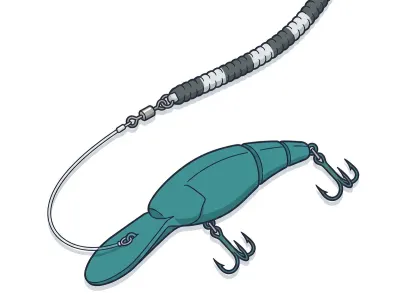
Leadcore Line + Crankbaits
4–5" mid-diving crankbait behind a long leadcore run
Bluegill · Live bait
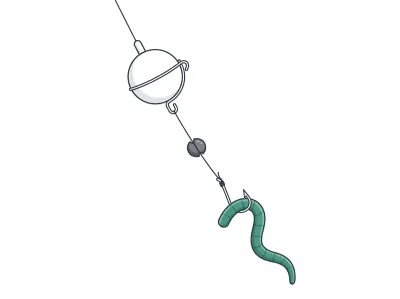
Clip-On Bobber + Worm
half to whole garden nightcrawler
Bluegill · Soft plastics
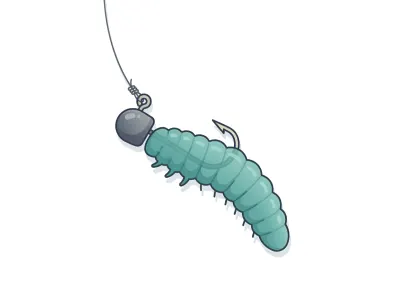
Tungsten Jig + Micro Plastic
1–1.5" micro plastic
Crappie · Soft plastics
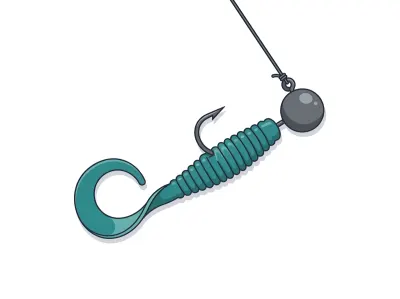
Curly-Tail Grub on Jig
3" curly-tail grub threaded on a round jighead
Crappie · Jigs & bladed
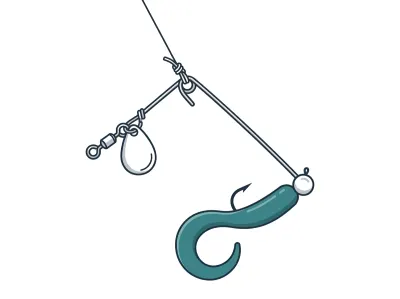
Beetle Spin
1.5–2" curly-tail grub trailer on a small in-line spinner jighead
Full setups, including hooks, weights and line, are on the live map. As an Amazon Associate I earn from qualifying purchases.
DNR stocking records
Stocking history
| Year | Species | Stocked |
|---|---|---|
| 2025 | Walleye | 1,002,000 fry |
| 2023 | Walleye | 1,002,000 fry |
| 2021 | Walleye | 1,002,000 fry |
| 2019 | Walleye | 1,002,000 fry |
| 2017 | Walleye | 1,002,000 fry |
MN DNR · in their words
From the 2025 survey
Blanche Lake is a 1,228-acre mesotrophic (moderately fertile) lake located in central Otter Tail County approximately four miles northeast of Battle Lake, MN. An inlet from Annie Battle Lake is located on the southwest shoreline and an outlet to Otter Tail Lake is located on the north shoreline. The immediate watershed is composed primarily of mixed hardwood woodlots. Blanche Lake has a maximum depth of 64 feet; however, 82% of the lake is 15 feet or less in depth. The Secchi disk reading during the 2015 survey was 6.5 feet. Previous Secchi disk readings ranged from 6.5 to 9.0 feet.
Moderate development exists along the northwest, north, and northeast shorelines. Four resorts and 133 homes/cabins were located along the shoreline during the 2000 lake survey. A state-owned public water access is located along the north shoreline. Shoal water substrates consist primarily of sand. Emergent vegetation (hardstem bulrush and common cattail) is prevalent throughout the southern portion of the lake. Emergent plants are important because they provide valuable fish and wildlife habitat and are critical for maintaining good water quality. They protect shorelines from erosion and can even absorb and break down pollutants from the water. Emergent plants provide spawning areas for fish species such as Northern Pike, Largemouth Bass, and panfish. They also are important nursery areas for all species of fish. Because of their ecological importance, emergent plants may not be removed without a DNR permit.
Read the full DNR narrative
Blanche Lake can be ecologically classified as a Walleye-centrarchid type of lake and this is reflected in the assemblage of the fish community. Walleye, Largemouth Bass, and Bluegill are the dominant gamefish species in Blanche Lake. A spring trap netting survey was conducted in 2025 to collect data on the Bluegill population. This was the first targeted assessment for Bluegill on Blanche Lake. Previous Bluegill data was obtained via standard lake survey summer trap netting.
Bluegills continue to be abundant in Blanche Lake. Age data indicates that Bluegill reproduction is consistently good. Bluegill size structure is also good as 66% of the Bluegills were 7.0 inches or greater in length. Bluegills attain an average length of 7.3 inches at seven years of age. Fish sampled during this survey ranged in size from 2.0 to 9.3 inches.
Anglers can maintain the quality of angling by practicing selective harvest. Selective harvest encourages the release of medium to large-size fish while allowing the harvest of more abundant smaller fish for table fare. Releasing the medium to large fish will ensure that the lake has enough spawning age fish on an annual basis and will provide anglers with more opportunities to catch large fish in the future.
Blanche Lake was designated as infested with zebra mussels in 2018. Aquatic invasive species are threatening Minnesota waters. Aquatic invasive species can potentially harm water quality, water recreation, aquatic habitat, native species, and fish populations. Anglers can help prevent the introduction and spread of invasive species by following watercraft transportation laws.
Narrative text from the Minnesota DNR lake survey.
Recent reports
Blanche Lake fishing reports
Recent reports on Blanche Lake from guides, tournaments and regular anglers. Anything posted in the last two weeks also bumps the matching spots on the live map, so you'll see a "matches a recent report" tag on them.
Public water access
Getting on the water
- Blanche Lake (trailer launch)
DNR bathymetry
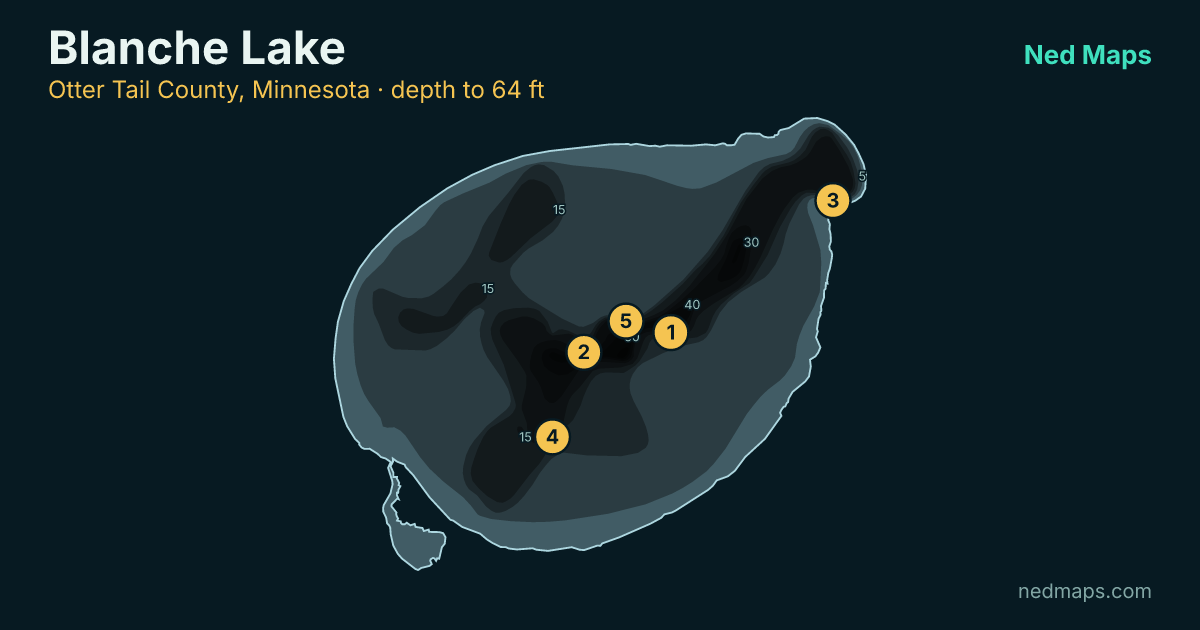
Blanche Lake depth map
Within 30 miles
Nearby lakes
- Annie Battle Lake · 354 ac · 1.5 mi
- Ethel Lake · 191 ac · 1.7 mi
- Molly Stark Lake · 152 ac · 2.3 mi
- Otter Tail Lake · 14,079 ac · 3.3 mi
- West Battle Lake · 5,615 ac · 3.8 mi
- First Silver Lake · 529 ac · 4.6 mi
- Deer Lake · 447 ac · 5.4 mi
- Elbow Lake · 188 ac · 5.8 mi
Quick answers
Frequently asked questions
How deep is Blanche Lake?
Blanche Lake reaches 64 ft at its deepest point; about 77% of the lake is littoral (15 ft or shallower).
How big is Blanche Lake?
Blanche Lake covers 1,296 acres with about 5.6 miles of shoreline.
How clear is the water in Blanche Lake?
DNR Secchi readings on Blanche Lake average 7.7 ft of visibility, middling clarity for a Minnesota lake.
What fish are in Blanche Lake?
Minnesota DNR surveys (most recently 2025) record walleye, largemouth bass, northern pike, bluegill, crappie, yellow perch, rock bass.
Is Blanche Lake stocked?
Yes. The DNR stocked walleye in 2025; the stocking table on this page lists every year back to 2017.
Does Blanche Lake have a public access?
Yes. Blanche Lake has one public access site: Blanche Lake (trailer launch).
How big do walleye get in Blanche Lake?
The biggest walleye measured in recent DNR surveys taped 20"; the size-history table on this page tracks the biggest fish in each survey back to 2000.
When was Blanche Lake last surveyed?
The Minnesota DNR last surveyed Blanche Lake in 2025, the most recent of 7 surveys on record.
Page updated .

Featured guide spot
Your guide service here
One featured guide per lake, with your photo, your writeup and a link straight to your booking page. Free through December 31, 2026.
Then $20 a month from January. Cancel any time.
The live map adds today's conditions and ranked spots for Blanche Lake, plus a trip plan you can share:
Open Blanche Lake on the live map → Fished it lately? Write a report