Minnesota · Cook County
Ball Club Lake Fishing guide
Ball Club Lake covers 206 acres in Cook County, Minnesota, reaching 25 ft at its deepest point. Average water clarity runs about 7.8 ft. The Minnesota DNR has surveyed the lake 9 times, most recently in 2022, with walleye, northern pike, yellow perch and brook trout in the nets.
DNR survey data
Fish species
WalleyeExcellent numbers10.8per gill net13"Typical20"Biggest
Lengths measured · 90 fish
Recent · 2022Lengths measured · 90 fish
2022Lengths measured · 97 fish
2012Lengths measured · 62 fish
2004Lengths measured · 47 fish
2000No recent survey rating.
Yellow perchGood numbers4.5per gill net4"Typical9"Biggest
Lengths measured · 219 fish
Recent · 2022Lengths measured · 219 fish
2022Lengths measured · 43 fish
2012Lengths measured · 5 fish
2004Only 5 fish measured that year — too few to read as a shape.
Lengths measured · 273 fish
2000Last recorded in the 1995 survey and not seen since.
Rates come from standard DNR survey gear (gill nets, trap nets, electrofishing), judged against statewide benchmarks for the same gear, so the same number of fish per net can read differently for two species. Where the standard gear can't count a species reliably, only presence and size are listed. Typical is the middle fish of those measured. Open a row for the full length spread, survey by survey.
How to fish Ball Club Lake through the year
Walleye
- Spring
- Walleye are shallow, on and just off the spawning flats and the first green weeds.
- Early summer
- Walleye are setting up on the outside weed edge, points and shallow structure.
- Summer
- Walleye are working the weed edge, points and any wind-blown structure. With 77% of this lake 15 ft or shallower, the weed edge is the main event.
- Fall
- Walleye are packing onto the sharpest breaks and points as the water cools, in big schools with short windows.
Yellow perch
- Spring
- Perch are draping eggs over flooded cover and weed stems on the shallow flats.
- Early summer
- Perch are spread over sand-grass flats and the first weed edges in loose packs.
- Summer
- Perch are over deeper soft-bottom flats and the basin, on the bottom and in schools. With 77% of this lake 15 ft or shallower, the weed edge is the main event.
- Fall
- Perch are roaming the mid-depth flats in loose schools, chasing young-of-year bait while it is still shallow.
Season patterns for each species. Open the live map for today's wind, light and water temp.
Size history
Biggest fish by survey year
| Survey year | Walleye | Yellow perch | Northern pike |
|---|---|---|---|
| 2022 | 20" | 9" | — |
| 2012 | 21" | 9" | — |
| 2004 | 21" | 8" | 22" |
| 2000 | 24" | 6" | 24" |
| 1995 | 20" | 8" | 24" |
Longest fish measured by DNR survey crews in each year's nets. Survey gear samples the population, so the lake usually holds larger fish than any survey measured.
Suggested tackle
What to bring
Top presentations for this lake's structure and clarity:
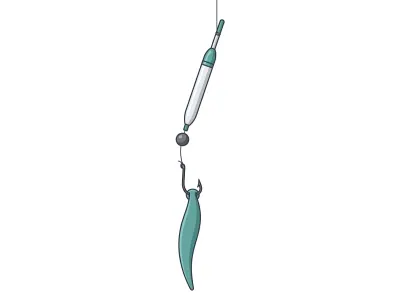
Walleye · Trolling
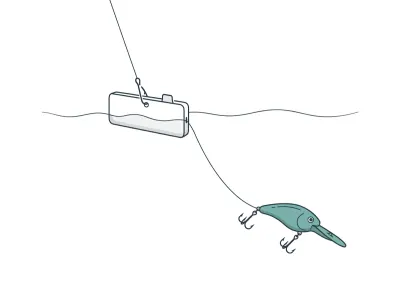
Planer Board Spread
4–6" crankbait or a 5–6 ft crawler harness run out to the side on an in-line planer board
Yellow perch · Soft plastics
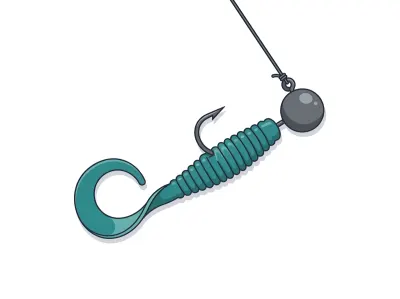
Curly-Tail Grub on Jig
3" curly-tail grub threaded on a round jighead
Yellow perch · Soft plastics
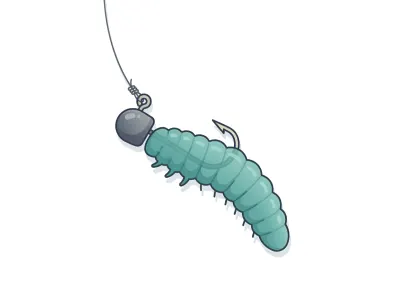
Tungsten Jig + Micro Plastic
1–1.5" micro plastic
Northern pike · Soft plastics
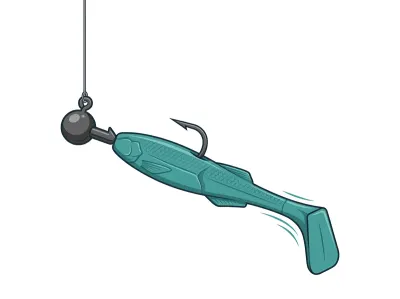
Paddletail Swimbait on Jighead
4–5" paddletail swimbait on a ball-head swimbait jighead
Northern pike · Muskie & pike
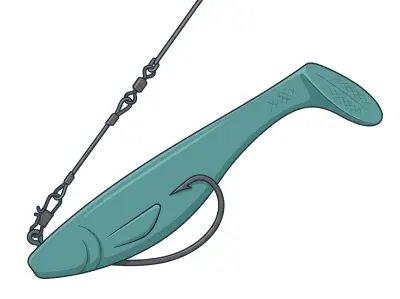
Soft Rubber (Bull Dawg / Medusa)
10" soft rubber body bait
Full setups, including hooks, weights and line, are on the live map. As an Amazon Associate I earn from qualifying purchases.
MN DNR · in their words
From the 2022 survey
Ball Club Lake is located about 20 miles from the City of Grand Marais and can be accessed from the Ball Club Lake Road, a well-maintained gravel road north of Two Island Lake. There is a concrete boat launch at the lake and a small camping area, with parking for six or seven vehicles. There is no development on the lake.
This survey of Ball Club Lake was completed to update population data for Walleye and Northern Pike and to monitor for the introduction of undesirable fish species to the lake. Ball Club Lake is managed primarily for Walleye, with a long-term goal of maintaining a minimum gill net catch of 6.0 fish/set, including some fish over 20 inches. The secondary management species is Northern Pike, with a long-term goal of maintaining a minimum gill net catch of 1.5 fish/set, and the presence of some fish over 25 inches. Regular Walleye stocking on the lake occurred in the 1970s and 1980s but was discontinued due to sufficient natural reproduction documented in most surveys completed at that time.
Read the full DNR narrative
Management goals for the Ball Club Lake Walleye population were met in the 2022 standard survey. The gill net catch exceeded the normal range of catches for similar lakes and was the highest observed for Ball Club Lake since 1983. Most of the Walleye sampled in 2022 were small, although one Walleye over 20 inches was captured. The mean weight for Walleye taken in gill nets was low compared to similar lakes in this area, but comparable to mean weights attained in past surveys of this lake. Fair numbers of Walleye were also sampled in 0.75-inch-mesh trap nets. Walleye natural reproduction appeared very consistent over the past ten years. Relatively strong year classes were apparently produced in 2017, 2018, and 2019. The 2021 year class also accounted for about 26% of the combined Walleye sample suggesting an additional strong year class may contribute to the fishery in the coming years. Walleye growth rates had been about average; Walleye average 11.6 inches at the end of their third year, compared to an area mean of 12.1 inches at that age.
Northern Pike were not captured in any sampling gear in 2022. Northern Pike gill net catches in this lake have varied widely and catches of zero fish have occurred in the past. Previously, low catches have always been followed by a quick recovery, with no management intervention. However, this marked the second consecutive survey in which Northern Pike were absent.
Yellow Perch gill net catches have shown an increasing trend over the last several surveys of Ball Club Lake, which could be the result of reduced Northern Pike abundance in the lake. The Yellow Perch gill net catch in 2022 followed the trend of higher catches, although abundance did not appear particularly high when compared to similar lakes in the area. High numbers of non-young-of-year Yellow Perch were also sampled in 0.25-inch-mesh trap nets, a majority of which would have been too small to be captured in gill nets. The Yellow Perch population likely provided a good forage base for Walleye, but few fish were large enough to attract much interest from anglers. The 2022 White Sucker gill net catch was about average for the lake class, and within the range of catches historically observed for the lake. Most of the White Sucker sampled in 2022 were too large to serve as forage for Walleye. Additional species sampled in 0.25-inch-mesh trap nets included Blacknose Shiner and Golden Shiner. Golden Shiners appeared relatively abundant in that gear and may have contributed to the Walleye forage base. No new fish species to the lake were documented in this survey.
Narrative text from the Minnesota DNR lake survey.
Recent reports
Ball Club Lake fishing reports
Recent reports on Ball Club Lake from guides, tournaments and regular anglers. Anything posted in the last two weeks also bumps the matching spots on the live map, so you'll see a "matches a recent report" tag on them.
Public water access
Getting on the water
- Ball Club Lake (trailer launch)
DNR bathymetry
Ball Club Lake depth map
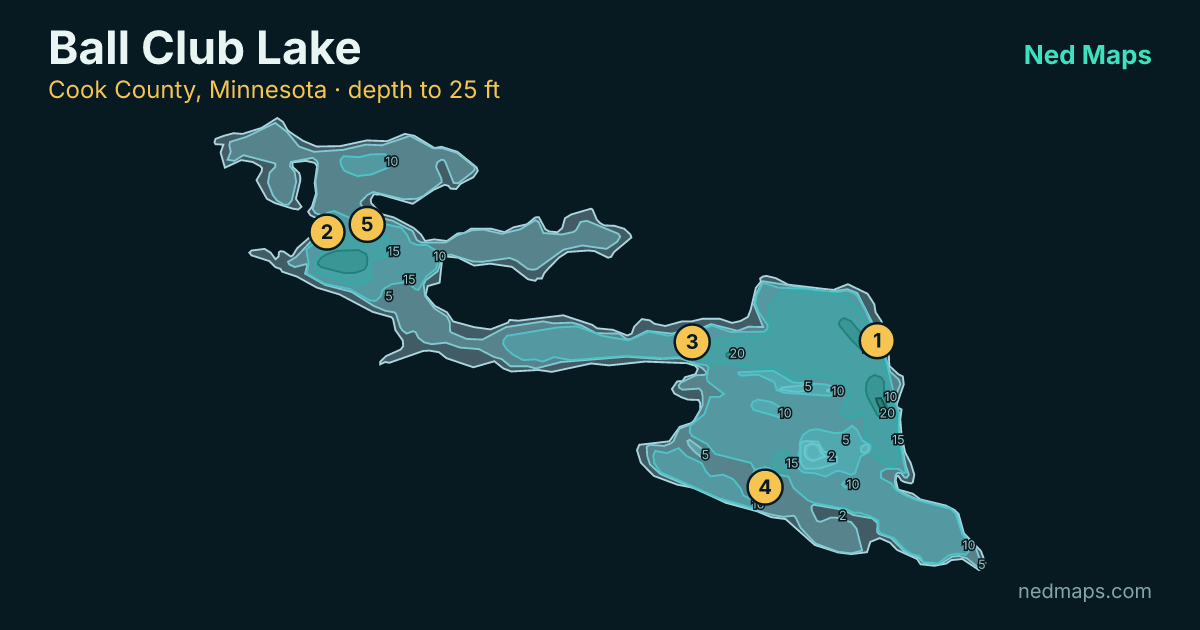
Within 30 miles
Nearby lakes
- Thrush Lake · 15 ac · 1.2 mi
- Hand Lake · 81 ac · 1.2 mi
- Thrasher Lake · 24 ac · 1.4 mi
- Bath Lake · 28 ac · 1.7 mi
- Mit Lake · 87 ac · 1.9 mi
- Bower Trout Lake · 133 ac · 2.9 mi
- Two Island Lake · 754 ac · 3 mi
- Kemo Lake · 189 ac · 3.1 mi
Quick answers
Frequently asked questions
How deep is Ball Club Lake?
Ball Club Lake reaches 25 ft at its deepest point; about 77% of the lake is littoral (15 ft or shallower).
How big is Ball Club Lake?
Ball Club Lake covers 206 acres with about 6.6 miles of shoreline.
How clear is the water in Ball Club Lake?
DNR Secchi readings on Ball Club Lake average 7.8 ft of visibility, middling clarity for a Minnesota lake.
What fish are in Ball Club Lake?
Minnesota DNR surveys (most recently 2022) record walleye, northern pike, yellow perch, brook trout.
Is Ball Club Lake stocked?
No stocking is on record for Ball Club Lake in the DNR's stocking database.
Does Ball Club Lake have a public access?
Yes. Ball Club Lake has one public access site: Ball Club Lake (trailer launch).
How big do walleye get in Ball Club Lake?
The biggest walleye measured in recent DNR surveys taped 20"; the size-history table on this page tracks the biggest fish in each survey back to 1995.
When was Ball Club Lake last surveyed?
The Minnesota DNR last surveyed Ball Club Lake in 2022, the most recent of 9 surveys on record.
Page updated .

Featured guide spot
Your guide service here
One featured guide per lake, with your photo, your writeup and a link straight to your booking page. Free through December 31, 2026.
Then $20 a month from January. Cancel any time.
The live map adds today's conditions and ranked spots for Ball Club Lake, plus a trip plan you can share:
Open Ball Club Lake on the live map → Fished it lately? Write a report