Minnesota · Big Stone County
Artichoke Lake Fishing guide
Artichoke Lake is a 1,971-acre lake in Big Stone County, Minnesota, reaching 15.5 ft at its deepest point. Average water clarity runs about 2.8 ft. The Minnesota DNR has surveyed the lake 29 times, most recently in 2025, with walleye, largemouth bass, northern pike and bluegill in the nets.
DNR survey data
Fish species
WalleyeLast stocked 2024One of the best around39.5per gill net6"Typical26"Biggest
Lengths measured · 2541 fish
Recent · 2021 + 2022 + 2023 + 2024 + 2025Lengths measured · 404 fish
2025Lengths measured · 675 fish
2024Lengths measured · 335 fish
2023Lengths measured · 464 fish
2022Largemouth bassLast stocked 2024Just a few14.9per hr (electrofishing)13"Typical19"Biggest
Lengths measured · 54 fish
Recent · 2021 + 2025Lengths measured · 19 fish
2025Lengths measured · 26 fish
2022Lengths measured · 35 fish
2021Lengths measured · 9 fish
2020Only 9 fish measured that year — too few to read as a shape.
Northern pikeLast stocked 2016Just a few2.1per gill net21"Typical32"Biggest
Lengths measured · 27 fish
Recent · 2021 + 2022 + 2024 + 2025Lengths measured · 10 fish
2025Lengths measured · 7 fish
2024Only 7 fish measured that year — too few to read as a shape.
Lengths measured · 4 fish
2022Only 4 fish measured that year — too few to read as a shape.
Lengths measured · 6 fish
2021Only 6 fish measured that year — too few to read as a shape.
BluegillJust a few0.4per trap net1"Typical8"Biggest
Lengths measured · 783 fish
Recent · 2021 + 2025Lengths measured · 33 fish
2025Lengths measured · 49 fish
2022Lengths measured · 750 fish
2021Lengths measured · 8750 fish
2020CrappieLast stocked 2024Just a few5.8per trap net2"Typical14"Biggest
Lengths measured · 1180 fish
Recent · 2021 + 2022 + 2025Lengths measured · 32 fish
2025Lengths measured · 1 fish
2023Only 1 fish measured that year — too few to read as a shape.
Lengths measured · 892 fish
2022Lengths measured · 256 fish
2021Yellow perchLast stocked 2019Just a few1.1per gill net7"Typical11"Biggest
Lengths measured · 12 fish
Recent · 2021 + 2022 + 2025Lengths measured · 1 fish
2025Only 1 fish measured that year — too few to read as a shape.
Lengths measured · 7 fish
2022Only 7 fish measured that year — too few to read as a shape.
Lengths measured · 4 fish
2021Only 4 fish measured that year — too few to read as a shape.
Lengths measured · 10 fish
2020Channel catfishGood numbers0.5per trap net20"Typical29"Biggest
Lengths measured · 20 fish
Recent · 2021 + 2022 + 2024Lengths measured · 5 fish
2024Only 5 fish measured that year — too few to read as a shape.
Lengths measured · 5 fish
2022Only 5 fish measured that year — too few to read as a shape.
Lengths measured · 10 fish
2021Lengths measured · 6 fish
2020Only 6 fish measured that year — too few to read as a shape.
No recent survey rating.
Rates come from standard DNR survey gear (gill nets, trap nets, electrofishing), judged against statewide benchmarks for the same gear, so the same number of fish per net can read differently for two species. Where the standard gear can't count a species reliably, only presence and size are listed. Typical is the middle fish of those measured. Open a row for the full length spread, survey by survey.
How to fish Artichoke Lake through the year
Walleye
- Spring
- Walleye are shallow, on and just off the spawning flats and the first green weeds. In 2.8 ft of visibility, they sit shallower than you think.
- Early summer
- Walleye are setting up on the outside weed edge, points and shallow structure.
- Summer
- Walleye are working the weed edge, points and any wind-blown structure. With 100% of this lake 15 ft or shallower, the weed edge is the main event.
- Fall
- Walleye are packing onto the sharpest breaks and points as the water cools, in big schools with short windows. A 15.5-ft bowl cools fast, so the fall window comes early here.
Largemouth bass
- Spring
- Largemouth are moving up into the warming bays and flats, staging around wood, docks and new weeds to spawn. In 2.8 ft of visibility, they sit shallower than you think.
- Early summer
- Largemouth are on the shallow spawning flats and protected bays, where beds go on firm bottom next to isolated cover.
- Summer
- Largemouth are in and along the weeds: cabbage and milfoil edges, matted cover and shade. With 100% of this lake 15 ft or shallower, the weed edge is the main event.
- Fall
- Largemouth are chasing bait back onto the flats and into the remaining green weeds, feeding hard and shallow before the freeze. A 15.5-ft bowl cools fast, so the fall window comes early here.
Season patterns for each species. Open the live map for today's wind, light and water temp.
Size history
Biggest fish by survey year
| Survey year | Walleye | Largemouth bass | Northern pike |
|---|---|---|---|
| 2025 | 18" | 6" | 26" |
| 2024 | 20" | — | 14" |
| 2023 | 9" | — | — |
| 2022 | 26" | 5" | 25" |
| 2021 | 26" | 19" | 32" |
| 2020 | 26" | 5" | 29" |
| 2019 | 19" | 11" | 26" |
| 2018 | 20" | 9" | 22" |
Longest fish measured by DNR survey crews in each year's nets. Survey gear samples the population, so the lake usually holds larger fish than any survey measured.
Suggested tackle
What to bring
Top presentations for this lake's structure and clarity:
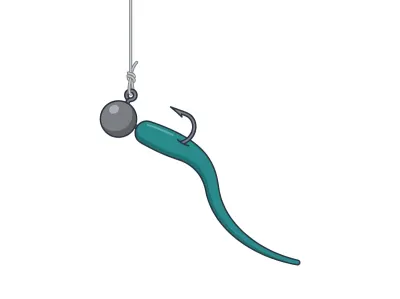
Walleye · Soft plastics
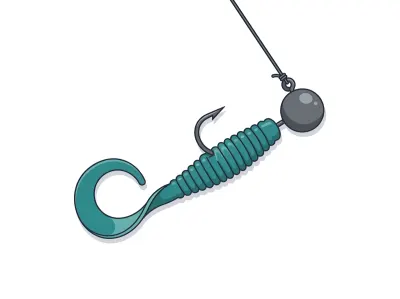
Curly-Tail Grub on Jig
3" curly-tail grub threaded on a round jighead
Largemouth bass · Soft plastics
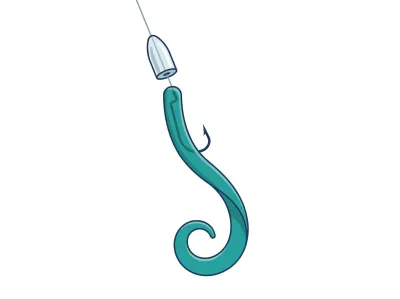
Texas-Rigged Worm
7" ribbon-tail or straight-tail plastic worm
Largemouth bass · Jigs & bladed
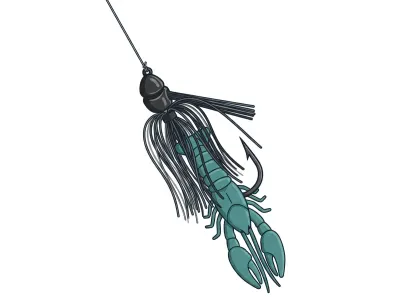
Skirted Casting Jig + Craw Trailer
3.5–4" craw-style trailer on a skirted casting/flipping jig
Northern pike · Soft plastics
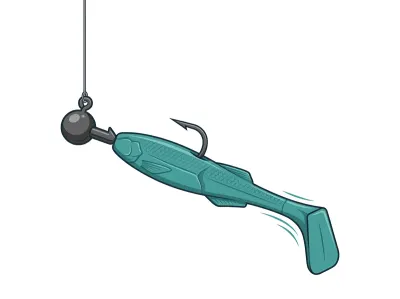
Paddletail Swimbait on Jighead
4–5" paddletail swimbait on a ball-head swimbait jighead
Northern pike · Jigs & bladed
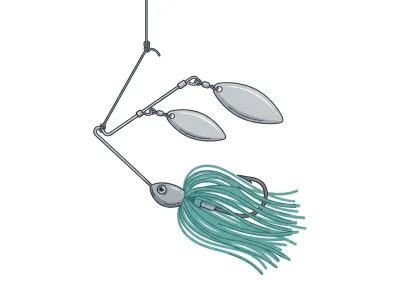
Spinnerbait
3/8–1/2 oz safety-pin spinnerbait with tandem willow-leaf blades
Full setups, including hooks, weights and line, are on the live map. As an Amazon Associate I earn from qualifying purchases.
DNR stocking records
Stocking history
| Year | Species | Stocked |
|---|---|---|
| 2024 | Black Crappie | 95 adults |
| 2024 | Largemouth Bass | 32 adults |
| 2024 | Walleye | 1,000,000 fry |
| 2023 | Black Crappie | 124 adults |
| 2023 | SPO | 15,500 adults |
| 2023 | Walleye | 1,002,310 fry |
| 2022 | Walleye | 1,000,418 fry |
| 2021 | Walleye | 1,000,000 fry |
| 2019 | Walleye | 1,000,000 fry · 16,447 fingerlings · 981 yearlings |
| 2019 | Yellow Perch | 44,375 adults |
| 2017 | Walleye | 1,000,000 fry |
| 2016 | Northern Pike | 733 adults |
Stocking records before 2016 omitted.
MN DNR · in their words
From the 2025 survey
Artichoke Lake is in western Minnesota approximately 14 miles northwest of Appleton. It is a highly productive prairie lake with a maximum depth of 15 feet and a surface area of 1,964 acres. Artichoke has several shallow rocky reefs and points that are not marked so anglers should study a contour map carefully before boating.
An aeration system located near the "narrows" is frequently operated during winter and it creates a substantial area of open water. Artichoke's fishery is managed primarily for walleyes, black crappies, largemouth bass and northern pike.
Read the full DNR narrative
Artichoke experienced a severe fish die-off during the winter of 2022-2023 due to the natural occurrence of low oxygen. Most game fish died and needed to be restocked. Save-A-Lake aeration operates an aeration system when necessary to reduce the chance of winterkill. However, during severe winters aeration doesn't always work. This was the case in 2022-23 when a rapid oxygen crash "overpowered" the ability of aeration to replenish oxygen and a severe winterkill occurred. The lake was restocked with walleye fry, and broodstock largemouth bass, black crappies and spottail shiners.
Annual fall surveys are conducted to collect fish population data using gill nets, trap nets and nighttime electrofishing. Walleyes were abundant during the 2025 survey and most were 12-14 inches. A strong 2025-year class of 7-8-inch walleyes was present as well, which should provide good fishing in the future. Species historically common to Artichoke Lake are increasing in number. Black crappies were moderately abundant and ranged from 4-8 inches. Freshwater drum were abundant and the majority were 4-6 inches. Some northern pike were also caught with the largest measuring 26 inches. High numbers of young-of-year largemouth bass were present along with a moderate number of young adults. Fathead minnows were abundant and being fed heavily on by the game fish. Once the minnow numbers have been reduced by predation, anglers can expect some good fishing, especially for walleyes.
Narrative text from the Minnesota DNR lake survey.
Recent reports
Artichoke Lake fishing reports
Recent reports on Artichoke Lake from guides, tournaments and regular anglers. Anything posted in the last two weeks also bumps the matching spots on the live map, so you'll see a "matches a recent report" tag on them.
Public water access
Getting on the water
- Artichoke Lake (E) (trailer launch)
- Artichoke Lake (N) (trailer launch)
- Artichoke Lake (S) (trailer launch)
- Artichoke Lake Fishing Pier (fishing pier)
DNR bathymetry
Artichoke Lake depth map
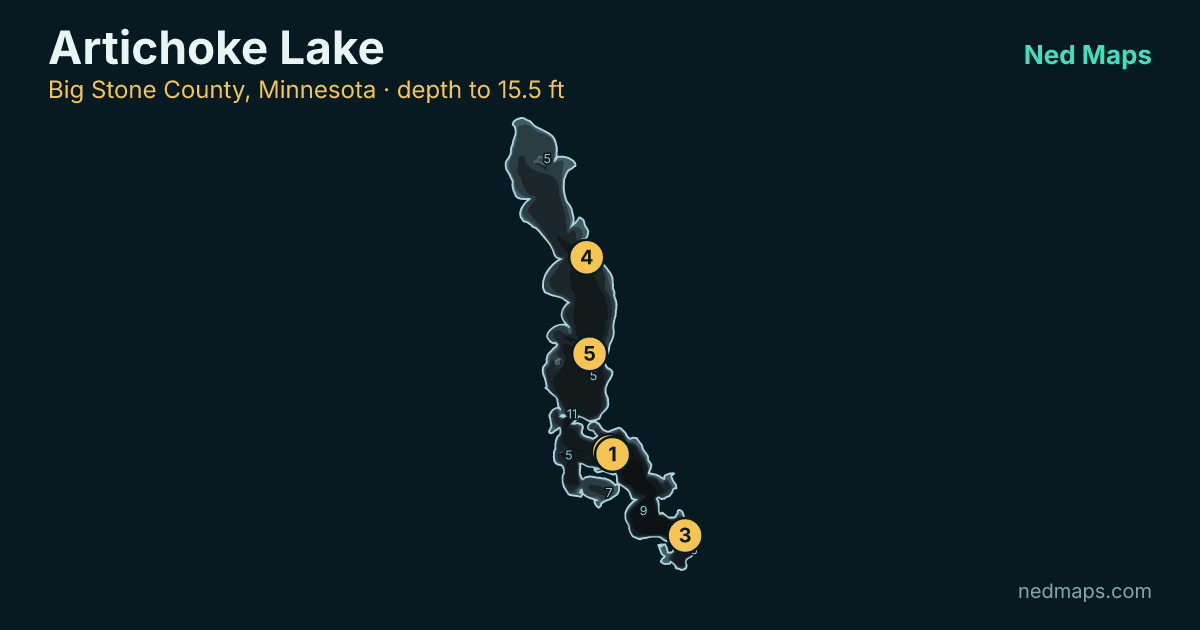
Within 30 miles
Nearby lakes
- Long Lake · 395 ac · 1.7 mi
- Oliver (west portion) Lake · 218 ac · 4.6 mi
- Dry Wood Lake · 404 ac · 4.7 mi
- Lake Oliver · 686 ac · 5.8 mi
- Oliver (east portion) Lake · 467 ac · 5.8 mi
- Shible Lake · 340 ac · 7.8 mi
- Marsh Lake · 4,462 ac · 10.3 mi
- Long Tom Lake · 147 ac · 10.9 mi
Quick answers
Frequently asked questions
How deep is Artichoke Lake?
Artichoke Lake reaches 15.5 ft at its deepest point; about 100% of the lake is littoral (15 ft or shallower).
How big is Artichoke Lake?
Artichoke Lake covers 1,971 acres with about 20.7 miles of shoreline.
How clear is the water in Artichoke Lake?
DNR Secchi readings on Artichoke Lake average 2.8 ft of visibility, on the stained end for a Minnesota lake.
What fish are in Artichoke Lake?
Minnesota DNR surveys (most recently 2025) record walleye, largemouth bass, northern pike, bluegill, crappie, yellow perch, channel catfish, white bass.
Is Artichoke Lake stocked?
Yes. The DNR stocked black crappie, largemouth bass and walleye in 2024; the stocking table on this page lists every year back to 2016.
Does Artichoke Lake have a public access?
Yes. Artichoke Lake has 4 public access sites, including Artichoke Lake (E) (trailer launch).
How big do walleye get in Artichoke Lake?
The biggest walleye measured in recent DNR surveys taped 26"; the size-history table on this page tracks the biggest fish in each survey back to 2018.
When was Artichoke Lake last surveyed?
The Minnesota DNR last surveyed Artichoke Lake in 2025, the most recent of 29 surveys on record.
Page updated .

Featured guide spot
Your guide service here
One featured guide per lake, with your photo, your writeup and a link straight to your booking page. Free through December 31, 2026.
Then $20 a month from January. Cancel any time.
The live map adds today's conditions and ranked spots for Artichoke Lake, plus a trip plan you can share:
Open Artichoke Lake on the live map → Fished it lately? Write a report